

Una giornata qualunque in un liceo di Portland. Per ognuno degli studenti la scuola rappresenta un'esperienza diversa, arricchente per alcuni, difficile per altri, finché due adolescenti dec... Leggi tuttoUna giornata qualunque in un liceo di Portland. Per ognuno degli studenti la scuola rappresenta un'esperienza diversa, arricchente per alcuni, difficile per altri, finché due adolescenti decidono di commettere una strage.Una giornata qualunque in un liceo di Portland. Per ognuno degli studenti la scuola rappresenta un'esperienza diversa, arricchente per alcuni, difficile per altri, finché due adolescenti decidono di commettere una strage.
- Regia
- Sceneggiatura
- Star
- Premi
- 8 vittorie e 13 candidature totali


Carrie Finn
- Carrie
- (as Carrie Finklea)


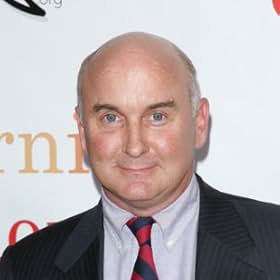
Ellis Williams
- GSA Teacher
- (as Ellis E. Williams)
Chantelle Chriestenson Nelson
- Noelle
- (as Chantelle Chriestenson)
Recensioni in evidenza
'Elephant' deals with one of the elephants in America's living room (one of the obvious but not dealt with problem - the culture of vulgarized violence which, combined with the easy access to weapons lead to the violent high school incidents like the one in Columbine. Director Gus Van Sant after cashing some good money from a previous commercial success did this movie the way he wanted, so he is the only to praise or blame for the film success or failure. The treatment is really different from what you expect, much is being invested in showing the banality of the teenagers life, the next door kid profile of both vilains and victims. No obvious message, the viewer is left completely on his own to draw its own conclusions, like in real life. The method works for much of the film, you feel the tension because you know what happened, but otherwise much of the film could be a high-school documentary, sometimes amusing, sometimes boring (why these long corridor shots?). I liked this approach to a point, but then too much is left to the viewer, and the characters (acted mostly by non-professional actors) do not have enough emotional depth. A film is to be judged based on what you see on the screen. Based on this it gets only 7 out of 10 on my personal scale, although the discussions it opens on the subject, and the thoughts after the screening may grant it a higher rate.
Imagine it: A horrific tragedy has taken place in a local school, the violence and inexplicability of which has stunned everyone who has heard of it. A meeting is announced that will address the issues that such an event has raised. At the meeting, the main speaker takes the floor, stares at his audience for a few long seconds, then shrugs his shoulders and mumbles "S**t happens". What? You ask. That's it? "Well," he says, "you can't expect me to provide YOU with the answers. But I did take some nice photos".
That's "Elephant".
It would be hard to tackle such a topic without sinking into "Movie of the Week" territory, so Van Sant avoids this by sitting down and not doing much of anything. But artfully.
Why was this film made? What does it tell us about the events? That they happened. What does he tell us about the victims? Nothing, absolutely nothing. We follow them around, interminably (I feel I knew the backs of their heads intimately, if nothing else) and it's a lot like reality tv -- dull: uninvolving, unrevealing and uneventful. What does it tell us about the perpetrators? Nothing we don't already know, haven't already read. Insights? None. It exists in its own universe, blank and unfeeling, a perfect circle, Art for Art's sake.
As far as it goes, there are some beautiful touches, here -- the overlapping time frames, the slowing down of the action to signify a small, private, joyful moment -- but Van Sant bottles out on taking them anywhere, afraid as he seems to be of taking a stand, making a statement or engaging, emotionally, in any way with anything here.
All in all, an Artsy and pointless exercise in navel-gazing, one that masquerades as something much deeper, and hopes its own silence and blankness will be taken for wisdom.
That's "Elephant".
It would be hard to tackle such a topic without sinking into "Movie of the Week" territory, so Van Sant avoids this by sitting down and not doing much of anything. But artfully.
Why was this film made? What does it tell us about the events? That they happened. What does he tell us about the victims? Nothing, absolutely nothing. We follow them around, interminably (I feel I knew the backs of their heads intimately, if nothing else) and it's a lot like reality tv -- dull: uninvolving, unrevealing and uneventful. What does it tell us about the perpetrators? Nothing we don't already know, haven't already read. Insights? None. It exists in its own universe, blank and unfeeling, a perfect circle, Art for Art's sake.
As far as it goes, there are some beautiful touches, here -- the overlapping time frames, the slowing down of the action to signify a small, private, joyful moment -- but Van Sant bottles out on taking them anywhere, afraid as he seems to be of taking a stand, making a statement or engaging, emotionally, in any way with anything here.
All in all, an Artsy and pointless exercise in navel-gazing, one that masquerades as something much deeper, and hopes its own silence and blankness will be taken for wisdom.
A refreshing film that was so simple that all of the complicatedness of the motives was so simply explained, and it worked. Not to mention the cinematography and lengthy shots were amazing. Also, from a 52 year old man, I expected worse of high school student dialogue, but boy was I surprised. Being in high school myself, I completely was convinced of this being actual high school dialogue, perhaps because much of it was improvised. I just cannot describe my feelings after watching the movie, like when most finish great films. It was realistic and simple, yet went to levels of insanity.
p.s.--the sound design was absolutely fantastic
p.s.--the sound design was absolutely fantastic
Depending on your point of view, this movie could have been boring or brilliant. For me, it was brilliant and disturbing. I get upset every time I see the interviews with the teens from columbine that day and want to cry every time i see the video's in the library. I didn't watch the entire film, i mostly listened to it. But that parts that I did watch were boring at first, then when I looked at it dramatically, they were amazing. even the simplist movements. I loved the style that the director filmed it visually and the time sequences.
I agree with the user that said that it showed how hopeless the children were. It shows the power of anyone with a motive and a gun. It's frightening to me. I'm in school right now and a bit scared. Anyone could be walking around with guns on them ready to shoot the school. If you've seen one of the Michael moore documentaries with the kid that has many guns hidden in his clothing, then you know how many weapons one can carry.
This movie opened my eyes though I wish it hadn't. It's frightening what can go on at any moment.
I agree with the user that said that it showed how hopeless the children were. It shows the power of anyone with a motive and a gun. It's frightening to me. I'm in school right now and a bit scared. Anyone could be walking around with guns on them ready to shoot the school. If you've seen one of the Michael moore documentaries with the kid that has many guns hidden in his clothing, then you know how many weapons one can carry.
This movie opened my eyes though I wish it hadn't. It's frightening what can go on at any moment.
Gus Van Sant's "Elephant" is what critics claimed it to be - an observation. The film strains very hard from any bias and undue sentimentality. It seeks to create a distanced atmosphere of void allowing the viewer to fill it with his / her emotional or intellectual reaction.
Does it work? In maintaining his distance Van Sant succeeds admirably, faltering only once or twice, satisfying some distasteful or satirically exaggerated high-school cliche. For instance, the camera follows three clearly popular girls, all concerned with their diet, through the lunch line in the cafeteria to the table where they have an empty and inconclusive discussion about the meaning of friendship (this is not the problem) and wander into the bathroom and synchronize vomiting behind closed stalls (this is). While there are, doubtless, instances of such behavior in all high-schools, the scene seems like a forced joke, irony shoved down the throat of the audience. Still, these shortcomings are few and far between. Most of the film consists of unfinished, meandering conversations and meandering people, wandering in and out of focus of the observing camera, which traces its way through a Portland school on one fall day. It does so, portraying the school life with solid realism, focusing on a few characters who experience this life differently.
However, these variegated experiences fade into meaninglessness when Columbine-style violence breaks out and the characters, known and anonymous, are shot by two boys. Van Sant's implication, objective camera observation or not, is clear in the way he tells his story. Whatever these kids that we meet experience is rendered meaningless by the violence, equally meaningless, that comes to end them. We are left with tragedy, questions, and shock. "Elephant" achieves this emotional resonance quite well precisely through its merciless observation, its refusal to preach and to sentimentalize the events it portrays.
Nonetheless, I think that "Elephant" should not necessarily be judged by its lack of sentimentality and bias. In an somewhat exaggerated comparison, "Elephant" feels a little like Van Sant's remake of "Psycho," shot for shot. Here is a film which is an attempt at a recreation of something like that which happened at Columbine in the course of one day, without the media and social baggage that came afterward. (Michael Moore dug into that). Its goal is exacting realism, its method strict self-discipline and austere self-restraint. And Van Sant leaves us with a haunting picture of school violence. So what? Yes, he manages to shed a lot of the embellishments with which society and the media have adorned school violence, but it leaves us with very little. The meaninglessness of the violence is self-explanatory as is the ordinariness of the day on which the violence occurred, until it occurred.
Van Sant does not blame the media, videogames, or rock-music (though videogames feature in the film more prominently than media, while there is a total absence of rock-music). He just shows us what happened. I think the problem is not that people didn't know what happened, but utilized events like Columbine to attack things they hated about society, to push censorship, or to oppose gun laws, to push for education, or oppose lax security at schools. Columbine created a forum for many bubbling issues and offered a chance at scapegoating. It warned of the growing alienation of high-school kids (which the film depicts reasonably well), while signaling of a much-deeper crisis emerging within our society. While I think that Michael Moore's "Bowling For Columbine" is a film hardly without biases and agenda (something that is to be treasured in "Elephant), it attacks that second, more prominent problem much more successfully. Columbine exposed many contradictions within schools, homes and in the the much larger social and political arenas.
"Elephant" is a film that expertly portrays alienation of its subjects and the meaninglessness to which they are reduced by the violence that breaks out. And, while I do not oppose but praise its restraint, "Elephant" says far too little to be watched again and again, or remembered for a long time.
Does it work? In maintaining his distance Van Sant succeeds admirably, faltering only once or twice, satisfying some distasteful or satirically exaggerated high-school cliche. For instance, the camera follows three clearly popular girls, all concerned with their diet, through the lunch line in the cafeteria to the table where they have an empty and inconclusive discussion about the meaning of friendship (this is not the problem) and wander into the bathroom and synchronize vomiting behind closed stalls (this is). While there are, doubtless, instances of such behavior in all high-schools, the scene seems like a forced joke, irony shoved down the throat of the audience. Still, these shortcomings are few and far between. Most of the film consists of unfinished, meandering conversations and meandering people, wandering in and out of focus of the observing camera, which traces its way through a Portland school on one fall day. It does so, portraying the school life with solid realism, focusing on a few characters who experience this life differently.
However, these variegated experiences fade into meaninglessness when Columbine-style violence breaks out and the characters, known and anonymous, are shot by two boys. Van Sant's implication, objective camera observation or not, is clear in the way he tells his story. Whatever these kids that we meet experience is rendered meaningless by the violence, equally meaningless, that comes to end them. We are left with tragedy, questions, and shock. "Elephant" achieves this emotional resonance quite well precisely through its merciless observation, its refusal to preach and to sentimentalize the events it portrays.
Nonetheless, I think that "Elephant" should not necessarily be judged by its lack of sentimentality and bias. In an somewhat exaggerated comparison, "Elephant" feels a little like Van Sant's remake of "Psycho," shot for shot. Here is a film which is an attempt at a recreation of something like that which happened at Columbine in the course of one day, without the media and social baggage that came afterward. (Michael Moore dug into that). Its goal is exacting realism, its method strict self-discipline and austere self-restraint. And Van Sant leaves us with a haunting picture of school violence. So what? Yes, he manages to shed a lot of the embellishments with which society and the media have adorned school violence, but it leaves us with very little. The meaninglessness of the violence is self-explanatory as is the ordinariness of the day on which the violence occurred, until it occurred.
Van Sant does not blame the media, videogames, or rock-music (though videogames feature in the film more prominently than media, while there is a total absence of rock-music). He just shows us what happened. I think the problem is not that people didn't know what happened, but utilized events like Columbine to attack things they hated about society, to push censorship, or to oppose gun laws, to push for education, or oppose lax security at schools. Columbine created a forum for many bubbling issues and offered a chance at scapegoating. It warned of the growing alienation of high-school kids (which the film depicts reasonably well), while signaling of a much-deeper crisis emerging within our society. While I think that Michael Moore's "Bowling For Columbine" is a film hardly without biases and agenda (something that is to be treasured in "Elephant), it attacks that second, more prominent problem much more successfully. Columbine exposed many contradictions within schools, homes and in the the much larger social and political arenas.
"Elephant" is a film that expertly portrays alienation of its subjects and the meaninglessness to which they are reduced by the violence that breaks out. And, while I do not oppose but praise its restraint, "Elephant" says far too little to be watched again and again, or remembered for a long time.



Lo sapevi?
- QuizThere are only about 88 shots in this film. More than half of them are in the last twenty minutes.
- BlooperAs Michelle is show pushing a trolley of books in the library over to a shelf just after the photographer walks in, you can see the yellow and white tape markings on the floor that indicate where she is supposed to stop the trolley and were she is to stand to stack the shelf.
- ConnessioniFeatured in Siskel & Ebert & the Movies: The Best Films of 2003 (2004)
- Colonne sonorePiano Sonata No. 14 in C sharp minor, Op. 27 No. 2 'Moonlight' I. Adagio sostenuto
(1800-01)
Composed by Ludwig van Beethoven
Courtesy of FirstCom Music, Inc.
I più visti
Accedi per valutare e creare un elenco di titoli salvati per ottenere consigli personalizzati
- How long is Elephant?Powered by Alexa
Dettagli
- Data di uscita
- Paese di origine
- Lingue
- Celebre anche come
- Elefante
- Luoghi delle riprese
- Whitaker Middle School, 5700 NE 39th Ave, Portland, Oregon, Stati Uniti(since demolished)
- Aziende produttrici
- Vedi altri crediti dell’azienda su IMDbPro
Botteghino
- Budget
- 3.000.000 USD (previsto)
- Lordo Stati Uniti e Canada
- 1.266.955 USD
- Fine settimana di apertura Stati Uniti e Canada
- 93.356 USD
- 26 ott 2003
- Lordo in tutto il mondo
- 10.012.022 USD
- Tempo di esecuzione
- 1h 21min(81 min)
- Colore
- Mix di suoni
- Proporzioni
- 1.37 : 1(original ratio)
Contribuisci a questa pagina
Suggerisci una modifica o aggiungi i contenuti mancanti