VALUTAZIONE IMDb
7,1/10
6327
LA TUA VALUTAZIONE
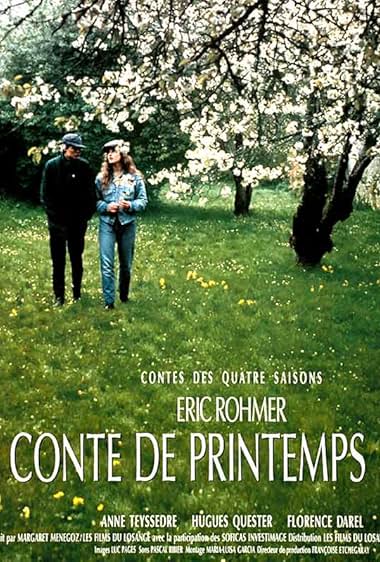
Jeanne e Natacha si incontrano durante una serata in cui ognuna si sente fuori posto. In pochi giorni diventano inseparabili. Natacha, esasperata dell'amica di suo padre, vedrebbe spiacevolm... Leggi tuttoJeanne e Natacha si incontrano durante una serata in cui ognuna si sente fuori posto. In pochi giorni diventano inseparabili. Natacha, esasperata dell'amica di suo padre, vedrebbe spiacevolmente un intrigo tra lui e Jeanne.Jeanne e Natacha si incontrano durante una serata in cui ognuna si sente fuori posto. In pochi giorni diventano inseparabili. Natacha, esasperata dell'amica di suo padre, vedrebbe spiacevolmente un intrigo tra lui e Jeanne.
- Regia
- Sceneggiatura
- Star


Recensioni in evidenza
To summarize, the film is basically about the beginning of a friendship between two women: a philosophy teacher and a younger pianist. The pianist wants to set up the philosopher with her father, who is already seeing someone else.
The resulting tensions play out at a summer cottage. The film is mostly dialog, and every feeling or impulse gets examined. Which makes sense, because of the bourgeois, self-involved bent of the characters.
I think the greatest point of action is when a dish gets nearly dropped (but it's saved and the characters then argue over who was to blame).
Although it has some pleasing insights, I wouldn't recommend the film to most people because it's simply too ponderous. Frankly it could use some comic relief. The fine country setting mitigates the over-intellectualizing somewhat, but Rohmer has made other films that are better.
The resulting tensions play out at a summer cottage. The film is mostly dialog, and every feeling or impulse gets examined. Which makes sense, because of the bourgeois, self-involved bent of the characters.
I think the greatest point of action is when a dish gets nearly dropped (but it's saved and the characters then argue over who was to blame).
Although it has some pleasing insights, I wouldn't recommend the film to most people because it's simply too ponderous. Frankly it could use some comic relief. The fine country setting mitigates the over-intellectualizing somewhat, but Rohmer has made other films that are better.
The first in Eric Rohmer's Four Seasons series, A Tale In Springtime is the story of an introverted young girl (Florence Darel) just reaching adulthood who takes a liking to an older woman she meets at a party (Anne Teyssedre) and determines to match her off with her father (Hugues Quester), despite the latter's already having a lover of his own. There is a certain absurdity to this, apparent to both adults, who though both reluctantly attracted to each other resent Darel's attempts at matchmaking. Nevertheless, both of them are intelligent enough to understand that there is no 'proper' way to meet, and are alive to the possibilities that life brings them. Darel, for her part, is a persistent catalyst. As with all Rohmer films, the stage is set, in an age of increasing impermanence and uncertainty in human relationships, for a series of minimalist reflections on love and life.
There is no sense of inevitability in this film; indeed it acknowledges throughout the unpredictable consequences of the choices we make in life. The implicit message of the film is that it is not so much the choices we make, but the cultivation of personal sensibility, awareness of others and honesty that will offer us the greatest chance of happiness. But then again nothing is certain! If, like me, you love Rohmer's films then you will adore the subtlety of this film and enjoy the challenge of absorbing the numerous philosophical reflections that are an essential part of it. The acting is good, and you care about what happens to all three protagonists, although not too much; their dilemmas are our dilemmas too, but whatever choices they make now, they will still be making choices for the rest of their lives.
And that is as it should be.
There is no sense of inevitability in this film; indeed it acknowledges throughout the unpredictable consequences of the choices we make in life. The implicit message of the film is that it is not so much the choices we make, but the cultivation of personal sensibility, awareness of others and honesty that will offer us the greatest chance of happiness. But then again nothing is certain! If, like me, you love Rohmer's films then you will adore the subtlety of this film and enjoy the challenge of absorbing the numerous philosophical reflections that are an essential part of it. The acting is good, and you care about what happens to all three protagonists, although not too much; their dilemmas are our dilemmas too, but whatever choices they make now, they will still be making choices for the rest of their lives.
And that is as it should be.
Ever see a film so rich in character and humanity that made you want to hug not only the projectionist -- but the projector that brought it to life for you? Well, this is one of those. Not a casual word is wasted as these characters so adeptly sneak up on you. In no time you are carried into their complex inner lives in much the same manner as you get to know new friends and neighbors. Rohmer's story and character design are masterful; the touches are sure-handed and rich. There are moments along the way that make you gasp with recognition. Subtle, inner feelings you may have experienced about yourself and those close to you that you never dreamed anyone else had touched. Unlike so many movies, there's a wonderful awareness that, in life, no one is really in control of even the minutest events of the day. Life happens and continues to happen ... everyone plays their role from the inside, out and we all endure or celebrate the consequences. The subtle insight; the ring of truth; there is such finesse here; this one is unforgettable.
Jeanne, a charming woman in her thirties, meets Natasha, a college student at a party and they strike up an unlikely friendship Bored with the party, they return to Natasha's apartment in Paris where her father's frequent absence allows her to invite Jeanne to stay for a week. While some thoughts may run to deviance or intrigue, A Tale of Springtime is Eric Rohmer territory and that means sparkling conversation, complex characters, and a slowly unfolding plot in which everyone discovers something new about themselves. Springtime is the first of Rohmer's Four Seasons series and, while we may not always be sure where we are going, we are always sure that there is an artist in firm control.
Both Jeanne and Natasha are smart and well spoken but each seems vaguely dissatisfied with their life. Jeanne (Anne Teyssedre), a philosophy teacher in high school, has lent her apartment to her cousin but refuses to stay at her boyfriend's place because of his inclination toward disorder and cannot quite come to terms with the question of whether or not she is in love with him. Natasha (Florence Darel) is a very talented pianist with romance and matchmaking on her mind; however, she is resentful of her divorced father's girlfriend Eve (Eloise Bennett), and has some serious thoughts about lining her father Igor (Hugues Quester) up with Jeanne.
Outwardly sweet but inwardly manipulative, Natasha suspects that Eve has stolen a family necklace that her father promised to her and tells the story to Jeanne, hoping to turn the teacher against her father's lover. When Igor shows up for a rare family dinner, all four participate in a philosophical conversation that leads to a clash of personalities. Each tries to impress the other with their knowledge and engage in some banter about Kantian philosophy, and it is easy to get lost among all the priori's and the posteriori's. The scene, however, is not really about philosophy but about how each character is revealed through their reactions and responses. Igor and Jeanne are attracted to each other but are leery of being manipulated. They cannot really be with each other because of that little voice chattering away in the back of their minds telling them to be cautious. As Jeanne says, "I spend too much time thinking about thought".
Unlike most Rohmer works, music is very much a part of this film, and the use of Beethoven's lilting Spring Sonata provides just the right touch. Though not on the top rung of Rohmer's films, A Tale of Springtime is a wonderfully entertaining way to spend two hours. It stands as a perfect example of how our considerations can sometimes get in the way of our aliveness and true self-interest. Characteristic of Rohmer, while each character is flawed and a bit lacking in self-awareness, they are very human and we identify their foibles as our own. By the end of the film, they have become a part of our lives.
Both Jeanne and Natasha are smart and well spoken but each seems vaguely dissatisfied with their life. Jeanne (Anne Teyssedre), a philosophy teacher in high school, has lent her apartment to her cousin but refuses to stay at her boyfriend's place because of his inclination toward disorder and cannot quite come to terms with the question of whether or not she is in love with him. Natasha (Florence Darel) is a very talented pianist with romance and matchmaking on her mind; however, she is resentful of her divorced father's girlfriend Eve (Eloise Bennett), and has some serious thoughts about lining her father Igor (Hugues Quester) up with Jeanne.
Outwardly sweet but inwardly manipulative, Natasha suspects that Eve has stolen a family necklace that her father promised to her and tells the story to Jeanne, hoping to turn the teacher against her father's lover. When Igor shows up for a rare family dinner, all four participate in a philosophical conversation that leads to a clash of personalities. Each tries to impress the other with their knowledge and engage in some banter about Kantian philosophy, and it is easy to get lost among all the priori's and the posteriori's. The scene, however, is not really about philosophy but about how each character is revealed through their reactions and responses. Igor and Jeanne are attracted to each other but are leery of being manipulated. They cannot really be with each other because of that little voice chattering away in the back of their minds telling them to be cautious. As Jeanne says, "I spend too much time thinking about thought".
Unlike most Rohmer works, music is very much a part of this film, and the use of Beethoven's lilting Spring Sonata provides just the right touch. Though not on the top rung of Rohmer's films, A Tale of Springtime is a wonderfully entertaining way to spend two hours. It stands as a perfect example of how our considerations can sometimes get in the way of our aliveness and true self-interest. Characteristic of Rohmer, while each character is flawed and a bit lacking in self-awareness, they are very human and we identify their foibles as our own. By the end of the film, they have become a part of our lives.
This movie and others of Eric Rohmer have a very interesting and unusual style. Character development is at its peak. He may give lesson on it to many other directors. The movie takes place in only 4 or 5 settings, one of which is a garden in Fontainebleau and others are apartment rooms. So the main focus is not the scene but the characters themselves. The subject of this movie and most others of Eric Rohmer are basically romantic relationships. Female characters express their emotions all the time. Some of them have more or less consistent thoughts while some have varying during the movie. They present their subjective thoughts on a particular event so the viewers are left with several choices. The literature in conversations are wisely written line by line. It consists of philosophical, psychological and faith-based arguments. Such a rating for such a low budget movie. This is the success of Eric Rohmer.


Lo sapevi?
- QuizFirst installment of the "Tales of Four Seasons" series.
- ConnessioniFeatured in Cinéma, de notre temps: Éric Rohmer, preuves à l'appui, 1e partie (1994)
- Colonne sonoreSonate für Violine und Klavier No. 5 'Frühling' op. 24: IV. Rondo. Allegro Ma Non Troppo
Composed by Ludwig van Beethoven
Performed by Tedi Papavrami (violin), Alexandre Tharaud (piano)
I più visti
Accedi per valutare e creare un elenco di titoli salvati per ottenere consigli personalizzati
- How long is A Tale of Springtime?Powered by Alexa
Dettagli
- Data di uscita
- Paese di origine
- Lingua
- Celebre anche come
- A Tale of Springtime
- Luoghi delle riprese
- Aziende produttrici
- Vedi altri crediti dell’azienda su IMDbPro
Botteghino
- Lordo in tutto il mondo
- 22.171 USD
Contribuisci a questa pagina
Suggerisci una modifica o aggiungi i contenuti mancanti