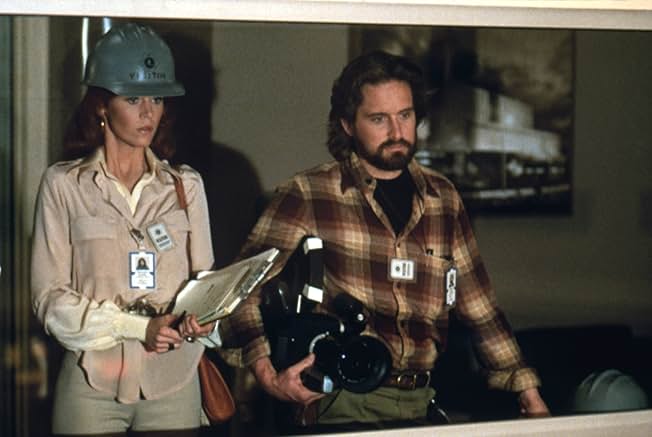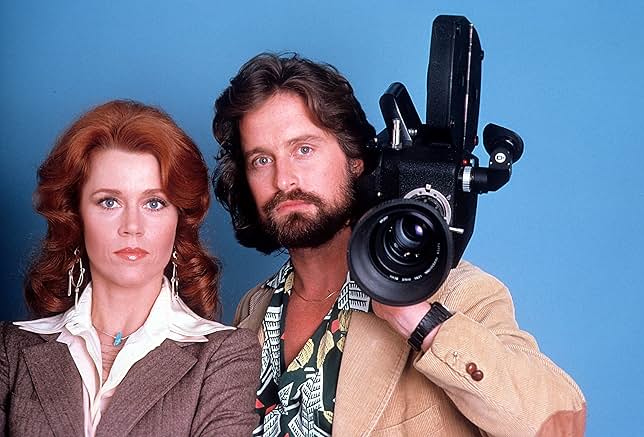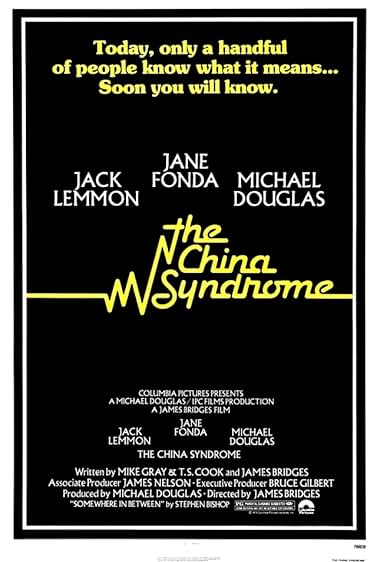
Una grintosa telecronista e il suo cameraman sono testimoni di un inspiegabile guasto tecnico nella centrale nucleare di Harrisburg (California) che potrebbe provocare un'esplosione atomica.... Leggi tuttoUna grintosa telecronista e il suo cameraman sono testimoni di un inspiegabile guasto tecnico nella centrale nucleare di Harrisburg (California) che potrebbe provocare un'esplosione atomica. Le autorità vorrebbero insabbiare la notizia, ma un ingegnere coraggioso si sacrifica per... Leggi tuttoUna grintosa telecronista e il suo cameraman sono testimoni di un inspiegabile guasto tecnico nella centrale nucleare di Harrisburg (California) che potrebbe provocare un'esplosione atomica. Le autorità vorrebbero insabbiare la notizia, ma un ingegnere coraggioso si sacrifica per amore della verità.
- Regia
- Sceneggiatura
- Star
- Candidato a 4 Oscar
- 9 vittorie e 16 candidature totali
- Marge
- (as Khalilah Ali)
Recensioni in evidenza
The script is impressively taut, intelligent but mercifully keeping the jargon to a minimum, and there is a genuine sense of sustained tension brought in play by the director as our three protagonists race to beat the clock. If you like 'whistle blowing' dramas, then this is not quite as good as "The Insider", but the whole thing is more than nervy enough.
All of that would be of no matter unless it wasn't a cracking good film which it certainly is. It's superbly cast for one thing not only with a dream-team of Lemmon, Fonda and Douglas in the main roles (all garnered deserved Oscar nominations for their work) but it's also well cast in the supporting roles too. The plot is convincingly believable at almost every stage with only the somewhat contrived melodramatic climax slightly at odds with what had gone before.
The film makes telling points about corporate greed over safety considerations still relevant in every walk of business today, but also confronts the limits of free speech and obviously, the debate on the use of nuclear power as an energy source in today's society, but at a more basic level it's just a top-class thriller which ratchets up the tension throughout.
The acting just couldn't be better, Fonda is convincing as the lightweight "feel-good spot" TV reporter who scents a real story for the first time, Douglas as the rule-bending maverick camera-man desperate to get the story out there and Lemmon in one of his last great roles as the company man whose loyalty is tested by his own conscience when he becomes aware of the cover-ups at the plant.
Sure the fashions and depicted technology to name but two elements are dated as only a film set in the 70's can be, but the message of the movie combined with its entertainment value easily transcends these to deliver a taut, exciting and thought-provoking film which was one of the best of, in my opinion, a great decade for Hollywood movie-making.
He may exaggerate to make his point, but he makes it so prominent that its place cannot be overlooked in examining the whole of the film.
Bridges also knows Hitchcock's trick of frustrating the audience with the passage of time. When Kimberly's crew is waiting at a public hearing for Jack to arrive with evidence, the performance of the enviro-protesters with their neat clothes, neat black gags and silent protest is as excruciating as nails scraping a blackboard. The audience is more anxious than the characters for an arrival to put an end to it.
This is one of the few movies that I have seen on the small screen (originally seeing it air on AMC, I believe, and then on the DVD I just watched) that made me get that feeling in the pit of my stomach. That little gnawing sensation that the director would hope you feel while watching his thriller.
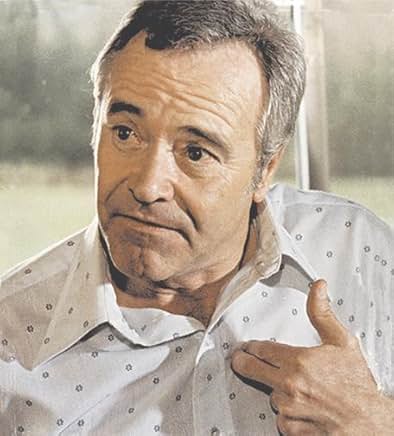
Jack Lemmon's performance is a fine one, and Jane Fonda and Michael Douglas follow. I felt so much empathy of Lemmon, who's character Jack Godell, only wanted people to listen to his warning.
But what impresses me most about this film is the lack of a score, and this is also what makes it beautiful to me. Apart from the opening titles there are no background music to increase the tension, because none is needed. And while the credits run, white on black, in silence it drives the point home.
I use the movie as an example to anyone who says music makes the movie. I think the movie should make the movie and the music should only amplify that. But for The China Syndrome music is not necessary to get across the realism and the urgency depicted here. The characters portray all of this far better than the music ever could.
I highly recommend this movie, it is one of my favorites. If you like movies, you won't be disappointed. If you like movie soundtracks more, you might not want to give this one a go.
Lo sapevi?
- QuizThe first script for the film was written in the mid-1970s. Michael Douglas initially wanted to produce this film immediately after Qualcuno volò sul nido del cuculo (1975). Jack Lemmon agreed to play his role as early as 1976. Douglas was enormously grateful to Lemmon, as he remained ready to start work at very short notice for over a year before production started, in the process passing up other work. To return the favor, Douglas amended the shooting schedule to allow Lemmon to attend rehearsals for the Broadway play Tribute - Serata d'onore (1980), the film version of which would later star Lemmon.
- BlooperIn the United States, there are two main types of commercial power reactors: PWR (Pressurized Water Reactor) and BWR (Boiling Water Reactor). When Gibson is explaining the basic workings of the plant to Kimberly Wells, the diagram on the board shows a PWR. This is indicated by the two-loop system in which the water is pumped through the reactor under high pressure to prevent boiling, then through a steam generator to create steam for the turbine using clean secondary water. Later, the dialog of the characters in the control room suggests they are dealing with a BWR, where water is allowed to boil in the reactor vessel, and steam is directly piped to the turbine, with no steam generator. Godell is concerned that the high water level in the reactor might reach the steam lines, of which there are none on a PWR vessel. Once Goddell and the operators realize the water level is low, the dialogue refers to Auxilary Feedwater, which is a PWR system. Also, in the action hearing later, the investigator talks about how the operators began cutting off feedwater and releasing steam in order to lower the reactor water level; this would happen only on a BWR.
- Citazioni
Greg Minor: [reviewing the film footage that Richard had secretly taken while at the nuclear power plant during the emergency] Whatever stuck valve it was, it's forcing them to deal with the water level. From their behavior, it looks pretty serious. As I remember the control layout, the annunciators they seem concerned with are also in the area of the core water level. I dunno... they might have come close to exposing the core.
Dr. Lowell: If that's true, we came very close to the China Syndrome.
Kimberly Wells: The what?
Dr. Lowell: If the core is exposed for whatever reason, the fuel heats beyond core heat tolerance in a matter of minutes. Nothing can stop it. And it melts down right through the bottom of the plant, theoretically to China. But of course, as soon as it hits ground water, it blasts into the atmosphere and sends out clouds of radioactivity. The number of people killed would depend on which way the wind is blowing. Render an area the size of Pennsylvania permanently uninhabitable, not to mention the cancer that would show up later.
- Curiosità sui creditiThe end credits run in total silence.
- ConnessioniFeatured in The Making of 'The China Syndrome' (1979)
- Colonne sonoreSomewhere In Between
by Stephen Bishop
I più visti
Dettagli
- Data di uscita
- Paese di origine
- Siti ufficiali
- Lingua
- Celebre anche come
- El síndrome de China
- Luoghi delle riprese
- Sewage Disposal Plant, El Segundo, California, Stati Uniti(plant exteriors)
- Aziende produttrici
- Vedi altri crediti dell’azienda su IMDbPro
Botteghino
- Budget
- 6.000.000 USD (previsto)
- Lordo Stati Uniti e Canada
- 51.718.367 USD
- Lordo in tutto il mondo
- 51.718.485 USD