

Un detective di San Francisco che soffre di acrofobia conduce delle indagini sulle strane attività della moglie di un suo vecchio amico che diventa per lui una pericolosa ossessione.Un detective di San Francisco che soffre di acrofobia conduce delle indagini sulle strane attività della moglie di un suo vecchio amico che diventa per lui una pericolosa ossessione.Un detective di San Francisco che soffre di acrofobia conduce delle indagini sulle strane attività della moglie di un suo vecchio amico che diventa per lui una pericolosa ossessione.
- Regia
- Sceneggiatura
- Star
- Candidato a 2 Oscar
- 9 vittorie e 8 candidature totali


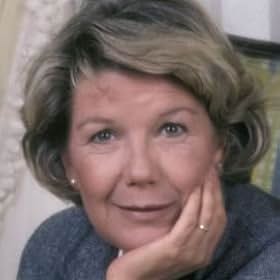


David Ahdar
- Priest
- (non citato nei titoli originali)
Isabel Analla
- Undetermined Role
- (non citato nei titoli originali)
Jack Ano
- Undetermined Role
- (non citato nei titoli originali)
Margaret Bacon
- Nun
- (non citato nei titoli originali)

John Benson
- Salesman
- (non citato nei titoli originali)
Danny Borzage
- Juror
- (non citato nei titoli originali)
Margaret Brayton
- Ransohoff's Saleslady
- (non citato nei titoli originali)

Paul Bryar
- Capt. Hansen
- (non citato nei titoli originali)
Boyd Cabeen
- Diner at Ernie's
- (non citato nei titoli originali)
Riepilogo
Reviewers say 'Vertigo' is acclaimed for its narrative complexity, innovative techniques, and psychological depth. Praised for its use of color, camera work, and Bernard Herrmann's score, the film features standout performances by James Stewart and Kim Novak. Despite some finding it slow-paced and its themes unsettling, 'Vertigo' is often cited among the greatest films, captivating audiences with its enigmatic plot and atmospheric tension.
Recensioni in evidenza
Two years before Hitchcock's legendary horror movie "Psycho" (1960) hit the theaters, our Alfred stunned audiences with another masterpiece. Perhaps not as dark, cruel and shoking as "Psycho" (1960) or "The Birds" (1963), "Vertigo" (1958) still manages to be called a timeless classic.
First of all, Scottie's condition allowed the use of an entirely new camera technique. "The Dolly Zoom" is one of cinematography's most impressive camera tricks. Years before Steven Spielberg used it in "Jaws" (1975), Irmin Roberts was the first cameraman to ever use this technique, in a Hitchcock film.
This movie tells the story of Scottie, a retired cop who's asked to investigate the case of his friend's wife, which seems to be possesed by the spirit of a dead young woman who committed suicide.
As the chilling story goes on, several moments of suspense accompanied by chilling musical scores are happening. If you're not a fan of it, you can still enjoy the superb settings throughout the movie, and as well the beautifuly filmed shots. These elements alone are a pure work of art in my opinion.
Because it's a 50's film, you will encounter extravagant dialogue between the characters, that still manages to look natural. It's not over the top forced as you may see in other films of the era.
Toward the end of the movie, I appreciated the interesting depiction of madness that Alfred creates throughout dreams and illusions that our leading man deals with. The beautiful lighting used in the last half an hour of the movie is also outstanding enough to be mentioned. And, without spoiling anything, I'd like to mention how from my perspective, the leading man portrayed throughout the movie as a tragic hero, becomes an antagonist.
Definetly an unpredictable and stylish classic you don't want to miss.
First of all, Scottie's condition allowed the use of an entirely new camera technique. "The Dolly Zoom" is one of cinematography's most impressive camera tricks. Years before Steven Spielberg used it in "Jaws" (1975), Irmin Roberts was the first cameraman to ever use this technique, in a Hitchcock film.
This movie tells the story of Scottie, a retired cop who's asked to investigate the case of his friend's wife, which seems to be possesed by the spirit of a dead young woman who committed suicide.
As the chilling story goes on, several moments of suspense accompanied by chilling musical scores are happening. If you're not a fan of it, you can still enjoy the superb settings throughout the movie, and as well the beautifuly filmed shots. These elements alone are a pure work of art in my opinion.
Because it's a 50's film, you will encounter extravagant dialogue between the characters, that still manages to look natural. It's not over the top forced as you may see in other films of the era.
Toward the end of the movie, I appreciated the interesting depiction of madness that Alfred creates throughout dreams and illusions that our leading man deals with. The beautiful lighting used in the last half an hour of the movie is also outstanding enough to be mentioned. And, without spoiling anything, I'd like to mention how from my perspective, the leading man portrayed throughout the movie as a tragic hero, becomes an antagonist.
Definetly an unpredictable and stylish classic you don't want to miss.
It's rather strange that this film was a box office flop, as it's one of Alfred Hitchcock's better movies. The only problem with "Vertigo" is that in order to really enjoy it, you need to turn off your brain and just accept the movie. If you think the plot out TOO MUCH, you'll find yourself asking too many questions and not just enjoying the film...like my oldest daughter did.
The film is the story of a somewhat creepy ex-cop (James Stewart). When the film begins, he's emotionally scarred in an accident-an accident that leaves him with a HUGE case of psychologically-based vertigo. He decides to quit the job and is soon approached by an old friend--who wants to hire him to follow his emotionally disturbed wife. What happens next is very weird--and later becomes really creepy. I could say A LOT more but think it's best you just see the film--it has quite a few twists and turns that are bound to catch you by surprise.
Overall, a wonderfully original film. The only deficit, for some, is that although Stewart was a wonderful actor, he was too old for this role. Still, I could look past this and enjoyed it immensely.
The film is the story of a somewhat creepy ex-cop (James Stewart). When the film begins, he's emotionally scarred in an accident-an accident that leaves him with a HUGE case of psychologically-based vertigo. He decides to quit the job and is soon approached by an old friend--who wants to hire him to follow his emotionally disturbed wife. What happens next is very weird--and later becomes really creepy. I could say A LOT more but think it's best you just see the film--it has quite a few twists and turns that are bound to catch you by surprise.
Overall, a wonderfully original film. The only deficit, for some, is that although Stewart was a wonderful actor, he was too old for this role. Still, I could look past this and enjoyed it immensely.
One of the many things that made Hitchcock such a great director is that he did not just stick to the same formula time after time; all of his best movies have their own unique feel and characteristics. "Vertigo" is particularly distinctive, both as a complex story filled with suspense, and as a fascinating study in psychological tension. While it lacks the humor of some of Hitchcock's other masterpieces, and sometimes moves rather slowly, it is unforgettable, and a great achievement by the director and his cast.
If you have never seen it, you will enjoy it more if you do not know too much about the plot, although the actual story is somewhat secondary to the ways that the characters are tested and their weaknesses exposed by the various events. Hitchcock uses a complicated story, interesting characters, lavish visual detail, and deliberate pacing, plus a fine musical score by the incomparable Bernard Hermann, to produce a mysterious, almost unearthly, atmosphere. The tension rarely lets up, and the viewer is caught up completely in it, at times almost to the point of discomfort. It's the kind of film that repays careful attention, as almost every moment is filled with significant detail.
There are also some great acting performances. Jimmy Stewart is outstanding in a role far different from his usual screen persona. He enables the viewer to sympathize completely with him, even as we cringe at many of his character's actions and decisions. Kim Novak is completely convincing in a difficult dual role, and the movie would not have been as compelling without her fine performance. The rest of the cast all have much smaller roles, but are all quite good too, especially Barbara Bel Geddes as Scottie's (Stewart's) old friend, who provides important insight into Scottie's character.
"Vertigo" is a classic by any standard. It's a must-see that remains just as impressive with each viewing.
If you have never seen it, you will enjoy it more if you do not know too much about the plot, although the actual story is somewhat secondary to the ways that the characters are tested and their weaknesses exposed by the various events. Hitchcock uses a complicated story, interesting characters, lavish visual detail, and deliberate pacing, plus a fine musical score by the incomparable Bernard Hermann, to produce a mysterious, almost unearthly, atmosphere. The tension rarely lets up, and the viewer is caught up completely in it, at times almost to the point of discomfort. It's the kind of film that repays careful attention, as almost every moment is filled with significant detail.
There are also some great acting performances. Jimmy Stewart is outstanding in a role far different from his usual screen persona. He enables the viewer to sympathize completely with him, even as we cringe at many of his character's actions and decisions. Kim Novak is completely convincing in a difficult dual role, and the movie would not have been as compelling without her fine performance. The rest of the cast all have much smaller roles, but are all quite good too, especially Barbara Bel Geddes as Scottie's (Stewart's) old friend, who provides important insight into Scottie's character.
"Vertigo" is a classic by any standard. It's a must-see that remains just as impressive with each viewing.
Personal Rating: 7/10
To cut to the chase, this movie didn't live up to my expectations. Coming off the back of 'Dial M for Murder' which I adored, I was excited to watch what critics argue to be the best film of Hitchcock's 'Vertigo', and I'm left feeling disappointed.
Why? Why am I not madly in love with the thing the whole world has touted as a masterpiece? The answer lies in the movie's name and one of its many motifs. Vertigo and spirals. This movie gives the viewer a sense of vertigo, packing many many spirals into its 2hr+ runtime so that by the end... are you truly any further than you were at the beginning? Example: Scottie chases "Madeline" around town following her, he then receives a piece of information, deepening the plot, and it starts up the next day, following her around. She falls, gets rescued (one of the most talked-about scenes: sexual tension, desire, lust, giving in, disillusionment, the whole shebang) and the following happens again the next day, with yet another piece of information to deepen the plot. Scottie becomes infatuated with "Madeline" and we think little of it, just like his going to Ernies and driving down a row of trees but when all of that happens exactly again later in the film more information has been revealed, the stakes are higher. This whole film is a spiral tightening in on itself. I mean the action the movie ends on is the exact action that occurred during the "climax" (middle) of the film. Talk about running in circles.
The fun thing about circles, is they're great to talk about, just read some of the reviews for this film, essays they really are. People project themselves onto this movie, some apply 21st-century values on this 1958 film, others attempt to see things from Hitchcock's perspective, everything. I'm not saying that's wrong, everyone's entitled to share how they interpret something! But I haven't found someone that just asks, were you satisfied at the end?
Perhaps I'm daft, not a true cinema buff, but for a movie to become a personal favourite for me I have to love the story, not just question it.
To conclude though, this film in all its other ways is spectacular. The score, beautiful. There's a point where 20 minutes pass with only a few words of dialogue, all you have is the score and it's magnificent. James Stewart and Kim Novak were incredible in their performances, and the cinematography, well, almost hurts how beautiful it is. Jaws eat your heart out, Hitchcock perfected the dolly zoom. And the use of colours (Green & Red), genius.
There's no doubt in my mind I will watch this movie again. There are plenty of things done very well, it just is not an enjoyable movie as a whole for myself. Whether you agree or disagree, thanks for reading my review.
One is a wanderer; Two together are always going somewhere.
To cut to the chase, this movie didn't live up to my expectations. Coming off the back of 'Dial M for Murder' which I adored, I was excited to watch what critics argue to be the best film of Hitchcock's 'Vertigo', and I'm left feeling disappointed.
Why? Why am I not madly in love with the thing the whole world has touted as a masterpiece? The answer lies in the movie's name and one of its many motifs. Vertigo and spirals. This movie gives the viewer a sense of vertigo, packing many many spirals into its 2hr+ runtime so that by the end... are you truly any further than you were at the beginning? Example: Scottie chases "Madeline" around town following her, he then receives a piece of information, deepening the plot, and it starts up the next day, following her around. She falls, gets rescued (one of the most talked-about scenes: sexual tension, desire, lust, giving in, disillusionment, the whole shebang) and the following happens again the next day, with yet another piece of information to deepen the plot. Scottie becomes infatuated with "Madeline" and we think little of it, just like his going to Ernies and driving down a row of trees but when all of that happens exactly again later in the film more information has been revealed, the stakes are higher. This whole film is a spiral tightening in on itself. I mean the action the movie ends on is the exact action that occurred during the "climax" (middle) of the film. Talk about running in circles.
The fun thing about circles, is they're great to talk about, just read some of the reviews for this film, essays they really are. People project themselves onto this movie, some apply 21st-century values on this 1958 film, others attempt to see things from Hitchcock's perspective, everything. I'm not saying that's wrong, everyone's entitled to share how they interpret something! But I haven't found someone that just asks, were you satisfied at the end?
Perhaps I'm daft, not a true cinema buff, but for a movie to become a personal favourite for me I have to love the story, not just question it.
To conclude though, this film in all its other ways is spectacular. The score, beautiful. There's a point where 20 minutes pass with only a few words of dialogue, all you have is the score and it's magnificent. James Stewart and Kim Novak were incredible in their performances, and the cinematography, well, almost hurts how beautiful it is. Jaws eat your heart out, Hitchcock perfected the dolly zoom. And the use of colours (Green & Red), genius.
There's no doubt in my mind I will watch this movie again. There are plenty of things done very well, it just is not an enjoyable movie as a whole for myself. Whether you agree or disagree, thanks for reading my review.
One is a wanderer; Two together are always going somewhere.
I get a bit tongue-tied talking about Hitchcock's greatest movies because they are just so remarkable, so astonishing, so entertaining, so multi-levelled, that it's very difficult to put into words what makes them great. Hitchcock made some of the greatest movies ever made, and 'Vertigo', though by no means his most accessible film, is quite possibly his crowning achievement. It is without any doubt a masterpiece, and I cannot fault it in any way. Every time I watch it I am knocked out, and every time I see something new, some nuance or moment that I appreciate more than I did the previous viewing. Jimmy Stewart, one of the most popular movie star in Hollywood history, gives a remarkable performance throughout, one of the best in his career. Stewart had worked with Hitchcock before, and had always been superb, especially in the much copied suspense classic 'Rear Window' a few years prior to this, but he plays against type in 'Vertigo' and is jaw-droppingly good. It's difficult to remember now that 'Vertigo' is regarded as a movie milestone, that it received many bad reviews when it was originally released, and was a relative failure for Hitchcock. A lot of this had to do with Stewart's intense performance I think, and also the difficult subject matter. 'Vertigo' is essentially a tale of sexual obsession, something most people were probably not expecting at the time! Almost as good as Stewart is Kim Novak ('The Man With The Golden Arm') in a role that she will always be remembered for. 'Vertigo' is a virtuoso piece from Hitchcock, and a movie that will no doubt continue to inspire other film makers over the years to come. However the most important thing about it is that it is still wonderful viewing, and a movie experience that you will never forget. In my mind it is one of the three of four greatest American movies. Simply astonishing.


Lo sapevi?
- QuizUncredited second unit cameraman Irmin Roberts invented the famous "zoom out and track in" shot (now sometimes called "contra-zoom" or "trombone shot") to convey the sense of vertigo to the audience. The view down the mission stairwell cost $19,000 for just a couple of seconds of screentime.
- BlooperBoth times the main characters drive to the old mission, the wide shots show them driving on the right side of the road. However, all shots inside the car show them driving on the left side of the road. This is because the US 101, where filming took place near San Juan Bautista, is split with two lanes in each direction by a grove of Eucalyptus trees. The film shows only one of the road's directions, giving the appearance that Scottie and Madeleine are driving on the wrong side of the road.
- Curiosità sui creditiThe opening Paramount logo is in black and white while the rest of the film, including the closing Paramount logo, is in Technicolor.
- Versioni alternativeAn additional ending was made during post production for some European countries due to certain laws prohibiting a film from letting a "bad guy" get away at the end of a film. In the new ending, after Scottie looks down from the bell tower (the original ending) there is a short scene of Midge in her apartment sitting next to a radio and listening to reports of the police tracking down Gavin Elster hiding out in Europe. As Midge turns off the radio, the news flash also reports that three Berkeley students got caught bringing a cow up the stairs of a campus building. Scottie enters the apartment, looks at Midge plainly, and then looks out a window. Midge makes two drinks and gives one to Scottie. The scene ends with both of them looking out the window without saying a single word to each other. This alternate ending can be found on the restoration Laserdisc as well as the film's DVD debut.
- ConnessioniEdited into Histoire(s) du cinéma: Une histoire seule (1989)
- Colonne sonoreSymphony No. 34 in C K. 338, 2nd Movement, Andante di Molto (piu tosto allegretto)
(uncredited)
Composed by Wolfgang Amadeus Mozart
Played as 'cue 10B' on a record in the psychiatric ward
I più visti
Accedi per valutare e creare un elenco di titoli salvati per ottenere consigli personalizzati
Dettagli
- Data di uscita
- Paese di origine
- Sito ufficiale
- Lingua
- Celebre anche come
- The Woman Who Lived Twice
- Luoghi delle riprese
- Fort Point, Presidio, Golden Gate National Recreation Area, San Francisco, California, Stati Uniti(Madeleine's jump into the bay)
- Azienda produttrice
- Vedi altri crediti dell’azienda su IMDbPro
Botteghino
- Budget
- 2.479.000 USD (previsto)
- Lordo Stati Uniti e Canada
- 7.863.310 USD
- Fine settimana di apertura Stati Uniti e Canada
- 252.880 USD
- 18 mar 2018
- Lordo in tutto il mondo
- 7.974.226 USD
- Tempo di esecuzione
- 2h 8min(128 min)
- Colore
- Proporzioni
- 1.85 : 1
Contribuisci a questa pagina
Suggerisci una modifica o aggiungi i contenuti mancanti