

I prigionieri di guerra alleati pianificano l'evasione di una centinaia di persone da un campo tedesco durante la seconda guerra mondiale.I prigionieri di guerra alleati pianificano l'evasione di una centinaia di persone da un campo tedesco durante la seconda guerra mondiale.I prigionieri di guerra alleati pianificano l'evasione di una centinaia di persone da un campo tedesco durante la seconda guerra mondiale.
- Regia
- Sceneggiatura
- Star
- Candidato a 1 Oscar
- 3 vittorie e 12 candidature totali





Riepilogo
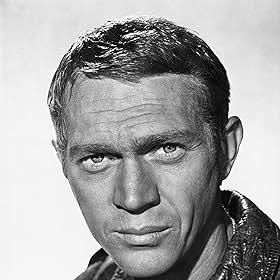
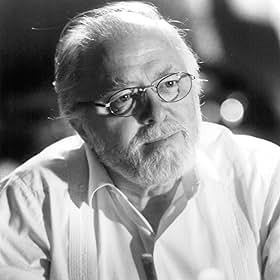
Reviewers say 'The Great Escape' is acclaimed for its thrilling World War II prison camp escape, blending suspense and tragedy. The all-star cast, including Steve McQueen and James Garner, and Elmer Bernstein's iconic score are praised. Historical accuracy and nuanced German characters are highlighted. The camaraderie and resilience of prisoners, along with the film's balance of humor and war's grim realities, are celebrated. Some critics find the pacing and camp conditions too lenient.
Recensioni in evidenza
I find it difficult to believe that some reviewers' negative reactions to this film are based on their (misguided) beliefs that none of this could possibly have happened. Comments like these make it crystal clear that what some people don't know about history is appalling. If you are going to judge a film based on historical fact, it helps if you know what it is.
It is well-documented what amazing technical feats the POW's were able to accomplish in the stalags. There was even an entire section of the British Secret Service dedicated to coming up with all sorts of clever ways to send these captured men the tools they needed to facilitate their escape attempts, i.e., sandwiching maps between the split sides of a record album (yes, the Germans allowed the prisoners to have records in the camps) or compasses in pens. At Colditz Castle, one of the more forbidding stalags, (actually an offlag since is was for officers only), many, many tunnels were dug and disguises created. One man actually created a German sergeant's uniform totally from scratch, donned a moustache and created an overall impersonation so realistic, it fooled two out of three sets of sentries. Some of the POW's built and concealed an entire glider that would have carried two men off the roof and over the wall! The only reason it didn't fly was because the prison was liberated before they got the chance! The Colditz experience is well documented. There are many books written about that particular prison complete with photographs, including one by a German officer confirming these amazing escapes and attempts. The reviewers who doubt what can be done when necessity is truly the mother of invention should look for them and learn something.
As for the prisoners not being in jumpsuits, as suggested by one reviewer as one reason to question the authenticity of the film? Ludicrous, POW's wore what they were captured in. The German military (different from the Gestapo and the SS) considered them soldiers and allowed them to keep their badges of rank.
As for the film itself, it is long, but absorbing. There are historical flaws (as there are in all movies), but several of the former POW's participated in the filming process, keeping it, for the most part, very authentic. As for the emphasis on Americans, it's true they were not among the escapees per se, but several did assist in the effort before they were transferred out, as mentioned by a previous reviewer. However, you must remember that the movie was made for an American audience in 1963, long before international distribution revenue became so important to a studio's bottom line. They needed American stars who would appeal to an American audience. Who knows, perhaps if they were to remake it today, the cast would be all British and German, but I doubt it (see "Hart's War" where not only the plot, but all the British and Canadian characters that were in the book, disappeared).
All in all, "The Great Escape" is an entertaining movie telling a fascinating story of what ordinary men can achieve in adverse circumstances. It's well worth the time.
It is well-documented what amazing technical feats the POW's were able to accomplish in the stalags. There was even an entire section of the British Secret Service dedicated to coming up with all sorts of clever ways to send these captured men the tools they needed to facilitate their escape attempts, i.e., sandwiching maps between the split sides of a record album (yes, the Germans allowed the prisoners to have records in the camps) or compasses in pens. At Colditz Castle, one of the more forbidding stalags, (actually an offlag since is was for officers only), many, many tunnels were dug and disguises created. One man actually created a German sergeant's uniform totally from scratch, donned a moustache and created an overall impersonation so realistic, it fooled two out of three sets of sentries. Some of the POW's built and concealed an entire glider that would have carried two men off the roof and over the wall! The only reason it didn't fly was because the prison was liberated before they got the chance! The Colditz experience is well documented. There are many books written about that particular prison complete with photographs, including one by a German officer confirming these amazing escapes and attempts. The reviewers who doubt what can be done when necessity is truly the mother of invention should look for them and learn something.
As for the prisoners not being in jumpsuits, as suggested by one reviewer as one reason to question the authenticity of the film? Ludicrous, POW's wore what they were captured in. The German military (different from the Gestapo and the SS) considered them soldiers and allowed them to keep their badges of rank.
As for the film itself, it is long, but absorbing. There are historical flaws (as there are in all movies), but several of the former POW's participated in the filming process, keeping it, for the most part, very authentic. As for the emphasis on Americans, it's true they were not among the escapees per se, but several did assist in the effort before they were transferred out, as mentioned by a previous reviewer. However, you must remember that the movie was made for an American audience in 1963, long before international distribution revenue became so important to a studio's bottom line. They needed American stars who would appeal to an American audience. Who knows, perhaps if they were to remake it today, the cast would be all British and German, but I doubt it (see "Hart's War" where not only the plot, but all the British and Canadian characters that were in the book, disappeared).
All in all, "The Great Escape" is an entertaining movie telling a fascinating story of what ordinary men can achieve in adverse circumstances. It's well worth the time.
Credit should be given to the brilliant score by Elmer Bernstein. If you listen to it closely, it literally is a battle between the Allied Prisoners (flutes & woodwinds) and the Germans (tubas). The escape scenes with the little boat on the scenic german river is evocative of Wagner and his heroic Germanic Operas. The scenery of the German countryside and the Alps is breathtaking. I believe that the scriptwriters emphasized the heroism, humor, and character of the prisoners to make an uplifting statement of what is essentially a cruel and tragic story. As a child growing up in the seventies, our 7th grade glass was reading the Paul Brickhill book and we had the opportunity to meet a former (American) Stalag Luft III prisoner from that era. He had arrived at the camp after the Great Escape, but was placed on the monument detail for the 50 executed men. He said that few men seriously contemplated escape after this incident and the emphasis was on surviving the war and going home alive.
This is a great movie which much more historically accurate than it is often given credit for. So many who say otherwise are ill-informed and obviously don't know much about the actual history of that actual escape. The depiction of what happened to the recaptured prisoners in the movie of THE GREAT ESCAPE is reasonably accurate as detailed on the historyinfilm site...specifically on the "Reprisal" page; along with being detailed in the various published accounts.
Hitler ultimately calmed down after being reasoned with by Goering, Feldmarschall Keitel, Maj-Gen Graevenitz and Maj-Gen Westhoff, and dictated that more than half the prisoners be shot and cremated. So, as depicted in the film, several of those recaptured were not executed and were indeed returned to confinement. In fact, even those executed were not "shot on the spot" for the most part, but were actually executed later after being turned over to the Gestapo; most being shot while being allowed to relieve themselves, under the guise of "trying to escape".
Furthermore, there are many accounts as to how much more humane the environment was within the camp (which even had a popular and very successful theatre, featuring prisoners who would later be name performers) than many other POW camps...and certainly nothing like the harsh conditions associated with the Concentration or Extermination camps.
To quote one source:
"It must be made clear that the German Luftwaffe [the German Air Force], who were responsible for Air Force prisoners of war, maintained a degree of professional respect for fellow flyers, and the general attitude of the camp security officers and guards should not be confused with the SS or Gestapo. The Luftwaffe treated the POWs well, despite an erratic and inconsistent supply of food.
Prisoners were handled quite fairly within the Geneva Convention, and the Kommandant, Oberst (Colonel) Friedrich-Wilhelm von Lindeiner-Wildau, was a professional and honourable soldier who won the respect of the senior prisoners."
Finally, virtually all the major engineering aspects in regards to the tunnels and the initial escape in the film are as they were actually acheived in the real escape.
It would behoove some to learn a little more actual history or do a little simple research before shooting from the hip with supposed "knowledge" of reality. THE GREAT ESCAPE certainly takes liberties in tone and character portrayal, but not in the key elements that are disparaged out of sneering ignorance.
BRIDGE ON THE RIVER KWAI is also a great film, but took even greater liberties with the technical details of the events described than THE GREAT ESCAPE did....and offering up VON RYAN'S EXPRESS as a more realistic alternative is simply delusional and ridiculous.
Hitler ultimately calmed down after being reasoned with by Goering, Feldmarschall Keitel, Maj-Gen Graevenitz and Maj-Gen Westhoff, and dictated that more than half the prisoners be shot and cremated. So, as depicted in the film, several of those recaptured were not executed and were indeed returned to confinement. In fact, even those executed were not "shot on the spot" for the most part, but were actually executed later after being turned over to the Gestapo; most being shot while being allowed to relieve themselves, under the guise of "trying to escape".
Furthermore, there are many accounts as to how much more humane the environment was within the camp (which even had a popular and very successful theatre, featuring prisoners who would later be name performers) than many other POW camps...and certainly nothing like the harsh conditions associated with the Concentration or Extermination camps.
To quote one source:
"It must be made clear that the German Luftwaffe [the German Air Force], who were responsible for Air Force prisoners of war, maintained a degree of professional respect for fellow flyers, and the general attitude of the camp security officers and guards should not be confused with the SS or Gestapo. The Luftwaffe treated the POWs well, despite an erratic and inconsistent supply of food.
Prisoners were handled quite fairly within the Geneva Convention, and the Kommandant, Oberst (Colonel) Friedrich-Wilhelm von Lindeiner-Wildau, was a professional and honourable soldier who won the respect of the senior prisoners."
Finally, virtually all the major engineering aspects in regards to the tunnels and the initial escape in the film are as they were actually acheived in the real escape.
It would behoove some to learn a little more actual history or do a little simple research before shooting from the hip with supposed "knowledge" of reality. THE GREAT ESCAPE certainly takes liberties in tone and character portrayal, but not in the key elements that are disparaged out of sneering ignorance.
BRIDGE ON THE RIVER KWAI is also a great film, but took even greater liberties with the technical details of the events described than THE GREAT ESCAPE did....and offering up VON RYAN'S EXPRESS as a more realistic alternative is simply delusional and ridiculous.
They will never make movies like this again... If You haven't seen this before go hit the play button. This has a fantastic cast, great story and just an all around entertaining flick. Sit back and enjoy a few cold ones while you watch this classic WWII movie. Easily one of the best war movies ever made...
During World War Two the Germans build a new prison camp, Stalag Luft III, for the express purpose of housing many of their most troublesome captured Allied airmen. However, all this serves to do is to pool the resources of some of the most ingenious escape artists in captivity and fill them with a resolve to engineer a mass breakout from the camp.
Based largely on real events, this film has assumed classic status over the years and its easy to understand why. Quite simply, it excells in many departments. Director John Sturges was at the height of his creative powers and he keeps a firm grip on the proceedings. Although the film runs close to three hours it never feels sluggish, while at the same time winding up the tension gradually and developing the characters. The production design is first rate, to the point where Donald Pleasance (who had been a P.O.W.) felt quite intimidated by the vast set on his arrival. Daniel Fapp's beautiful photography shows this and the picturesque German locations off to full effect. Put these virtues together with a good script, inspired casting and a classic score by Elmer Bernstein, and you have an object lesson in how to create an intelligent and exciting big budget adventure film.
On the subject of the cast; Much is made of Steve McQueen's role. While I am a huge McQueen fan, I feel that some of the other performances are equal to, if not better than his. Richard Attenborough, James Garner, Donald Pleasance, Charles Bronson and Gordon Jackson are all excellent. Good too are James Coburn, James Donald, David McCallum and Hannes Messemer as the sympathetic Commandant.
This is one of those films that I can happily watch time and time again. In September of this year a new print was screened at the NFT in London as part of an 'Attenborough at 80' season. It was a pleasure to see this on the big screen at last. For the most part the print was in very good condition. The DVD was one of the first that I ever bought some three and a half years ago, and I watched its inevitable Christmas screening on BBC2 last night. I just never tire of it. In these days of brainless, poorly executed action fodder, its a joy to behold something that hits its targets so precisely.
Based largely on real events, this film has assumed classic status over the years and its easy to understand why. Quite simply, it excells in many departments. Director John Sturges was at the height of his creative powers and he keeps a firm grip on the proceedings. Although the film runs close to three hours it never feels sluggish, while at the same time winding up the tension gradually and developing the characters. The production design is first rate, to the point where Donald Pleasance (who had been a P.O.W.) felt quite intimidated by the vast set on his arrival. Daniel Fapp's beautiful photography shows this and the picturesque German locations off to full effect. Put these virtues together with a good script, inspired casting and a classic score by Elmer Bernstein, and you have an object lesson in how to create an intelligent and exciting big budget adventure film.
On the subject of the cast; Much is made of Steve McQueen's role. While I am a huge McQueen fan, I feel that some of the other performances are equal to, if not better than his. Richard Attenborough, James Garner, Donald Pleasance, Charles Bronson and Gordon Jackson are all excellent. Good too are James Coburn, James Donald, David McCallum and Hannes Messemer as the sympathetic Commandant.
This is one of those films that I can happily watch time and time again. In September of this year a new print was screened at the NFT in London as part of an 'Attenborough at 80' season. It was a pleasure to see this on the big screen at last. For the most part the print was in very good condition. The DVD was one of the first that I ever bought some three and a half years ago, and I watched its inevitable Christmas screening on BBC2 last night. I just never tire of it. In these days of brainless, poorly executed action fodder, its a joy to behold something that hits its targets so precisely.





Lo sapevi?
- QuizThe real camp can be visited today in Sagan, Poland. It's a ruin now, that's mostly used for archaeological purpose. A replica of the camp is located forty kilometers (twenty-five miles) south, where you can enter a model of tunnel "Harry" yourself. In the movie, they confused the actual names of the tunnels.
- BlooperStrong timbers are needed to support thousands of pounds of dirt above a tunnel. The three foot long, 1/2 inch thick boards taken from the bed frames shown used in the tunnel seemingly could not support the weight. However, documentary interviews and excavation of the actual Stalag Luft 3 site, reveal that the film's depiction of the tunnel's construction was accurate. While the materials used may not have been adequate for a professional tunnel or mine, they were apparently adequate to the task and some are still holding up the tunnel even now.
- Versioni alternativeSome TV versions edit the scene in which Ives is shot and killed for trying to escape over the fence.
- ConnessioniEdited into Return to 'The Great Escape' (1993)
I più visti
Accedi per valutare e creare un elenco di titoli salvati per ottenere consigli personalizzati
Dettagli
- Data di uscita
- Paese di origine
- Lingue
- Celebre anche come
- El gran escape
- Luoghi delle riprese
- Füssen, Bavaria, Germania(motorcycle scenes; Gestapo agents chase Bartlett and MacDonald)
- Aziende produttrici
- Vedi altri crediti dell’azienda su IMDbPro
Botteghino
- Budget
- 4.000.000 USD (previsto)
- Lordo in tutto il mondo
- 232.707 USD
- Tempo di esecuzione
- 2h 52min(172 min)
- Colore
- Proporzioni
- 2.35 : 1
Contribuisci a questa pagina
Suggerisci una modifica o aggiungi i contenuti mancanti