

Un villaggio di contadini sotto attacco da banditi assume sette samurai disoccupati affinché li difendano.Un villaggio di contadini sotto attacco da banditi assume sette samurai disoccupati affinché li difendano.Un villaggio di contadini sotto attacco da banditi assume sette samurai disoccupati affinché li difendano.
- Regia
- Sceneggiatura
- Star
- Candidato a 2 Oscar
- 5 vittorie e 9 candidature totali


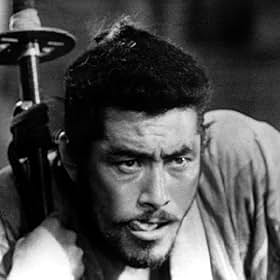
Toshirô Mifune
- Kikuchiyo
- (as Toshiro Mifune)


Yukiko Shimazaki
- Wife
- (as Yukio Shimazaki)


Isao Kimura
- Katsushiro
- (as Ko Kimura)


Kokuten Kôdô
- Old Man Gisaku
- (as Kuninori Todo)


Riepilogo
Reviewers say 'Seven Samurai' is highly rated for its groundbreaking influence, Kurosawa's direction, and epic storytelling. It explores themes of honor, sacrifice, and social class, with praise for its cinematography and battle scenes. Critics note its historical and cultural significance and impact on future films. However, some find it overly long with pacing issues and outdated acting styles. Despite these criticisms, its classic reputation and place in cinematic history maintain high ratings.
Recensioni in evidenza
This is my favorite Kurosawa film, the man was a true master of the cinematic arts. If you have never seen a Kurosawa film definetly make this your first. Though extremely long at about 3 1/2 hours it is well worth the time spent.
To quickly summarize, a poor Japanese village hires 7 Samurai to protect it from being raided by bandits. Don't get me wrong there is way more to it than that, I just dont want to give anything away. This is an intense and emotional movie that hooks you from the first scene and keeps you on the line till it is all over. The battle scene at the end is in true Kurosawa form. The acting is outstanding by everyone involved from the main characters all the way down to the very last extra. Of course the best way to see any film, especially a Kurosawa film is on the big screen if you are able to. Beautifully filmed, in black and white, anyone familiar with Kurosawa's work has to wonder visually how much more gorgeous it could have been had Kurosawa had the option of color in 1954.
The camera use is brilliant and every scene is balanced visually. This film is also the first one to use "the wipe" as a way of changing from one scene to another. This technique was later used by George Lucas in his Star Wars movies. I would also recommend the DVD version that has the commentary option by the Japanese cinema expert if anyone is interested in a deeper understanding of the "hows" and "whys" of Kurosawa's film making. Any man, woman, boy or girl who just wants to see a really, really great movie, THIS IS THE ONE! An A+++ in my book.
To quickly summarize, a poor Japanese village hires 7 Samurai to protect it from being raided by bandits. Don't get me wrong there is way more to it than that, I just dont want to give anything away. This is an intense and emotional movie that hooks you from the first scene and keeps you on the line till it is all over. The battle scene at the end is in true Kurosawa form. The acting is outstanding by everyone involved from the main characters all the way down to the very last extra. Of course the best way to see any film, especially a Kurosawa film is on the big screen if you are able to. Beautifully filmed, in black and white, anyone familiar with Kurosawa's work has to wonder visually how much more gorgeous it could have been had Kurosawa had the option of color in 1954.
The camera use is brilliant and every scene is balanced visually. This film is also the first one to use "the wipe" as a way of changing from one scene to another. This technique was later used by George Lucas in his Star Wars movies. I would also recommend the DVD version that has the commentary option by the Japanese cinema expert if anyone is interested in a deeper understanding of the "hows" and "whys" of Kurosawa's film making. Any man, woman, boy or girl who just wants to see a really, really great movie, THIS IS THE ONE! An A+++ in my book.
Donald Richie thought it was Kurosawa's finest, and suggested that it might the best Japanese film ever made.
It is a film that rewards casual viewing and careful viewing and repeated viewing and viewing over time. Isn't that rather like a wonderful book, that rewards you every time you pick it up? I suppose that is the definition of greatness.
How was this greatness achieved? (This is not a rhetorical question. It truly astonishes me how this film creates meaning...cutting across all boundaries of nationality, language, and culture to become a meaningful personal experience for those who view it). This creation of greatness may be a mystery, but we can point to the some features of the film's excellence:
The artistic achievement: The music, the cinematography, the extensive set design, the editing and the acting in the service of a moving story all conspire to create a world that becomes ours on a deeply personal level. It is a film which influences later films and filmmakers.
The narrative achievement: Based on an original concept of Kurosawa's which began as a "day in the life" documentary of a samurai's existence, Kurosawa developed the idea into this breathtaking film of samurai who save a village. This simple but complexly nuanced human story involves us in different social classes in an historical framework. We come to know individual peasants and samurai, and feel that we know significant things about them, their motivations, hopes and fears.
The achievements of the actors: These are characters you will love, people you need to have in your life: the characters of Kyuzo, Heihachi and the unforgettable Bokuzen Hidari as a bewildered peasant..! Takeshi Shimura, as the leader of the samurai, Gambei, is the embodiment of wisdom, and calm in the storm. And, saying that Toshiro Mifune has star power is like saying the noonday sun sheds a little warmth.
Toshiro: It's the cut of his jawline when he asks the village patriarch, "Got a problem, grandad?", and the most charming look of confusion and embarrassment playing over his face when he is told by Heihachi that he is the triangle on the samurai flag. It's his energy, speed and agility and power and intelligence. Mifune sniffing out the fuse of a gun in the woods, bouncing through the brush half-naked in an abbreviated set of armor, or carrying his ridiculously oversize sword on one shoulder, Mifune crying over a baby, and the incomparable scene of his embarrassment that turns to rage when Mifune accuses the samurai of creating the farmer's condition.
Toshiro Mifune represents with extraordinary physicality the spirit of a man desperate to prove his worth: Mifune's got the animal sexuality, the physical response to emotional situations, the expressive face, the humorous and varied vocalisms to make us feel deeply what his character experiences: his struggles, his growth.(His drunken burblings as the last "samurai" to audition are nothing short of hilarious, and his "fish singing" is eerie and funny, too...also the grunted "eh?" that he often uses to show confusion, and the "heh" of disgust..such wonderful sounds, and so expressive!) Mifune's acting is wild and alive, even more than 50 years after the film's original release.
Takashi Shimura: You will trust him with your life. His great, open heart, his mature calm, his honesty and compassion make him one of the greatest of all samurai on film.
Fumio Hayasaka's music: Kuroasawa was lucky to have such a brilliant composer as collaborator. Themes introduce characters, and the samurai theme is surprising and memorable. If you have viewed the film, chances are, the samurai theme is playing in your mind with just a mention of the music. Hayasaka's music is muscular and nuanced: creating humor, or a counterpoint to the action, or deepening our sympathy for and understanding of the characters.
Muraki's scenography: There is no doubt that the places shown in the film are real. The achievement of Kurosawa's longtime collaborator provide a real world for the action.
The filmography is ground-breaking: the multiple cameras, slow-motion and attention to light and composition make each frame worthy of an 8X10 glossy. How can individual moments of such beauty be sustained throughout the movement of the film? It is an astonishing feat. And, best of all, no image degenerates into interior design or vacuous prettiness...everything forwards the movement of the cinematic experience. When the film ends, we feel as if we have lived it!
It is with great respect and humility that I offer my thanks to the memory of Mr. Kurosawa. His great work leads us to treasure humanity and its struggles, to develop our own abilities to feel compassion, encourages us to try to make good choices, to be socially and morally responsible, to embrace life.
It is a film that rewards casual viewing and careful viewing and repeated viewing and viewing over time. Isn't that rather like a wonderful book, that rewards you every time you pick it up? I suppose that is the definition of greatness.
How was this greatness achieved? (This is not a rhetorical question. It truly astonishes me how this film creates meaning...cutting across all boundaries of nationality, language, and culture to become a meaningful personal experience for those who view it). This creation of greatness may be a mystery, but we can point to the some features of the film's excellence:
The artistic achievement: The music, the cinematography, the extensive set design, the editing and the acting in the service of a moving story all conspire to create a world that becomes ours on a deeply personal level. It is a film which influences later films and filmmakers.
The narrative achievement: Based on an original concept of Kurosawa's which began as a "day in the life" documentary of a samurai's existence, Kurosawa developed the idea into this breathtaking film of samurai who save a village. This simple but complexly nuanced human story involves us in different social classes in an historical framework. We come to know individual peasants and samurai, and feel that we know significant things about them, their motivations, hopes and fears.
The achievements of the actors: These are characters you will love, people you need to have in your life: the characters of Kyuzo, Heihachi and the unforgettable Bokuzen Hidari as a bewildered peasant..! Takeshi Shimura, as the leader of the samurai, Gambei, is the embodiment of wisdom, and calm in the storm. And, saying that Toshiro Mifune has star power is like saying the noonday sun sheds a little warmth.
Toshiro: It's the cut of his jawline when he asks the village patriarch, "Got a problem, grandad?", and the most charming look of confusion and embarrassment playing over his face when he is told by Heihachi that he is the triangle on the samurai flag. It's his energy, speed and agility and power and intelligence. Mifune sniffing out the fuse of a gun in the woods, bouncing through the brush half-naked in an abbreviated set of armor, or carrying his ridiculously oversize sword on one shoulder, Mifune crying over a baby, and the incomparable scene of his embarrassment that turns to rage when Mifune accuses the samurai of creating the farmer's condition.
Toshiro Mifune represents with extraordinary physicality the spirit of a man desperate to prove his worth: Mifune's got the animal sexuality, the physical response to emotional situations, the expressive face, the humorous and varied vocalisms to make us feel deeply what his character experiences: his struggles, his growth.(His drunken burblings as the last "samurai" to audition are nothing short of hilarious, and his "fish singing" is eerie and funny, too...also the grunted "eh?" that he often uses to show confusion, and the "heh" of disgust..such wonderful sounds, and so expressive!) Mifune's acting is wild and alive, even more than 50 years after the film's original release.
Takashi Shimura: You will trust him with your life. His great, open heart, his mature calm, his honesty and compassion make him one of the greatest of all samurai on film.
Fumio Hayasaka's music: Kuroasawa was lucky to have such a brilliant composer as collaborator. Themes introduce characters, and the samurai theme is surprising and memorable. If you have viewed the film, chances are, the samurai theme is playing in your mind with just a mention of the music. Hayasaka's music is muscular and nuanced: creating humor, or a counterpoint to the action, or deepening our sympathy for and understanding of the characters.
Muraki's scenography: There is no doubt that the places shown in the film are real. The achievement of Kurosawa's longtime collaborator provide a real world for the action.
The filmography is ground-breaking: the multiple cameras, slow-motion and attention to light and composition make each frame worthy of an 8X10 glossy. How can individual moments of such beauty be sustained throughout the movement of the film? It is an astonishing feat. And, best of all, no image degenerates into interior design or vacuous prettiness...everything forwards the movement of the cinematic experience. When the film ends, we feel as if we have lived it!
It is with great respect and humility that I offer my thanks to the memory of Mr. Kurosawa. His great work leads us to treasure humanity and its struggles, to develop our own abilities to feel compassion, encourages us to try to make good choices, to be socially and morally responsible, to embrace life.
Having seen Kurosawa's Seven Samurai at least 10 times, I still see something new every time I watch it. I don't see how anyone, especially a non-Japanese, could possibly absorb this movie in less than 2 or 3 viewings. I've always been surprised at how each of the 7 samurai can make such an individual impression on you even if you can't understand Japanese. Although Toshiro Mifune is often considered the star, for me its Takashi Shimura who is firmly fixed at the center of the movie. He is the guiding moral force from the moment of his appearance in the film and can capture the viewer's attention in a way similar to Alec Guinness. Mifune's character can be annoying at first in his loutish behavior, but he gains stature throughout the film and eventually becomes a unifying force second only to Shimura. Minoru Chiaki as the woodcutting samurai provides a subtle humor and the others look to him to boost their morale. Daisuke Kato is another very familiar face to Japanese movie fans and provides an excellent foil to Shimura as his second in command. Yoshio Inaba is very good as the samurai who is recruited by Shimura and quickly builds a strong rapport with him. Seiji Miyaguchi as the "expert" warrior, dedicated to honing his skill as a swordsman is a very low key yet likeable character. Ko Kimura as the young hero-worshipping samurai, as well as the love interest of the peasant girl, wishes to be a great samurai, but is easily distracted by a field of flowers or a pretty face. The peasants in the village being defended by the samurai each have their own defining characteristics as well.
In addition to the wealth of interesting characters, we have a terrific action plot--the defending of the village from 40 marauding bandits by the small troop of samurai--, and a more subtle secondary plot involving the distrust of the samurai by the villagers due to the historical interaction of these two classes in feudal Japan. All of these plot and character elements are woven together into an unforgettable epic, but, at least in my opinion, its not one that can be absorbed in a single sitting. While it's similar in this sense to another of my favorite epics, Leone's Once Upon a Time in the West, it is more complex given the number of characters.
I can only say that your patience with this film will probably be well rewarded if you take the time to give it multiple viewings. You will also have the pleasure of seeing many of the samurai and villagers pop up in other Kurosawa films and films of other Japanese directors. If you like Mifune and Shimura in this one, catch them in Stray Dog and Drunken Angel in very different settings and parts.
This one is 10 out of 10 without a doubt.
In addition to the wealth of interesting characters, we have a terrific action plot--the defending of the village from 40 marauding bandits by the small troop of samurai--, and a more subtle secondary plot involving the distrust of the samurai by the villagers due to the historical interaction of these two classes in feudal Japan. All of these plot and character elements are woven together into an unforgettable epic, but, at least in my opinion, its not one that can be absorbed in a single sitting. While it's similar in this sense to another of my favorite epics, Leone's Once Upon a Time in the West, it is more complex given the number of characters.
I can only say that your patience with this film will probably be well rewarded if you take the time to give it multiple viewings. You will also have the pleasure of seeing many of the samurai and villagers pop up in other Kurosawa films and films of other Japanese directors. If you like Mifune and Shimura in this one, catch them in Stray Dog and Drunken Angel in very different settings and parts.
This one is 10 out of 10 without a doubt.
I've been on a Toho binge for a while now and for the most part the films have been enjoyable, especially those by Kurosawa.
The earlier films were dark, bleak and unsettling viewing and therefore going into Seven Samurai I was of two minds. First I expected more of the same, in both quality and tone but then on the flipside at time of writing this is ranked as the 19th highest rated movie on IMDB which is incredible.
My expectations were that it would be good, but that's about it. Seeing Takashi Shimura in the credits also confirmed my logic that this was going to at least be an entertaining three and a half hours.
I was mistaken, Seven Samurai is not good............it's outstanding.
Wonderfully crafted, perfectly scored, incredibly choreographed, well acted and beautifully written this is well deserving of it's high place and I would consider it nothing short of a masterpiece.
If you check out my IMDB rating distribution it's very clear to see that getting anything higher than an eight is a rarity, this deserves it on so many levels.
I didn't expect this level of quality further as generally I don't tend to agree with titles in the IMDB top 250, this however I do I thoroughly unconditionally agree.
A masterpiece and essential viewing, I don't even need to give the premise of the movie in this review and must simply stress that this is film making mastery at its finest.
The Good:
Takashi Shimura
Very well shot for its time
Perfectly crafted
The Bad:
Nothing springs to mind
Things I Learnt From This Movie:
Akira Kurosawas should be a household name, not Bruckheimer or Bay!
I'll put money down now that none of the remakes or movies heavily influenced by Seven Samurai comes close in quality
The earlier films were dark, bleak and unsettling viewing and therefore going into Seven Samurai I was of two minds. First I expected more of the same, in both quality and tone but then on the flipside at time of writing this is ranked as the 19th highest rated movie on IMDB which is incredible.
My expectations were that it would be good, but that's about it. Seeing Takashi Shimura in the credits also confirmed my logic that this was going to at least be an entertaining three and a half hours.
I was mistaken, Seven Samurai is not good............it's outstanding.
Wonderfully crafted, perfectly scored, incredibly choreographed, well acted and beautifully written this is well deserving of it's high place and I would consider it nothing short of a masterpiece.
If you check out my IMDB rating distribution it's very clear to see that getting anything higher than an eight is a rarity, this deserves it on so many levels.
I didn't expect this level of quality further as generally I don't tend to agree with titles in the IMDB top 250, this however I do I thoroughly unconditionally agree.
A masterpiece and essential viewing, I don't even need to give the premise of the movie in this review and must simply stress that this is film making mastery at its finest.
The Good:
Takashi Shimura
Very well shot for its time
Perfectly crafted
The Bad:
Nothing springs to mind
Things I Learnt From This Movie:
Akira Kurosawas should be a household name, not Bruckheimer or Bay!
I'll put money down now that none of the remakes or movies heavily influenced by Seven Samurai comes close in quality
Story-telling at its finest, "Seven Samurai" is a terrific film not because of a handful of memorable scenes or lines, but rather because scene-by-scene, frame-by-frame, it tells an interesting story as well as it is possible to tell it. The story and characters are developed carefully, and everything about the movie, from the settings and props to the musical score, is done carefully and expertly.
Mifune grabs the attention in most of his scenes, and Shimura's more restrained character is a nice balance. Those two have the best parts, but all seven of the samurai are memorable characters. The sequence of events that collects the seven together occupies the first part of the movie, and forms a perfect foundation for the rest. A few of the villagers are also portrayed nicely, although they are naturally overshadowed when the samurai are around.
The story always moves along nicely, with many ups and downs. It has enough unpredictability to keep you interested the whole time, without ever losing its credibility. There is plenty of action, but there is also substance behind the action to give it more significance. The only possible drawback is the long running time (you can always split it up into two installments, but it's more satisfying if you can watch the whole story through at once), but there is little that you could cut out, even if you wanted to. It holds your attention the entire time with a good story and great technique, not by resorting to sensational or sordid details.
This movie well deserves its reputation for excellence, and is one that everyone who appreciates classic cinema will want to see and enjoy.
Mifune grabs the attention in most of his scenes, and Shimura's more restrained character is a nice balance. Those two have the best parts, but all seven of the samurai are memorable characters. The sequence of events that collects the seven together occupies the first part of the movie, and forms a perfect foundation for the rest. A few of the villagers are also portrayed nicely, although they are naturally overshadowed when the samurai are around.
The story always moves along nicely, with many ups and downs. It has enough unpredictability to keep you interested the whole time, without ever losing its credibility. There is plenty of action, but there is also substance behind the action to give it more significance. The only possible drawback is the long running time (you can always split it up into two installments, but it's more satisfying if you can watch the whole story through at once), but there is little that you could cut out, even if you wanted to. It holds your attention the entire time with a good story and great technique, not by resorting to sensational or sordid details.
This movie well deserves its reputation for excellence, and is one that everyone who appreciates classic cinema will want to see and enjoy.


Lo sapevi?
- QuizAkira Kurosawa's original idea for the film was to make it about a day in the life of a samurai, beginning with him rising from bed, eat breakfast, go to his master's castle and ending with him making some mistake that required him to go home and kill himself to save face. Despite a good deal of research, he did not feel he had enough solid factual information to make the movie. He then pitched the idea of a film that would cover a series of five samurai battles, based on the lives of famous Japanese swordsmen. Hashimoto went off to write that script, but Kurosawa ultimately scrapped that idea as well, worrying that a film that was just "a series of climaxes" wouldn't work. Then, producer Sôjirô Motoki found, through historical research, that samurai in the "Warring States" period of Japanese history would often volunteer to stand guard at peasant villages overnight in exchange for food and lodging. Kurosawa then came across an anecdote about a village hiring samurai to protect them and decided to use that idea. Kurosawa wrote a complete dossier for each character with a speaking role. In it were details about what they wore, their favourite foods, their past history, their speaking habits, their reaction to battle and every other detail he could think of about them. No other Japanese director had ever done this before.
- BlooperIn the closing moments of the final battle, the bandits fire two musket shots only seconds apart. It is clear from the plot that at that time they possess only one musket. The black powder muskets of the age required much more time to reload. This error was pointed out in the commentary of the deluxe DVD edition.
- Citazioni
Kambei Shimada: This is the nature of war: By protecting others, you save yourselves. If you only think of yourself, you'll only destroy yourself.
- Versioni alternativeThe film's original Japanese release version runs 207 minutes, plus intermission, which includes four minutes of entr'acte music against a blank screen. This is the version that has been generally shown worldwide since the 1980s, though sometimes it is shown without the intermission and entr'acte, resulting in a listed running time of 203 minutes. The initial U.S.A. release was re-titled 'The Magnificent Seven' and released November 1956, with English subtitles, and ran 158 minutes. Some European releases were even further shortened to 141 minutes. Landmark Films re-released the film in the U.S. in December 1982, the first time outside Japan the film saw a major release with its running time intact (although the intermission and entr'acte were removed). Later U.S.A. releases by Avco-Embassy Pictures, Janus Films, and Films Incorporated, and by BFI in the UK, are also the full original version of the film.
- ConnessioniFeatured in Obiettivo 500 milioni (1966)
I più visti
Accedi per valutare e creare un elenco di titoli salvati per ottenere consigli personalizzati
Dettagli
Botteghino
- Budget
- 125.000.000 JPY (previsto)
- Lordo Stati Uniti e Canada
- 820.278 USD
- Fine settimana di apertura Stati Uniti e Canada
- 15.942 USD
- 28 lug 2002
- Lordo in tutto il mondo
- 1.092.319 USD
- Tempo di esecuzione
- 3h 27min(207 min)
- Colore
- Mix di suoni
- Proporzioni
- 1.37 : 1
Contribuisci a questa pagina
Suggerisci una modifica o aggiungi i contenuti mancanti