[go: up one dir, main page]

    Calendario delle usciteI migliori 250 filmI film più popolariEsplora film per genereCampione d’incassiOrari e bigliettiNotizie sui filmFilm indiani in evidenza
    Cosa c’è in TV e in streamingLe migliori 250 serieLe serie più popolariEsplora serie per genereNotizie TV
    Cosa guardareTrailer più recentiOriginali IMDbPreferiti IMDbIn evidenza su IMDbGuida all'intrattenimento per la famigliaPodcast IMDb
    OscarsBest Of 2025Holiday Watch GuideGotham AwardsCelebrity PhotosSTARmeter AwardsAwards CentralFestival CentralTutti gli eventi
    Nato oggiCelebrità più popolariNotizie sulle celebrità
    Centro assistenzaZona contributoriSondaggi
Per i professionisti del settore
  • Lingua
  • Completamente supportata
  • English (United States)
    Parzialmente supportata
  • Français (Canada)
  • Français (France)
  • Deutsch (Deutschland)
  • हिंदी (भारत)
  • Italiano (Italia)
  • Português (Brasil)
  • Español (España)
  • Español (México)
Lista Video
Accedi
  • Completamente supportata
  • English (United States)
    Parzialmente supportata
  • Français (Canada)
  • Français (France)
  • Deutsch (Deutschland)
  • हिंदी (भारत)
  • Italiano (Italia)
  • Português (Brasil)
  • Español (España)
  • Español (México)
Usa l'app
  • Il Cast e la Troupe
  • Recensioni degli utenti
  • Quiz
  • Domande frequenti
IMDbPro

Il cantante di jazz

Titolo originale: The Jazz Singer
  • 1927
  • Passed
  • 1h 28min
VALUTAZIONE IMDb
6,4/10
11.781
LA TUA VALUTAZIONE
Al Jolson in Il cantante di jazz (1927)
DrammaMusicaMusicaleRomanticismo

Il figlio di un cantore ebreo deve sfidare le tradizioni del padre religioso per perseguire il suo sogno di diventare un cantante jazz.Il figlio di un cantore ebreo deve sfidare le tradizioni del padre religioso per perseguire il suo sogno di diventare un cantante jazz.Il figlio di un cantore ebreo deve sfidare le tradizioni del padre religioso per perseguire il suo sogno di diventare un cantante jazz.

  • Regia
    • Alan Crosland
  • Sceneggiatura
    • Samson Raphaelson
    • Alfred A. Cohn
    • Jack Jarmuth
  • Star
    • Al Jolson
    • May McAvoy
    • Warner Oland
  • Vedi le informazioni sulla produzione su IMDbPro
  • VALUTAZIONE IMDb
    6,4/10
    11.781
    LA TUA VALUTAZIONE
    • Regia
      • Alan Crosland
    • Sceneggiatura
      • Samson Raphaelson
      • Alfred A. Cohn
      • Jack Jarmuth
    • Star
      • Al Jolson
      • May McAvoy
      • Warner Oland
    • 125Recensioni degli utenti
    • 54Recensioni della critica
    • 66Metascore
  • Vedi le informazioni sulla produzione su IMDbPro
  • Vedi le informazioni sulla produzione su IMDbPro
    • Candidato a 1 Oscar
      • 3 vittorie e 1 candidatura in totale

    Foto74

    Visualizza poster
    Visualizza poster
    Visualizza poster
    Visualizza poster
    Visualizza poster
    Visualizza poster
    + 68
    Visualizza poster

    Cast principale38

    Modifica
    Al Jolson
    Al Jolson
    • Jakie Rabinowitz
    May McAvoy
    May McAvoy
    • Mary Dale
    Warner Oland
    Warner Oland
    • The Cantor
    Eugenie Besserer
    Eugenie Besserer
    • Sara Rabinowitz
    Otto Lederer
    Otto Lederer
    • Moisha Yudelson
    Robert Gordon
    Robert Gordon
    • Jakie Rabinowitz - Age 13
    • (as Bobby Gordon)
    Richard Tucker
    Richard Tucker
    • Harry Lee
    Yossele Rosenblatt
    Yossele Rosenblatt
    • Cantor Rosenblatt - Concert Recital
    • (as Cantor Joseff Rosenblatt)
    Charlene Aber
    • Chorus Girl
    • (non citato nei titoli originali)
    Arline Abers
    • Chorus Girl
    • (non citato nei titoli originali)
    Jane Arden
    • Small Part
    • (non citato nei titoli originali)
    Ernest Belcher
    • Choreographer - 'April Follies'
    • (non citato nei titoli originali)
    Violet Bird
    • Small Part
    • (non citato nei titoli originali)
    Bernard B. Brown
    • Violinist
    • (non citato nei titoli originali)
    Nat Carr
    Nat Carr
    • Levi
    • (non citato nei titoli originali)
    Claire Delmar
    Claire Delmar
    • Small Part
    • (non citato nei titoli originali)
    William Demarest
    William Demarest
    • Buster Billings
    • (non citato nei titoli originali)
    Neely Edwards
    Neely Edwards
    • Dance Director
    • (non citato nei titoli originali)
    • Regia
      • Alan Crosland
    • Sceneggiatura
      • Samson Raphaelson
      • Alfred A. Cohn
      • Jack Jarmuth
    • Tutti gli interpreti e le troupe
    • Produzione, botteghino e altro su IMDbPro

    Recensioni degli utenti125

    6,411.7K
    1
    2
    3
    4
    5
    6
    7
    8
    9
    10

    Recensioni in evidenza

    ccthemovieman-1

    More Than Just A 'Curiosity Piece'

    An historic film, billed as "the first talkie," this was a surprise because many of the lines are not verbalized, only when Al Jolson sings or just before or just after his songs. Otherwise, most of it is still a silent film with the words shown on the screen as in the other silent films.

    This is a powerful story with interesting characters and good songs, to boot. It was different to see Warner Oland as somebody else besides Charlie Chan. He played Jolson's father and I never would have recognized him had I not read the credits. Nor would I have recognized William Demarest.

    Jolson, however, is the man who dominates the film. Some of this songs wound up being classics, ones played for years and years, such as "Toot, Toot Toosie" and "Mammy."

    Faced with a very tough decision on what to do with his life, Jolson's character does the right thing in the end, which was nice to see. Overall, it's entertaining.
    8strezise

    a film boosted by its legendary historical status

    Whatever might be the shortcomings of this famous film, it is an uncanny experience to visit it from time to time. As we know, although it's the first 'talki' it's mostly a silent movie with all that entails. Nevertheless, those moments when sound and image are synchronised, often just for one side of the disc used for the soundtrack, are electrifying. The heat is turned up by the fact that Al Jolson improvised some of his lines, much to the horror of his stage mother. And besides, the tale of the errant son making good in the big lights is affecting. The music is superb, and we are rewarded by some haunintg evocations of the Jewish cantor tradition. I love the film.
    Schlockmeister

    "Wait a minute, you ain't heard nothin' yet!"

    George Jessel passed up a chance to star in this movie. he thought sound in film was too risky a venture to try and took a pass. Al Jolson went on to stardom and George became known as a toastmaster at Hollywood roasts. This is an excellent movie that certainly belongs on anyone's list of 100 best movies. The story has been ably told here, I won't repeat it. I do want to add a few observations, however. The movie is very sentimental, especially in it's portrayal of "Mama" and Jolson's devotion to her. Even when it first came out, writers were critical of this, which harked back to the days of broad stage melodramas. The use of the song Kol Nidre and the Jewish day of Atonement at the ending is significant in that forgiveness and reconciliation is what this movie's theme is all about. Recommended highly, many of the scenes are etched in the consciousness of movie-goers whether you have seen this movie or not. Jolson in blackface doing "Mammy" and "Mother Of Mine", singing "Toot, Toot, Toosie Goodbye". Seeing this film will bring back all these images and place them in their proper contexts. The minstrel type show or even blackface solos were still going strong in the 1920s. In the 1930s and even into the 1940s famous Hollywood actors such as Judy Garland and Mickey Rooney among many others would still be doing songs in blackface. This was no isolated case by a long shot. See it and see history. Also see it for what it is, a classic Hollywood story.
    6Ziggy5446

    You need to see Al Jolson in The Jazz Singer and it'll all start to make sense.

    Director Alan Crosland's and Warner Bros.' 1927 historic milestone film entitled The Jazz Singer was not the first sound film, nor the first "talkie" film or the first movie musical. It's completely baffling to hear many people actually associate this film with the visitation of sound, however, if one can recall the 1926 silent film featuring John Barrymore entitled Don Juan, than they would know that it was the first feature film with a Vitaphone soundtrack, though, like The Jazz Singer, it is by no means the first sound film either. The first sound film can be dated as far back to 1895.

    Though, not being the first "talkie", The Jazz Singer, is certainly a remarkable film; it still holds its place as an cinematic landmark for being the first feature-length Hollywood "talke" film in which "spoken dialogue was used as part of the dramatic action." However, it's still largely a silent film with a synchronized musical score and a handful of sound sequences built around singing. It's also become something of a controversial case because of Al Jolson's (arguably the most popular entertainer of his time) use of blackface in some of the musical sequences, forgetful of the fact that this was a theatrical artifice from the era; it wasn't intended as "mean-spirited" as so many claim it to be. It was actually praised by black newspapers in 1927, and was being done by another much defamed minority, a Jew.

    You can see what an impact sound must have had in 1927, because it certainly wasn't the movie that made this production a phenomenon. Though, the film itself, is more than just a movie about a guy who likes music. It's also a story about a Jewish kid who turns his back on his heritage to try and make it big on the stage - exceptionally daring subject matter for its era, and still enthralling today. It's certainly not ragged and dull, though, the magic moment when Jolson turns to the camera to announce, "You ain't heard nothing' yet" - a line so loaded with unconscious irony that it still raises a few goose bumps. Audiences were captivated by this and still are to this very day. A must see!!!
    tedg

    Four Angels, Poised

    There's not much to say about this other than even today, for this viewer, it is emotionally effective. Yes you know you are being manipulated. Yes, the acting conventions of the silent screen are comically exaggerated. Yes, it is shameless in setting up the ultimate choice. But this is so well structured that even today it escapes cliché. That's so remarkable, because big movies are almost always turned into clichés as bits of them are digested and continuously re-served to us as our visual grammar.

    The love interest here is so unusual. He does fall in love with a pretty dancer, but tells her plainly that his career is more important than she is. She later doesn't become part of the choice — as would be the case in nearly every other script — instead she becomes part of the audience, presenting the dramatic quandary: the stage or God.

    The presentation of religion is unique in my experience. Everyone here is a Jew, except the performers. They are the "real" and everyone else is "pretend," performing. Though there are many opportunities to fall into obnoxious stereotypes, its avoided over and over. That's despite the dozens of examples they had before.

    In fact, there's an amazing engineering of story here. As any viewer will know, this was the first talkie. It was new, and to emphasize its newness a story was created to emphasize the contrast between old and new.

    This film is part silent, part "talkie." It shows a struggle between the old (obviously obsolete) and the vital young. It also depicts in a rather subtle but effective way the "old" god, and the new: there's plenty of talk about the performance hall being a modern church. The music as well: we have the implication that it is not only the setting, the performer and the calling, but the music itself that is something new.

    Along the way we get street scenes of the Jewish area of New York. These are genuine street scenes and are absolutely phenomenal: there isn't anything I know that compares. There was an attempt of sorts in "The Pawnbroker," which by itself was strong. But nothing compared to this.

    Ted's Evaluation -- 4 of 3: Every cineliterate person should experience this.

    Altri elementi simili

    La folla
    8,0
    La folla
    Nascita di una nazione
    6,1
    Nascita di una nazione
    Lights of New York
    5,6
    Lights of New York
    Aurora
    8,1
    Aurora
    La grande parata
    7,9
    La grande parata
    L'angelo della strada
    7,3
    L'angelo della strada
    Le notti di Chicago
    7,5
    Le notti di Chicago
    Ali
    7,5
    Ali
    Intolerance
    7,7
    Intolerance
    Settimo cielo
    7,5
    Settimo cielo
    Il cantante di jazz
    6,0
    Il cantante di jazz
    Notte d'Arabia
    6,6
    Notte d'Arabia

    Interessi correlati

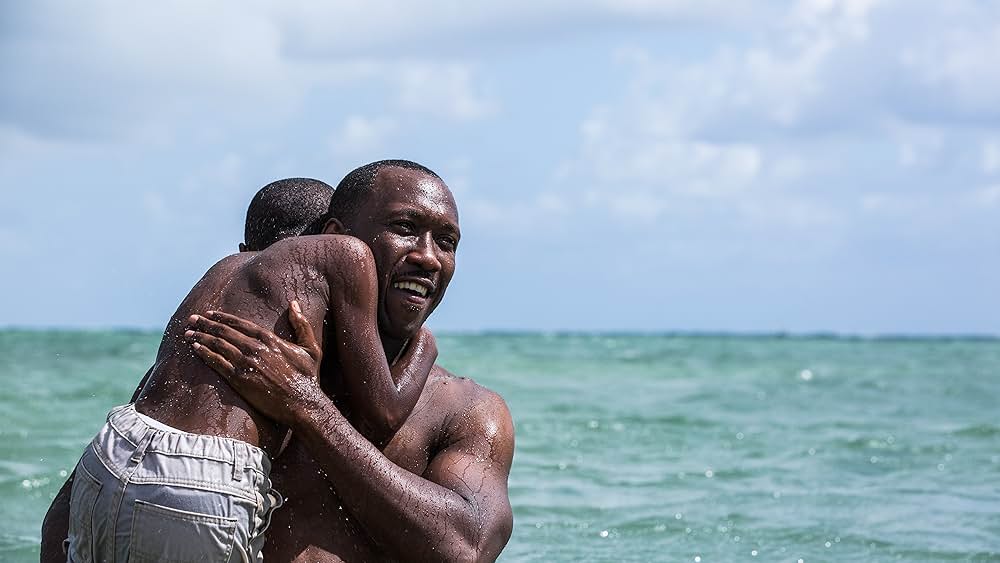
    Naomie Harris, Mahershala Ali, Janelle Monáe, André Holland, Herman Caheej McGloun, Edson Jean, Alex R. Hibbert, and Tanisha Cidel in Moonlight (2016)
    Dramma
    Prince and Apollonia Kotero in Purple Rain (1984)
    Musica
    Julie Andrews in Tutti insieme appassionatamente (1965)
    Musicale
    Ingrid Bergman and Humphrey Bogart in Casablanca (1942)
    Romanticismo

    Trama

    Modifica

    Lo sapevi?

    Modifica
    • Quiz
      This is the first feature-length movie with audible dialogue.
    • Blooper
      Mary recieves a telegram dated August 8, 1927. Later in the film, Jack is seen writing a letter to Mary, dating it August 7, 1927.
    • Citazioni

      [opening lines, first quote and first words in the first widely-seen talking picture]

      Jack Robin: Wait a minute, wait a minute, you ain't heard nothin' yet! Wait a minute, I tell ya! You ain't heard nothin'! You wanna hear "Toot, Toot, Tootsie"? All right, hold on, hold on...

      [then he walks back to one of the band members]

      Jack Robin: Lou, listen. Play "Toot, Toot, Tootsie", three chorus, you understand. In the third chorus, I whistle. Now give it to 'em hard and heavy, go right ahead.

    • Connessioni
      Edited into Okay for Sound (1946)
    • Colonne sonore
      My Gal Sal
      (1905) (uncredited)

      Written by Paul Dresser

      Sung by Robert Gordon (dubbed by an unidentified singer)

    I più visti

    Accedi per valutare e creare un elenco di titoli salvati per ottenere consigli personalizzati
    Accedi

    Domande frequenti22

    • How long is The Jazz Singer?Powered by Alexa
    • What is 'The Jazz Singer' about?
    • Is 'The Jazz Singer' based on a book?
    • How does the movie end?

    Dettagli

    Modifica
    • Data di uscita
      • 4 febbraio 1928 (Stati Uniti)
    • Paese di origine
      • Stati Uniti
    • Lingue
      • Inglese
      • Yiddish
    • Celebre anche come
      • The Jazz Singer
    • Luoghi delle riprese
      • Los Angeles, California, Stati Uniti
    • Azienda produttrice
      • Warner Bros.
    • Vedi altri crediti dell’azienda su IMDbPro

    Botteghino

    Modifica
    • Budget
      • 422.000 USD (previsto)
    Vedi le informazioni dettagliate del botteghino su IMDbPro

    Specifiche tecniche

    Modifica
    • Tempo di esecuzione
      • 1h 28min(88 min)
    • Colore
      • Black and White
    • Proporzioni
      • 1.33 : 1

    Contribuisci a questa pagina

    Suggerisci una modifica o aggiungi i contenuti mancanti
    • Ottieni maggiori informazioni sulla partecipazione
    Modifica pagina

    Altre pagine da esplorare

    Visti di recente

    Abilita i cookie del browser per utilizzare questa funzione. Maggiori informazioni.
    Scarica l'app IMDb
    Accedi per avere maggiore accessoAccedi per avere maggiore accesso
    Segui IMDb sui social
    Scarica l'app IMDb
    Per Android e iOS
    Scarica l'app IMDb
    • Aiuto
    • Indice del sito
    • IMDbPro
    • Box Office Mojo
    • Prendi in licenza i dati di IMDb
    • Sala stampa
    • Pubblicità
    • Lavoro
    • Condizioni d'uso
    • Informativa sulla privacy
    • Your Ads Privacy Choices
    IMDb, una società Amazon

    © 1990-2025 by IMDb.com, Inc.