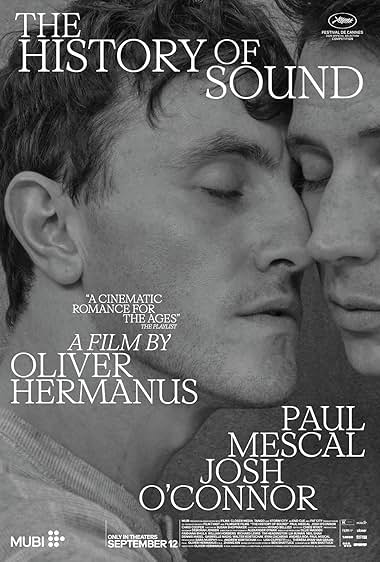

Pendant la Première Guerre mondiale, deux jeunes hommes ont entrepris d'enregistrer la vie, les voix et la musique de leurs compatriotes américains.Pendant la Première Guerre mondiale, deux jeunes hommes ont entrepris d'enregistrer la vie, les voix et la musique de leurs compatriotes américains.Pendant la Première Guerre mondiale, deux jeunes hommes ont entrepris d'enregistrer la vie, les voix et la musique de leurs compatriotes américains.
- Réalisation
- Scénariste
- Stars
- Récompenses
- 1 victoire et 5 nominations au total


Avis à la une
The History of Sound is a slow, almost meditative narrative that follows the brief but intense relationship between Lionel and David.
While I did enjoy it, I had hoped the film would focus on and explore their relationship more on screen, rather than relying on fragments for us to infer from. This isn't always a bad thing, but for a film that is about their relationship and love, I expected more of it to focus on that. That part was a little disappointing for me.
My favourite scenes were when Paul and Josh were together. They're both great actors in my opinion, had amazing chemistry. I just wish we had gotten more! Having these two as your lead actors, the possibilities are endless. Perhaps my expectations were too high. That said, I loved the beginning and the last 30 minutes. Another positive is that it's a beautiful film, with gorgeous shots!
Overall, it's a good film and one plan to see again.
Side note: I have a soft spot for Josh O'Connor, so it's always a delight to see him on screen.
While I did enjoy it, I had hoped the film would focus on and explore their relationship more on screen, rather than relying on fragments for us to infer from. This isn't always a bad thing, but for a film that is about their relationship and love, I expected more of it to focus on that. That part was a little disappointing for me.
My favourite scenes were when Paul and Josh were together. They're both great actors in my opinion, had amazing chemistry. I just wish we had gotten more! Having these two as your lead actors, the possibilities are endless. Perhaps my expectations were too high. That said, I loved the beginning and the last 30 minutes. Another positive is that it's a beautiful film, with gorgeous shots!
Overall, it's a good film and one plan to see again.
Side note: I have a soft spot for Josh O'Connor, so it's always a delight to see him on screen.
From the outset of its announcement, I closely followed the development of The History of Sound. The reason was straightforward: like Brokeback Mountain, it is adapted from a short story. Expanding such a compact narrative into a feature-length film inevitably demands significant intervention from the director and screenwriter. While the original text offers only fleeting descriptions of many scenes, the filmmakers must decide whether to elaborate upon these gaps or to remain faithful to the sparseness of the source.
It is therefore almost unavoidable to compare this film with Brokeback Mountain. The comparison became especially acute as I left the cinema after the credits had finished. Both films address themes of loss and regret, yet the crucial question is whether a director can transcend this now familiar framework. Regrettably, I contend that Oliver Hermanus does not. Entering the cinema already familiar with the short story, I could anticipate the emotional trajectory with surprising accuracy. For viewers, such predictability undermines emotional force, since foreknowledge diminishes impact.
That being said, the film's atmosphere is crafted with undeniable skill. The staging and visual tone exert considerable power, and the occasional impressionistic passages recalled for me the aesthetic precision of Luca Guadagnino. Yet therein lies a difficulty: when the world of the film feels so palpably real, the characters must embody a corresponding authenticity. Otherwise, their emotions risk appearing contrived. This is the director's central challenge, and I do not believe the balance was fully achieved.
In its articulation of love, the film remains overly restrained. Once again, comparison with Brokeback Mountain proves illuminating. The two narratives follow strikingly similar trajectories: a restrictive social milieu, two people isolated from the world, eventual separation, marriage to others, and Sudden death. These stages align almost exactly. Yet the difference in characterization alters the effect. In Brokeback Mountain, Jack is the active force, the instigator who propels the story forward, making his sudden death profoundly disruptive. Ang Lee's shift of perspective from Jack to Ennis further deepens the emotional resonance of Jack's absence. By contrast, David in The History of Sound is introverted and reticent. Employing a similar structure undercuts emotional engagement, for audiences struggle to empathize with the bond between David and Lionel, rendering the final revelation less powerful.
The difficulty lies in the representation of their relationship, which appears too attenuated. Though the story spans decades, built upon waiting and promises, the two are in fact together for only a few months, as the short story explicitly states. This similarity to Brokeback Mountain intensifies the challenge. With so little time shared, the director needed to accentuate details that would mark the relationship as unique and indispensable. Only through such emphasis could viewers be persuaded that Lionel's lifelong memory of David was justified. Hermanus, however, chose continued restraint. Even in moments when emotional intensity seemed required, the film remains subdued. The result is a narrative with limited emotional modulation. Beautiful images and carefully curated atmospheres are not sufficient; without variation in feeling, they become mere surfaces, unable to sustain the weight of love.
It is worth noting that the moment which moved me most did not involve the central romance at all, but rather Lionel discovering his mother's embroidery, accompanied by a cut to her smiling face. Curiously, in the short story the mother is almost invisible, scarcely described. This indicates that the director did invest thought in certain details, though in this case channeling emotion into a secondary character. If such attention had been more consistently integrated into the interactions of the protagonists, the love story might have acquired greater depth.
This is not to deny Hermanus's care. The pillow feathers, a bird's tail plume, and the final reel of recorded sound each elicited genuine emotional response from me. Yet these moments, though affecting, are too brief and too dispersed to sustain a two-hour film. They glitter as fragments but fail to coalesce into a continuous emotional line.
In sum, The History of Sound is a work of considerable poetic ambition and period sensibility. Its cinematography, atmosphere, and details affirm the enduring resonance of its love story. However, these strengths remain largely on the level of aesthetic beauty, lacking integration with emotional depth. Hermanus's preference for restraint grants the film serenity but also deprives it of resonance. The embedded details, while thoughtful, might be better suited to brisker narratives that reward repeated viewings. In a slow, narratively expansive drama, such reticence proves limiting. For me, The History of Sound is beautiful but not fully moving: a finely written love letter without sufficient passion to ignite the reader's heart. Compared to the original text, it falls just short of achieving its potential.
It is therefore almost unavoidable to compare this film with Brokeback Mountain. The comparison became especially acute as I left the cinema after the credits had finished. Both films address themes of loss and regret, yet the crucial question is whether a director can transcend this now familiar framework. Regrettably, I contend that Oliver Hermanus does not. Entering the cinema already familiar with the short story, I could anticipate the emotional trajectory with surprising accuracy. For viewers, such predictability undermines emotional force, since foreknowledge diminishes impact.
That being said, the film's atmosphere is crafted with undeniable skill. The staging and visual tone exert considerable power, and the occasional impressionistic passages recalled for me the aesthetic precision of Luca Guadagnino. Yet therein lies a difficulty: when the world of the film feels so palpably real, the characters must embody a corresponding authenticity. Otherwise, their emotions risk appearing contrived. This is the director's central challenge, and I do not believe the balance was fully achieved.
In its articulation of love, the film remains overly restrained. Once again, comparison with Brokeback Mountain proves illuminating. The two narratives follow strikingly similar trajectories: a restrictive social milieu, two people isolated from the world, eventual separation, marriage to others, and Sudden death. These stages align almost exactly. Yet the difference in characterization alters the effect. In Brokeback Mountain, Jack is the active force, the instigator who propels the story forward, making his sudden death profoundly disruptive. Ang Lee's shift of perspective from Jack to Ennis further deepens the emotional resonance of Jack's absence. By contrast, David in The History of Sound is introverted and reticent. Employing a similar structure undercuts emotional engagement, for audiences struggle to empathize with the bond between David and Lionel, rendering the final revelation less powerful.
The difficulty lies in the representation of their relationship, which appears too attenuated. Though the story spans decades, built upon waiting and promises, the two are in fact together for only a few months, as the short story explicitly states. This similarity to Brokeback Mountain intensifies the challenge. With so little time shared, the director needed to accentuate details that would mark the relationship as unique and indispensable. Only through such emphasis could viewers be persuaded that Lionel's lifelong memory of David was justified. Hermanus, however, chose continued restraint. Even in moments when emotional intensity seemed required, the film remains subdued. The result is a narrative with limited emotional modulation. Beautiful images and carefully curated atmospheres are not sufficient; without variation in feeling, they become mere surfaces, unable to sustain the weight of love.
It is worth noting that the moment which moved me most did not involve the central romance at all, but rather Lionel discovering his mother's embroidery, accompanied by a cut to her smiling face. Curiously, in the short story the mother is almost invisible, scarcely described. This indicates that the director did invest thought in certain details, though in this case channeling emotion into a secondary character. If such attention had been more consistently integrated into the interactions of the protagonists, the love story might have acquired greater depth.
This is not to deny Hermanus's care. The pillow feathers, a bird's tail plume, and the final reel of recorded sound each elicited genuine emotional response from me. Yet these moments, though affecting, are too brief and too dispersed to sustain a two-hour film. They glitter as fragments but fail to coalesce into a continuous emotional line.
In sum, The History of Sound is a work of considerable poetic ambition and period sensibility. Its cinematography, atmosphere, and details affirm the enduring resonance of its love story. However, these strengths remain largely on the level of aesthetic beauty, lacking integration with emotional depth. Hermanus's preference for restraint grants the film serenity but also deprives it of resonance. The embedded details, while thoughtful, might be better suited to brisker narratives that reward repeated viewings. In a slow, narratively expansive drama, such reticence proves limiting. For me, The History of Sound is beautiful but not fully moving: a finely written love letter without sufficient passion to ignite the reader's heart. Compared to the original text, it falls just short of achieving its potential.
So many reviewers seem to have preconceived notions about this film, most of which are described prior to seeing it.
This film is a masterpiece in disguise, and if you allow yourself to see it without spoiling every detail you're going to love it.
The music, the cinematography, and the plot are so well intertwined that it's worth watching alone as a tribute to the artform. Another viewing for the love and characters.
More than anything though, the direction and production are astounding. How they nailed the setting, the time period, the outfits, everything; I can't imagine the enormous efforts but for those who are fans of movies you'll love the detail work.
Amazing job to all who worked to create this, thank you from a fan.
This film is a masterpiece in disguise, and if you allow yourself to see it without spoiling every detail you're going to love it.
The music, the cinematography, and the plot are so well intertwined that it's worth watching alone as a tribute to the artform. Another viewing for the love and characters.
More than anything though, the direction and production are astounding. How they nailed the setting, the time period, the outfits, everything; I can't imagine the enormous efforts but for those who are fans of movies you'll love the detail work.
Amazing job to all who worked to create this, thank you from a fan.
Mescal and O'Connor deliver beautiful and honest performances in this gorgeous movie. Audiences will detect shades of "Brokeback Mountain," but the rawness of Appalachian folk music brings an added honesty and simplicity to the story. One of the best films of the year.i strongly recommend the movie.
The History of Sound is well written, acted, directed and filmed attraction between two men who's lives intersected for too brief a period of time. I was surprised that Josh and Paul sang that well. Unrequited love pulls at your hearts and messes with your minds. The scenery in Kentucky, Maine, London and Italy set in the era around WWI and afterwards pleases the eyes.



Le saviez-vous
- AnecdotesChris Cooper, who plays the older version of Lionel, also narrates the audiobook version of the original short story on which the film is based.
- GaffesAfter the disagreement they have halfway through the movie, when one of them cooks two eggs, one egg is poked, but when the scene cuts away to a wide shot, you can tell that both eggs are still untouched and sunny side up, and not poked.
- ConnexionsReferenced in Radio Dolin: Best Movies of the 2025 Cannes Film Festival (2025)
- Bandes originalesO Salutaris Hostia
Written by Lorenzo Perosi (1872-1956)
Performed by Elements of the ResAltera Ensemble of Rome
Arranged by Stefano Vasselli
Meilleurs choix
Connectez-vous pour évaluer et suivre la liste de favoris afin de recevoir des recommandations personnalisées
The Year in Posters
The Year in Posters
From Hurry Up Tomorrow to Highest 2 Lowest, take a look back at some of our favorite posters of 2025.

- How long is The History of Sound?Alimenté par Alexa
Détails
- Date de sortie
- Pays d’origine
- Site officiel
- Langues
- Aussi connu sous le nom de
- The History of Sound
- Lieux de tournage
- Rome, Lazio, Italie(on location)
- Sociétés de production
- Voir plus de crédits d'entreprise sur IMDbPro
Box-office
- Montant brut aux États-Unis et au Canada
- 841 366 $US
- Week-end de sortie aux États-Unis et au Canada
- 83 345 $US
- 14 sept. 2025
- Montant brut mondial
- 1 024 362 $US
- Durée
- 2h 8min(128 min)
- Couleur
- Mixage
- Rapport de forme
- 1.66 : 1
Contribuer à cette page
Suggérer une modification ou ajouter du contenu manquant