

Le comte Dracula, un vampire âgé de plusieurs siècles, se rend en Angleterre pour séduire Mina Murray, la fiancée de son avocat Jonathan Harker, et faire des ravages dans ce pays étranger.Le comte Dracula, un vampire âgé de plusieurs siècles, se rend en Angleterre pour séduire Mina Murray, la fiancée de son avocat Jonathan Harker, et faire des ravages dans ce pays étranger.Le comte Dracula, un vampire âgé de plusieurs siècles, se rend en Angleterre pour séduire Mina Murray, la fiancée de son avocat Jonathan Harker, et faire des ravages dans ce pays étranger.
- Réalisation
- Scénaristes
- Stars
- Récompensé par 3 Oscars
- 30 victoires et 21 nominations au total


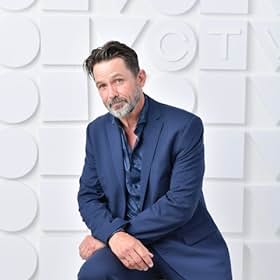
Billy Campbell
- Quincey P. Morris
- (as Bill Campbell)


Avis à la une
"Apocalypse Now" worked due to its hazy, surreal vision of a hellish world. Coppola returned thirteen years later and created a similarly haunting and poetic so-called "masterpiece," a supposed truthful adaptation of Bram Stoker's Dracula tale - when, in fact, the truth is that this movie is no more faithful to Stoker than the (superior) Universal Pictures original.
The hazy film-making is visually satisfying, and some of the special effects are - simply put - amazing. Coppola's backlighting and use of shadows is creative and unique. But, unfortunately, after a while his emphasis on style over content begins to eat away at the film's other strengths - the relationship between the heroine (Winona Ryder) and Dracula (Gary Oldman) is weak. Many story links are completely nonsensical and people appear and disappear at whimsy. The heroine's fiancée (Keanu Reeves) writes to her from Transylvania, asking her to depart at once to marry him; in a matter of one or two scenes she has suddenly traveled a vast distance and is standing at the alter prepared to wed. It seems like Coppola loses a grip on his characters and plotting very early on.
Oldman gives a chilling performance but isn't given very much to do, because he's set aside and the special effects take over. The opening scenes of his battle and his motivation to become the King of the Undead is very enthralling - if Coppola had maintained this mixture of style and content the movie would have been far better.
The casting of the weak Keanu Reeves and Winona Ryder in leading roles harms the impact of the film as well. Reeves sounds like a Californian pothead imitating a Brit; Ryder treats the material as if it is a dramatic, over-the-top theatre rendition; every line she speaks is sickeningly cheesy.
Anthony Hopkins turns in a disappointing performance as the utterly forgettable Van Helsing, who is given very little to do in this particular film apart from show up when convenient and sprout fancy little one-liners, most of them dramatic closers to scenes (e.g. "We are dealing with a demon!", then a cut-away to another scene.) Overall, "Dracula" is a good film and is worth seeing for its visuals alone. It is not, however, the strongest adaptation of Bram Stoker's novel; given the hype surrounding its release in 1992, the completed effort is rather lackluster in the story department.
The hazy film-making is visually satisfying, and some of the special effects are - simply put - amazing. Coppola's backlighting and use of shadows is creative and unique. But, unfortunately, after a while his emphasis on style over content begins to eat away at the film's other strengths - the relationship between the heroine (Winona Ryder) and Dracula (Gary Oldman) is weak. Many story links are completely nonsensical and people appear and disappear at whimsy. The heroine's fiancée (Keanu Reeves) writes to her from Transylvania, asking her to depart at once to marry him; in a matter of one or two scenes she has suddenly traveled a vast distance and is standing at the alter prepared to wed. It seems like Coppola loses a grip on his characters and plotting very early on.
Oldman gives a chilling performance but isn't given very much to do, because he's set aside and the special effects take over. The opening scenes of his battle and his motivation to become the King of the Undead is very enthralling - if Coppola had maintained this mixture of style and content the movie would have been far better.
The casting of the weak Keanu Reeves and Winona Ryder in leading roles harms the impact of the film as well. Reeves sounds like a Californian pothead imitating a Brit; Ryder treats the material as if it is a dramatic, over-the-top theatre rendition; every line she speaks is sickeningly cheesy.
Anthony Hopkins turns in a disappointing performance as the utterly forgettable Van Helsing, who is given very little to do in this particular film apart from show up when convenient and sprout fancy little one-liners, most of them dramatic closers to scenes (e.g. "We are dealing with a demon!", then a cut-away to another scene.) Overall, "Dracula" is a good film and is worth seeing for its visuals alone. It is not, however, the strongest adaptation of Bram Stoker's novel; given the hype surrounding its release in 1992, the completed effort is rather lackluster in the story department.
Excuse me, but I just read a series of reviews by people who are disappointed by the fact that this movie didn't follow the same old script that has been done over and over and over again. They gave a provocative movie a rating of "1" so they could sabotage what most people thought. Go do something else besides writing about films. This is not a perfect movie, but it takes the basic text of the Stoker novel and extrapolates from it. People seem to be reacting tot he sexuality of this. If we go back to the seminal movies, "Nosferatu" being the greatest example, we see that sexual tension dominates these films as well as the books. Dracula has power over people. He can draw women to him. He is not an animal, but he is a sub-human with desires to dominate. Coppola uses this to show his evil intent. Gary Oldman is the most eccentric and wonderful Dracula to come along in years. When did it become written that every Dracula should be the black-caped Bela Lugosi figure that kids still dress up as on Halloween. He is a force to be reckoned with; he is evil; and he is powerful. Remember, people accept the scenes of him sucking the blood out of women without any trouble. Why not an evil abuser of their being? Remember, they are under a spell over which they have no control.
... although I keep remembering that this "modern" tale was filmed 31 years ago.
James V. Hart's script seemed heavily indebted to Fred Saberhagen's The Dracula Tape (1980), which was a re-telling of the events of Bram Stoker's novel from the POV of Dracula, whose POV was missing from the Stoker original. It was also much more favorable towards Dracula, and added a lot of the romantic elements.
One thing that it did get right was having all the actual characters from the original novel. Many of the adaptations removed one or more of the suitors, especially the American Quincy Morris, or age up Dr. Seward, or make him the father of Mina or Lucy. This version did present them as they were in the novel.
Stylistically, it was unusual even for 1992, with Coppola said to be attempting some sort of visual homage to silent and classic film techniques, with some things looking deliberately artificial.
I recall at the time thinking Keanu Reeves was highly miscast, and his awkward performance nearly undid the whole film for me. Anthony Hopkins was coming off his Oscar win for The Silence of the Lambs, and he did seem to have his performance pitched to the rafters. His characterization seemed more in line with the Saberhagen book, where Van Helsing is depicted as more of a religious fanatic with a cruel streak.
The whole enterprise was a cash grab for Coppola who was coming off the relative disappointment of The Godfather Part III. It was a success, and kickstarted a "prestige horror" trend over the next several years, with Mary Shelley's Frankenstein, Wolf, and Interview with the Vampire.
James V. Hart's script seemed heavily indebted to Fred Saberhagen's The Dracula Tape (1980), which was a re-telling of the events of Bram Stoker's novel from the POV of Dracula, whose POV was missing from the Stoker original. It was also much more favorable towards Dracula, and added a lot of the romantic elements.
One thing that it did get right was having all the actual characters from the original novel. Many of the adaptations removed one or more of the suitors, especially the American Quincy Morris, or age up Dr. Seward, or make him the father of Mina or Lucy. This version did present them as they were in the novel.
Stylistically, it was unusual even for 1992, with Coppola said to be attempting some sort of visual homage to silent and classic film techniques, with some things looking deliberately artificial.
I recall at the time thinking Keanu Reeves was highly miscast, and his awkward performance nearly undid the whole film for me. Anthony Hopkins was coming off his Oscar win for The Silence of the Lambs, and he did seem to have his performance pitched to the rafters. His characterization seemed more in line with the Saberhagen book, where Van Helsing is depicted as more of a religious fanatic with a cruel streak.
The whole enterprise was a cash grab for Coppola who was coming off the relative disappointment of The Godfather Part III. It was a success, and kickstarted a "prestige horror" trend over the next several years, with Mary Shelley's Frankenstein, Wolf, and Interview with the Vampire.
Nothing is better than the original. But this movie is a classic in its own way. It shows the story of Dracula in a much darker, sensual and weird way. That really makes you feel the utter strangeness of a world where Dracula exists.
Personally I found the movie a little too strange. Most movies make vampires and werewolves into a fun and exciting thing. But this movie made it into a horror. It did not hide the ugliness of dark beings. Instead it brought out the strangeness of it all, to really make you feel pure unease.
The cast was phenomenal. Keanu Reeves the poor innocent who was fully touched by darkness and managed to escape its grasp. He was so young and yet brilliant. Winona Ryder the dainty, delicately beautiful women who is lost in a love story. Anthony Hopkins who has a small part as Van Helsing, as always is magnificent with his passion and strength. And Gary Oldman as Dracula. He came across so sly and "off". Every time I kept looking at him I thought of johnny Depp. The cast really brings the movie to life.
The film is filled with beautiful sets and costumes. It's well constructed and clearly artful. The scene transitions were annoying as they kept fading into another scene. They did this a lot. But over all an artful classic telling of the horror story Dracula.
Personally I found the movie a little too strange. Most movies make vampires and werewolves into a fun and exciting thing. But this movie made it into a horror. It did not hide the ugliness of dark beings. Instead it brought out the strangeness of it all, to really make you feel pure unease.
The cast was phenomenal. Keanu Reeves the poor innocent who was fully touched by darkness and managed to escape its grasp. He was so young and yet brilliant. Winona Ryder the dainty, delicately beautiful women who is lost in a love story. Anthony Hopkins who has a small part as Van Helsing, as always is magnificent with his passion and strength. And Gary Oldman as Dracula. He came across so sly and "off". Every time I kept looking at him I thought of johnny Depp. The cast really brings the movie to life.
The film is filled with beautiful sets and costumes. It's well constructed and clearly artful. The scene transitions were annoying as they kept fading into another scene. They did this a lot. But over all an artful classic telling of the horror story Dracula.
Coppola's take on one of horror's sacred texts was divisive at the time of release; well, I say divisive ... but I'm the only person I remember loving it. But time plays tricks. It's faithful to the text - at least more than most adaptations; in and of itself that's not necessarily a good or bad thing. But Coppola's high-wire act of excess makes it work brilliantly, and it's aged very well ... who knew that the man who made The Godfather could make a good film?
Hopkins and Reeves excepted (whose idea were their interpretations?), there are some terrific performances, and I seriously doubt if Gary Oldman has ever had more fun as an actor than he does here. The almost entirely in-camera approach to visual effects lends the film an otherworldly, chilling air; there are some dazzlingly brilliant transitions that speak to the film's technical mastery. It's not afraid to be many things; camp, funny, exciting, disturbing, erotic, and romantic, all in the right proportions and at the right times. It's also unafraid to make Dracula himself, ultimately, something of the story's romantic hero and to see the events of the story through the female gaze as much as the male.
Ultimately it's one of those films that's imperfect and all the better for it; it has hopelessly high ambitions, but its failure to reach some of them (but by no means all) is still thrilling. You can't possibly be bored.
Hopkins and Reeves excepted (whose idea were their interpretations?), there are some terrific performances, and I seriously doubt if Gary Oldman has ever had more fun as an actor than he does here. The almost entirely in-camera approach to visual effects lends the film an otherworldly, chilling air; there are some dazzlingly brilliant transitions that speak to the film's technical mastery. It's not afraid to be many things; camp, funny, exciting, disturbing, erotic, and romantic, all in the right proportions and at the right times. It's also unafraid to make Dracula himself, ultimately, something of the story's romantic hero and to see the events of the story through the female gaze as much as the male.
Ultimately it's one of those films that's imperfect and all the better for it; it has hopelessly high ambitions, but its failure to reach some of them (but by no means all) is still thrilling. You can't possibly be bored.
Bande-son
Écoutez un extrait de la bande originale ici et continuez à l'écouter sur Amazon Music.


Le saviez-vous
- AnecdotesPrince Vlad's scream after he drives his sword into the cross is not the voice of Sir Gary Oldman. Lux Interior, lead singer of punk band The Cramps, recorded the scream, and it was dubbed in.
- GaffesElisabeta's eyebrows and eyelids twitch visibly when Prince Vlad stumbles down to view her dead body.
- Versions alternativesBritish video version contains a scene where Jonathan Harker's nipple is licked by one of the female vampires, who then bites it and causes it to bleed. When the film premiered in America this scene was not included.
- ConnexionsEdited into Bram Stoker's Dracula: Deleted and Extended Scenes (2007)
- Bandes originalesLove Song for a Vampire
(from 'Bram Stoker's Dracula')
Produced by Stephen Lipson
Written and Performed by Annie Lennox
Courtesy of BMG Ariola Muenchen GmbH
Meilleurs choix
Connectez-vous pour évaluer et suivre la liste de favoris afin de recevoir des recommandations personnalisées
Détails
- Date de sortie
- Pays d’origine
- Langues
- Aussi connu sous le nom de
- Drácula, de Bram Stoker
- Lieux de tournage
- Sociétés de production
- Voir plus de crédits d'entreprise sur IMDbPro
Box-office
- Budget
- 40 000 000 $US (estimé)
- Montant brut aux États-Unis et au Canada
- 82 522 790 $US
- Week-end de sortie aux États-Unis et au Canada
- 30 521 679 $US
- 15 nov. 1992
- Montant brut mondial
- 215 862 692 $US
- Durée
- 2h 8min(128 min)
- Couleur
- Mixage
- Rapport de forme
- 1.85 : 1
Contribuer à cette page
Suggérer une modification ou ajouter du contenu manquant