[go: up one dir, main page]

    Calendrier de sortiesLes 250 meilleurs filmsLes films les plus populairesRechercher des films par genreMeilleur box officeHoraires et billetsActualités du cinémaPleins feux sur le cinéma indien
    Ce qui est diffusé à la télévision et en streamingLes 250 meilleures sériesÉmissions de télévision les plus populairesParcourir les séries TV par genreActualités télévisées
    Que regarderLes dernières bandes-annoncesProgrammes IMDb OriginalChoix d’IMDbCoup de projecteur sur IMDbGuide de divertissement pour la famillePodcasts IMDb
    OscarsBest Of 2025Holiday Watch GuideGotham AwardsCelebrity PhotosSTARmeter AwardsAwards CentralFestivalsTous les événements
    Né aujourd'huiLes célébrités les plus populairesActualités des célébrités
    Centre d'aideZone des contributeursSondages
Pour les professionnels de l'industrie
  • Langue
  • Entièrement prise en charge
  • English (United States)
    Partiellement prise en charge
  • Français (Canada)
  • Français (France)
  • Deutsch (Deutschland)
  • हिंदी (भारत)
  • Italiano (Italia)
  • Português (Brasil)
  • Español (España)
  • Español (México)
Liste de favoris
Se connecter
  • Entièrement prise en charge
  • English (United States)
    Partiellement prise en charge
  • Français (Canada)
  • Français (France)
  • Deutsch (Deutschland)
  • हिंदी (भारत)
  • Italiano (Italia)
  • Português (Brasil)
  • Español (España)
  • Español (México)
Utiliser l'appli
  • Distribution et équipe technique
  • Avis des utilisateurs
  • Anecdotes
  • FAQ
IMDbPro

Entre le ciel et l'enfer

Titre original : Tengoku to jigoku
  • 1963
  • Tous publics
  • 2h 23min
NOTE IMDb
8,4/10
69 k
MA NOTE
POPULARITÉ
2 224
9
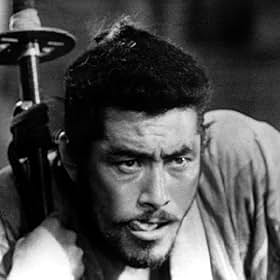
Toshirô Mifune, Kenjirô Ishiyama, Kyôko Kagawa, Tatsuya Mihashi, and Tatsuya Nakadai in Entre le ciel et l'enfer (1963)
Regarder Trailer [OVS]
Lire trailer3:39
1 Video
99+ photos
JaponaisEnquêtes policièresCriminelDrameMystèreThriller

À Yokohama, un malfaiteur kidnappe un enfant, qu'il prend pour le fils d'un industriel japonais. Il s'agit en fait du fils de son chauffeur. Le commissaire Tokura est chargé de l'affaire.À Yokohama, un malfaiteur kidnappe un enfant, qu'il prend pour le fils d'un industriel japonais. Il s'agit en fait du fils de son chauffeur. Le commissaire Tokura est chargé de l'affaire.À Yokohama, un malfaiteur kidnappe un enfant, qu'il prend pour le fils d'un industriel japonais. Il s'agit en fait du fils de son chauffeur. Le commissaire Tokura est chargé de l'affaire.

  • Réalisation
    • Akira Kurosawa
  • Scénaristes
    • Hideo Oguni
    • Ryûzô Kikushima
    • Eijirô Hisaita
  • Stars
    • Toshirô Mifune
    • Yutaka Sada
    • Tatsuya Nakadai
  • Voir les informations de production sur IMDbPro
  • NOTE IMDb
    8,4/10
    69 k
    MA NOTE
    POPULARITÉ
    2 224
    9
    • Réalisation
      • Akira Kurosawa
    • Scénaristes
      • Hideo Oguni
      • Ryûzô Kikushima
      • Eijirô Hisaita
    • Stars
      • Toshirô Mifune
      • Yutaka Sada
      • Tatsuya Nakadai
    • 223avis d'utilisateurs
    • 114avis des critiques
    • 90Métascore
  • Voir les informations de production sur IMDbPro
  • Film noté 71 parmi les meilleurs
    • Récompenses
      • 3 victoires et 3 nominations au total

    Vidéos1

    Trailer [OVS]
    Trailer 3:39
    Trailer [OVS]

    Photos112

    Voir l'affiche
    Voir l'affiche
    Voir l'affiche
    Voir l'affiche
    Voir l'affiche
    Voir l'affiche
    Voir l'affiche
    + 105
    Voir l'affiche

    Casting principal53

    Modifier
    Toshirô Mifune
    Toshirô Mifune
    • Kingo Gondô
    Yutaka Sada
    Yutaka Sada
    • Aoki - the Chauffeur
    Tatsuya Nakadai
    Tatsuya Nakadai
    • Chief Detective Tokura
    Kyôko Kagawa
    Kyôko Kagawa
    • Reiko Gondô
    Tatsuya Mihashi
    Tatsuya Mihashi
    • Kawanishi - Gondô's Secretary
    Isao Kimura
    • Detective Arai
    Kenjirô Ishiyama
    Kenjirô Ishiyama
    • Chief Detective 'Bos'n' Taguchi
    Takeshi Katô
    Takeshi Katô
    • Detective Nakao
    Takashi Shimura
    Takashi Shimura
    • Chief of Investigation Section
    Jun Tazaki
    Jun Tazaki
    • Kamiya - National Shoes Publicity Director
    Nobuo Nakamura
    Nobuo Nakamura
    • Ishimaru - National Shoes Design Department Director
    Yûnosuke Itô
    Yûnosuke Itô
    • Baba - National Shoes Executive
    Tsutomu Yamazaki
    Tsutomu Yamazaki
    • Ginjirô Takeuchi - Medical Intern
    Minoru Chiaki
    Minoru Chiaki
    • First Reporter
    Eijirô Tôno
    Eijirô Tôno
    • Factory Worker
    Masao Shimizu
    Masao Shimizu
    • Prison Warden
    Masahiko Shimazu
    Masahiko Shimazu
    • Shin'ichi Aoki
    Toshio Egi
    • Jun Gondô
    • Réalisation
      • Akira Kurosawa
    • Scénaristes
      • Hideo Oguni
      • Ryûzô Kikushima
      • Eijirô Hisaita
    • Toute la distribution et toute l’équipe technique
    • Production, box office et plus encore chez IMDbPro

    Avis des utilisateurs223

    8,469.4K
    1
    2
    3
    4
    5
    6
    7
    8
    9
    10

    Résumé

    Reviewers say 'High and Low' is acclaimed for its moral dilemmas, class disparity, and human nature complexities. Kurosawa's direction, storytelling, and cinematography are praised. Mifune and Nakadai's performances are noted for depth and realism. The suspenseful narrative, blending moral dilemma and police procedural, is commended. Social commentary on Japan's economic changes and Western influence is relevant and insightful. However, some find the pacing slow and the ending ambiguous. Overall, it's a significant work in Kurosawa's versatile filmography.
    Généré par IA à partir de textes des commentaires utilisateurs

    Avis à la une

    10Quinoa1984

    If you like ransom/police storiesmysteries, and have interest in Kurosawa &/or Mifune, check it out at least once

    High and Low, like Yojimbo and Throne of Blood, combines elements to create something special while seeming rather routine- while Yojimbo seems like a bad-ass samurai flick, it has the ingredients of a western and satire, and Throne of Blood is a rather faithful, strange adaptation of Macbeth in the guise of a warlord/samurai tale, High and Low does a similar method. Akira Kurosawa, a filmmaker who gets film buff's ears lit up at the mere mention of him, can usually be counted on to keep a film interesting even if it may not be entertaining to some of the crowd that likes a section of his movies or another (there's usually a split between his samurai/medieval tales and epics, and his dramas about the tragedies of ordinary people).

    Here he finds a middle ground- the story is taken from a hard-boiled detective novel, the kind you could probably buy for a quarter or fifty cents in the old days- as he tells of two stories interconnected at the hip, both with detail a commercial Hollywood director would brush off. The first is of businessman Gondo (Toshiro Mifune, with his usual bravura presence, but with enough nuanced and quiet moments for two movies), who is about to close a deal to get the shoe company he's worked for for years, when he gets a phone call. There's been a kidnapping- not his son, but his chauffeur's by default. Backed into a corner without options, he gets together 30 million he really can't afford, and gives it to the kidnapper(s). The police, meanwhile, are not about to give up, and start digging for clues with an in-depth investigation that goes to probe every possibility: the chauffeur's son used as a partial witness with drawings; a car; a trolly car; all this leads to nothing and everything, leading to a third act that's as riveting as the first two.

    Although the acting by everyone involved, cop characters included (Tatsuya Nakadai and Yutaka Sada are surprisingly good, the later even with limited screen time), Kurosawa keeps the film deliberately paced. Another director (more modern perhaps, but maybe not) might cut to the chase quicker, cutting past most of the investigation details, and even the emotional high-points in the first act. But Kurosawa is as interested in the nature and details of what the police do as he is with the compositions, which are constructed and framed as only an artist would do. The film creates a superb juxtaposition as well- Mifune's Gondo is enraged about what will happen with his money, but his morals stand above everything in his business affairs. Meanwhile, the cops here aren't cruel and unforgiving, but professionals trying to crack a case that the audience can hang onto. And then when the "seedy" underbelly of the city comes into view, it's looked on with at least some compassion by Kurosawa, and it's not too over-the-top.

    If all your looking for is thrill after thrill, like in Sanjuro or even Hidden Fortress, look elsewhere- the violence, by the way, is kept to a low level for this one (it'd even be quite suitable for kids, if they don't mind the subtitles and quintessential intensity in the Japanese style of film acting). But for tight, often gripping suspense in the IL' 'whodunit' mystery tale, this is a keeper. Manipulative, perhaps, yet in the hands of a master it's an exemplary deal. And, in the end, it even provides a sad, existential kind of conclusion as good and evil become blurred as the kidnapper looks through glass at the disillusioned Gondo. It's one of the great endings in world cinema. A+
    10jemmytee

    Kurosawa at his best and most subtle

    This is one of those rare movies I had to watch twice to catch all the meaning and beauty of its construction, that is how sleek and polished this film is. The storyline is deceptively simple -- a businessman named Gondo is about to take control of the company he's worked in for years when he's told his son's been kidnapped. It turns out the kidnappers got his chauffeur's son by mistake, but they still want him to pay the ransom. If he does, he will be financially ruined. If he doesn't, he will be reviled. Which will he choose? This makes up the first half of the movie, culminating in a breathtaking scene on one of Japan's bullet trains. The second half is the police search for the kidnapper/murderer and how a case is built that will take him to the gallows.

    Now this sounds like your typical cop thriller, the type Hollywood churns out with one hand tied behind its back, but Kurosawa makes it into a meditation on honor and decency, and on how one's choices can lead one to Heaven or to Hell in little steps that seem to be taking you nowhere. Gondo is an honorable man who worked hard to built himself a life of wealth and power. This is no small feat, considering Japan is not known as a society where one can easily change one's station in life, so this adds to his dilemma; he will not only lose his fortune, he will also lose his hard-gained power and respect in the business community, all for a child that is not even his. And not only will he lose but his own wife and son will, as well. But to NOT pay the ransom means he will lose everything in him that is human and decent, and his wife and son will suffer from that, too.

    This is a big deal -- not just in Japanese society but in the world as a whole. It doesn't matter if you live in Nepal or Kenya or Argentina or New York City, when faced with the choice of losing your position in your society or losing your soul, which would you choose? And would you still make that choice knowing that even if the cops catch the bad guy, it will make no difference in your own circumstances? Just a glance at some of the recent stock scandals gives you a good idea of where most people fall in their choices. And even Ed McBain, upon whose novel this movie is based, knew how hard it would be to give up your world for your spirit; his businessman refuses to pay the ransom.

    To me, this movie is Kurosawa at his best and most subtle. Every shot is composed and measured and done just right. Not all films have to have bombs exploding and chase scenes and people going "Boo!" to affect you; sometimes just a man riding on a train en route to what he knows will be a catastrophe to him and his world is enough to make you thank the heavens for a story well told.
    10dorlago

    Intense and Highly Entertaining

    "High and Low" could be considered two movies. The first, "High" takes place in Kingo Gondo's (Mifune's) hilltop mansion. The crime occurs and what follows in the next hour is one of the most meticulous and brilliantly constructed film segments I have ever seen! The first half of the film could almost be considered theatre. It is static and deceptively simple but.....so intense! The ensemble acting is superb with Mifune a stand out as usual! Connecting these two movies is the train sequence. After the calculated intensity of the first part this scene comes at you like a sledgehammer! These four or five minutes are magnificent! So very exciting and so very quick it leaves you drained when it ends! "Low" begins with the hunt for the criminal. Only "Stray Dog" comes closer to capturing the cop's decent into hell. This last part of the film is fast and furious. We are no longer an observer. We have become part of the chase. First, we know who the criminal is. The police do not know and what follows is a fascinating puzzle being put together before our eyes! The last scene in the film is unexpected, deeply disturbing and left me numb and staring at the TV screen after the film had ended. Like Gondo we are left with the answers that we did not want to hear.
    10theorbys

    About the best police procedural you're ever likely to see

    Toshiro Mifune is a businessman in a Japan that is on the brink of the Economic Miracle of the Sixties. He is an honest man who loves his job as a shoe factory exec and is in a battle for corporate control against a pack of hyenas. He has mortgaged and borrowed and scraped to raise the money for a surprise coup when his son is kidnapped. But there is a major plot twist: it is not HIS son that was taken but his son's playmate, the chauffeur's kid and the ransom demanded is astronomical. If he pays he will lose everything he has worked so hard for, but can he just sacrifice the chauffeur's child because it is not his? From here on High and Low (perhaps better translated as Heaven and Hell) is a police procedural based on an Ed McBain 87th precinct story.

    Watching this film I had a rare, almost unique, experience. I saw it on a fairly screen tv, letterboxed, in a darkened room. All the preceding conditions helped contribute to put me into an objective/subjective middle ground where I had the feeling of looking through a special visor that allowed me to see the world by means of an almost perfect film as if through the eyes of a cinematic genius who is in total command of his artistic means and in total command of his subject matter. I think the key to this experience is that while High and Low is interesting as human drama, it is yet peculiarly uninvolving emotionally but very involving cinematically. These distances are important in Kurosawa's films (he is high on my list of top ten directors but after Welles). In IKIRU you probably could not be more deeply involved emotionally, while in RAN there is nothing but relentless distance.

    I think a good companion film to watch with this would be Kurosawa's earlier, looser, but much more individually tense, police film STRAY DOG (this time Mifune is the cop)
    10ross_d

    The masterpiece of the "police procedural" genre

    This is one of the outstanding detective films. For me, the most remarkable feature of this film is its architecture - the beginning is a long, static set piece taking place in one room. however, about a third of the way through the movie, it erupts into action, showing the resourcefulness of a largely blue collar police force tracking a lone sociopathic criminal.

    The film is a fascinating portrait of '60's Japan, but at the same time reveals its roots in Ed McBain's _King's Ransom_, from which it was taken.

    This is one of those films which doesn't seem to age after several viewings. Especially affecting are the police detectives, whose proletarian roots contrast sharply with the cold insensitivity of the powerful corporate executives. But the police find a hero in Gondo, the rebellious general manager who stakes his entire fortune to rescue his chauffeur's son. The admiration that the police detectives feel for him is one of the key emotions in the film.

    Vous aimerez aussi

    Dans les yeux de Tammy Faye
    6,6
    Dans les yeux de Tammy Faye
    Le Blues de Ma Rainey
    6,9
    Le Blues de Ma Rainey
    Mank
    6,8
    Mank
    West Side Story
    7,1
    West Side Story
    Belfast
    7,2
    Belfast
    Judas and the Black Messiah
    7,4
    Judas and the Black Messiah
    The Power of the Dog
    6,8
    The Power of the Dog
    Minari
    7,4
    Minari
    La Méthode Williams
    7,5
    La Méthode Williams
    Nomadland
    7,3
    Nomadland
    Sound of Metal
    7,7
    Sound of Metal
    Navalny
    7,8
    Navalny

    Centres d’intérêt connexes

    Hidetoshi Nishijima and Tôko Miura in Drive My Car (2021)
    Japonais
    Ice-T, Mariska Hargitay, Danny Pino, and Kelli Giddish
    Enquêtes policières
    James Gandolfini, Edie Falco, Sharon Angela, Max Casella, Dan Grimaldi, Joe Perrino, Donna Pescow, Jamie-Lynn Sigler, Tony Sirico, and Michael Drayer in Les Soprano (1999)
    Criminel
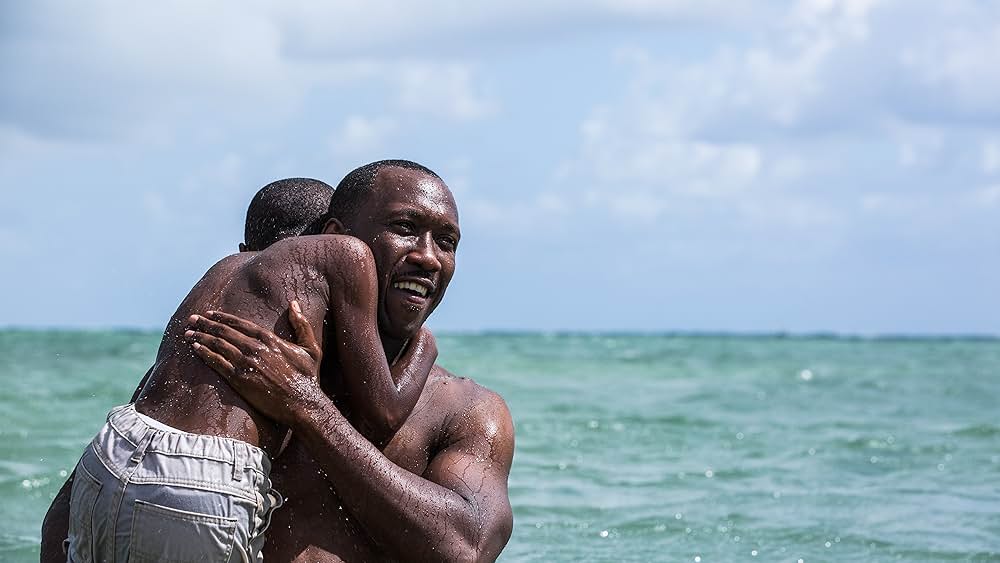
    Naomie Harris, Mahershala Ali, Janelle Monáe, André Holland, Herman Caheej McGloun, Edson Jean, Alex R. Hibbert, and Tanisha Cidel in Moonlight (2016)
    Drame
    Jack Nicholson and Faye Dunaway in Chinatown (1974)
    Mystère
    Cho Yeo-jeong in Parasite (2019)
    Thriller

    Histoire

    Modifier

    Le saviez-vous

    Modifier
    • Anecdotes
      After the film was released, kidnappings were on the rise in Japan. Akira Kurosawa himself had received threats for the kidnapping of his own daughter, Kazuko Kurosawa. She quoted him as once saying to her "With High and Low, I wanted to inspire tougher sentences on kidnappers. Instead, I was criticized for their increase."
    • Gaffes
      The story occurs in midsummer. This implies that Mt. Fuji has no snow. Since the location filming was carried out in winter season, the top of Mt. Fuji is very white. Some film critics mention that this is almost the only mistake they can find in the film.
    • Citations

      Kingo Gondo: Why should you and I hate each other?

      Ginjirô Takeuchi, medical intern: I don't know. I'm not interested in self-analysis. I do know my room was so cold in winter and so hot in summer I couldn't sleep. Your house looked like heaven, high up there. That's how I began to hate you.

    • Connexions
      Featured in Tsukuru to iu koto wa subarashii! Kurosawa Akira: Korega Kuroswa sasupensu da (2003)
    • Bandes originales
      The Magic Begins
      (uncredited)

      Performed by Yumi Shirakawa

    Meilleurs choix

    Connectez-vous pour évaluer et suivre la liste de favoris afin de recevoir des recommandations personnalisées
    Se connecter

    FAQ18

    • How long is High and Low?Alimenté par Alexa

    Détails

    Modifier
    • Date de sortie
      • 9 juin 1976 (France)
    • Pays d’origine
      • Japon
    • Langue
      • Japonais
    • Aussi connu sous le nom de
      • Le paradis et l'enfer
    • Lieux de tournage
      • Toho Studios, Tokyo, Japon(Studio)
    • Sociétés de production
      • Toho
      • Kurosawa Production Co.
    • Voir plus de crédits d'entreprise sur IMDbPro

    Box-office

    Modifier
    • Budget
      • 230 000 000 JPY (estimé)
    • Montant brut aux États-Unis et au Canada
      • 46 808 $US
    • Week-end de sortie aux États-Unis et au Canada
      • 15 942 $US
      • 28 juil. 2002
    • Montant brut mondial
      • 64 503 $US
    Voir les infos détaillées du box-office sur IMDbPro

    Spécifications techniques

    Modifier
    • Durée
      • 2h 23min(143 min)
    • Couleur
      • Black and White
    • Rapport de forme
      • 2.35 : 1

    Contribuer à cette page

    Suggérer une modification ou ajouter du contenu manquant
    • En savoir plus sur la contribution
    Modifier la page

    Découvrir

    Récemment consultés

    Activez les cookies du navigateur pour utiliser cette fonctionnalité. En savoir plus
    Obtenir l'application IMDb
    Identifiez-vous pour accéder à davantage de ressourcesIdentifiez-vous pour accéder à davantage de ressources
    Suivez IMDb sur les réseaux sociaux
    Obtenir l'application IMDb
    Pour Android et iOS
    Obtenir l'application IMDb
    • Aide
    • Index du site
    • IMDbPro
    • Box Office Mojo
    • Licence de données IMDb
    • Salle de presse
    • Annonces
    • Emplois
    • Conditions d'utilisation
    • Politique de confidentialité
    • Your Ads Privacy Choices
    IMDb, une société Amazon

    © 1990-2025 by IMDb.com, Inc.