NOTE IMDb
7,7/10
37 k
MA NOTE


M. Dunson mène un élevage de bétail, aboutissement de plus de 14 ans de travail, jusqu'à sa destination dans le Missouri. Mais son comportement abusif au cours du voyage provoque une mutiner... Tout lireM. Dunson mène un élevage de bétail, aboutissement de plus de 14 ans de travail, jusqu'à sa destination dans le Missouri. Mais son comportement abusif au cours du voyage provoque une mutinerie, dirigée par son fils adoptif.M. Dunson mène un élevage de bétail, aboutissement de plus de 14 ans de travail, jusqu'à sa destination dans le Missouri. Mais son comportement abusif au cours du voyage provoque une mutinerie, dirigée par son fils adoptif.
- Réalisation
- Scénaristes
- Stars
- Nommé pour 2 Oscars
- 2 victoires et 5 nominations au total


Coleen Gray
- Fen
- (as Colleen Gray)

Harry Carey
- Mr. Melville
- (as Harry Carey Sr.)


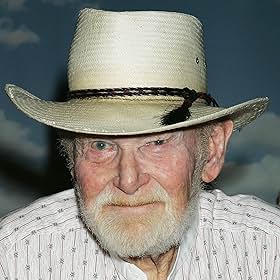

Chief Yowlachie
- Quo
- (as Chief Yowlatchie)


Hal Taliaferro
- Old Leather
- (as Hal Talliaferro)

John Bose
- Dunston Rider
- (non crédité)
Buck Bucko
- Cowhand
- (non crédité)

Avis à la une
In the pantheon of great performances by John Wayne, Red River ranks as one of the great ones, probably in the top five of his films. It's what the publicity folks mean when they talk about epic westerns.
John Wayne is a driven man, he's got to get that gigantic herd of cattle to market in Missouri or face ruin. He's not going to be selling them in Texas at carpetbagger prices so he's putting together the biggest, longest cattle drive on record to get to the railroad terminus in Missouri. He does it with the able assistance of his stepson Montgomery Clift newly returned from the Civil War.
A prologue to the main film shows what happened to Wayne years before. He left a wagon train going to California with good friend Walter Brennan and later that train is massacred with Wayne's fiancé Coleen Gray along with it. On the way to Texas, Wayne and Brennan pick up Mickey Kuhn who is playing a younger version of Monty Clift. They settle in Texas and Wayne puts together the biggest cattle ranch in the state which is where the main film starts.
Wayne and Clift play beautifully off against each other. Father and surrogate son, first working together and then having a big difference of opinion on the cattle drive. Clift started a film career in Red River playing sensitive people who you can only trod on just so long before they take action. You can see the inner workings of such later Clift roles as Robert E. Lee Prewitt and Noah Ackerman. Monty made a grand screen debut. And it was his debut, Red River was filmed first, but held up in release and Clift's The Search was released first to the public.
John Wayne had one of the best faces for movie closeups ever. In his best performances, top directors like John Ford, Howard Hawks, and Bill Wellman realized this. He has a few in this film and they tell the audience more about what's going on inside this man than ten pages of dialog.
With Joanne Dru, Howard Hawks tries to repeat the magic he had with Lauren Bacall in To Have and Have Not. Joanne is no Bacall, but she's good and had a pretty good career on her own. Her scenes with both Wayne and Clift have some of the same bite that Bacall's do with Bogey.
Dimitri Tiomkin's score deserves star billing right up there with the human cast. It is one of the great movie scores of all time period. let alone in the western genre. For me I've always noticed the similarity with the cattle drive beginning with the great use of Tiomkin's music and what Cecil B. DeMille did in the sound version of Ten Commandments as Charlton Heston tells the Hebrew children, he's takin' 'em to Canaan with Elmer Bernstein's score in the background as DeMille's cast of thousands moves out. I've often wondered whether DeMille copied Hawks, or Hawks was influenced by DeMille's silent Ten Commandments.
Red River is a must, for John Wayne fans, for Monty Clift fans, for fans of both and of great movie music like I am.
John Wayne is a driven man, he's got to get that gigantic herd of cattle to market in Missouri or face ruin. He's not going to be selling them in Texas at carpetbagger prices so he's putting together the biggest, longest cattle drive on record to get to the railroad terminus in Missouri. He does it with the able assistance of his stepson Montgomery Clift newly returned from the Civil War.
A prologue to the main film shows what happened to Wayne years before. He left a wagon train going to California with good friend Walter Brennan and later that train is massacred with Wayne's fiancé Coleen Gray along with it. On the way to Texas, Wayne and Brennan pick up Mickey Kuhn who is playing a younger version of Monty Clift. They settle in Texas and Wayne puts together the biggest cattle ranch in the state which is where the main film starts.
Wayne and Clift play beautifully off against each other. Father and surrogate son, first working together and then having a big difference of opinion on the cattle drive. Clift started a film career in Red River playing sensitive people who you can only trod on just so long before they take action. You can see the inner workings of such later Clift roles as Robert E. Lee Prewitt and Noah Ackerman. Monty made a grand screen debut. And it was his debut, Red River was filmed first, but held up in release and Clift's The Search was released first to the public.
John Wayne had one of the best faces for movie closeups ever. In his best performances, top directors like John Ford, Howard Hawks, and Bill Wellman realized this. He has a few in this film and they tell the audience more about what's going on inside this man than ten pages of dialog.
With Joanne Dru, Howard Hawks tries to repeat the magic he had with Lauren Bacall in To Have and Have Not. Joanne is no Bacall, but she's good and had a pretty good career on her own. Her scenes with both Wayne and Clift have some of the same bite that Bacall's do with Bogey.
Dimitri Tiomkin's score deserves star billing right up there with the human cast. It is one of the great movie scores of all time period. let alone in the western genre. For me I've always noticed the similarity with the cattle drive beginning with the great use of Tiomkin's music and what Cecil B. DeMille did in the sound version of Ten Commandments as Charlton Heston tells the Hebrew children, he's takin' 'em to Canaan with Elmer Bernstein's score in the background as DeMille's cast of thousands moves out. I've often wondered whether DeMille copied Hawks, or Hawks was influenced by DeMille's silent Ten Commandments.
Red River is a must, for John Wayne fans, for Monty Clift fans, for fans of both and of great movie music like I am.
From 1939 to 1948, two major Westerns done with taste and skill and with an eye to beauty could be mentioned: John Ford's "Stagecoach," and Howard Hawks' "Red River."
"Red River" is a great adventure Western considered as the very best among all Westerns... But could we compared it to Ford's splendidly filmed "Wagon Master"? John Ford maintains his shooting eye at a certain distance while Howard Hawks keeps it nearby... But both are skilled directors of a bunch of great movies
Ford is closer to Western movies, and Hawks to other genre... Ford treats his Western characters as people behave... Hawks displays it in vivid adventure... In "Red River," "Rio Bravo," and "The Big Sky" Howard Hawks is far from the magnitude of Ford's "The Searchers." Under Ford's instruction, John Wayne is fluent and moderate, refined in conduct and manners as in "The Quiet Man." With Hawks, Wayne's character prevails differential tendency toward passion and fury...
It is soon evident that the cattle boss is tough to the point of obsession It could be argued that only men of this spirit could have handled and survived the first pioneering cattle drives One of the drovers (John Ireland) wants to make for Abilene but gets no change out of Wayne When the cattle stampede Wayne goes to 'gun-whip' one of the hands, Clift intervenes It was then evident that Wayne was going to drive his men just as hard as he intends to drive the cattle
"Red River" is a Western just as much concerned with human relationships and their tensions as with spectacle and actiona hallmark of Hawks' films and this element is introduced when the pair meet up with a boy leading a cow The boy confirms the wagon-train massacre, and the boy and the cow from then on are included in the partnership This is not only a key-point of the narrative but also a highly symbolic moment
For some years Garfield was the only screen rebel... But in Clift's appearance in "Red River," another rebel was born In "Red River," Clift plays the adopted son who opposes his father's domineering attitudes and behavior towards himself and also towards the cowhands who work for them on the drive to market The struggle between father and adopted son, compels delighted interest... Dunson's unfeeling hardhearted style remembers us Captain Bligh in "Mutiny on the Bounty." In the beginning of the film we had admiration for Wayne's persona... We concluded finding him unfriendly, unconscious, unacceptable and faulty... Clift wins our sympathy!
Clift was the withdrawn, introverted man who quietly maintains his integrity as he resists all pressures These qualities were summed up in the words of Private Prewitt in "From Here to Eternity" probably Clift's finest rebel role!
"Red River" will remain a film with a unique flavor It has, and will continue to have, its own special niche among honored Westerns
With two Academy Award Nomination for Writing, splendid music score by Dmitri Tomkin and excellent acting including the supporting cast, the film had all the concepts of Howard Hawks' quality: vigor in action, reality as opposed to emotions and a faculty of scale...
"Red River" is a great adventure Western considered as the very best among all Westerns... But could we compared it to Ford's splendidly filmed "Wagon Master"? John Ford maintains his shooting eye at a certain distance while Howard Hawks keeps it nearby... But both are skilled directors of a bunch of great movies
Ford is closer to Western movies, and Hawks to other genre... Ford treats his Western characters as people behave... Hawks displays it in vivid adventure... In "Red River," "Rio Bravo," and "The Big Sky" Howard Hawks is far from the magnitude of Ford's "The Searchers." Under Ford's instruction, John Wayne is fluent and moderate, refined in conduct and manners as in "The Quiet Man." With Hawks, Wayne's character prevails differential tendency toward passion and fury...
It is soon evident that the cattle boss is tough to the point of obsession It could be argued that only men of this spirit could have handled and survived the first pioneering cattle drives One of the drovers (John Ireland) wants to make for Abilene but gets no change out of Wayne When the cattle stampede Wayne goes to 'gun-whip' one of the hands, Clift intervenes It was then evident that Wayne was going to drive his men just as hard as he intends to drive the cattle
"Red River" is a Western just as much concerned with human relationships and their tensions as with spectacle and actiona hallmark of Hawks' films and this element is introduced when the pair meet up with a boy leading a cow The boy confirms the wagon-train massacre, and the boy and the cow from then on are included in the partnership This is not only a key-point of the narrative but also a highly symbolic moment
For some years Garfield was the only screen rebel... But in Clift's appearance in "Red River," another rebel was born In "Red River," Clift plays the adopted son who opposes his father's domineering attitudes and behavior towards himself and also towards the cowhands who work for them on the drive to market The struggle between father and adopted son, compels delighted interest... Dunson's unfeeling hardhearted style remembers us Captain Bligh in "Mutiny on the Bounty." In the beginning of the film we had admiration for Wayne's persona... We concluded finding him unfriendly, unconscious, unacceptable and faulty... Clift wins our sympathy!
Clift was the withdrawn, introverted man who quietly maintains his integrity as he resists all pressures These qualities were summed up in the words of Private Prewitt in "From Here to Eternity" probably Clift's finest rebel role!
"Red River" will remain a film with a unique flavor It has, and will continue to have, its own special niche among honored Westerns
With two Academy Award Nomination for Writing, splendid music score by Dmitri Tomkin and excellent acting including the supporting cast, the film had all the concepts of Howard Hawks' quality: vigor in action, reality as opposed to emotions and a faculty of scale...
Dimitri Tiomkin's thunderous score sets the tone for this rousing story of cowboy ranchers in nineteenth century Texas headed north, with a thunderous herd of cattle in tow. It's the archetypal story of the American West, with its strong, ethical male leader, Thomas Dunson (John Wayne), and his pursuit of a big dream, set in an era when men were men, times were tough, hardships were inevitable, guns ruled, and Native Americans were the bad guys. What a saga ...
What makes "Red River" such a grand adventure is its high quality. Its story is simple, direct, exciting, and well told, with complex characters, interesting and sympathetic because they show weakness as well as strength. Dunson is a good man, but he's stubborn and headstrong. His semi-adopted son, Matt (Montgomery Clift), is good with a gun but a little softhearted. Dunson's chief sidekick is Groot (Walter Brennan), a cantankerous old buzzard who has problems with his teeth.
It's the relationship between these three men that is the heart and soul of "Red River". Trouble ensues along the way, you can be sure. And how that trouble unfolds and plays out presents viewers with engaging human drama, and humor, centered on these three main characters. The lonesome High Plains, with all its inherent risks, adds grandeur to the epic story.
At strategic points in the film, the page of a book appears on screen with text that briefly summarizes upcoming events. It's like we, the viewers, are reading a book about some long ago trailblazers. It's a technique that could have been intrusive. But here, it is handled with such finesse that it actually helps the narrative, by functioning as a transition from one sequence to the next.
The acting is fine. John Wayne is more than convincing as Dunson. Walter Brennan is characteristically funny. And Montgomery Clift is terrific. Had he maintained his looks, and if real-life circumstances not intervened, Monty could have been one of the truly top actors through at least the 50s and 60s.
If the film has a weakness, it might be the cinematography. Not often, but at times, the actors appear to be standing in front of a canvas, an effect that renders a shallow depth of field. Maybe this was the result of technical limitations of photography at the time the film was made.
There are few film westerns that can compare in quality with "Red River". And I don't know of any other cinematic cattle drives that are this good. So, the next time you herd your cattle to market, this is the film to watch. Even if you have no cattle, "Red River" is still a wonderfully entertaining cinematic experience.
What makes "Red River" such a grand adventure is its high quality. Its story is simple, direct, exciting, and well told, with complex characters, interesting and sympathetic because they show weakness as well as strength. Dunson is a good man, but he's stubborn and headstrong. His semi-adopted son, Matt (Montgomery Clift), is good with a gun but a little softhearted. Dunson's chief sidekick is Groot (Walter Brennan), a cantankerous old buzzard who has problems with his teeth.
It's the relationship between these three men that is the heart and soul of "Red River". Trouble ensues along the way, you can be sure. And how that trouble unfolds and plays out presents viewers with engaging human drama, and humor, centered on these three main characters. The lonesome High Plains, with all its inherent risks, adds grandeur to the epic story.
At strategic points in the film, the page of a book appears on screen with text that briefly summarizes upcoming events. It's like we, the viewers, are reading a book about some long ago trailblazers. It's a technique that could have been intrusive. But here, it is handled with such finesse that it actually helps the narrative, by functioning as a transition from one sequence to the next.
The acting is fine. John Wayne is more than convincing as Dunson. Walter Brennan is characteristically funny. And Montgomery Clift is terrific. Had he maintained his looks, and if real-life circumstances not intervened, Monty could have been one of the truly top actors through at least the 50s and 60s.
If the film has a weakness, it might be the cinematography. Not often, but at times, the actors appear to be standing in front of a canvas, an effect that renders a shallow depth of field. Maybe this was the result of technical limitations of photography at the time the film was made.
There are few film westerns that can compare in quality with "Red River". And I don't know of any other cinematic cattle drives that are this good. So, the next time you herd your cattle to market, this is the film to watch. Even if you have no cattle, "Red River" is still a wonderfully entertaining cinematic experience.
Fourteen years ago Thomas Dunson entered Texas across Red River with two head of cattle, his trail hand, and a young boy, Matt Garth, who survived an Indian attack on a wagon train that killed Dunson's sweetheart. After years of development he is now head of a ranch and is preparing to drive his head of thousands of cattle up to Missouri for sale, despite the perils. However Dunson's brutal leadership style bucks up against the more peaceful Matt, leading to a rebellion and a splitting of the ways between Dunson and his adopted son.
With an early scene establishing both Dunson's methods (taking land by force) and the source of much of his future bitterness and rage, this film sets itself out to be a real good character piece and pretty much manages to do it. The plot sweeps across 14 years but doesn't suffer for it. The main plot device is the cattle drive, which is depicted with affection here, however the main story is the conflict between Dunson and Matt's methods and views on man management. This aspect is not given quite as much time as I had hoped and tends to be over shadowed by the scale of the cattle drive itself however this is still good.
The weakest point here is the romance which feels tacked on at the end. Not only does it feel unnecessary but it doesn't really work very well either. To make matters worse when the conflict between Dunson and Matt manifests itself physically, it is devalued by the involvement of Tess somewhat. Wayne's leading man is strong and is a good performance considering how unpopular he is as a character. Clift gives a balanced performance and stands up well alongside the Duke. The support cast is full of western favourites and does well to fill the story out with colour, comic relief from Brennan's chuck wagon driver is great fun.
Overall this is a good western that I felt didn't quite reach it's full potential as a film. It could have gone further with the battle of wills between the characters but instead the cattle drive takes the lion's share of screen time. Having said that, there is still plenty to enjoy with both the character clashes and the perils of the cattle drive itself.
With an early scene establishing both Dunson's methods (taking land by force) and the source of much of his future bitterness and rage, this film sets itself out to be a real good character piece and pretty much manages to do it. The plot sweeps across 14 years but doesn't suffer for it. The main plot device is the cattle drive, which is depicted with affection here, however the main story is the conflict between Dunson and Matt's methods and views on man management. This aspect is not given quite as much time as I had hoped and tends to be over shadowed by the scale of the cattle drive itself however this is still good.
The weakest point here is the romance which feels tacked on at the end. Not only does it feel unnecessary but it doesn't really work very well either. To make matters worse when the conflict between Dunson and Matt manifests itself physically, it is devalued by the involvement of Tess somewhat. Wayne's leading man is strong and is a good performance considering how unpopular he is as a character. Clift gives a balanced performance and stands up well alongside the Duke. The support cast is full of western favourites and does well to fill the story out with colour, comic relief from Brennan's chuck wagon driver is great fun.
Overall this is a good western that I felt didn't quite reach it's full potential as a film. It could have gone further with the battle of wills between the characters but instead the cattle drive takes the lion's share of screen time. Having said that, there is still plenty to enjoy with both the character clashes and the perils of the cattle drive itself.
I read quite a few references to the ending and how it should have been an "unhappy " one. The screenwriter, Borden Chase, was also very unhappy with it. The original ending was The Duke's death. Hawks changed the ending and Chase never spoke to him again.
Mr. Chase was married in 1920 to my Grandmother, Lillian Doran. But, that is another story!



Le saviez-vous
- AnecdotesHoward Hawks shot the beginning of the cattle drive in close-ups of each of the principal cowhands because he felt tight shots would be needed to help the audience keep all the characters straight in their minds. To that end, he also gave them all different kinds of hats, including a derby. Montgomery Clift used Hawks' own hat, which was given to him by Gary Cooper. Cooper had imparted a weather-beaten look to the hat by watering it every night. "Spiders built nests in it," Hawks said. "It looked great."
- GaffesWhen the Mexicans ride up and Dunson asks them the name of the river, they reply without hesitation, "Rio Grande." The river has always been called "Rio Bravo" in Mexico, which is what they would have answered.
- Crédits fousOpening credits prologue: Among the annals of the great state of Texas may be found the story of the first drive on the famous Chisholm Trail. A story of one of the great cattle herds of the world, of a man and a boy--Thomas Dunson and Matthew Garth, the story of the Red River D.
- Versions alternativesAccording to Peter Bogdanovich, the shorter version is in fact the Director's Cut. Howard Hawks was unhappy with the pacing of the longer, 133 minute cut.
- ConnexionsFeatured in The Screen Writer (1950)
- Bandes originalesSettle Down
(1947)
by Dimitri Tiomkin
Lyric by Frederick Herbert (uncredited)
Played during the opening credits
Meilleurs choix
Connectez-vous pour évaluer et suivre la liste de favoris afin de recevoir des recommandations personnalisées
Détails
Box-office
- Budget
- 3 000 000 $US (estimé)
- Montant brut mondial
- 14 462 $US
- Durée
- 2h 13min(133 min)
- Couleur
- Rapport de forme
- 1.37 : 1
Contribuer à cette page
Suggérer une modification ou ajouter du contenu manquant