

Un photographe en fauteuil roulant épie ses voisins depuis la fenêtre de son appartement et finit par être convaincu que l'un d'entre eux a commis un meurtre.Un photographe en fauteuil roulant épie ses voisins depuis la fenêtre de son appartement et finit par être convaincu que l'un d'entre eux a commis un meurtre.Un photographe en fauteuil roulant épie ses voisins depuis la fenêtre de son appartement et finit par être convaincu que l'un d'entre eux a commis un meurtre.
- Réalisation
- Scénaristes
- Stars
- Nommé pour 4 Oscars
- 7 victoires et 14 nominations au total





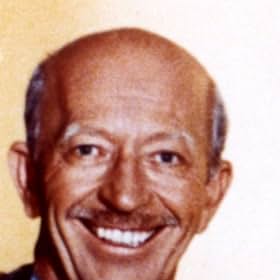


- Dancer with Miss Torso
- (non crédité)

- Choreographer with Miss Torso
- (non crédité)

- Man with Miss Torso
- (non crédité)

- Minor Role
- (non crédité)
Résumé
Avis à la une
Hitchcock realized this and took voyeurism to the next level, allowing us to watch a voyeur as he watched others. While `Rear Window' as a whole is probably not quite at a level with `Vertigo' (which was far more suspenseful and mysterious with a powerful musical score) as a cinematic accomplishment, it is more seductive because it strikes closer to our human obsessions. Hitchcock's mastery is most evident in his subtle use of reaction scenes by the various characters. We watch an event that Jeff (James Stewart) is watching and then Hitchcock immediately cuts to his reaction. This is done repeatedly in various layers even with the other tenants as they interact with one another. For instance, in the scene with Miss Lonelyheart (Judith Evelyn), we see her throw out the man who made a pass at her and then we see her reaction after she slams the door, followed by the reaction of Jeff and Lisa (Grace Kelly). In another scene, Detective Doyle (Wendell Corey) sees Lisa's nightclothes and presumes she will be staying the night. Hitchcock shows the suitcase, then Doyle's reaction, and then he goes to Jeff who points his finger at him and says `Be Careful, Tom'. This elegant scene takes a few seconds and speaks volumes with little dialogue. Such technique gets the viewer fully involved, because if we were there this is exactly what we would be doing, watching the unfolding events and then seeing how others around us responded. In essence, it puts us in the room with them.
Hitchcock was a stickler for detail. For instance, he aimed the open windows so they would show subtle reflections of places in the apartment we couldn't see directly. However, there were certain details included or excluded that were inexplicable. Would Thorwold really be scrubbing the walls with the blinds open? Would Lisa be conspicuously waving at Jeff while Stella (Thelma Ritter) was digging up the garden? Moreover, wouldn't Lisa have taken off her high heels before climbing a wall and then a fire escape? This film had numerous small incongruities that are normally absent from Hitchcock films. Though these are picayune criticisms, they are painfully obvious in the film of a director known to be a compulsive perfectionist.
The acting is superb in this film. Jimmy Stewart is unabashedly obsessed as the lead character. Photographers have an innate visual perceptiveness and the ability to tell a story with an image and Stewart adopts this mindset perfectly. Grace Kelly has often been accused of being the `Ice Maiden' in her films, yet in this film she is assertive and even reckless. Though cool at times, she is often playful and rambunctious. I always enjoy Thelma Ritter's performances for their honesty and earthiness and this is another example of a character actor at her best. Raymond Burr often doesn't get the recognition he deserves for this role, which is mostly shot at a distance with very few lines. Yet, he imbues Thurwold with a looming nefariousness using predominantly physical acting.
This film was rated number 42 on AFI's top 100 of the century sandwiched between `Psycho' (#18) and `Vertigo' (#61). I personally think more highly of `Vertigo' but it is a minor distinction, because I rated them both 10/10. `Rear Window' is a classic, a masterpiece of filmmaking technique from a director who was a true pioneer of suspense.





Le saviez-vous
- AnecdotesThe film negative was damaged considerably as a result of color dye fading as early as the 1960s. Nearly all of the yellow image dyes had faded. Despite fears that the film had been irrevocably damaged, preservation experts were able to restore the film nearly to its original coloration.
- GaffesThe helicopter seen near the start is obviously a composite, as there is camera shake in the copter footage.
- Citations
Stella: How much do we need to bail Lisa from jail?
L.B. Jefferies: Well, this is first offense burglary, that's about $250. I have $127.
Stella: Lisa's handbag. Uh... 50 cents. I got $20 or so in my purse.
L.B. Jefferies: And what about the rest?
Stella: When those cops at the station see Lisa, they'll even contribute.
- Crédits fousThe film is bookended with the opening and closing of window blinds across Jeff's rear window.
The opening titles appear on the former, and the Paramount logo appears on the latter.
- Versions alternativesThe film has been fully restored from original negatives in 1998. A new negative has been created that resembles the original color scheme of the film, but he first kissing scene had to be restored digitally because the source elements were in bad condition.
- ConnexionsEdited into Alfred Hitchcock: The Art of Making Movies (1990)
Meilleurs choix
Détails
- Date de sortie
- Pays d’origine
- Langue
- Aussi connu sous le nom de
- La ventana indiscreta
- Lieux de tournage
- Stage 18, Paramount Studios - 5555 Melrose Avenue, Hollywood, Los Angeles, Californie, États-Unis(Exterior court yard apartment complex)
- Société de production
- Voir plus de crédits d'entreprise sur IMDbPro
Box-office
- Budget
- 1 000 000 $US (estimé)
- Montant brut aux États-Unis et au Canada
- 37 622 343 $US
- Montant brut mondial
- 37 907 089 $US
- Durée
- 1h 52min(112 min)
- Couleur
- Rapport de forme
- 1.37 : 1(original ratio)
- 1.66 : 1