NOTE IMDb
7,3/10
6,1 k
MA NOTE
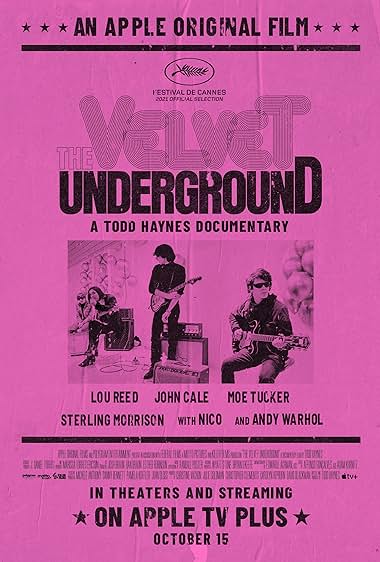
Exploration des multiples raisons qui ont convergé pour former l'un des groupes les plus influents du rock and roll.Exploration des multiples raisons qui ont convergé pour former l'un des groupes les plus influents du rock and roll.Exploration des multiples raisons qui ont convergé pour former l'un des groupes les plus influents du rock and roll.
- Réalisation
- Scénariste
- Stars
- Récompenses
- 3 victoires et 35 nominations au total
The Velvet Underground
- Themselves
- (images d'archives)
Lou Reed
- Self - Songwriter, Musician & Author
- (images d'archives)
Sterling Morrison
- Self - Musician
- (images d'archives)
Avis à la une
Pieced together almost as strangely as the band itself, this doc features excellent profiles of each band member and those closest to them. Was nice to have insight from people like John Waters, and who knew Jackson Browne was once involved with something that didn't suck?
Loved the early footage of Lou Reed and the band playing doo-wop.
Oddly limited in scope. I knew it was a standalone two hour job but found myself doubting that- given the first half was given to pre-band. This was of course fascinating.
But we end up with a 20 minute breeze through the Doug Yule era and I adore those albums.
No reformation covered either.
Visuals wonderful - but bizarre sound mixing (at least for my experience anyway) which meant you couldn't hear the commentary over the music so I had to watch with subtitles on. Which gave an interesting experience in realising that "my" Velvets lyrics have subtle, distinct differences to those that are apparently true.
But we end up with a 20 minute breeze through the Doug Yule era and I adore those albums.
No reformation covered either.
Visuals wonderful - but bizarre sound mixing (at least for my experience anyway) which meant you couldn't hear the commentary over the music so I had to watch with subtitles on. Which gave an interesting experience in realising that "my" Velvets lyrics have subtle, distinct differences to those that are apparently true.
Todd Haynes' artful documentary on the pioneering art rock band fronted by Lou Reed and John Cale takes almost 40 minutes before Reed and Cale even meet. Haynes doesn't use narration but he builds his movie with ample footage from the time period. He creatively makes the link between the avant-garde and the "underground" which sets the stage for the band to flourish.
By hooking up with Andy Warhol and becoming his 'house band', the Velvet Underground not only got attention, but it also guaranteed that film and still photography would document their every move. They never sold many records at the time, but their influence was profound.
The interview subjects range from John Waters to Warhol scenesters like Mary Woronov, to go along with the generous archive footage. It paints a vivid picture of the rise and premature fall of the group (Co-founder John Cale only appeared on the first two albums; singer Nico only on their debut). Reed, of course, became a rock icon as a solo artist, but, the band's impact stands apart as a singular achievement, something which Haynes captures brilliantly.
By hooking up with Andy Warhol and becoming his 'house band', the Velvet Underground not only got attention, but it also guaranteed that film and still photography would document their every move. They never sold many records at the time, but their influence was profound.
The interview subjects range from John Waters to Warhol scenesters like Mary Woronov, to go along with the generous archive footage. It paints a vivid picture of the rise and premature fall of the group (Co-founder John Cale only appeared on the first two albums; singer Nico only on their debut). Reed, of course, became a rock icon as a solo artist, but, the band's impact stands apart as a singular achievement, something which Haynes captures brilliantly.
(Jonathan Richman on Velvet Underground): "For me, it was like being in the presence of Michelangelo!"
Now, let's not get too crazy here - Michelangelo never created anything as rad as "I'm Waiting for the Man" :p
This is the kind of documentary you can sink into, that moves from one part to the next seamlessly. And it made me realize that how they created those first songs and that first album is even more miraculous than I had thought before. It's like a really clear and inspirational look - and inspiration that comes from depicting life in an honesty and sadness that came from personal spots - also at how this group managed to synthesize art into many forms... because it wasn't "with it" (oh how they go after the hippies here, or at least Woronov who is a great interview). Real art actually pushes past what came before while embracing so many other kinds of art (from the most avant garde to the Everly Brothers in pop), and Haynes's doc does a superb job of revealing that.
Haynes did a q&a after the screening I went to (oh I'm so glad I got to see the title on a big screen if nothing else, but those Warhol Screen Tests really are more interesting in a theatrical setting, though it helps that there's split screen to juxtapose and so on that's so great, I digress but the editing is some of the most invigorating in a doc in years) - he called this kind of a Dreamscape of the 60s and New York, and it's a dream that vacillates in the joy and thrill of creating something new and the edge and uncanny and dark that comes with that. And the fact that the footage of the Underground largely rests in the Factory world makes it a story of that, too... up to a point.
But at the heart of it and what drives it to being so absorbing is Lou Reed. There's a mystery and sadness to him that the film can only scratch the surface to see, not because it doesn't mean to try but because it would be too disrespectful to try to make hypothetical things. He's just... Lou.
And lastly... I still don't get Warhol, either. Frankly, maybe I've just never been cool or hip enough for it. Vinyl (1965) is not bad, though. And I'm glad there was mention of (the Factory) being not all peaches and cream, especially for the women.
Now, let's not get too crazy here - Michelangelo never created anything as rad as "I'm Waiting for the Man" :p
This is the kind of documentary you can sink into, that moves from one part to the next seamlessly. And it made me realize that how they created those first songs and that first album is even more miraculous than I had thought before. It's like a really clear and inspirational look - and inspiration that comes from depicting life in an honesty and sadness that came from personal spots - also at how this group managed to synthesize art into many forms... because it wasn't "with it" (oh how they go after the hippies here, or at least Woronov who is a great interview). Real art actually pushes past what came before while embracing so many other kinds of art (from the most avant garde to the Everly Brothers in pop), and Haynes's doc does a superb job of revealing that.
Haynes did a q&a after the screening I went to (oh I'm so glad I got to see the title on a big screen if nothing else, but those Warhol Screen Tests really are more interesting in a theatrical setting, though it helps that there's split screen to juxtapose and so on that's so great, I digress but the editing is some of the most invigorating in a doc in years) - he called this kind of a Dreamscape of the 60s and New York, and it's a dream that vacillates in the joy and thrill of creating something new and the edge and uncanny and dark that comes with that. And the fact that the footage of the Underground largely rests in the Factory world makes it a story of that, too... up to a point.
But at the heart of it and what drives it to being so absorbing is Lou Reed. There's a mystery and sadness to him that the film can only scratch the surface to see, not because it doesn't mean to try but because it would be too disrespectful to try to make hypothetical things. He's just... Lou.
And lastly... I still don't get Warhol, either. Frankly, maybe I've just never been cool or hip enough for it. Vinyl (1965) is not bad, though. And I'm glad there was mention of (the Factory) being not all peaches and cream, especially for the women.
Very much enjoyed this, as a fan of the bands music, I'm not sure I learned much that I didn't know before but I loved seeing a lot of this archive footage and photographs, which I don't think have been seen before publicly.
Its very much a celebration of the bands music and legacy and a few of the interviews made me laugh and the closing montage may have made me cry a little. What more can you ask from a film?
I did find the Warhol style a little jarring at the beginning, with some of the flashing imagery, but it did calm down and seems fully appropriate to the subject and so much better than it being a dull series of interviews with talking heads... And while there were interviews with the remaining members of band and the scene they were all completely relevant, thankfully we didn't get a series of other fans or celebrities talking about the band and themselves. The film also did really well including those members who are no longer with us and it really felt that the whole band was featured and represented here.
It is not an encyclopedic history of the band which some people perhaps wanted, I guess you'd need a six or eight hour miniseries to cover that, or you could just read one of the many books and biographys that exist. Like I say I love the bands music and the artists subsequent careers, I don't know how the film would play if you were not familiar with Warhol and the band already but for me it was a perfectly judged and very enjoyable two hours.
Its very much a celebration of the bands music and legacy and a few of the interviews made me laugh and the closing montage may have made me cry a little. What more can you ask from a film?
I did find the Warhol style a little jarring at the beginning, with some of the flashing imagery, but it did calm down and seems fully appropriate to the subject and so much better than it being a dull series of interviews with talking heads... And while there were interviews with the remaining members of band and the scene they were all completely relevant, thankfully we didn't get a series of other fans or celebrities talking about the band and themselves. The film also did really well including those members who are no longer with us and it really felt that the whole band was featured and represented here.
It is not an encyclopedic history of the band which some people perhaps wanted, I guess you'd need a six or eight hour miniseries to cover that, or you could just read one of the many books and biographys that exist. Like I say I love the bands music and the artists subsequent careers, I don't know how the film would play if you were not familiar with Warhol and the band already but for me it was a perfectly judged and very enjoyable two hours.
Le saviez-vous
- AnecdotesAfter Lou Reed and Sterling Morrison quit the band, it carried on for a time with Doug Yule becoming the frontman on vocals and guitar. Moe Tucker also stayed with the band after her return from parental leave and they were joined by a new bassist and keyboardist. This lineup toured the Loaded album around parts of North America and Europe in 1971. A fifth studio album was released for a UK record label under the Velvet Underground name: 1973's Squeeze. All members bar Doug Yule were sent back to the United States in 1972 and Yule recorded all parts except the drums by Deep Purple's Ian Paice, saxophone by someone called Malcolm and some unidentified female backing vocals. Recording the album as essentially a Doug Yule solo effort was at the instruction of manager Steve Seswick, who had earlier brought Yule to the band and had long pushed for the Velvets to adopt a more commercial style with Yule at its centre. Yule himself was displeased at Seswick's control of the process. While Yule had been a significant creative force, albeit secondary to Lou Reed, on the celebrated Loaded album, Squeeze is much-maligned. It received terrible reviews, though it has gained some appreciators over the years. It is typically considered a Velvets record in name only. At around the same time as the official Velvet Underground were being reduced to Seswick's Doug Yule project, Lou Reed, John Cale and Nico had also been in Europe for a reunion performance in Paris in 1972, which was bootlegged and eventually released under the name Le Bataclan '72. Footage from this reunion performance is included in this film.
- Citations
Self - Songwriter, Musician & Producer: We tuned to the sixty-cycle hum of the refrigerator. The sixty-cycle hum of the refrigerator was to us the drone of Western civilization.
- ConnexionsFeatures Pierrette I (1924)
Meilleurs choix
Connectez-vous pour évaluer et suivre la liste de favoris afin de recevoir des recommandations personnalisées
- How long is The Velvet Underground?Alimenté par Alexa
Détails
- Date de sortie
- Pays d’origine
- Langue
- Aussi connu sous le nom de
- Ban nhạc the Velvet Underground
- Lieux de tournage
- Ville de New York, New York, États-Unis(main location)
- Sociétés de production
- Voir plus de crédits d'entreprise sur IMDbPro
- Durée
- 2h 1min(121 min)
- Couleur
- Rapport de forme
- 1.78 : 1
Contribuer à cette page
Suggérer une modification ou ajouter du contenu manquant