

Protégé par son armée, le Roi de Qin (l'unificateur de la Chine), semble hors d'atteinte de qui voudrait l'abattre. Mais pour avoir vaincu ses trois ennemis les plus redoutables, Sans Nom ob... Tout lireProtégé par son armée, le Roi de Qin (l'unificateur de la Chine), semble hors d'atteinte de qui voudrait l'abattre. Mais pour avoir vaincu ses trois ennemis les plus redoutables, Sans Nom obtient le privilège de l'approcher à 10 pas.Protégé par son armée, le Roi de Qin (l'unificateur de la Chine), semble hors d'atteinte de qui voudrait l'abattre. Mais pour avoir vaincu ses trois ennemis les plus redoutables, Sans Nom obtient le privilège de l'approcher à 10 pas.
- Réalisation
- Scénaristes
- Vedettes
- Nommé pour 1 oscar
- 46 victoires et 48 nominations au total


- Broken Sword
- (as Tony Leung Chiu-Wai)
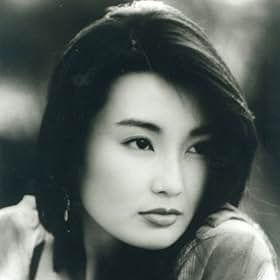
- Flying Snow
- (as Maggie Cheung Man-Yuk)

- Moon
- (as Zhang Ziyi)

- King
- (as Chen Dao Ming)
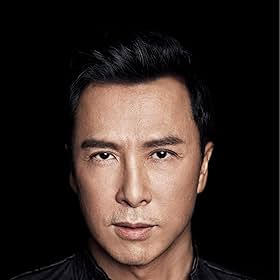
- Scholar
- (as Liu Zhong Yuan)
- Old Servant
- (as Zheng Tian Yong)

- Commander
- (as Zhang Ya Kun)
- Seven Qin Guards
- (as Hei Zi)
Avis en vedette
First, there are scenes of haunting beauty("Duel in the yellow forest" and "Turquoise autumn" to site a couple) that, like the best of impressionist paintings, are so affecting that you will forever see the world in a slightly different way having once beheld them.
Secondly, the overall message of the film is a provocative one. The claim is that a degree of human casualties and suffering may be the optimal path to a better world, especially when the alternative is equally brutal chaos. This is not a popular theme. It has become much more fashionable to be anti-war in all cases. And understandably so, since variations of this logic have often been used in the past to justify atrocities. But the film provides a crisp litmus test for avoiding delusion: action must be taken with a heart void of malice and an unwavering commitment to the broadest possible ultimate outcome of good for all. Can anyone live up to this standard? Several characters in the movie do, each in their own way. If the standard could be met, would the world be a better place? These are questions worth reflecting on that have not been dealt with, to this depth, in any film I'm aware of.
First of all, I noticed heavy use of Daoist symbols. The five elements were used - one per fight - fire, wind, water, wood, and metal. A message in the film seemed to show the Daoist idea that the harder you try, the worse you do, as Moon did in her fights. On the other hand, if you can go with the Dao (think: Use the force, Luke), you will succeed.
Second, I did not know before watching the film that it was Zhang Yimou's. His films are often critical of the Chinese Communist Party and sometimes have deep allegorical meaning. Some of his films are banned in China. Hero, on the other hand, seemed to be intensely nationalistic. Lately in China, the communist government has promoted nationalism (instead of populist Communist values as they did pre-1976) with a great degree of success. The use of the word "Tianxia" (literally "all under heaven," translated in the movie was "Our Land") seems Confucian and nationalistic at the same time. Although I would have not guessed this film was by Zhang Yimou from the plot or message, the cinematography was unmistakable. Hero eerily reminded me of another film, Yellow Earth (Huang Tudi), which Zhang Yimou did not direct but for which he did the cinematography.
Third, historically, Hero lacked in a few very obvious places. The Qin Emperor, Qin Shi Huang, was legendary for his fear of death and his Machiavellian rule. When his character states that he no longer fears death because of Broken Sword's words and invites Nameless to kill him, he is entirely breaking with the true historical figure of the emperor. Remember, this is the emperor who built an entire terracotta army to protect him from his enemies in death and spent a lot of money and effort looking for the secret to reach immortality. He was known for a Confucian philosophy spin-off known as Legalism, which is very similar to Western Machiavellianism. While his quick mind (or his advisor's) might have figured out Nameless's plot, he would never have hesitated in executing him.
Overall, this seems like a break from the usual genre one would expect from Zhang Yimou. I am not sure exactly what message he is trying to convey with this film, other than an endorsement of Chinese nationalism and perhaps Daoism as well.
Comprising, but not limited to outstanding duelling with a variety of razor sharp implements and tongues, a kaleidoscopic background of intense colour and beauty, several tangents to keep you on your toes, an immense scale that befits the telling of such a story with an elegance seldom encountered in Western culture when it comes to films of this time and age, buttressed through outstanding performances by the lead actors all round - outstanding.
Hero is a film that is beautiful in many aspects. The direction and photography is artsy without being pretentious. Every shot is worthy of being a work of art in itself. The language spoken is traditional mandarin, but oh, so easy to the ear, even though i couldn't understand every word. (I don't think Tony's and Maggie's voices were dubbed, but i could be mistaken). The main characters were very well acted out, especially that of the role of the Qin Emperor. Zhang Ziyi's character was largely insignificant though, so i think she's been put in to add some star power to the production. The fighting scenes are unusual by most standards, employing an interesting combination of CGI and real action. Some of the powers that the characters possess appear too amazing to be true, but remember that some of the fights only took place in the fighters' imagination. The music, though quite similar to that in CTHD, is appropriate, and sticks hauntingly to the back of your mind long after the movie is over.
I went to the cinema having heard some of the hype leading to the movie, but with no real knowledge of the storyline, and not expecting a lot. I think that helped me enjoy the movie more, because the way the story unfolded actually set me thinking and anticipating in a manner that i could not have had i known more about the storyline. The message at the end of the movie is simple, but certainly open for debate. In fairness, i don't think the director attempted to provide an answer, as to whether the decision made by the Nameless One was the correct one or not, but rather to ask questions. I'd better not give out too much here, but it certainly set me thinking about things for a little while after the show had ended. These days, any movie that can get me pondering after the credits go down has got to be pretty good.
Overall an excellent movie. I'm sure some areas could be better, but i can't think of any right now. Highly recommended.
Score: 8.5/10


Le saviez-vous
- AnecdotesThe "red fight" between Moon and Flying-Snow was filmed in a forest in Mongolia. Director Yimou Zhang had to wait until the leaves turn yellow, and hired local nomads to gather even more yellow leaves in order to cover the ground completely. In fact, he was so fanatic about the leaves, that he had his crew separate the leaves into four different "classes" which were each put at increasingly farther lengths from the camera.
- GaffesOn numerous occasions, it is possible to see the glue that molds the sides of Jet Li's wig to his head (it casts a plastic-like reflection in certain light). It's most noticeable during the fight with Ziyi Zhang("Moon"), when he traps one of her blades with his sword and there's a close-up of the side of his face, and at the very end, when he's reached the palace gate and turns towards the camera.
- Citations
King of Qin: I have just come to a realization! This scroll by Broken Sword contains no secrets of his swordsmanship. What this reveals is his highest ideal. In the first state, man and sword become one and each other. Here, even a blade of grass can be used as a lethal weapon. In the next stage, the sword resides not in the hand but in the heart. Even without a weapon, the warrior can slay his enemy from a hundred paces. But the ultimate ideal is when the sword disappears altogether. The warrior embraces all around him. The desire to kill no longer exists. Only peace remains.
- Autres versionsThe Director's Cut was 107:15 minutes, compared to the theatrical version at 96:23 minutes.
- ConnexionsEdited into Ying xiong: Cause - The Birth of Hero (2002)
Meilleurs choix
Détails
Box-office
- Budget
- 31 000 000 $ US (estimation)
- Brut – États-Unis et Canada
- 53 710 019 $ US
- Fin de semaine d'ouverture – États-Unis et Canada
- 17 800 000 $ US
- 29 août 2004
- Brut – à l'échelle mondiale
- 177 395 557 $ US
- Durée
- 1h 47m(107 min)
- Couleur
- Mixage
- Rapport de forme
- 2.35 : 1