

En 1948, un tribunal américain en Allemagne occupée juge quatre nazis jugés pour crimes de guerre.En 1948, un tribunal américain en Allemagne occupée juge quatre nazis jugés pour crimes de guerre.En 1948, un tribunal américain en Allemagne occupée juge quatre nazis jugés pour crimes de guerre.
- Réalisation
- Scénaristes
- Vedettes
- A remporté 2 oscars
- 16 victoires et 26 nominations au total








Sommaire
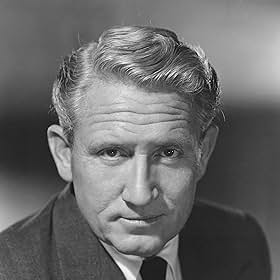
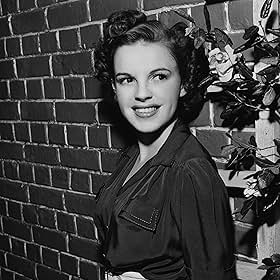
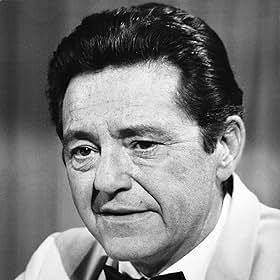
Reviewers say 'Judgment at Nuremberg' is acclaimed for its profound exploration of justice and morality post-World War II. It examines accountability through the trial of German judges, highlighting moral dilemmas and post-war challenges. Performances by Spencer Tracy, Maximilian Schell, and others are universally praised. The script, direction by Stanley Kramer, and historical accuracy are lauded. Despite minor criticisms about length and direction, the film is recognized as significant and thought-provoking.
Avis en vedette
Beyond its compelling subject matter "Judgement At Neuremberg" revolutionizes the court room drama genre. The camera swings and swerves and dives between the lines of this exemplary Abby Mann script. Stanley Kramer conducts his orchestra of iconic stars with the precision of a Swiss watchmaker. The language barriers and the confinement of the action masterfully resolved. Spencer Tracy is simply magnificent and, as per usual, we believe every word that comes out of his mouth. His judge is an American monument of unsentimental humanity. Twentynine year old Maimilian Schell won the Oscar as best actor and his performance survived the test of time with the vigor of his conviction. Montgomery Cliff makes his short minutes on the screen, one of those memorable moments that nobody that has ever seen it will be able to forget. The man and the character merging into one chilling, shattering truth. "I am half the man I've ever been" Marlene Dietrich gives to her German aristocrat a legendary star quality. And Judy Garland, overweight and almost unrecognizable breaks your heart and gets her last Oscar nomination. My only troubles came with the stoic Burt Lancaster because I could never forget it was Burt Lancaster and with Richard Widmark's strident prosecutor. I have seen "Judgement At Neuremberg" more than a dozen times and it never ceases to amaze me that no matter the darkness of the subject it always manages to entertain and inspire.
This 1961 film is just about as close to timeless in its impact as you can get, in its searing treatment of the universal themes of law, justice, and humanity. This far downstream, it's worth recalling that the movie was made just 15 years after the end of WWII when the aftermath of the war was still reverberating. It's set during the "Nuremberg Trials" of 1947-49 during which high-ranking German generals, judges, politicians and others responsible for the atrocities of the Nazi regime were tried against still-evolving standards of international law. The movie takes us through just one of these, the trial of four high-placed judges, and I was actually surprised to learn that there was an earlier, much shorter version of this drama shown 2 years earlier on the prestigious old TV series Playhouse 90. But the movie carries a wallop that no TV show could have given.
I had to check the history to be sure, but though the bare bones of the time, place, and setting are accurate, all the characters and details are entirely fictional. I think maybe this was the correct choice, because it could allow the script to concentrate entirely on two major themes in its 3-hour run time: first and foremost, the courtroom drama, and second, a look into German postwar society when most were desperate to forget and try to get back to normal living. The side plot is kind of disposable -- some of those scenes drag -- but the courtroom scenes that are the spine of the movie are intense, claustrophobic, and utterly absorbing. Because of the imbalance of the two parts of the story, I rate this as "only" 9/10, but my bottom-line message is simply to see it, any way you can. There is lots here that resonates with what is happening now all around us.
The cast is flat-out astonishing: Spencer Tracy, Maximilian Schell, Richard Widmark, Marlene Dietrich, Judy Garland, Burt Lancaster, Montgomery Clift. None of these giants are still with us, but if you want to see what the classic Hollywood stars were capable of, this is just about the best place to go. (Schell won the Best Actor Oscar for this, which is hard to argue with once you see him work.) Each one of these multiple leads has at least one powerhouse scene -- always in the courtroom, where all of the true interest of the film takes place -- that is guaranteed to stick in your mind. Tracy and Widmark were in lots and lots of movies, and they tended to play every role in much the same way: Tracy played the aw-shucks average guy you could imagine as a next-door neighbor, Widmark always seemed to have that flat delivery with an edge of menace -- but here they stretch themselves. Widmark's narration of the horrors revealed in the concentration camps (which in the setting of the film were uncovered just two years before) accompanied by hard-to-watch film records is impressively spare and restrained, and Tracy as the leading tribunal judge gives a summation speech that has real weight.
Even among all these leads, however, Burt Lancaster stands out. Playing a respected and even renowned German judge who inexplicably stepped into the dark side, late in the film he delivers a long, uninterrupted testimony that is electrifying. Up till that point he had been only a looming Presence lurking at the edge of the proceedings, but he is the key defendant everyone mentions repeatedly. When will he speak? What will he say? The dramatic tension pays off handsomely. Lancaster was an amazingly physical kind of actor, and by that I don't mean just physique or action-hero roles. But the camera is drawn to him in a way that is hard to explain: he can get your attention just by standing up from a chair. I think much of it is due to a kind of stillness of posture, an utter spareness of movement. I can't think of a single modern actor like that.
It's fun to note that one of the supporting actors in this stellar cast who IS still with us is William Shatner. As the military aide to Judge Haywood (Tracy), he's there from beginning to end, and he does very nicely. Several years later, he'd move on to become Captain Kirk.
Maybe understandably for the time, all the speaking roles for the "German" characters, except for Maximilian Schell and Marlene Dietrich, were played by Americans with fake mild accents. Today that wouldn't work . I'm visualizing a re-mounting of this piece with a true international cast, but I'm not sure anyone wants to revisit the Nazi era in quite so unsparing a way.
I had to check the history to be sure, but though the bare bones of the time, place, and setting are accurate, all the characters and details are entirely fictional. I think maybe this was the correct choice, because it could allow the script to concentrate entirely on two major themes in its 3-hour run time: first and foremost, the courtroom drama, and second, a look into German postwar society when most were desperate to forget and try to get back to normal living. The side plot is kind of disposable -- some of those scenes drag -- but the courtroom scenes that are the spine of the movie are intense, claustrophobic, and utterly absorbing. Because of the imbalance of the two parts of the story, I rate this as "only" 9/10, but my bottom-line message is simply to see it, any way you can. There is lots here that resonates with what is happening now all around us.
The cast is flat-out astonishing: Spencer Tracy, Maximilian Schell, Richard Widmark, Marlene Dietrich, Judy Garland, Burt Lancaster, Montgomery Clift. None of these giants are still with us, but if you want to see what the classic Hollywood stars were capable of, this is just about the best place to go. (Schell won the Best Actor Oscar for this, which is hard to argue with once you see him work.) Each one of these multiple leads has at least one powerhouse scene -- always in the courtroom, where all of the true interest of the film takes place -- that is guaranteed to stick in your mind. Tracy and Widmark were in lots and lots of movies, and they tended to play every role in much the same way: Tracy played the aw-shucks average guy you could imagine as a next-door neighbor, Widmark always seemed to have that flat delivery with an edge of menace -- but here they stretch themselves. Widmark's narration of the horrors revealed in the concentration camps (which in the setting of the film were uncovered just two years before) accompanied by hard-to-watch film records is impressively spare and restrained, and Tracy as the leading tribunal judge gives a summation speech that has real weight.
Even among all these leads, however, Burt Lancaster stands out. Playing a respected and even renowned German judge who inexplicably stepped into the dark side, late in the film he delivers a long, uninterrupted testimony that is electrifying. Up till that point he had been only a looming Presence lurking at the edge of the proceedings, but he is the key defendant everyone mentions repeatedly. When will he speak? What will he say? The dramatic tension pays off handsomely. Lancaster was an amazingly physical kind of actor, and by that I don't mean just physique or action-hero roles. But the camera is drawn to him in a way that is hard to explain: he can get your attention just by standing up from a chair. I think much of it is due to a kind of stillness of posture, an utter spareness of movement. I can't think of a single modern actor like that.
It's fun to note that one of the supporting actors in this stellar cast who IS still with us is William Shatner. As the military aide to Judge Haywood (Tracy), he's there from beginning to end, and he does very nicely. Several years later, he'd move on to become Captain Kirk.
Maybe understandably for the time, all the speaking roles for the "German" characters, except for Maximilian Schell and Marlene Dietrich, were played by Americans with fake mild accents. Today that wouldn't work . I'm visualizing a re-mounting of this piece with a true international cast, but I'm not sure anyone wants to revisit the Nazi era in quite so unsparing a way.
I watched "Judgment at Nuremburg" on PBS the other night. I had never seen it before. I expected an empty-headed, Hollywood-style, quasi-melodrama, but I was pleasantly surprised. Even Spencer Tracy, that universally beloved actor whose appeal has always escaped me, gave an honest and heartfelt portrayal of a "simple man" who was also a deeply conflicted judge.
What I liked most about this movie was that it didn't pull any punches, in the manner of other "controversial" films of its time. The defense attorney, superbly played by Maximilian Schell, weaves a simple, but undeniable web of logic:
Correct me if I'm wrong, but it must have taken major cojones to present that kind of message to American filmgoers in 1961. Would a film of that candor have a chance of being made today?
I tend to doubt it.
One further note. The film describes how the Nazis went about stripping the German judiciary of judges who were known for their objectivity, and replacing them with judges who were appointed based solely on their party loyalties.
The mind boggles at the implications and yes, the prescience of this well-written, well-played masterpiece.
What I liked most about this movie was that it didn't pull any punches, in the manner of other "controversial" films of its time. The defense attorney, superbly played by Maximilian Schell, weaves a simple, but undeniable web of logic:
- Sterilization of "undesirables," one of the charges against the Nazi war criminals, was at one time condoned by the U.S. courts, and encouraged by none other than Oliver Wendell Holmes. - Numerous leading industrialists in the U.S. contributed to the development of the Nazi war machine. - Encouragement was given to Hitler's expansionism by both Russia and England. - Churchill is quoted as having admired Hitler. - The Vatican actively collaborated with the Nazis.
Correct me if I'm wrong, but it must have taken major cojones to present that kind of message to American filmgoers in 1961. Would a film of that candor have a chance of being made today?
I tend to doubt it.
One further note. The film describes how the Nazis went about stripping the German judiciary of judges who were known for their objectivity, and replacing them with judges who were appointed based solely on their party loyalties.
The mind boggles at the implications and yes, the prescience of this well-written, well-played masterpiece.
Lacking the big names of what people normally think of as the "Nuremberg Trials" - the trial of Nazi leaders such as Goering, Hess and Speer - this movie focuses on the lesser known people who were tried for war crimes: the German judges whose responsibility it was to dispense "justice" in Hitler's Germany. Although the big names are missing, the movie is powerful and masterfully deals with the troubling questions around Nazism: how could normally good, decent people (represented in this movie by Ernst Janning, played by Burt Lancaster, on trial with three others) have allowed themselves to be sucked into the evil that was Hitler and National Socialism? How could the German people have turned a blind eye to what was going on and simply denied all responsibility? And the movie also considers a troubling question about the United States: if Nazism was evil enough to have warranted a war and then all the effort of the Nuremberg trials, why were the Americans suddenly so willing to "forgive and forget" with the onset of the Cold War and the threat of communism?
The implication here is that the Americans never really took the secondary trials seriously. A second-rate judge (Dan Haywood, available only because he had been defeated in an election, and played magnificently by Spencer Tracy) was appointed to head the trial, the Army was putting pressure on the prosecution to go lightly. It's an amazing fact of history that within three years of the end of World War II, the feeling was so clearly against pursuing those who had played roles in the Nazi nightmare (and, of course, it's a question that still haunts us today as Nazi war criminals from time to time turn up and the response of the public is often, "he's an old man. Why bother?")
Focussing largely on the trial itself, the movie is consistently gripping throughout, and even the diversions outside the courtroom (such as the relationship between Judge Haywood and Mrs. Bertholt -Marlene Dietrich) don't detract from the suspense, as they continue to push the question: "how can you just sit there and deny knowing anything?" Anyone with an interest in the puzzle of Nazi Germany should watch this. In the end, it raises a lot of questions and offers few answers, but that may be the legacy of Nazism. But the movie makes its point. As Judge Janning talks to Judge Haywood at the end of the movie he says almost pleadingly, "we never knew it would go so far." Haywood simply responds, "Herr Janning, it went that far the first time you convicted a man you knew was innocent." Powerful stuff.
10/10
The implication here is that the Americans never really took the secondary trials seriously. A second-rate judge (Dan Haywood, available only because he had been defeated in an election, and played magnificently by Spencer Tracy) was appointed to head the trial, the Army was putting pressure on the prosecution to go lightly. It's an amazing fact of history that within three years of the end of World War II, the feeling was so clearly against pursuing those who had played roles in the Nazi nightmare (and, of course, it's a question that still haunts us today as Nazi war criminals from time to time turn up and the response of the public is often, "he's an old man. Why bother?")
Focussing largely on the trial itself, the movie is consistently gripping throughout, and even the diversions outside the courtroom (such as the relationship between Judge Haywood and Mrs. Bertholt -Marlene Dietrich) don't detract from the suspense, as they continue to push the question: "how can you just sit there and deny knowing anything?" Anyone with an interest in the puzzle of Nazi Germany should watch this. In the end, it raises a lot of questions and offers few answers, but that may be the legacy of Nazism. But the movie makes its point. As Judge Janning talks to Judge Haywood at the end of the movie he says almost pleadingly, "we never knew it would go so far." Haywood simply responds, "Herr Janning, it went that far the first time you convicted a man you knew was innocent." Powerful stuff.
10/10
Outstanding film. Star-studded with several fantastic performances. Highly emotional given the subject matter, but presented in a very intelligent, balanced way. I was struck at once by that, and by how well director Stanley Kramer gives us both sides of the argument – and avoids simply paying lip service to the defense of the German judges on trial. Maximilian Schell is brilliant as the defense attorney, well worthy of his Oscar, and is forceful and compelling in his arguments. There are also so many brilliant scenes. Spencer Tracy walking in the empty arena where the Nazi rallies were held, with Kramer focusing on the dais from which Hitler spoke. The testimony of Montgomery Clift and Judy Garland, both of whom are outstanding and should have gotten Oscars. Burt Lancaster in the role of one of the German judges, the one tortured by his complicity, knowing he and others are guilty. The devastating real film clips from the concentration camps, which are still spine tingling despite all we 'know' or have been exposed to. Marlene Dietrich as the German general's wife, haunted but expressing the German viewpoint, one time while people are singing over drinks. Her night stroll with Tracy, as she explains the words to one song, is touching. It just seemed like there was just one powerhouse scene after another, and the film did not seem long at all at three hours. Heck, you've even got Werner Klemperer and William Shatner before they would become Colonel Klink and Captain Kirk! In this film, the acting, the script, and the direction are all brilliant, and in harmony with one another.
As for the trial itself, the defense argument was along these lines: they were judges (and therefore interpreters), not makers of law. They didn't know about the atrocities in the concentration camps. At least one of them saved or helped many by staying in their roles and doing the best they could under the heavy hand of the Third Reich. They were patriots, saw improvement in the country when Hitler took power, but did not know how far he would go. If you were going to convict these judges, you would have to convict many more Germans (and where would it stop?). The Americans themselves practiced Eugenics and killed thousands and thousands of innocents at Hiroshima and Nagasaki. The one small weakness I found was that the defense never makes the simple argument that these judges were forced to do what they did, just as countless others in Germany were, and would have been imprisoned or killed themselves had they not complied. Anyone who's lived under a totalitarian regime may understand, or at least empathize.
I'm not saying I bought into these arguments or that one should be an apologist to Nazis, but the fact that the film presented such a strong defense was thought provoking. How fantastic is it that Spencer Tracy plays his character the way he does – simply pursuing the facts, and in a quiet, thoughtful way. It's the best of humanity. How heartbreaking is Burt Lancaster's character, admitting they knew, admitting their guilt, knowing that what happened was horrible and that they were wrong, and yet seeking Tracy's understanding in that scene in the jail cell at the end – intellectual to intellectual - and being rebuked. Even a single life taken unjustly was wrong. Had the Axis won the war, I don't know which Americans would have been on trial for war crimes for the fire bombings of Dresden and Tokyo, or for dropping the atomic bombs, but the film makes one think, even for a war when things were seemingly as black and white as they could ever be. The particulars of this trial were fictionalized, but it's representative of what really occurred, and it transports you into events 70 years ago which seem so unreal today – and yet are so vitally important to understand, and remember.
As for the trial itself, the defense argument was along these lines: they were judges (and therefore interpreters), not makers of law. They didn't know about the atrocities in the concentration camps. At least one of them saved or helped many by staying in their roles and doing the best they could under the heavy hand of the Third Reich. They were patriots, saw improvement in the country when Hitler took power, but did not know how far he would go. If you were going to convict these judges, you would have to convict many more Germans (and where would it stop?). The Americans themselves practiced Eugenics and killed thousands and thousands of innocents at Hiroshima and Nagasaki. The one small weakness I found was that the defense never makes the simple argument that these judges were forced to do what they did, just as countless others in Germany were, and would have been imprisoned or killed themselves had they not complied. Anyone who's lived under a totalitarian regime may understand, or at least empathize.
I'm not saying I bought into these arguments or that one should be an apologist to Nazis, but the fact that the film presented such a strong defense was thought provoking. How fantastic is it that Spencer Tracy plays his character the way he does – simply pursuing the facts, and in a quiet, thoughtful way. It's the best of humanity. How heartbreaking is Burt Lancaster's character, admitting they knew, admitting their guilt, knowing that what happened was horrible and that they were wrong, and yet seeking Tracy's understanding in that scene in the jail cell at the end – intellectual to intellectual - and being rebuked. Even a single life taken unjustly was wrong. Had the Axis won the war, I don't know which Americans would have been on trial for war crimes for the fire bombings of Dresden and Tokyo, or for dropping the atomic bombs, but the film makes one think, even for a war when things were seemingly as black and white as they could ever be. The particulars of this trial were fictionalized, but it's representative of what really occurred, and it transports you into events 70 years ago which seem so unreal today – and yet are so vitally important to understand, and remember.




Le saviez-vous
- AnecdotesSpencer Tracy's eleven-minute closing speech was filmed in one take using multiple cameras shooting simultaneously.
- GaffesAt the end of the movie a graphic states that 99 people were tried and sentenced at Nuremberg and that by the date of the movie (1961) none remained in prison. Some critics have pointed out that Nuremberg defendants Rudolf Hess and others were still imprisoned in Spandau. However, Hess and the other major defendants were tried by the International Military Tribunal (with judges and prosecutors from each of the four victorious Allied powers). The caption in the film states that the statistic refers only to the Nuremberg trials "held in the American sector." By 1961, all of the defendants sentenced in the American trials were indeed free; the graphic is therefore correct.
- Citations
[last lines]
Ernst Janning: Judge Haywood... the reason I asked you to come: Those people, those millions of people... I never knew it would come to that. You *must* believe it, *You must* believe it!
Judge Dan Haywood: Herr Janning, it "came to that" the *first time* you sentenced a man to death you *knew* to be innocent.
- ConnexionsFeatured in Marlene (1984)
Meilleurs choix
Connectez-vous pour évaluer et surveiller les recommandations personnalisées
Détails
- Date de sortie
- Pays d’origine
- Langues
- Aussi connu sous le nom de
- Judgment at Nuremberg
- Lieux de tournage
- former Reichsparteitag area, Nuremberg, Bavière, Allemagne(After the first session Judge Haywood walks through these former Nazi Party Rally Grounds)
- société de production
- Consultez plus de crédits d'entreprise sur IMDbPro
Box-office
- Budget
- 3 000 000 $ US (estimation)
- Brut – à l'échelle mondiale
- 12 180 $ US
- Durée
- 2h 59m(179 min)
- Couleur
- Rapport de forme
- 1.85 : 1
Contribuer à cette page
Suggérer une modification ou ajouter du contenu manquant