

Un jeune Lord anglais emmène sa jeune épouse dans son manoir où plane le souvenir de sa première femme, Rebecca...Un jeune Lord anglais emmène sa jeune épouse dans son manoir où plane le souvenir de sa première femme, Rebecca...Un jeune Lord anglais emmène sa jeune épouse dans son manoir où plane le souvenir de sa première femme, Rebecca...
- Réalisation
- Scénaristes
- Vedettes
- A remporté 2 oscars
- 10 victoires et 10 nominations au total


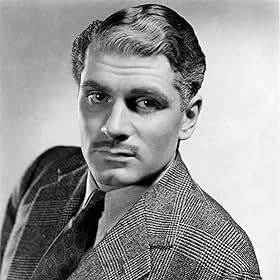
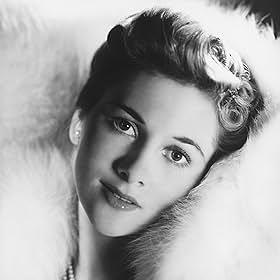


Bunny Beatty
- Maid
- (uncredited)

Billy Bevan
- Policeman
- (uncredited)
Sommaire
Reviewers say 'Rebecca' is acclaimed for its atmospheric storytelling and psychological tension, showcasing Alfred Hitchcock's masterful direction. The film's haunting ambiance, complex characters, and enigmatic Rebecca are highlighted. Key themes include identity, memory, and the struggle of the second Mrs. de Winter. Performances by Joan Fontaine, Laurence Olivier, and Judith Anderson are praised. Cinematography and set design enhance the gothic suspense. Some find the plot uneven and the ending less satisfying, but it remains a significant work in Hitchcock's career.
Avis en vedette
This is one of my favorite movies of all time. Definitely my favorite classic. There are some that come close, such as Citizen Kane, Spellbound, and Psycho, but none quite compare to this amazing movie.
The first thing that you notice is the outstanding cinematography. You have to remember that this movie was made in 1940, when they didn't have the technology we have now. But that first shot of the water beating up against the rocks grabs you and for one split second you wonder if maybe this isn't part of the movie but rather something filmed just recently. But then you see the familiar face of Laurence Olivier, reminding you that this was made 60 years ago, a fact that forever amazes me. The only oscar it won besides Best Picture was well deserved.
Another thing that makes it such a wonderful film is the acting. I have debated on whether Laurence Olivier's character, the tortured Maxim de Winter, is the pitiable character or if his second wife played by Joan Fontaine is really the one to feel sorry for. Every time I watch it I see it from a different point of view. Joan Fontaine is excellent. Laurence Olivier is wonderful, but that's no surprise. The only thing that bugs me is that it seems in every movie he's in (well, at least, everything I've seen him in), he always plays the same type of character. But he's extremely good at it, so I suppose it doesn't matter.
But although Joan Fontaine and Laurence Olivier are wonderful, Judith Anderson steals the show! The first time I watched the movie, I was immediately grabbed by her stunning performance as the sinister Mrs. Danvers. You hardly notice the other characters when she's in the scene. She acted the part so well that it's strange to imagine that she was any different in real life.
With a wonderful storyline, and a very surprising ending, Rebecca well deserves the title as the only of Hitchcock's films to win the oscar for Best Picture. Although it may not be the most famous of all his films, it is without a doubt the greatest
The first thing that you notice is the outstanding cinematography. You have to remember that this movie was made in 1940, when they didn't have the technology we have now. But that first shot of the water beating up against the rocks grabs you and for one split second you wonder if maybe this isn't part of the movie but rather something filmed just recently. But then you see the familiar face of Laurence Olivier, reminding you that this was made 60 years ago, a fact that forever amazes me. The only oscar it won besides Best Picture was well deserved.
Another thing that makes it such a wonderful film is the acting. I have debated on whether Laurence Olivier's character, the tortured Maxim de Winter, is the pitiable character or if his second wife played by Joan Fontaine is really the one to feel sorry for. Every time I watch it I see it from a different point of view. Joan Fontaine is excellent. Laurence Olivier is wonderful, but that's no surprise. The only thing that bugs me is that it seems in every movie he's in (well, at least, everything I've seen him in), he always plays the same type of character. But he's extremely good at it, so I suppose it doesn't matter.
But although Joan Fontaine and Laurence Olivier are wonderful, Judith Anderson steals the show! The first time I watched the movie, I was immediately grabbed by her stunning performance as the sinister Mrs. Danvers. You hardly notice the other characters when she's in the scene. She acted the part so well that it's strange to imagine that she was any different in real life.
With a wonderful storyline, and a very surprising ending, Rebecca well deserves the title as the only of Hitchcock's films to win the oscar for Best Picture. Although it may not be the most famous of all his films, it is without a doubt the greatest
Hitchcock's first American movie, a word, American that is, that should be put in quotes because as Hitchcock pointed out, all of the cast and almost all of the crew were British. The film has already garnered so many comments that I'll avoid repeating most of them. The plot I'm sure has been thoroughly outlined and professionally analyzed but a few points are worth emphasis.
The plot of very precisely structured. It consists basically of a man who is the dream of many women in the 1940s audience: ruggedly handsome, intelligent, keen witted, a bit commanding but not too much, fabulously wealthy, a touch roguish, and mysterious. It's the mystery that provides the plot engine. Every incident of his past emotional life needs to be pried out of Maxim deWinter (what a name, suggesting frigidity and distance) as if it were an abcessed tooth. Each secret, as he reveals it, is a surprise to his wife. Except for the final secret uncovered in the plot, which surprises everybody. Maxim could clear the whole mystery up with an hour's worth of private conversation with his wife. But of course he doesn't, or else there would be no story. That's why Hamlet takes so long to slaughter Claudius. And why the Indians don't shoot the horses as they're chasing the stagecoach.
The acting. Olivier is extremely good at impersonating deWinter with all his charm and challenge. George Sanders is the best cad that the movies ever produced, and he proves it again here. Mrs. Danvers has a face and an expression that looks like an ice sculpture. The implicit lesbianism in her character of course had to remain implicit, but it is still rather a shock when she tenderly unfolds Mrs. DeWinter's nightie and says smoothly, "Look, you can see my hand through it." As for Joan Fontaine, a friend in Ireland said of her performance, "She does the shivering wife very well." Precisely put. With her delicate bone structure, fragile looking limbs, and her overall ikabani flower arrangement appearance, her wide asymmetrical eyes, with one brow arching up over her pale forehead, she looks about to faint with fright through half the movie. The only thing coarse about her is her wardrobe: bulky knit sweaters over her girlish bosom, long flapping drab skirts over her small but saucy rump, and those clodhoppers she wears while clunking about the house. She does the shivering naif in at least two other films of the period -- Hitchcock's "Suspicion" and "Jane Eyre." In fact, rummaging through the disarranged attic that is my long-term memory, I can't really remember her "doing" any other role.
It's the closest Hitchcock ever came to making what was then called "a woman's picture." It received a "best picture" Oscar, which went to Selznick. Something Hitchcock seemed to resent for the remainder of his life. It was a commercial and critical success and it deserved to be.
The plot of very precisely structured. It consists basically of a man who is the dream of many women in the 1940s audience: ruggedly handsome, intelligent, keen witted, a bit commanding but not too much, fabulously wealthy, a touch roguish, and mysterious. It's the mystery that provides the plot engine. Every incident of his past emotional life needs to be pried out of Maxim deWinter (what a name, suggesting frigidity and distance) as if it were an abcessed tooth. Each secret, as he reveals it, is a surprise to his wife. Except for the final secret uncovered in the plot, which surprises everybody. Maxim could clear the whole mystery up with an hour's worth of private conversation with his wife. But of course he doesn't, or else there would be no story. That's why Hamlet takes so long to slaughter Claudius. And why the Indians don't shoot the horses as they're chasing the stagecoach.
The acting. Olivier is extremely good at impersonating deWinter with all his charm and challenge. George Sanders is the best cad that the movies ever produced, and he proves it again here. Mrs. Danvers has a face and an expression that looks like an ice sculpture. The implicit lesbianism in her character of course had to remain implicit, but it is still rather a shock when she tenderly unfolds Mrs. DeWinter's nightie and says smoothly, "Look, you can see my hand through it." As for Joan Fontaine, a friend in Ireland said of her performance, "She does the shivering wife very well." Precisely put. With her delicate bone structure, fragile looking limbs, and her overall ikabani flower arrangement appearance, her wide asymmetrical eyes, with one brow arching up over her pale forehead, she looks about to faint with fright through half the movie. The only thing coarse about her is her wardrobe: bulky knit sweaters over her girlish bosom, long flapping drab skirts over her small but saucy rump, and those clodhoppers she wears while clunking about the house. She does the shivering naif in at least two other films of the period -- Hitchcock's "Suspicion" and "Jane Eyre." In fact, rummaging through the disarranged attic that is my long-term memory, I can't really remember her "doing" any other role.
It's the closest Hitchcock ever came to making what was then called "a woman's picture." It received a "best picture" Oscar, which went to Selznick. Something Hitchcock seemed to resent for the remainder of his life. It was a commercial and critical success and it deserved to be.
Hitchcock felt 'Rebecca', his first Hollywood film, was a compromise, but as a viewer I just can't fault it. It's a masterpiece in my opinion, full of suspense, mystery and brooding atmosphere. It's also one of the most romantic movies I've ever seen. I've watched it several times over the years, and even now that I know all the plot twists and turns (quite shocking on your first viewing), it never fails to hook me in. One of the reasons it really works is the flawless casting. I'm not much of an Olivier fan but he's superb as de Winter, with just the right mixture of charm and coldness. And Joan Fontaine is just perfect as de Winter's new bride. I can't spot an unconvincing moment in her performance and can't imagine any other actress in the role. Hitchcock subsequently used her in 'Suspicion' with Cary Grant. She was also excellent in that but 'Rebecca' is a much stronger movie. The supporting cast also includes some brilliant performances, especially Judith Anderson ('Laura') as the extremely creepy Mrs. Danvers, George Sanders who plays Rebecca's slimy cousin, and Nigel Bruce in a typical role as de Winter's bumbling brother-in-law Major Lacy. Sanders subsequently worked again with Hitchcock in 'Foreign Correspondent', and Bruce played Cary Grant's lovable pal "Beaky" in 'Suspicion'. I sometimes think that Hitchcock's 1940s movies are overlooked by many because they are regarded as being too "old fashioned", but for me movies like 'Suspicion', 'Saboteur', 'Lifeboat' and 'Spellbound' are some of the most entertaining movies Hitchcock ever made, and 'Rebecca' is the best of the lot. If you want to be totally enthralled for two hours just watch 'Rebecca'!
I spent the majority of this film thinking about how lucky M. Olivier really was. To be able to wrap his arms around Joan Fontaine and kiss her. Oh my. She's one of the most beautiful women I've ever seen (almost, but not quite as beautiful as Veronica Lake). She's also absolutely perfect in the role of the second Mrs. DeWinter, taking a character that could have become a cloying bore in less capable hands and transforming her into a sympathetic and interesting figure.
The movie, on the whole, is similarly amazing, capturing the spirit and the tone of those great Gothic romances. Watching Rebecca, I was reminded (pleasantly) of Wuthering Heights; I do not mean to suggest that in some way this film re-tells the tale of Cathy and Heathcliff, but rather that Rebecca has the feel of Bronte's novel (I am most certainly not talking about the William Wyler adaptation a few years before the release of Rebecca. That's a terrible film that somehow manages to mis-interpret the novel).
I must assume that the guiding hand of Hitchcock played no small role in recreating the feel of a Gothic romance. There are very few that would be able to take a love story, infuse it with such gloom, with such a sense of foreboding, and still manage to create something that ends happily without it feeling like a cop-out. I'd also like to draw everyone's attention to the incredibly moving section of the film that occurs between the arrival of the second Mrs. DeWinter at Mandalay and the masqued ball. The emotional strain on the Joan Fontaine character is so palpable, so absolutely taxing, that it actually pains me to watch. I hurt along with her. Few other movies affect me so emotionally - one of them is Vertigo.
All in all, this is a fantastic piece of film-making from Hollywood's golden age. Laurence Olivier is in top-form, as he plays the quiet, sad Maxim and George Sanders is positively hateful.
10/10 - a visceral masterpiece
The movie, on the whole, is similarly amazing, capturing the spirit and the tone of those great Gothic romances. Watching Rebecca, I was reminded (pleasantly) of Wuthering Heights; I do not mean to suggest that in some way this film re-tells the tale of Cathy and Heathcliff, but rather that Rebecca has the feel of Bronte's novel (I am most certainly not talking about the William Wyler adaptation a few years before the release of Rebecca. That's a terrible film that somehow manages to mis-interpret the novel).
I must assume that the guiding hand of Hitchcock played no small role in recreating the feel of a Gothic romance. There are very few that would be able to take a love story, infuse it with such gloom, with such a sense of foreboding, and still manage to create something that ends happily without it feeling like a cop-out. I'd also like to draw everyone's attention to the incredibly moving section of the film that occurs between the arrival of the second Mrs. DeWinter at Mandalay and the masqued ball. The emotional strain on the Joan Fontaine character is so palpable, so absolutely taxing, that it actually pains me to watch. I hurt along with her. Few other movies affect me so emotionally - one of them is Vertigo.
All in all, this is a fantastic piece of film-making from Hollywood's golden age. Laurence Olivier is in top-form, as he plays the quiet, sad Maxim and George Sanders is positively hateful.
10/10 - a visceral masterpiece
Director Alfred Hitchcock is renowned for his visual acuity, creating some of the most memorable shots in movie history; he also had a keen eye for beauty, casting some of Hollywood's most stunning actresses in iconic roles: Grace Kelly in Rear Window, Maureen O'Hara in Jamaica Inn, Tippi Hedren in The Birds, Ingrid Bergman in Spellbound, and Janet Leigh in Psycho, to name but a few. Perhaps his most enchanting leading lady was Joan Fontaine, who won an Oscar for her role in Suspicion (1941), but who was never more appealing than in her first film for Hitch, Rebecca, based on a novel by Daphne Du Maurier.
The gorgeous Fontaine plays a meek young woman (we never discover her name, but she's not the 'Rebecca' of the title) who falls for rich aristocrat 'Maxim' de Winter (Laurence Olivier) while working in the South of France. Equally besotted, Maxim proposes to the self-effacing beauty, and takes her back to his ancestral home, Manderley, which he once shared with his first wife Rebecca, before she drowned in a boating accident. The new Mrs. de Winter does her best to adapt to her new lifestyle, but is constantly under the shadow of her predecessor, with stern housekeeper Mrs. Danvers (Judith Anderson) being particularly disapproving of Maxim's new bride, deliberately driving a wedge between the married couple and even going so far as to try and talk Mrs. de Winter Mk. II into killing herself.
Thus far, the film is pure melodrama and sappy romance, and avid Hitchcock fans might be wondering where the murder and mystery is; worry, not, for this comes in the second half of the film and provides plenty of intrigue and suspense as Maxim reveals what really happened to his first wife and is subsequently suspected of her murder. Both his wife and the viewer are aware of his innocence, but with Rebecca's lover Jack Favell (George Sanders) accusing Mr. de Winter of murder, and plenty of damning evidence, things are looking pretty bad for the poor fellow. It all wraps up nicely in the end, of course, but there are plenty of tense moments along the way, all handled in the director's typically assured manner, with bags of atmosphere and sumptuous cinematography.
But as great as the direction and story are, it is the performances that really make Rebecca a winner: Olivier is perfect as the troubled toff, Anderson is wonderfully wicked as scheming housekeeper Danvers, nobody does 'bumbling oaf' quite as well as Nigel Bruce (playing Major Giles Lacy, who puts his foot in his mouth whenever he speaks), Sanders is suitably slimy as adulterous blackmailer Favell, and Fontaine... well, she is completely captivating, every smile, every tilt of her head, and every nervous glance guaranteed to win over the viewer (she was nominated for Best Actress in a Leading Role at the Oscars, but lost to Ginger Rogers). Hell, even the dog that played Maxim's mutt Jasper was excellent (so cute!).
The gorgeous Fontaine plays a meek young woman (we never discover her name, but she's not the 'Rebecca' of the title) who falls for rich aristocrat 'Maxim' de Winter (Laurence Olivier) while working in the South of France. Equally besotted, Maxim proposes to the self-effacing beauty, and takes her back to his ancestral home, Manderley, which he once shared with his first wife Rebecca, before she drowned in a boating accident. The new Mrs. de Winter does her best to adapt to her new lifestyle, but is constantly under the shadow of her predecessor, with stern housekeeper Mrs. Danvers (Judith Anderson) being particularly disapproving of Maxim's new bride, deliberately driving a wedge between the married couple and even going so far as to try and talk Mrs. de Winter Mk. II into killing herself.
Thus far, the film is pure melodrama and sappy romance, and avid Hitchcock fans might be wondering where the murder and mystery is; worry, not, for this comes in the second half of the film and provides plenty of intrigue and suspense as Maxim reveals what really happened to his first wife and is subsequently suspected of her murder. Both his wife and the viewer are aware of his innocence, but with Rebecca's lover Jack Favell (George Sanders) accusing Mr. de Winter of murder, and plenty of damning evidence, things are looking pretty bad for the poor fellow. It all wraps up nicely in the end, of course, but there are plenty of tense moments along the way, all handled in the director's typically assured manner, with bags of atmosphere and sumptuous cinematography.
But as great as the direction and story are, it is the performances that really make Rebecca a winner: Olivier is perfect as the troubled toff, Anderson is wonderfully wicked as scheming housekeeper Danvers, nobody does 'bumbling oaf' quite as well as Nigel Bruce (playing Major Giles Lacy, who puts his foot in his mouth whenever he speaks), Sanders is suitably slimy as adulterous blackmailer Favell, and Fontaine... well, she is completely captivating, every smile, every tilt of her head, and every nervous glance guaranteed to win over the viewer (she was nominated for Best Actress in a Leading Role at the Oscars, but lost to Ginger Rogers). Hell, even the dog that played Maxim's mutt Jasper was excellent (so cute!).
Oscars Best Picture Winners, Ranked
Oscars Best Picture Winners, Ranked
See the complete list of Oscars Best Picture winners, ranked by IMDb ratings.




Le saviez-vous
- AnecdotesOver 20 actresses were screen-tested for the role of Mrs. de Winter, which eventually went to newcomer Joan Fontaine. One of them was Vivien Leigh, for whom Sir Laurence Olivier was pressing, as they were a couple at the time.
- GaffesThe large map on the courtroom wall is a map of the Americas. It is grossly implausible that such a map would be on the wall of an English courtroom.
- Citations
[the new Mrs. de Winter wants to dispose of Rebecca's letters]
The Second Mrs. de Winter: I want you to get rid of all these things.
Mrs. Danvers: But these are Mrs. de Winter's things.
The Second Mrs. de Winter: *I* am Mrs. de Winter now!
- Générique farfeluThe original 1940 credits read "Selznick International presents its picturization of Daphne Du Maurier's 'Rebecca'". The credits on the re-issue version read "The Selznick Studio presents its production of Daphne Du Maurier's 'Rebecca'".
- Autres versionsThe opening credits were re-done (with different font) for the 1950's re-release of the movie. It is these credits that have turned up on all telecasts of the film (even as recently as 2013) and all previous video releases. The Criterion release (which is now only available through outlet stores) restores all of the credits to their original form.
- ConnexionsEdited into The Last Tycoon: Pilot (2016)
- Bandes originalesLove's Old Sweet Song (Just a Song at Twilight)
(1884) (uncredited)
Music by J.L. Molloy
Hummed by Joan Fontaine
Meilleurs choix
Connectez-vous pour évaluer et surveiller les recommandations personnalisées
Détails
Box-office
- Budget
- 1 288 000 $ US (estimation)
- Brut – à l'échelle mondiale
- 114 106 $ US
- Durée
- 2h 10m(130 min)
- Couleur
- Rapport de forme
- 1.37 : 1
Contribuer à cette page
Suggérer une modification ou ajouter du contenu manquant