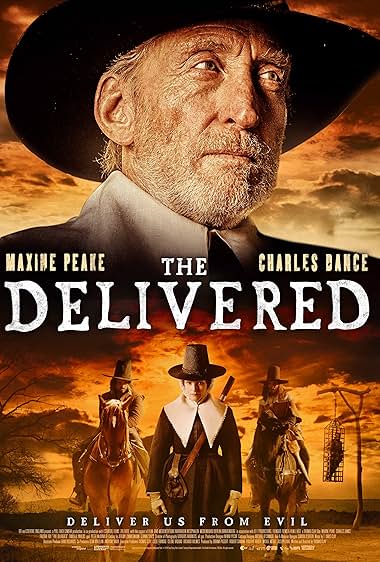

L'histoire d'une femme qui apprend à transcender son mariage oppressif et à découvrir un nouveau monde de possibilités - mais à un coût personnel élevé.L'histoire d'une femme qui apprend à transcender son mariage oppressif et à découvrir un nouveau monde de possibilités - mais à un coût personnel élevé.L'histoire d'une femme qui apprend à transcender son mariage oppressif et à découvrir un nouveau monde de possibilités - mais à un coût personnel élevé.
- Réalisation
- Scénariste
- Vedettes
- Prix
- 1 victoire et 7 nominations au total


Avis en vedette
Very good film but sometimes it navigates away from the focus a bit too much unintentionally. Still loved it!
Most of us anyway hunger for original films and one of the many positives of Fanny Lye Deliver'd, is that it truly is a movie based on original ideas. Fancy a Puritan western? A folk horror tale? Or just an extremely unusual period piece? Thomas Clay's Fanny might just be more than worthy of your attention. But having said that, I also have to admit I have mixed feelings about it and am disappointed that such a beautifully acted film, which spent 3 years in post production (almost unbelievable for such a clearly low budget production) didn't end up being a better product.
There is a lot to admire here, The film looks amazing: the costumes and production design are striking and the subdued colours, often viewed through mist, make many shots look almost like paintings. The small cast is excellent, especially Charles Dance, who gives his stern character some humanity, and Maxine Peak, who, as the titular character, gradually discovers there are other ways to live and is tempted by the possibilities. The occasional anachronistic-sounding piece of dialogue aside, there's a strong period feeling.
The narrative itself is compellingly interesting, especially for those with a genuine interest in the time of the singular English republic. The pace varies for sure, but the storyline could never be accused of being predictable. And the major characters of the admittedly, deliberately small cast are all engaging in their own ways.
So, the letdowns? Clay's score, added in the above - stated post production phase of course, is varied in its themes and instrumentation but does seem to be lathered on way too much and overall ends up feeling rather awkward. At times it seems as though the music is simply playing in the background with little or no relation to what's happening on screen. And the inclusion of an arrangement of the Ode to Joy from Beethoven's Ninth Symphony more than 150 years before the composer wrote it was another jarring anachronism, too familiar to be fully effective.
On top of this, the film builds to a climactic action set piece, which is filmed in virtual darkness. For about a minute and a half, we can't really see what's going on, only hear a multitude of sounds. It might make for a good radio play, but it doesn't make for good cinema. The light of day reveals what has occurred, but the feeling that much dramatic heft, has been expunged from our viewing, cannot be easily passed off. Again, I have to ask, why was this allowed to occur in a film so long in post production and editing? Surely it could have been remedied in some way. It also would appear that this scene, which really defines the "Deliver'd" aspect of the film's title should have appeared somewhat earlier in the film in order that we can discover how well Fanny Lye has been delivered of her previous life.
In concluding, FLD will undoubtedly please many punters looking for movies with original riffs. However it only achieves qualified success, due to some wayward directorial decisions, from its albeit, very creative writer - director.
There is a lot to admire here, The film looks amazing: the costumes and production design are striking and the subdued colours, often viewed through mist, make many shots look almost like paintings. The small cast is excellent, especially Charles Dance, who gives his stern character some humanity, and Maxine Peak, who, as the titular character, gradually discovers there are other ways to live and is tempted by the possibilities. The occasional anachronistic-sounding piece of dialogue aside, there's a strong period feeling.
The narrative itself is compellingly interesting, especially for those with a genuine interest in the time of the singular English republic. The pace varies for sure, but the storyline could never be accused of being predictable. And the major characters of the admittedly, deliberately small cast are all engaging in their own ways.
So, the letdowns? Clay's score, added in the above - stated post production phase of course, is varied in its themes and instrumentation but does seem to be lathered on way too much and overall ends up feeling rather awkward. At times it seems as though the music is simply playing in the background with little or no relation to what's happening on screen. And the inclusion of an arrangement of the Ode to Joy from Beethoven's Ninth Symphony more than 150 years before the composer wrote it was another jarring anachronism, too familiar to be fully effective.
On top of this, the film builds to a climactic action set piece, which is filmed in virtual darkness. For about a minute and a half, we can't really see what's going on, only hear a multitude of sounds. It might make for a good radio play, but it doesn't make for good cinema. The light of day reveals what has occurred, but the feeling that much dramatic heft, has been expunged from our viewing, cannot be easily passed off. Again, I have to ask, why was this allowed to occur in a film so long in post production and editing? Surely it could have been remedied in some way. It also would appear that this scene, which really defines the "Deliver'd" aspect of the film's title should have appeared somewhat earlier in the film in order that we can discover how well Fanny Lye has been delivered of her previous life.
In concluding, FLD will undoubtedly please many punters looking for movies with original riffs. However it only achieves qualified success, due to some wayward directorial decisions, from its albeit, very creative writer - director.
I attempt to watch all the historical films no matter how bad they are due to my love for history. I saw some articles about the films journey and struggles to get it filmed edited and released. I was hoping that the journey of making Fanny Lye was as good as the end product. It was! Though the story felt rushed at one small section, and the sheriff contrasts heavily with other characters, the film provides high historical accuracy in an area cinema has rarely covered. It was a blast to watch and the almost 2 hour runtime somehow felt way shorter. Fox provided such a vibrant cunning show and his chemistry on-screen with Charles Dance was something amazing!!!!
I can see where some reviews are coming from with negativity as the film is no where near the sort of expectations a historical film tells, no super ordinary humans, just a regular 1600s family. But this film deserves a chance to be watched and a chance for an open mind to experience an era that you will probably never watch or hear of for many years in the future.
A labor of love for its writer and director Thomas Clay, who spent the better part of 10 years developing this 1600's set English period folk piece; his first film since 2008's Soi Cowboy, Fanny Lye Deliver'd is an almost indescribable melting pot of drama, thriller and religiously tinged horror and while it doesn't all work, this unique piece of independent film-making is still worth your time.
Introducing us to a post war era of rural England, where witch hunts, churches and religious zealots run rampant throughout the mud-filled lands of the English countryside, Deliver'd introduces us to odd couple John and Fanny, who alongside their young boy Arthur live out a quiet existence on their farmland (custom built for this film), with their faith dominating their lives, a faith tested by the arrival of Freddie Fox's Thomas and Tanya Reynolds Rebecca, a couple who couldn't be further from the Lye's in nature and desires.
When watching clips or trailers of Clay's film one would be right in expecting something of The Witch like horror but Deliver'd is a much different beast to that genre classic and while both films share similar settings, religious/faith themed undertones and characters grappling with their teachings going head to head with their feelings, Deliver'd is a more dramatic themed feminist-centric yarn that allows its breakout performer Maxine Peake one of the roles of her increasingly impressive career.
Fanny may be the titular character of the film but it takes a while for Peake's fully formed performance to take centre stage here in what's a masterful build-up from her and Clay with Fanny undergoing significant evolution from the first time we see her tending to her chores through to her last triumphant frame and after notable turns in well-regarded if little seen offerings like Funny Cow and Peterloo, Peake is an undeniable triumph here as complicated wife, mother and independent spirit.
There's a lot going on around Fanny and Clay's film is loaded with ideas and explorations, some of which don't feel fully formed come the films more drastically pivoted final stretch but it's an unpredictable affair and one that might not make for easy viewing but remains constantly engaging throughout as we remain on edge, unsure of what lays ahead for our collection of troubled souls in equally troubled times.
Final Say -
A film that defies simple explanation or analysis, Fanny Lye Deliver'd is a confronting film and one that struggles at times to juggle its various components but its strong trope of actors and wholly original vibe makes for mostly fascinating and unpredictable viewing.
3 1/2 muddy fields out of 5
Introducing us to a post war era of rural England, where witch hunts, churches and religious zealots run rampant throughout the mud-filled lands of the English countryside, Deliver'd introduces us to odd couple John and Fanny, who alongside their young boy Arthur live out a quiet existence on their farmland (custom built for this film), with their faith dominating their lives, a faith tested by the arrival of Freddie Fox's Thomas and Tanya Reynolds Rebecca, a couple who couldn't be further from the Lye's in nature and desires.
When watching clips or trailers of Clay's film one would be right in expecting something of The Witch like horror but Deliver'd is a much different beast to that genre classic and while both films share similar settings, religious/faith themed undertones and characters grappling with their teachings going head to head with their feelings, Deliver'd is a more dramatic themed feminist-centric yarn that allows its breakout performer Maxine Peake one of the roles of her increasingly impressive career.
Fanny may be the titular character of the film but it takes a while for Peake's fully formed performance to take centre stage here in what's a masterful build-up from her and Clay with Fanny undergoing significant evolution from the first time we see her tending to her chores through to her last triumphant frame and after notable turns in well-regarded if little seen offerings like Funny Cow and Peterloo, Peake is an undeniable triumph here as complicated wife, mother and independent spirit.
There's a lot going on around Fanny and Clay's film is loaded with ideas and explorations, some of which don't feel fully formed come the films more drastically pivoted final stretch but it's an unpredictable affair and one that might not make for easy viewing but remains constantly engaging throughout as we remain on edge, unsure of what lays ahead for our collection of troubled souls in equally troubled times.
Final Say -
A film that defies simple explanation or analysis, Fanny Lye Deliver'd is a confronting film and one that struggles at times to juggle its various components but its strong trope of actors and wholly original vibe makes for mostly fascinating and unpredictable viewing.
3 1/2 muddy fields out of 5
If you live in a family that is quite strict, strangers coming from outside may feel like a welcome (pun intended) distraction. On the other hand, the father (wonderfully played here) may have the best interest in mind and heart, but his harsh and way too restricted views are not helping his wife or "kid".
The outlaws from outside really bring imbalance. Depending on your moral views, your sympathy may sway from one scene to the other. It is ok to feel, you are being given a tough choice. Morally speaking this isn't too easy - but that is what the movie gives you. Something to think about - something to chew on. And questions about what is good and what is bad, that go beyond religion and obvious answers.
Not sure why my previous comment got deleted, but while I had not saved it yet, I will park this somewhere just in case, someone feels the need to be mean - which would bring us to the characters: who is eventually the mean one? Who do you side with? Have you decided yet?
The outlaws from outside really bring imbalance. Depending on your moral views, your sympathy may sway from one scene to the other. It is ok to feel, you are being given a tough choice. Morally speaking this isn't too easy - but that is what the movie gives you. Something to think about - something to chew on. And questions about what is good and what is bad, that go beyond religion and obvious answers.
Not sure why my previous comment got deleted, but while I had not saved it yet, I will park this somewhere just in case, someone feels the need to be mean - which would bring us to the characters: who is eventually the mean one? Who do you side with? Have you decided yet?




Le saviez-vous
- AnecdotesThe local accent in Shropshire and eastern Powys of the time was not recognisably "Welsh" or "West Midlands" in the way that might be expected today.
- GaffesAmong the linguistic anachronisms in the script are the following: Pee - to urinate: Although an old expression, the Oxford English Dictionary states that the term didn't come about until the eighteenth century, the century after this film is set. Shrooms - mushrooms with psychedelic properties: The first recorded use of this term in print was in Australia in 1977 Mixed emotions - a mid-twentieth century term describing ambivalence. Bleed out - to die due to blood loss: A twentieth century term with its origins in the United States (it is suggested that it was originally military jargon). Lose the attitude - An instruction meaning don't be rude: A late twentieth century term with its origins in the US.
- Autres versionsAlso exists in an Extended Cut, around 19 minutes longer than the Theatrical Cut, and currently only available through the film's 4K Ultra HD disc release in the UK. This version is the director's preferred version of the film.
- Bandes originalesMarch to Joy
Written by Thomas Clay
Based on "Symphony No. 9" written by Ludwig van Beethoven
Heard as end theme
Meilleurs choix
Connectez-vous pour évaluer et surveiller les recommandations personnalisées
- How long is The Delivered?Propulsé par Alexa
Détails
- Date de sortie
- Pays d’origine
- Sites officiels
- Langue
- Aussi connu sous le nom de
- The Delivered
- Lieux de tournage
- sociétés de production
- Consultez plus de crédits d'entreprise sur IMDbPro
Box-office
- Brut – à l'échelle mondiale
- 40 753 $ US
- Durée
- 1h 52m(112 min)
- Couleur
- Rapport de forme
- 2.39 : 1
Contribuer à cette page
Suggérer une modification ou ajouter du contenu manquant