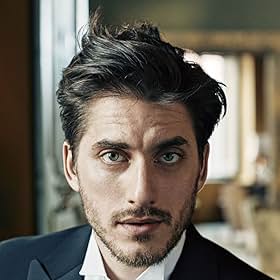
Crónica del ascenso al poder del dictador italiano Benito Mussolini en una historia de un país que se rindió a la dictadura.Crónica del ascenso al poder del dictador italiano Benito Mussolini en una historia de un país que se rindió a la dictadura.Crónica del ascenso al poder del dictador italiano Benito Mussolini en una historia de un país que se rindió a la dictadura.
- Premios
- 3 premios ganados y 1 nominación en total
Explorar episodios
Opiniones destacadas
Based on the 2018 novel of the same name by Italian author Antonio Scurati, "Mussolini: Son of the Century" (M. Il figlio del secolo) is equal parts high stakes drama and historical sweep and pageantry, chronicling the early years of Italian Fascist dictator Benito Mussolini from his stint as newspaperman and combative revolutionary to the hallowed seats of the Italian parliament. Along the way the road is paved with bombast, fiery speeches, mercurial temperaments and personalities, sex (a lot of the "behind" kind), political machinations, violence and murder. Lead actor Luca Marinelli carries this rambunctious 8-Part miniseries ably as the balding and fleshy upnosed, arms akimbo, domineering and comically strutting Mussolini as he stomps his way from tenement to the halls of power. The solid supporting cast and realist script with an intellectual bent add quality and depth to this tale of chaos and disorder.
Oddly for all it's in your face noise and unyielding relentlessness the series is slow highlighting its lack of that artistic touch that graces cinematic greatness. The EDM soundtrack is a woefully distracting and misguided intrusion to this Jazz Age depiction. It's history. And what do you do when you're tackling serious history?
While no classic, "Mussolini: Son of the Century" is one of the notable television releases of recent times and a good watch for fans of history and quality TV in general. A panoramic glimpse at one of the darkest eras of human history and a potent lesson on the price of megalomania where at one moment one is speaking in front of adoring thousands from a balcony; the next one's corpse is hanging at the middle of a street above a seething crowd hellbent on revenge, so intent that when one's cadaver hits the ground the furious hellions kick one's face so bad that one's visage deforms sideways as if eternally wanting to kiss the ground it once ruled on. Take it easy.
Oddly for all it's in your face noise and unyielding relentlessness the series is slow highlighting its lack of that artistic touch that graces cinematic greatness. The EDM soundtrack is a woefully distracting and misguided intrusion to this Jazz Age depiction. It's history. And what do you do when you're tackling serious history?
While no classic, "Mussolini: Son of the Century" is one of the notable television releases of recent times and a good watch for fans of history and quality TV in general. A panoramic glimpse at one of the darkest eras of human history and a potent lesson on the price of megalomania where at one moment one is speaking in front of adoring thousands from a balcony; the next one's corpse is hanging at the middle of a street above a seething crowd hellbent on revenge, so intent that when one's cadaver hits the ground the furious hellions kick one's face so bad that one's visage deforms sideways as if eternally wanting to kiss the ground it once ruled on. Take it easy.
I mainly focus on the film aspects. Without getting too deep into it, I try to gauge how much truth versus mystification is presented. I don't align with either the right or the left.
This series is one of the most beautiful I have seen in recent times. Mussolini's dialogue with the camera is pure gold. The way he conveys his thoughts, mocks the viewer, and shares his confessions keeps you glued to the screen and makes you feel involved in the story. Marinelli is fantastic! Those who criticize him likely do so for reasons unrelated to his performance. Francesco Russo is superb, and Barbara Chichiarelli is perfect!
While the cinematography is out for everyone to appreciate, I feel a need to stress a couple of key points international audiences might miss.
First and foremost: the series is based on the first of four books about the life of Mussolini, and while they are routinely described as "novels", they are in fact impressively researched from a historical point. Pretty much every dialogue, speech, document and event are openly sourced and beyond question.
While the staging frequently and blatantly is not realistic in order to make the show more spectacular, pretty much everything happened as you see it - including a D'Annunzio's Japanese samurai secretary and other apparently absurd elements.
My second point is about the acting and language. While it will fly above the heads of anyone not _very_ experienced with Italian, the work behind regional accents, lapses into dialects and the very speech patterns of 100 years ago is exceptional indeed. It is a shame this will mostly go unnoticed, as it actually conveys a fair bit of refinement to an already stellar ensemble performance.
Lastly, the (not present in the books) stabs at current politics are far more varied than expected. Like, everyone can understand a sudden fourth-wall-breaking "Make Italy Great Again!", but you'll probably miss the reference to the catastrophic Berlusconi era (delivered via subtle voice and body acting, or even just a brief costume change), or to the sorry state of the last few recent Italian legislatures.
In short: come for the show, stay for the history lesson... and see it with an Italian resident if you can to enjoy it at its fullest.
First and foremost: the series is based on the first of four books about the life of Mussolini, and while they are routinely described as "novels", they are in fact impressively researched from a historical point. Pretty much every dialogue, speech, document and event are openly sourced and beyond question.
While the staging frequently and blatantly is not realistic in order to make the show more spectacular, pretty much everything happened as you see it - including a D'Annunzio's Japanese samurai secretary and other apparently absurd elements.
My second point is about the acting and language. While it will fly above the heads of anyone not _very_ experienced with Italian, the work behind regional accents, lapses into dialects and the very speech patterns of 100 years ago is exceptional indeed. It is a shame this will mostly go unnoticed, as it actually conveys a fair bit of refinement to an already stellar ensemble performance.
Lastly, the (not present in the books) stabs at current politics are far more varied than expected. Like, everyone can understand a sudden fourth-wall-breaking "Make Italy Great Again!", but you'll probably miss the reference to the catastrophic Berlusconi era (delivered via subtle voice and body acting, or even just a brief costume change), or to the sorry state of the last few recent Italian legislatures.
In short: come for the show, stay for the history lesson... and see it with an Italian resident if you can to enjoy it at its fullest.
A solid recommendation from me. I really enjoyed the flow, acting, action, and storytelling. I always find it fascinating how such a destructive force can rise to power-what forces support it, oppose it, and which ones get swayed, and why. The quality of the series is excellent. For me, it belongs in the same league as Der Untergang and Unsere Mütter, unsere Väter.
What makes this series particularly compelling is its exploration of the political landscape in Italy at the time. The power struggles between the socialists, the monarchy, and other factions add layers of intrigue, showing how different forces either resisted or enabled the rise of authoritarianism. The shifting allegiances and moral dilemmas make for gripping storytelling.
On top of that, the action sequences are intense and well-executed. The battles, street clashes, and political confrontations feel raw and realistic, adding weight to the historical events. The choreography, cinematography, and pacing of these scenes keep the tension high, making it a visually and emotionally engaging experience.
What makes this series particularly compelling is its exploration of the political landscape in Italy at the time. The power struggles between the socialists, the monarchy, and other factions add layers of intrigue, showing how different forces either resisted or enabled the rise of authoritarianism. The shifting allegiances and moral dilemmas make for gripping storytelling.
On top of that, the action sequences are intense and well-executed. The battles, street clashes, and political confrontations feel raw and realistic, adding weight to the historical events. The choreography, cinematography, and pacing of these scenes keep the tension high, making it a visually and emotionally engaging experience.
For those who have any interest in history, politics, and lessons on human nature, this is the show for you. Seeing the rise of Mussolini in such a way - with Luca Marinelli frequently breaking the fourth wall to speak to us, his audience - keeps it captivating and really holds up to the meta spectacle of his character. Despite the seriousness of the topic, the biting sarcasm and amusing moments keep it entertaining, too. Of course, for anyone who's been following the recent global rise in certain political trends, they'll undoubtedly feel a little uneasy when recognizing the patterns in today's day and age. An impressive production, Luca Marinelli's portrayal of the famous Italian dictator is downright stupendous. A wholehearted recommendation to watch and be amazed by M - Son of the Century.
¿Sabías que…?
- TriviaWhen Joe Wright got on board as director, at first he meant to have the actors say their lines in English. Then he changed his mind and chose to shoot the series in Italian, for a higher immediacy.
Selecciones populares
Inicia sesión para calificar y agrega a la lista de videos para obtener recomendaciones personalizadas
- How many seasons does Mussolini: Son of the Century have?Con tecnología de Alexa
Detalles
- Fecha de lanzamiento
- Países de origen
- Sitio oficial
- Idioma
- También se conoce como
- Mussolini: Son of the Century
- Locaciones de filmación
- Productoras
- Ver más créditos de la compañía en IMDbPro
- Tiempo de ejecución
- 52min
- Color
Contribuir a esta página
Sugiere una edición o agrega el contenido que falta