CALIFICACIÓN DE IMDb
6.9/10
6.4 k
TU CALIFICACIÓN

Agrega una trama en tu idiomaThree stories set in three times, 1911, 1966 and 2005. Two actors play the two main characters in each story.Three stories set in three times, 1911, 1966 and 2005. Two actors play the two main characters in each story.Three stories set in three times, 1911, 1966 and 2005. Two actors play the two main characters in each story.
- Premios
- 8 premios ganados y 19 nominaciones en total


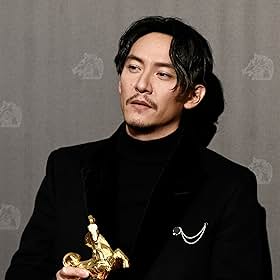
Chang Chen
- Chen
- (segments "A Time for Love", "A Time for Freedom", "A Time for Youth")
- …

Shu-Chen Liao
- Hostess
- (segments "A Time for Love", "A Time for Freedom", "A Time for Youth")
- …
Mei Di
- May's mother
- (segments "A Time for Love", "A Time for Freedom", "A Time for Youth")
- …
Shi-Shan Chen
- Haruko
- (segments "A Time for Love", "A Time for Freedom", "A Time for Youth")
- …
Pei-Hsuan Lee
- Yue
- (segments "A Time for Love", "A Time for Youth")
- …
Yi-Hua Chang
- Billiard Player
- (segment "A Time for Love")
Hung-Yi Hsiao
- Billiard Player
- (segment "A Time for Love")
Hui-ni Hsu
- Billiard Player
- (segment "A Time for Love")
Pei-Te Hsu
- Billiard Player Mr. Su
- (segments "A Time for Love", "A Time for Freedom", "A Time for Youth")
- …
Chi Feng Hung
- Billiard Player
- (segment "A Time for Love")

Ling-Tzu Liao
- Passenger
- (segments "A Time for Love", "A Time for Freedom")
- …
Fu-Han Lyu
- Billiard Player
- (segments "A Time for Love", "A Time for Youth")
- …
Kuo-Chih Shu
- Master Su
- (segment "A Time for Freedom")

Chih-cheng Wang
- Middleman
- (segment "A Time for Freedom")
Wei-liu Wang
- Housekeeper
- (segment "A Time for Freedom")
- Dirección
- Escritura
- Todo el elenco y el equipo
- Producción, taquilla y más en IMDbPro
Opiniones destacadas
THREE TIMES (Zui hao de shi guang) is so frank a film that the viewer may get lost looking for the hidden meanings in this century traversal of lovers' interactions in China. Not one for simple linear film-making, director Hsiao-hsien Hou instead opts for mood and suggestion and leaves the paucity of dialog to make room for emotional involvement and response. Three periods - 1966 A Time for Love, 1911 A Time for Freedom, and 2005 A Time for Youth - are depicted with the same main characters, Qi Shu and Chen Chang, who prove to be exceptionally sensitive to the concept from the director: with each new tale these fine actors mold new characters and questions and yet allow us to see a line of similarity in the couples as the director has suggested.
The film wisely opens with the most successful of the three 'Times' - 1966 A Time for Love - - tracing the emergence of timid passion between a lad headed for the military and a young girl who works in a pool hall. They communicate by letters after their first brief introductory encounter and circumstances interfere with the progress of their relationship in 1966 Taiwan. The middle section 1911 A Time for Freedom is gorgeous visually and conceptually the director has elected to use the cinematic form of the period (silent movie) to tell his story about the freeing of a young girl from the grip of a brothel madam and surveys the political tensions between Japan and China as the quietly lighted story of love and yearning unfolds. The film ends with 2005 A Time for Youth and here our lovers are caught up in the pollution of smog, cellphones, emails, nightclubs, and infidelities for same sex affairs that speak loudly about the tenor of the times.
Hsiao-hsien Hou's films are an acquired taste and many will find the choppy editing, the fragmentary scenes that are not always well focused for the story line, and the over-long length (130 minutes) too much to endure. But the ideas are fresh and the characters and vignettes are memorable, and most of the major critics in the media have lavished praise on this film. It is an interesting work but for this viewer there are enough flaws to keep it grounded. Grady Harp
The film wisely opens with the most successful of the three 'Times' - 1966 A Time for Love - - tracing the emergence of timid passion between a lad headed for the military and a young girl who works in a pool hall. They communicate by letters after their first brief introductory encounter and circumstances interfere with the progress of their relationship in 1966 Taiwan. The middle section 1911 A Time for Freedom is gorgeous visually and conceptually the director has elected to use the cinematic form of the period (silent movie) to tell his story about the freeing of a young girl from the grip of a brothel madam and surveys the political tensions between Japan and China as the quietly lighted story of love and yearning unfolds. The film ends with 2005 A Time for Youth and here our lovers are caught up in the pollution of smog, cellphones, emails, nightclubs, and infidelities for same sex affairs that speak loudly about the tenor of the times.
Hsiao-hsien Hou's films are an acquired taste and many will find the choppy editing, the fragmentary scenes that are not always well focused for the story line, and the over-long length (130 minutes) too much to endure. But the ideas are fresh and the characters and vignettes are memorable, and most of the major critics in the media have lavished praise on this film. It is an interesting work but for this viewer there are enough flaws to keep it grounded. Grady Harp
Interestingly enough, two elites of contemporary Chinese directors have presented their latest nostalgic works between 2004 and 2005. Compared to Wong Kar-wai's hybrid style and inscrutable cinematic codes in last year's 2046, Hou Hsiao Hsien's new masterpiece Three times in this year's Cannes is distinctly built on a three-episode structure and simply reminiscent of his chefs-d'oeuvre from his different golden ages.
The first episode "A time for love" is obviously associated with Hou's earlier works in 1980s. Set in Taiwan's snooker parlor in 1960s, a nostalgic aura infused with youthful vigor and adolescent impulse successfully recurred in Hou's stylish, experienced long-shots. The subtle relationship between the two main characters was getting clear with repetition of the Taiwanese old songs and western pops Smoke gets in your eyes, The Beatles' Rain and tears. This episode contains Director's real experiences and was rendered the most accessible of the three stories.
The second episode "A time for freedom" reminds me of his acclaimed classic Flower of Shanghai. Similar backgrounds, characters, chamber settings, fastidious costume designs refer to the identical tragic theme: Historically and emotionally lost. The surprise comes from the narration, which is dealt with in the form of silent movies. What struck me more is Shu Qi's weepy performance of those ancient elegies in an incomprehensible language.
The last episode "A time for youth" drew me back to the contemporary Taiwan in 2005. This episode is shockingly flooded with a variety of Generation-X's stuff such as e-mails, blog, cellar messages, trance music, digital camera, drugs, epilepsy etc., and also focused upon a group of aimless and hopeless younger animals, center of whom is a premature girl played by Shu Qi. Reminiscent of Millennium Mambo, also starring amazing Shu Qi as the key character, this story is loosely predicted on a girl whose relationship between her homosexual lover and a young male camera is morbidly and unapologetically intertwined. It's hard to conjecture why the director chose such an extraordinary story here as a representation of the contemporary society. Utilization of all kinds of most up-dated symbols has, however, proved his master touch in exactly presenting the loneliness, aimlessness and helplessness of the X-Generation living in the new century.
As the best actress in 2005's Golden Horse Award, Shu Qi's portrait of three women from different times is so convincing and laudable that she is totally competent for more difficult characters.
The first episode "A time for love" is obviously associated with Hou's earlier works in 1980s. Set in Taiwan's snooker parlor in 1960s, a nostalgic aura infused with youthful vigor and adolescent impulse successfully recurred in Hou's stylish, experienced long-shots. The subtle relationship between the two main characters was getting clear with repetition of the Taiwanese old songs and western pops Smoke gets in your eyes, The Beatles' Rain and tears. This episode contains Director's real experiences and was rendered the most accessible of the three stories.
The second episode "A time for freedom" reminds me of his acclaimed classic Flower of Shanghai. Similar backgrounds, characters, chamber settings, fastidious costume designs refer to the identical tragic theme: Historically and emotionally lost. The surprise comes from the narration, which is dealt with in the form of silent movies. What struck me more is Shu Qi's weepy performance of those ancient elegies in an incomprehensible language.
The last episode "A time for youth" drew me back to the contemporary Taiwan in 2005. This episode is shockingly flooded with a variety of Generation-X's stuff such as e-mails, blog, cellar messages, trance music, digital camera, drugs, epilepsy etc., and also focused upon a group of aimless and hopeless younger animals, center of whom is a premature girl played by Shu Qi. Reminiscent of Millennium Mambo, also starring amazing Shu Qi as the key character, this story is loosely predicted on a girl whose relationship between her homosexual lover and a young male camera is morbidly and unapologetically intertwined. It's hard to conjecture why the director chose such an extraordinary story here as a representation of the contemporary society. Utilization of all kinds of most up-dated symbols has, however, proved his master touch in exactly presenting the loneliness, aimlessness and helplessness of the X-Generation living in the new century.
As the best actress in 2005's Golden Horse Award, Shu Qi's portrait of three women from different times is so convincing and laudable that she is totally competent for more difficult characters.
I must admit that I fall asleep twice during the "Second Time", the 1911, but, still, the film has some things that can make it really interesting. Here are two of them: I specially liked the use of the light in the different stories. The light itself talks and tells us how the director feels about each of the periods he describes. Well, I can't talk that much about the second one but the 1966 one and the 2005 story are clear examples of this. The light in the first "time" is a warm light, an innocent one...the colors are soft and confident under that light. Like their love. On the other hand, the light from the final part is cold, blue, distant...it doesn't invite us to join the experiences the characters are living as the one in the first part does. I guess the director becomes the light in this movie...it's the point of view, the subjective eye in the film.
There is another thing I liked a lot in "Three times": the role of communication. In the first time, 1966, there are a lot of handwritten letters, few face-to-face words and delicate skin-to-skin and eye-to-eye contacts. In the Second part, it's mainly conversations. And in the 2005, when the characters are provided with a wide range of communication gadgets, communication seems even more difficult...(the scene with her crying in the motorbike and him asking if she's OK is extremely good in expressing this contradiction of the nowadays world: fast motorbikes, sms, e-mails, pictures...and still we are not able to express our most important feelings!) All in all, and in spite of the fact that the second part of "Three Times" might be too slow, there are a couple of interesting things to see in this film. However I must say that it is not a film for everyone and nor for every moment!
There is another thing I liked a lot in "Three times": the role of communication. In the first time, 1966, there are a lot of handwritten letters, few face-to-face words and delicate skin-to-skin and eye-to-eye contacts. In the Second part, it's mainly conversations. And in the 2005, when the characters are provided with a wide range of communication gadgets, communication seems even more difficult...(the scene with her crying in the motorbike and him asking if she's OK is extremely good in expressing this contradiction of the nowadays world: fast motorbikes, sms, e-mails, pictures...and still we are not able to express our most important feelings!) All in all, and in spite of the fact that the second part of "Three Times" might be too slow, there are a couple of interesting things to see in this film. However I must say that it is not a film for everyone and nor for every moment!
Masterfully directed, though questionably plotted love story focuses on a pair of star-crossed lovers who end up falling in love throughout three different lifetimes in three different time periods. This mystical romance is presented through three self contained vignettes, which remain as true to the customs and culture of the times as is possible. The scope of this film is quite admirable, presenting a deeply sensitive observation on the true essence of love, karma, and the pressures that keep those apart from each other. However, one finds, after the passionate first segment, that the majority of the film does not quite live up to it's vast promise. Starting with it's most emotionally concrete and acutely observed segment, Hsiao-hsien Hou shows why he has earned the respect of his cinematic peers worldwide by beautifully and subtly capturing the heartfelt story. While the other two segments remain interesting, emotional connections begin to slide throughout the tones of the remaining segments. Hou's decision to film the second segment as a silent film, while breaking up the three contrasting styles nicely, ultimately plays as detached and leaves the viewer unconcerned with the characters involved. Returning to modern times, the third segment regains a little vibrancy, but also comes across as distant and underdeveloped. This would all be a lot more tedious to watch, had it not been for Hou's esteemed composition, and the natural graces of the two main leads, exemplified at it's finest unfortunately far too early in the film.
Tonight, a friend and I saw the critically acclaimed "Three Times" at a local theatre. The description that the theatre's site had posted is:
'The film features three different stories of love and memory through three time periods, 1966, 1911 and 2005. The first, "A Time for Love," hinges on the meeting of soldier boy Chen with pool hall hostess May and his subsequent search for her. The second episode, "A Time for Freedom," deals with a courtesan tending to a Mr. Chang during the Japanese occupation of Taiwan. And the third episode, "A Time for Youth," centers on epileptic singer Jing who casually takes up with photographer Zhen while increasingly ignoring her female lover.'
Neither of us left the film understanding what the commotion could have been about. We both reasonably enjoyed the episode taking place in 1966 - it is sweet and innocent, and all the characters seemed happy. In the 1911 episode, the characters were all imprisoned by duty-bound roles, and happiness was not readily apparent. In the gritty modern 2005 final episode, all trace of innocence and happiness seemed to be whisked away in the detritus of the modern anonymous city.
The best scene for me was in the first part; in the sweet romance blooming between our two protagonists, Chen (played by Chen Chang) reaches his hand down slowly to clasp the hand of May (Qi Shu). But rather than enjoy many such touching scenes, I was left a bit puzzled by the dearth of interest, to me, in the rest of the film.
I had expected that Hsia-hsien Hou, cited as filming subtle scenes of beauty, would have cleverly used the three parallel histories, perhaps weaving them and interchanging them nonlinearly, or somehow relating them. All I saw was the coincidental use of two characters in love stories of three different eras. The film was slow; if it were entirely to have taken place in the 1960s, I could have described "slow" with more positive phrases, such as, perhaps, "subtly engaging" or "innocently unwinding" or maybe even "softly touching". I would give the film 5 1/2 or 6 stars out of 10.
--Dilip Barman, Durham, NC, Friday, August 4, 2006 (quote from Carolina Theatre, Durham NC website)
'The film features three different stories of love and memory through three time periods, 1966, 1911 and 2005. The first, "A Time for Love," hinges on the meeting of soldier boy Chen with pool hall hostess May and his subsequent search for her. The second episode, "A Time for Freedom," deals with a courtesan tending to a Mr. Chang during the Japanese occupation of Taiwan. And the third episode, "A Time for Youth," centers on epileptic singer Jing who casually takes up with photographer Zhen while increasingly ignoring her female lover.'
Neither of us left the film understanding what the commotion could have been about. We both reasonably enjoyed the episode taking place in 1966 - it is sweet and innocent, and all the characters seemed happy. In the 1911 episode, the characters were all imprisoned by duty-bound roles, and happiness was not readily apparent. In the gritty modern 2005 final episode, all trace of innocence and happiness seemed to be whisked away in the detritus of the modern anonymous city.
The best scene for me was in the first part; in the sweet romance blooming between our two protagonists, Chen (played by Chen Chang) reaches his hand down slowly to clasp the hand of May (Qi Shu). But rather than enjoy many such touching scenes, I was left a bit puzzled by the dearth of interest, to me, in the rest of the film.
I had expected that Hsia-hsien Hou, cited as filming subtle scenes of beauty, would have cleverly used the three parallel histories, perhaps weaving them and interchanging them nonlinearly, or somehow relating them. All I saw was the coincidental use of two characters in love stories of three different eras. The film was slow; if it were entirely to have taken place in the 1960s, I could have described "slow" with more positive phrases, such as, perhaps, "subtly engaging" or "innocently unwinding" or maybe even "softly touching". I would give the film 5 1/2 or 6 stars out of 10.
--Dilip Barman, Durham, NC, Friday, August 4, 2006 (quote from Carolina Theatre, Durham NC website)



¿Sabías que…?
- TriviaThe song Rain and Tears is based on Pachelbel's Canon
- ConexionesFeatured in Siskel & Ebert & the Movies: The Best Films of 2006 (2006)
Selecciones populares
Inicia sesión para calificar y agrega a la lista de videos para obtener recomendaciones personalizadas
- How long is Three Times?Con tecnología de Alexa
Detalles
Taquilla
- Total en EE. UU. y Canadá
- USD 151,922
- Fin de semana de estreno en EE. UU. y Canadá
- USD 14,197
- 30 abr 2006
- Total a nivel mundial
- USD 581,875
- Tiempo de ejecución
- 2h 19min(139 min)
- Color
- Mezcla de sonido
- Relación de aspecto
- 1.85 : 1
Contribuir a esta página
Sugiere una edición o agrega el contenido que falta