CALIFICACIÓN DE IMDb
8.0/10
152 k
TU CALIFICACIÓN


El cineasta Michael Moore explora las raíces de la predilección de Estados Unidos por las armas de fuego.El cineasta Michael Moore explora las raíces de la predilección de Estados Unidos por las armas de fuego.El cineasta Michael Moore explora las raíces de la predilección de Estados Unidos por las armas de fuego.
- Ganó 1 premio Óscar
- 39 premios ganados y 13 nominaciones en total


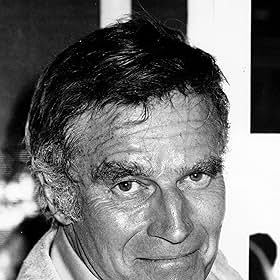


Salvador Allende
- Self - President of Chile
- (material de archivo)

Jacobo Árbenz
- Self - President of Guatemala
- (material de archivo)
- (as Jacobo Arbenz)
Arthur A. Busch
- Self - County Prosecutor: Flint, Michigan
- (as Arthur Busch)

George Bush
- Self
- (material de archivo)

George W. Bush
- Self
- (material de archivo)


Bill Clinton
- Self
- (material de archivo)
Steve Davis
- Self - Deputy Sheriff
- (material de archivo)

Ngo Dinh Diem
- Self - President of South Vietnam
- (material de archivo)
Joe Farmer
- Self - Superintendent of Schools
- (material de archivo)
- Dirección
- Escritura
- Todo el elenco y el equipo
- Producción, taquilla y más en IMDbPro
Opiniones destacadas
On April 20, 1999 two students opened fire on their classmates at Columbine High School in Littleton, Colorado. It left 13 people dead and many more injured, gravely affecting the lives of those involved and stirring up a very loud gun control debate. In 2001, Michael Moore released Bowling for Columbine, a documentary that takes a look at gun violence in America and the things that make us the nation with, by far, the most gun related deaths per year. Moore examines the culture of America and just how we got this way through fear, paranoia, and vast over compensation to protect ourselves from something that isn't even there.
Michael Moore is obviously very liberal, and this comes through in almost everything he says or does. There is a lot of politics that go into his filmmaking, especially in this film that was released amidst the Bush administration. A lot of personal opinion goes into his filmmaking and he presents a very left wing point of view. Moore also employs plenty of theatrics and some overly dramatic moments in his film to get a point across. However, said point is incredibly important and it is laid out very clearly and very concisely throughout Bowling for Columbine.
Politics play a part in Moore's arguments, but they don't overshadow the basis of what he is trying to prove. In this film, he clearly outlines America's gun crazy culture fueled by paranoia, and if you just take a look around you will know that he has a point. Sure he finds the most ridiculous stories and the greatest examples to push his point, but in the broad generalization of what he is examining you can't say that he's wrong.
Interestingly enough, things haven't changed much in our culture in the eleven years this film has been out. America still thrives on fear, and we still fear the same things we did when this movie was made. It was incredibly interesting watching this film after the recent events in Aurora, Colorado because anything Moore says about Columbine can easily be related to our most recent tragedy. It proves that Moore has, rather unfortunately, made a timeless film that looks at an issue that seems to never go away, instead only getting worse. Moore tackles some disturbingly true topics about gun violence and fear, and he puts it all into his perspective very well in a very high quality documentary. Bowling for Columbine is an excellent film that people in America truly have to watch. Moore points out some sad but very prevalent truths in this film, and there is a lot to be learned from it.
Michael Moore is obviously very liberal, and this comes through in almost everything he says or does. There is a lot of politics that go into his filmmaking, especially in this film that was released amidst the Bush administration. A lot of personal opinion goes into his filmmaking and he presents a very left wing point of view. Moore also employs plenty of theatrics and some overly dramatic moments in his film to get a point across. However, said point is incredibly important and it is laid out very clearly and very concisely throughout Bowling for Columbine.
Politics play a part in Moore's arguments, but they don't overshadow the basis of what he is trying to prove. In this film, he clearly outlines America's gun crazy culture fueled by paranoia, and if you just take a look around you will know that he has a point. Sure he finds the most ridiculous stories and the greatest examples to push his point, but in the broad generalization of what he is examining you can't say that he's wrong.
Interestingly enough, things haven't changed much in our culture in the eleven years this film has been out. America still thrives on fear, and we still fear the same things we did when this movie was made. It was incredibly interesting watching this film after the recent events in Aurora, Colorado because anything Moore says about Columbine can easily be related to our most recent tragedy. It proves that Moore has, rather unfortunately, made a timeless film that looks at an issue that seems to never go away, instead only getting worse. Moore tackles some disturbingly true topics about gun violence and fear, and he puts it all into his perspective very well in a very high quality documentary. Bowling for Columbine is an excellent film that people in America truly have to watch. Moore points out some sad but very prevalent truths in this film, and there is a lot to be learned from it.
This movie makes me feel that it is the first time i just remotely understand the American society. Michael Moore explores the darkest side of America - the society built on fear. Fear of terrorists, fear of the coloureds fear of your neighbor. It appears that americans have lost perspective, not noticing the real dangers of life: pollution, traffic, e.t.c. With TV-channels telling stories only about violence and terrorism and populistic politicians scaring people to vote for them Americans trust only in themselves.
Michael Moore tries with this movie to make the Americans consider and think for themselves being rationals, and to tell the rest of the world how the American society works. Really something to think about... See it, its necessary
Michael Moore tries with this movie to make the Americans consider and think for themselves being rationals, and to tell the rest of the world how the American society works. Really something to think about... See it, its necessary
As most of the world knows, in April 1999, two Columbine High School students, Eric Harris and Dylan Klebold, took guns to school and shot thirteen students and one teacher dead. How did they get the guns? What does bowling have to do with anything? Those looking for an in-depth look at the two shooters will be disappointed. Although Mr Moore does record that Harris and Klebold went bowling on the morning of the shooting and later takes two of the wounded students, now recovered, to buy bullets at Kmart, this is not really about Eric and Dylan. Rather, it is more of an examination of the "gun culture" of the USA. The National Rifle Association, in this film headed by Charlton Heston, has ensured that getting a gun and ammunition is as easy as filling a prescription. Moore notes that we are unique among countries in that our rate of gun shootings and killings far surpasses that of Canada, our nearest neighbor, and other Western civilizations. Some have blamed violent video games, some singers like Marilyn Manson (interviewed in this film as a favorite singer of Harris), still others that "family department" stores like Kmart and Walmart have the weapons and the ammo. Interestingly, Moore also takes a look at Work-to-Welfare programs like the one near his hometown of Flint, Michigan. A young single mother was forced to work at a casino, 90 minutes away, to satisfy the welfare requirements but still couldn't pay the bills. When she was forced to move in with an uncle and had to leave her six year old son in his care, the young lad found his uncle's gun and took it to class, only to shoot a fellow student dead. what a tragedy! In short, anyone wanting to talk about the Second Amendment and gun control would do well to begin with this film. Those seeking in- depth information on the Columbine shooting should look elsewhere.
The two high school students made infamous for their rampage at Columbine were rumored to have been at a bowling class at the school the morning of the shooting. It turned out to be urban legend, but Moore kept the catchy title, anyway. There seems to be no in between in regards to the filmmaker. I flat out love his work, all the way back to Roger and Me, and his TV shows, TV Nation and The Awful Truth. Here he takes on the NRA and Charleton Heston, or Moses, as he is best remembered, as he was the chief spokesman for the gun rights organization. As a gun owner, living in a secluded area, even I recognize the need for proper screenings and some restrictions on firearms.
As usual, Moore uses sardonic humor to make his point. At a bank in Colorado, he is given a hunting rifle for purchasing a CD. As he leaves the bank with the weapon, he asks, don't you think it's a little dangerous handing out guns at a bank? The high point is when Moore interviews Heston, asking him about the high level of gun violence, and Chuck answers that the reason is "race mixing" in America. This was seen by some as an ambush; I see it as Moore capturing the actors true feelings, and they are frightening. RIP Charlie boy.
Bowling for Columbine is both informative and entertaining, and Moore is our best documentary filmmaker. Look out, Dittoheads, the truth hurts.
As usual, Moore uses sardonic humor to make his point. At a bank in Colorado, he is given a hunting rifle for purchasing a CD. As he leaves the bank with the weapon, he asks, don't you think it's a little dangerous handing out guns at a bank? The high point is when Moore interviews Heston, asking him about the high level of gun violence, and Chuck answers that the reason is "race mixing" in America. This was seen by some as an ambush; I see it as Moore capturing the actors true feelings, and they are frightening. RIP Charlie boy.
Bowling for Columbine is both informative and entertaining, and Moore is our best documentary filmmaker. Look out, Dittoheads, the truth hurts.
First, Michael Moore is an extraordinary documentarian, making an adventure out of every topic he tackles, rather than a series of talking heads. Bowling for Columbine tackles gun violence in the U.S. with simple, open-ended question: Why the U.S.? What is it about the culture and history as well as access to guns of the United States that makes this country such a dangerous place to live with so many gun deaths compared to all other industrialized countries? His answer is not a simplistic one - it is not simply that we have a 2nd amendment and people misinterpret it as so many anti-gun folks might say. Canadians own about as many firearms and yet they don't have nearly the rate of gun-related deaths. Although many will view this film as anti-gun, I think the film is much more sophisticated than those who feel threatened even by the question "why" understand the film? Moore, in fact, does not come to any hard and fast conclusions, perhaps other than that we in the U.S. live in a culture of fear and there are historical conditions, including racial segregation and economic conditions that we as Americans have not come close to fully addressing. This documentary is a must-see for anyone concerned about the number of gun related deaths and injuries and even for those who believe the 2nd amendment protects a person's right to bear arms, but feels that no "right" is without some reasonable restrictions.


¿Sabías que…?
- TriviaBecause the film didn't fit neatly into any established categories at Cannes, the Jury created a special 55th Anniversary Award just for the film.
- ErroresThe film claims that that Eric Harris and Dylan Klebold attended a bowling class on the morning of the massacre. This is incorrect as testified in a judicial review.
- Citas
Michael Moore: If you were to talk directly to the kids at Columbine or the people in that community, what would you say to them if they were here right now?
Marilyn Manson: I wouldn't say a single word to them. I would listen to what they have to say, and that's what no one did.
- Créditos curiososIn the credits, there is a thank-you to Mike's Militia--Athens Branch. This does not exist; during his speaking engagement at Ohio University to promote his book "Stupid White Men", Michael Moore screened two versions of the "History of gun control" animated segment, which featured the same animation but different narration. The audience was asked to vote on which of the two versions should be included. After choosing a version, Moore claimed he would include Athens, Ohio and the audience in the credits, but wasn't sure what name to give credit to. Several suggestions were shouted out and Mike Michigan Militia, Athens, Ohio branch was finally chosen.
- Versiones alternativasIn the theatrical release, a caption was inserted into a 1988 Bush-Quayle ad, "Revolving Doors," which read "Willie Horton released. Then kills again." In the DVD release, the caption reads "Willie Horton released. Then rapes a woman." Neither version makes it clear that the text was not part of the original ad.
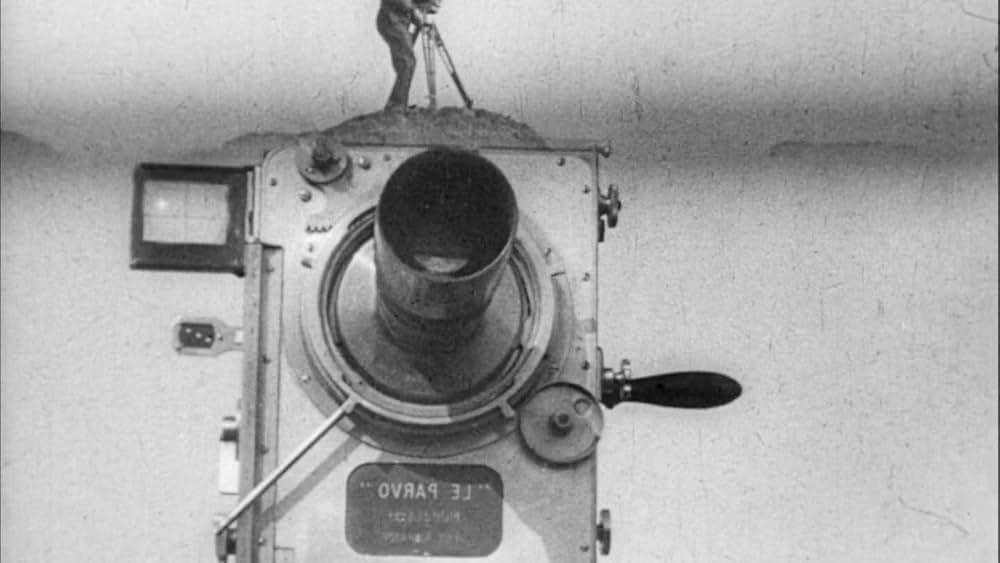
- ConexionesEdited from Peasants' Paradise (1931)
- Bandas sonorasTake the Skinheads Bowling
Written by Victor Krummenacher, David Lowery, Christopher Molla and Jonathan Segel
Performed by Teenage Fanclub
Selecciones populares
Inicia sesión para calificar y agrega a la lista de videos para obtener recomendaciones personalizadas
- How long is Bowling for Columbine?Con tecnología de Alexa
Detalles
- Fecha de lanzamiento
- Países de origen
- Idioma
- También se conoce como
- Bowling for Columbine
- Locaciones de filmación
- Productoras
- Ver más créditos de la compañía en IMDbPro
Taquilla
- Presupuesto
- USD 4,000,000 (estimado)
- Total en EE. UU. y Canadá
- USD 21,576,018
- Fin de semana de estreno en EE. UU. y Canadá
- USD 209,148
- 13 oct 2002
- Total a nivel mundial
- USD 58,015,923
- Tiempo de ejecución
- 2h(120 min)
- Color
- Mezcla de sonido
- Relación de aspecto
- 1.85 : 1
Contribuir a esta página
Sugiere una edición o agrega el contenido que falta