CALIFICACIÓN DE IMDb
7.2/10
21 k
TU CALIFICACIÓN
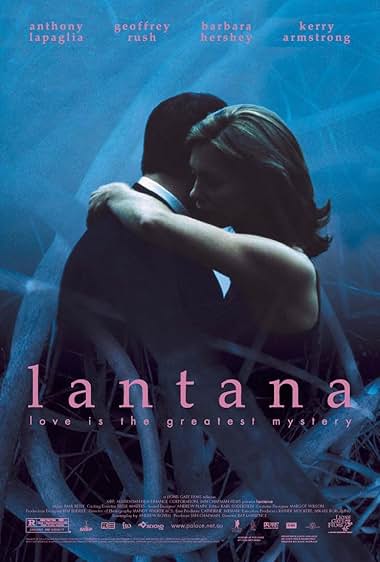

Las relaciones de cuatro parejas se rompen después de descubrir el cuerpo de una mujer joven en los arbustos de Lantana en los suburbios de Sydney.Las relaciones de cuatro parejas se rompen después de descubrir el cuerpo de una mujer joven en los arbustos de Lantana en los suburbios de Sydney.Las relaciones de cuatro parejas se rompen después de descubrir el cuerpo de una mujer joven en los arbustos de Lantana en los suburbios de Sydney.
- Premios
- 36 premios ganados y 22 nominaciones en total


Manu Bennett
- Steve
- (as Jon Bennett)


Opiniones destacadas
In this starkly realistic examination of love and infidelity among the thirtysomething crowd from down under we learn that you may desire to cheat on your spouse, but it's better if you don't.
Leon Zat, a police detective played with an original and striking demeanor by Anthony LaPaglia, cheats on his wife and finds that his adultery compromises not only his marriage but his performance on the job. He becomes irritable and flies off the handle at things of little importance, and becomes consumed with guilt.
He is not alone. The marriage of John Knox (Geoffrey Rush) and psychiatrist Valerie Somers (Barbara Hershey) is falling apart as Knox seeks something from the outside and Somers is torn apart with the suspicion that he is having a homosexual affair, perhaps with one of her clients. Meanwhile Jane O'May (Zat's adulteress played by Rachael Blake) finds that she needs a man, or maybe two, other than her estranged husband. Even Sonja Zat (Kerry Armstrong) feels the pressure and yearns to feel attractive, perhaps with younger men.
More than halfway through we have an apparent murder and an investigation during the course of which some of the adulteries come to light and cause the participants to examine themselves and their lives closely.
Andrew Dovell wrote the subtle, richly attired script, full of penetrating dialogue and an uncompromising veracity, adapting it from his play Speaking in Tongues. Ray Lawrence directed in an unusual but compelling manner in which the scenes are sharply focused and cut to linger in our minds. Again and again I was startled with just how exactly right was something a character said or did. Lawrence's exacting attention to detail gives the film a textured and deeply layered feel so that one has the sense of real life fully lived. The cast is uniformly excellent although LaPaglia stands out because of his most demanding role. His performance is one of the best I have seen in recent years. The only weakness in the film is a somewhat lethargic start, partially caused by Lawrence's cinéma vérité scene construction and editing. What he likes to do is lead us to a realization along with the characters and then punctuate the experience by lingering on the scene, or in other cases by cutting quickly away. Often what other directors might show, he leaves to our imagination, and at other times he shows something seemingly trivial which nonetheless stays in our mind. John Knox's affair, for example, is not shown. Jane O'May and her husband's reconciliation is left to our mind's eye. Yet the scene with Valerie Somers in the lighted telephone booth (with graffiti) is shown at length and then what happens next is not. These are interesting directorial choices.
The ending comes upon us, as it sometimes should, unexpectedly, but then resonates so that we can see and feel the resolution. Not everything is tied up. Again we are left in some cases to use our own imagination.
This original film, one of the best of the new millennium I have seen, stayed with me long after they ran the closing credits. It is well worth the two hours.
(Note: Over 500 of my movie reviews are now available in my book "Cut to the Chaise Lounge or I Can't Believe I Swallowed the Remote!" Get it at Amazon!)
Leon Zat, a police detective played with an original and striking demeanor by Anthony LaPaglia, cheats on his wife and finds that his adultery compromises not only his marriage but his performance on the job. He becomes irritable and flies off the handle at things of little importance, and becomes consumed with guilt.
He is not alone. The marriage of John Knox (Geoffrey Rush) and psychiatrist Valerie Somers (Barbara Hershey) is falling apart as Knox seeks something from the outside and Somers is torn apart with the suspicion that he is having a homosexual affair, perhaps with one of her clients. Meanwhile Jane O'May (Zat's adulteress played by Rachael Blake) finds that she needs a man, or maybe two, other than her estranged husband. Even Sonja Zat (Kerry Armstrong) feels the pressure and yearns to feel attractive, perhaps with younger men.
More than halfway through we have an apparent murder and an investigation during the course of which some of the adulteries come to light and cause the participants to examine themselves and their lives closely.
Andrew Dovell wrote the subtle, richly attired script, full of penetrating dialogue and an uncompromising veracity, adapting it from his play Speaking in Tongues. Ray Lawrence directed in an unusual but compelling manner in which the scenes are sharply focused and cut to linger in our minds. Again and again I was startled with just how exactly right was something a character said or did. Lawrence's exacting attention to detail gives the film a textured and deeply layered feel so that one has the sense of real life fully lived. The cast is uniformly excellent although LaPaglia stands out because of his most demanding role. His performance is one of the best I have seen in recent years. The only weakness in the film is a somewhat lethargic start, partially caused by Lawrence's cinéma vérité scene construction and editing. What he likes to do is lead us to a realization along with the characters and then punctuate the experience by lingering on the scene, or in other cases by cutting quickly away. Often what other directors might show, he leaves to our imagination, and at other times he shows something seemingly trivial which nonetheless stays in our mind. John Knox's affair, for example, is not shown. Jane O'May and her husband's reconciliation is left to our mind's eye. Yet the scene with Valerie Somers in the lighted telephone booth (with graffiti) is shown at length and then what happens next is not. These are interesting directorial choices.
The ending comes upon us, as it sometimes should, unexpectedly, but then resonates so that we can see and feel the resolution. Not everything is tied up. Again we are left in some cases to use our own imagination.
This original film, one of the best of the new millennium I have seen, stayed with me long after they ran the closing credits. It is well worth the two hours.
(Note: Over 500 of my movie reviews are now available in my book "Cut to the Chaise Lounge or I Can't Believe I Swallowed the Remote!" Get it at Amazon!)
This well-delivered ensemble piece is a film version of Andrew Bovell's play SPEAKING IN TONGUES. It deals with adult relationships, particularly the sexual tension and anxiety that eventually develops in mature relationships. The plot and interaction between characters depends heavily on coincidence, but this isn't a major flaw in a film that really concerns itself with adult behavior patterns. That aspect of the film is sophisticated and honest; well worth the viewer's time. Brooding, subtle and smart are the words for LANTANA and I highly recommend it.
This is a complex drama. Although the film involves a murder, the story is more the exploration of a number of interconnected relationships.
The film starts with a woman's body lying in a lantana bush, but we don't know who it is until the end. The story builds up to that point, and centres on a quartet of families starting with Leon Zat (Anthony La Paglia), a police detective, and his wife Sonja (Kerry Armstrong).
"Lantana", the title of the film, refers to the noxious weed that grows like crazy and eventually strangles and entangles everything else in the garden - it's the perfect metaphor for the way all the various relationships are being strangled and entangled by infidelity, deception and unhappiness.
The structure of the film is similar to Robert Altman's "Short Cuts" where different stories intersect at critical times.
Although the film has a sense of mystery, I found "Lantana" just too serious and humourless. Unlike "Short Cuts", there really isn't a light touch in the whole thing. Anthony La Paglia's Leon Zat makes the characters played by Nicholas Cage seem deliriously happy by comparison. I am also wary in Australian movies of scenes set in psychiatrist's offices; it often allows the 'meaningful' dialogue to be delivered in very large chunks.
After a while, for me at any rate, the interconnectivity - where no meeting is random - comes across as just a little too laboured. What saves "Lantana" is that everyone plays it low-key - the actors give the movie class.
The brilliant Barbara Hershey has competition for attention from two other women: Kerry Armstrong and Rachael Blake. Kerry Armstrong is one of the most interesting actors in Australian film and television, and she ages beautifully.
The film steps up a notch when the mystery kicks in about halfway through, and it becomes partly a police procedural.
"Lantana" was loved up by the critics and won every Australian film award going at the time it was released. It is the sort of smart, multi-layered film that the cognoscenti could discuss at some length over lattes on Sunday morning.
The film is well made and the acting is flawless, but it seems interminably stretched out, an effect aided by the chilled out score. My main problem with "Lantana" is that it seems to self-consciously scream out "How clever is my script?" I can see the gears turning.
The film starts with a woman's body lying in a lantana bush, but we don't know who it is until the end. The story builds up to that point, and centres on a quartet of families starting with Leon Zat (Anthony La Paglia), a police detective, and his wife Sonja (Kerry Armstrong).
"Lantana", the title of the film, refers to the noxious weed that grows like crazy and eventually strangles and entangles everything else in the garden - it's the perfect metaphor for the way all the various relationships are being strangled and entangled by infidelity, deception and unhappiness.
The structure of the film is similar to Robert Altman's "Short Cuts" where different stories intersect at critical times.
Although the film has a sense of mystery, I found "Lantana" just too serious and humourless. Unlike "Short Cuts", there really isn't a light touch in the whole thing. Anthony La Paglia's Leon Zat makes the characters played by Nicholas Cage seem deliriously happy by comparison. I am also wary in Australian movies of scenes set in psychiatrist's offices; it often allows the 'meaningful' dialogue to be delivered in very large chunks.
After a while, for me at any rate, the interconnectivity - where no meeting is random - comes across as just a little too laboured. What saves "Lantana" is that everyone plays it low-key - the actors give the movie class.
The brilliant Barbara Hershey has competition for attention from two other women: Kerry Armstrong and Rachael Blake. Kerry Armstrong is one of the most interesting actors in Australian film and television, and she ages beautifully.
The film steps up a notch when the mystery kicks in about halfway through, and it becomes partly a police procedural.
"Lantana" was loved up by the critics and won every Australian film award going at the time it was released. It is the sort of smart, multi-layered film that the cognoscenti could discuss at some length over lattes on Sunday morning.
The film is well made and the acting is flawless, but it seems interminably stretched out, an effect aided by the chilled out score. My main problem with "Lantana" is that it seems to self-consciously scream out "How clever is my script?" I can see the gears turning.
10Movie-12
LANTANA (2001) **** (out of four)
"Lantana" does not embody a story like most movies; it isn't about anything in particular. It's a movie about characters. Not larger-than-life super heroes, but characters who succumb to temptation, cheat on their wives, doubt their spouses, make mistakes and suffer consequences. In other words, "Lantana" is about real people. Normal, imperfect people like all of us. Not that everyone behaves like the characters here, but few films capture transgression with such compassion and sympathy.
Set in Australia, a colorful pallet of characters paints a vivid, coherent psychological portrait of infidelity, deceit, and estrangement. At the center of the film is four couples, immersed in guilt and depravity for different reasons. Everybody has something to hide. The conflicts of these people illuminate the personal crisis of a police detective (Anthony LaPaglia) as he investigates the disappearance of a local woman.
Apart from the investigation, the couples have little connection with each other. They do have one thing in common, however, that none of them communicates with their loved ones. "Lantana" proves communication enforces commitment, but a lack thereof results in disaster. This sincere, uncompromising picture places the lack of communication at the center of family problems.
The film won various Australian Film Awards for its performances, screenplay, and direction by Ray Lawrence. Lawrence clearly intended the title-referring to a tropical shrub with beautiful flowers that hide dense, thorny undergrowth-to represent the characters' private lives hidden behind an outward appearance. He's got the wrong metaphor. These characters do not appear sunny on the inside, outside, front or back. They don't wear masks or attempt to cover their frowning states of mind. They are unhappy people, and the movie never pretends otherwise.
Those qualities make the characters absorbing. Instead of providing them with outlets and opportunities to hide their faults, the film pokes, prods, and starves them of their happiness until they reach a breaking point. For some, the breaking point results in an explosion of anger. For others, it's subtle and personal. "Lantana" investigates real people who deal with real situations and encounter real consequences.
None of the characters are model citizens, yet we care deeply about each of them. When someone cries, we feel sorry for them. When someone begs for forgiveness, we try to forgive them. When someone questions their spouse, we are concerned with both sides of the marriage. These people make big mistakes; the results of their mistakes are never certain. The movie does not neatly pull things together at the end. It doesn't allow the characters an easy way out. These characters must dig themselves out of their problems.
"Lantana" is one of the most compelling, involving films of the year. It's based on a play called "Speaking in Tongues" by Andrew Bovell, who also wrote the fluid screenplay. I want to see this play. If these characters feel so alive, so real, so tormented on screen, think of their power in person.
"Lantana" does not embody a story like most movies; it isn't about anything in particular. It's a movie about characters. Not larger-than-life super heroes, but characters who succumb to temptation, cheat on their wives, doubt their spouses, make mistakes and suffer consequences. In other words, "Lantana" is about real people. Normal, imperfect people like all of us. Not that everyone behaves like the characters here, but few films capture transgression with such compassion and sympathy.
Set in Australia, a colorful pallet of characters paints a vivid, coherent psychological portrait of infidelity, deceit, and estrangement. At the center of the film is four couples, immersed in guilt and depravity for different reasons. Everybody has something to hide. The conflicts of these people illuminate the personal crisis of a police detective (Anthony LaPaglia) as he investigates the disappearance of a local woman.
Apart from the investigation, the couples have little connection with each other. They do have one thing in common, however, that none of them communicates with their loved ones. "Lantana" proves communication enforces commitment, but a lack thereof results in disaster. This sincere, uncompromising picture places the lack of communication at the center of family problems.
The film won various Australian Film Awards for its performances, screenplay, and direction by Ray Lawrence. Lawrence clearly intended the title-referring to a tropical shrub with beautiful flowers that hide dense, thorny undergrowth-to represent the characters' private lives hidden behind an outward appearance. He's got the wrong metaphor. These characters do not appear sunny on the inside, outside, front or back. They don't wear masks or attempt to cover their frowning states of mind. They are unhappy people, and the movie never pretends otherwise.
Those qualities make the characters absorbing. Instead of providing them with outlets and opportunities to hide their faults, the film pokes, prods, and starves them of their happiness until they reach a breaking point. For some, the breaking point results in an explosion of anger. For others, it's subtle and personal. "Lantana" investigates real people who deal with real situations and encounter real consequences.
None of the characters are model citizens, yet we care deeply about each of them. When someone cries, we feel sorry for them. When someone begs for forgiveness, we try to forgive them. When someone questions their spouse, we are concerned with both sides of the marriage. These people make big mistakes; the results of their mistakes are never certain. The movie does not neatly pull things together at the end. It doesn't allow the characters an easy way out. These characters must dig themselves out of their problems.
"Lantana" is one of the most compelling, involving films of the year. It's based on a play called "Speaking in Tongues" by Andrew Bovell, who also wrote the fluid screenplay. I want to see this play. If these characters feel so alive, so real, so tormented on screen, think of their power in person.
What struck me the most about Lantana was not the well-laid plot, more the thoroughly realistic characters and performances. The classic 'mystery' thread was really only the setting for the several different relationships and couples featured in the film.
But having said that, the story itself was gutsy and twisting to keep you guessing till the end, all without the need for non-essential narrative or the need to keep spelling things out. The questions were all answered so far as the story was concerned, but because of the complexity and realism in all the principle characters, i still left the cinema rolling plenty of the emotional issues through my mind for hours after.
La Paglia was fantastic. His character, though shown as an adulterer from the very beginning, captured so many of the current male 'indentities' with great subtlety instead of a stereotyped 'hug session' which most recent films dealing with the subject matter inevitably lead to. He so easily showed the internal conflicts which most normal Australian men deal with day-to-day while still keeping up the brave face we all do.
I also enjoyed the quirky way the relatively small number of characters were all drawn together by fairly consequential links, and without a huge big statement of it in the end - no matter how many people there are on the planet, it still amazes me how small and incestual problem-circles end up becoming :)
This film has the potential to appeal to so many different audiences - works as a mystery, cop-drama, "chick flick", and to anyone who could ever relate to the 'feel' of Australia, which the film captures perfectly through great ambient audio and natural-looking lighting.
Well written, directed, photographed and cast give this one an easy full marks.
But having said that, the story itself was gutsy and twisting to keep you guessing till the end, all without the need for non-essential narrative or the need to keep spelling things out. The questions were all answered so far as the story was concerned, but because of the complexity and realism in all the principle characters, i still left the cinema rolling plenty of the emotional issues through my mind for hours after.
La Paglia was fantastic. His character, though shown as an adulterer from the very beginning, captured so many of the current male 'indentities' with great subtlety instead of a stereotyped 'hug session' which most recent films dealing with the subject matter inevitably lead to. He so easily showed the internal conflicts which most normal Australian men deal with day-to-day while still keeping up the brave face we all do.
I also enjoyed the quirky way the relatively small number of characters were all drawn together by fairly consequential links, and without a huge big statement of it in the end - no matter how many people there are on the planet, it still amazes me how small and incestual problem-circles end up becoming :)
This film has the potential to appeal to so many different audiences - works as a mystery, cop-drama, "chick flick", and to anyone who could ever relate to the 'feel' of Australia, which the film captures perfectly through great ambient audio and natural-looking lighting.
Well written, directed, photographed and cast give this one an easy full marks.


¿Sabías que…?
- TriviaAnthony LaPaglia had to work with a dialect coach to regain his native Australian accent. He had lost it from years of working on American movies.
- ErroresWhen Sonja is in the car park, at about 54' at the bottom of the frame you can see the dolly track complete with sandbag, wedges and Mafer clamp.
- Créditos curiososGrateful acknowledgement of assistance to all our families
- ConexionesEdited into Terror Nullius (2018)
Selecciones populares
Inicia sesión para calificar y agrega a la lista de videos para obtener recomendaciones personalizadas
- How long is Lantana?Con tecnología de Alexa
Detalles
- Fecha de lanzamiento
- Países de origen
- Idiomas
- También se conoce como
- Lantana
- Locaciones de filmación
- Productoras
- Ver más créditos de la compañía en IMDbPro
Taquilla
- Total en EE. UU. y Canadá
- USD 4,623,189
- Fin de semana de estreno en EE. UU. y Canadá
- USD 66,701
- 16 dic 2001
- Total a nivel mundial
- USD 15,747,450
- Tiempo de ejecución
- 2h 1min(121 min)
- Color
- Mezcla de sonido
- Relación de aspecto
- 2.35 : 1
Contribuir a esta página
Sugiere una edición o agrega el contenido que falta