CALIFICACIÓN DE IMDb
8.7/10
11 k
TU CALIFICACIÓN
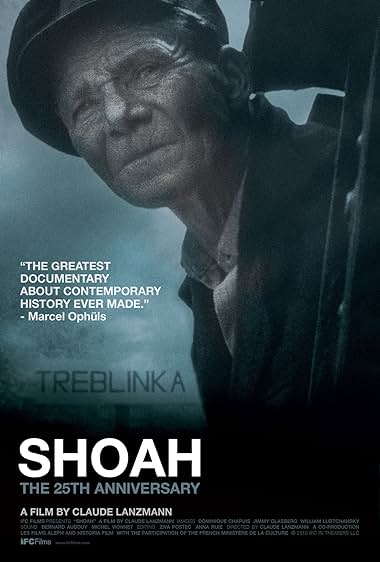

Cuenta la historia del Holocausto a través de entrevistas con testigos, tanto autores como supervivientes.Cuenta la historia del Holocausto a través de entrevistas con testigos, tanto autores como supervivientes.Cuenta la historia del Holocausto a través de entrevistas con testigos, tanto autores como supervivientes.
- Ganó 2premios BAFTA
- 15 premios ganados en total


Michael Podchlebnik
- Self
- (as Michaël Podchlebnik)

Richard Glazar
- Self
- (as Richard Glazer)


Helena Pietyra
- Self
- (as Pana Pietyra)


Opiniones destacadas
It's nine and a half hours of travelogue footage and interviews with terribly ordinary middle-aged and senior citizens about events that happened a half-century ago.
Except that the sites visited are the scenes of the systematic mass murder of roughly 11 million men, women and children, including some 6 million Jews, and the ordinary grandparents are the survivors and perpetrators of some of the most horrendous atrocities that mankind has committed upon each other.
It is a terribly draining movie, hypnotic and disorienting, both in it's length and in the blandness, the matter-of-fact descriptions of things that would make a normal person scream in horror. And that is what is so amazingly important and meaningful about this film; that these were ordinary, average people. These were, and are, normal folks like you and me, and anybody, regardless of background, moral upbringing, and standards of decency can be caught up in circumstances beyond their power or experience, and can do the most depraved or heroic things imaginable. It is shocking, insightful, and a very,very important film that forces us to confront our own humanity and decide what that, in fact means.
But it's nine and a half hours long. Be prepared to be drained and leave with your head buzzing.
Except that the sites visited are the scenes of the systematic mass murder of roughly 11 million men, women and children, including some 6 million Jews, and the ordinary grandparents are the survivors and perpetrators of some of the most horrendous atrocities that mankind has committed upon each other.
It is a terribly draining movie, hypnotic and disorienting, both in it's length and in the blandness, the matter-of-fact descriptions of things that would make a normal person scream in horror. And that is what is so amazingly important and meaningful about this film; that these were ordinary, average people. These were, and are, normal folks like you and me, and anybody, regardless of background, moral upbringing, and standards of decency can be caught up in circumstances beyond their power or experience, and can do the most depraved or heroic things imaginable. It is shocking, insightful, and a very,very important film that forces us to confront our own humanity and decide what that, in fact means.
But it's nine and a half hours long. Be prepared to be drained and leave with your head buzzing.
I finally saw Shoah yesterday at the Ontario Cinematheque. I sat through the entire 9 and a half hours in one sitting.
Shoah surprised me in several ways. The first was how the interviews were conducted. Lanzmann is a very direct and aggressive interviewer and initially, I was very put off by how he delved into his subjects. He seemed almost wreckless and completely devoid of empathy as he continued to ask the most personal and private questions, never hesitating to force his subjects to think back to what was not only the darkest moment of their lives, but the darkest moments of modern Western history.
Eventually, what happens however, is astonishing. Most interviewees eventually give up their resistance, and very carefully relate their stories. Lanzmann forces them to consider details. How many bodies per furnace? How wide was the ditch? How far was the train ramp from the camp's bunkers? These details facilitate memory and soon, the subjects open up in the most remarkable way.
No matter how you feel, or what you think you know about the Holocaust, this film puts faces to the tragedy in a way few conventional documentaries could. The emphasis here is on memory and oral history.
As one Holocaust victim says early in the film, "It might be good for you to talk about these things. But for me, no." Eventually however, he realizes he must bear witness.
There's one remarkable scene where Lanzmann confronts German settlers in Poland about the previous owner of their home, who were Jewish and sent to Auschwitz after their properties were confiscated.
People who don't find this film 'entertaining' or perhaps 'boring' probably feel that way because, outside of the immediate experiences of the subjects being interviewed, there is no wider context to present the events. A worthwhile companion to this film would be the BBC's Auschwitz: Inside The Nazi State which runs 4 and a half hours, but will help you understand Shoah better.
The other thing I found fascinating about this film was how the translations actually helped you absorb what is being said in a way direct subtitling wouldn't. For instance, most of the subjects speak German or Polish. Lanzmann speaks French mainly and some German. His translator translates what's being said into French and then the subtitles translate the French into English. By being able to look into the eyes of the people speaking, in their own native language, and then read the subtitles, was a very subtle, but very effective tool that deadens the 'shock value' of what is being spoken and gives the viewer more time to absorb the content.
Some people have complained also that the film also has many long takes, which are seemingly of nothing. For instance, Lanzmann lets his camera linger on the remnants of Chelmno, which was razed after the war. Although it just looks like a five minute shot of a field, what struck me was how different this bucolic field must have been in 1942. Making this connection justifies every frame shot. Lanzmann, however, will not force this down your throat. You must be patient.
This is an astonishing film that must be seen by everyone, at least once. Please review the general historical context of the Holocaust before you see it, to get the most out of it, but otherwise, this is living testament of the most vital kind.
Brilliant, essential film-making.
Shoah surprised me in several ways. The first was how the interviews were conducted. Lanzmann is a very direct and aggressive interviewer and initially, I was very put off by how he delved into his subjects. He seemed almost wreckless and completely devoid of empathy as he continued to ask the most personal and private questions, never hesitating to force his subjects to think back to what was not only the darkest moment of their lives, but the darkest moments of modern Western history.
Eventually, what happens however, is astonishing. Most interviewees eventually give up their resistance, and very carefully relate their stories. Lanzmann forces them to consider details. How many bodies per furnace? How wide was the ditch? How far was the train ramp from the camp's bunkers? These details facilitate memory and soon, the subjects open up in the most remarkable way.
No matter how you feel, or what you think you know about the Holocaust, this film puts faces to the tragedy in a way few conventional documentaries could. The emphasis here is on memory and oral history.
As one Holocaust victim says early in the film, "It might be good for you to talk about these things. But for me, no." Eventually however, he realizes he must bear witness.
There's one remarkable scene where Lanzmann confronts German settlers in Poland about the previous owner of their home, who were Jewish and sent to Auschwitz after their properties were confiscated.
People who don't find this film 'entertaining' or perhaps 'boring' probably feel that way because, outside of the immediate experiences of the subjects being interviewed, there is no wider context to present the events. A worthwhile companion to this film would be the BBC's Auschwitz: Inside The Nazi State which runs 4 and a half hours, but will help you understand Shoah better.
The other thing I found fascinating about this film was how the translations actually helped you absorb what is being said in a way direct subtitling wouldn't. For instance, most of the subjects speak German or Polish. Lanzmann speaks French mainly and some German. His translator translates what's being said into French and then the subtitles translate the French into English. By being able to look into the eyes of the people speaking, in their own native language, and then read the subtitles, was a very subtle, but very effective tool that deadens the 'shock value' of what is being spoken and gives the viewer more time to absorb the content.
Some people have complained also that the film also has many long takes, which are seemingly of nothing. For instance, Lanzmann lets his camera linger on the remnants of Chelmno, which was razed after the war. Although it just looks like a five minute shot of a field, what struck me was how different this bucolic field must have been in 1942. Making this connection justifies every frame shot. Lanzmann, however, will not force this down your throat. You must be patient.
This is an astonishing film that must be seen by everyone, at least once. Please review the general historical context of the Holocaust before you see it, to get the most out of it, but otherwise, this is living testament of the most vital kind.
Brilliant, essential film-making.
With commenting this film we are going out of the movie industry to get into history and the world that it shaped. This rating concerns the importance of the theme of the movie and the effort and the enormous importance of the established work.
The film draws us into the deepest, dark and dirty human intentions that led to and are even devoid of any humane sense. It is shown the downfall of modern humanity, which mimics the barbaric world of the past. The long centuries of experience appear to be insufficient to call for peace and universal existence. On the contrary, it seems that the negative trends will not disappear very soon.
Although it is not shown any atrocity, the stories of witnesses of the war are enough to push our imagination to unthinkable mental pictures. It remains impossible to think and honestly to sympathize to storytellers due to lack of language in which we could understand what they experienced. We can only be able to pity them when they do not find the strength to continue their stories and to bow to their power to tell everyone about the downfall of much part of mankind.
Extremely long and difficult story that requires serious approach and interest in the topic. Valuable result.
http://vihrenmitevmovies.blogspot.com/
The film draws us into the deepest, dark and dirty human intentions that led to and are even devoid of any humane sense. It is shown the downfall of modern humanity, which mimics the barbaric world of the past. The long centuries of experience appear to be insufficient to call for peace and universal existence. On the contrary, it seems that the negative trends will not disappear very soon.
Although it is not shown any atrocity, the stories of witnesses of the war are enough to push our imagination to unthinkable mental pictures. It remains impossible to think and honestly to sympathize to storytellers due to lack of language in which we could understand what they experienced. We can only be able to pity them when they do not find the strength to continue their stories and to bow to their power to tell everyone about the downfall of much part of mankind.
Extremely long and difficult story that requires serious approach and interest in the topic. Valuable result.
http://vihrenmitevmovies.blogspot.com/
Claude Lanzmann's nine-hour Holocaust documentary is difficult, painful, and, above all else, exhausting – both emotionally and physically. I watched this goliath over four nights, and I pretty much had to force myself into every viewing, knowingly condemning myself to two hours of misery. But I wouldn't trade the experience. There are movies, and then there are... well, there are no words for what this is.
Lanzmann spent six years tracking down and interviewing Jewish survivors, German commanders, and Polish eye-witnesses, reconstructing through oral testimonies – without even a second of archival footage – the horror of the Nazi death camps. The dialogue, often interminably filtered through an interpreter and then translated from French via subtitles, is overlaid on footage of the death camps as they stand now (that is, in the 1970s/80s), as innocuous ruins or grassy fields. Thus, Lanzmann juxtaposes the atrocities described in his interviews with the quietude of the modern-day locations, acknowledging from the outset the impossibility of ever fully recreating or appreciating the horrors that took place.
Throughout the film, we mostly perceive Lanzmann as an off-camera interviewer, but he nevertheless takes a very active role in the film's presentation. We note his determination to assemble a historical record at all costs: he includes footage of himself assuring Franz Suchomel, a former SS officer, that the interview is not being filmed. (Many alleged perpetrators are seen only through a grainy black-and-white hidden camera, a device that keeps them emotionally distant from the viewer, as in a 1940s newsreel). Lanzmann rather sardonically asks his interpreter to complement a German couple on their beautiful home, knowing full well that it once belonged to a Jewish family.
The interviews with Jewish survivors are most haunting of all. Lanzmann doesn't ask them to communicate their emotions, but instead needles them for details, seemingly inconsequential observations that nevertheless improve our understanding of how the Final Solution operated. But he also knows when to keep quiet. The silent anguish evident on the survivors' old, scarred faces is often more powerful than words could ever be. One survivor of the Warsaw Uprising remarks to Lanzmann, "if you could lick my heart, it would poison you." We can see this even in his face.
Lanzmann spent six years tracking down and interviewing Jewish survivors, German commanders, and Polish eye-witnesses, reconstructing through oral testimonies – without even a second of archival footage – the horror of the Nazi death camps. The dialogue, often interminably filtered through an interpreter and then translated from French via subtitles, is overlaid on footage of the death camps as they stand now (that is, in the 1970s/80s), as innocuous ruins or grassy fields. Thus, Lanzmann juxtaposes the atrocities described in his interviews with the quietude of the modern-day locations, acknowledging from the outset the impossibility of ever fully recreating or appreciating the horrors that took place.
Throughout the film, we mostly perceive Lanzmann as an off-camera interviewer, but he nevertheless takes a very active role in the film's presentation. We note his determination to assemble a historical record at all costs: he includes footage of himself assuring Franz Suchomel, a former SS officer, that the interview is not being filmed. (Many alleged perpetrators are seen only through a grainy black-and-white hidden camera, a device that keeps them emotionally distant from the viewer, as in a 1940s newsreel). Lanzmann rather sardonically asks his interpreter to complement a German couple on their beautiful home, knowing full well that it once belonged to a Jewish family.
The interviews with Jewish survivors are most haunting of all. Lanzmann doesn't ask them to communicate their emotions, but instead needles them for details, seemingly inconsequential observations that nevertheless improve our understanding of how the Final Solution operated. But he also knows when to keep quiet. The silent anguish evident on the survivors' old, scarred faces is often more powerful than words could ever be. One survivor of the Warsaw Uprising remarks to Lanzmann, "if you could lick my heart, it would poison you." We can see this even in his face.
I've been learning about the Holocaust for at least twenty years now. I've attended at least two talks that were given by survivors. I've read memoirs and short stories and graphic novels and history books, seen fictionalized films and documentaries, and been to at least two Holocaust museums, including the one in DC.
Yet it wasn't until watching this film that it truly dawned on me: the Holocaust took place in this exact world that we're living in now. It took place in a world where people wear Hawaiian shirts, where children walk alongside their bicycles, where people pay to get haircuts. It took place in a world with railroads and travel agencies and moving vans and typewriters. It took place in a world with farmers and bureaucrats and engineers and babies. A world where people complain about their jobs, where people are too tired or selfish or stupid or scared to care about anything other than themselves. The trees looked like trees then, the rivers flowed like rivers, and the grass was green in the summertime. All of this happened, not in some otherworldly, black-and-white, unfathomable realm, but in a world where children under four can ride a train for free, where not having a flush toilet in your house could be considered appallingly primitive, and where a living person exposed to exhaust fumes will suffocate and a body exposed to flame will turn to ash.
Lanzmann's interviews are intense. His personality, albeit quite calm and always polite, is stirringly insistent--he never hesitates to call a lie a lie, even as he encounters every possible variety of mistruth. There are those who try to rewrite the past--to claim ignorance, poor memory, a lack of any actionable authority, a rosier and more melodramatic view of a tragic fate that was simply unavoidable. What could we have done, they say. We didn't know, they say. We did everything we could, they say. Even if we had risked our necks, it was fated from up above. He never lets that pass. "No. I don't think that's true," he says, and their faces falter, all shrugs and awkward smiles and apologetic platitudes, because of course it's not true.
The Holocaust unfolded because everybody kept doing what they were supposed to be doing, too overwhelmed or uncaring to choose resistance. It was an unprecedented and horrifying event, yet it unfolded in the temperament, landscape, and conditions of this very normal world. Hopefully, Lanzmann's courage will encourage viewers to speak up whenever they have an opportunity to challenge wrongness.
Yet it wasn't until watching this film that it truly dawned on me: the Holocaust took place in this exact world that we're living in now. It took place in a world where people wear Hawaiian shirts, where children walk alongside their bicycles, where people pay to get haircuts. It took place in a world with railroads and travel agencies and moving vans and typewriters. It took place in a world with farmers and bureaucrats and engineers and babies. A world where people complain about their jobs, where people are too tired or selfish or stupid or scared to care about anything other than themselves. The trees looked like trees then, the rivers flowed like rivers, and the grass was green in the summertime. All of this happened, not in some otherworldly, black-and-white, unfathomable realm, but in a world where children under four can ride a train for free, where not having a flush toilet in your house could be considered appallingly primitive, and where a living person exposed to exhaust fumes will suffocate and a body exposed to flame will turn to ash.
Lanzmann's interviews are intense. His personality, albeit quite calm and always polite, is stirringly insistent--he never hesitates to call a lie a lie, even as he encounters every possible variety of mistruth. There are those who try to rewrite the past--to claim ignorance, poor memory, a lack of any actionable authority, a rosier and more melodramatic view of a tragic fate that was simply unavoidable. What could we have done, they say. We didn't know, they say. We did everything we could, they say. Even if we had risked our necks, it was fated from up above. He never lets that pass. "No. I don't think that's true," he says, and their faces falter, all shrugs and awkward smiles and apologetic platitudes, because of course it's not true.
The Holocaust unfolded because everybody kept doing what they were supposed to be doing, too overwhelmed or uncaring to choose resistance. It was an unprecedented and horrifying event, yet it unfolded in the temperament, landscape, and conditions of this very normal world. Hopefully, Lanzmann's courage will encourage viewers to speak up whenever they have an opportunity to challenge wrongness.




¿Sabías que…?
- TriviaAn estimated 350 hours of footage were shot. The editing process took 5 years.
- ErroresSimon Srebnik and Michael Podchlebnik were not the only Jewish survivors of the Chelmno Extermination Camp. Today, at least 9 are known by name, but not all survived WWII and/or gave testimonies. Claude Lanzmann probably didn't know then.
- Citas
Franz Suchomel: If you lie enough, you believe your own lies.
- ConexionesEdited into We Shall Not Die Now (2019)
- Bandas sonorasMandolinen um Mitternacht
Performed by Peter Alexander (uncredited)
Selecciones populares
Inicia sesión para calificar y agrega a la lista de videos para obtener recomendaciones personalizadas
- How long is Shoah?Con tecnología de Alexa
Detalles
Taquilla
- Total en EE. UU. y Canadá
- USD 20,175
- Fin de semana de estreno en EE. UU. y Canadá
- USD 2,874
- 12 dic 2010
- Total a nivel mundial
- USD 20,175
Contribuir a esta página
Sugiere una edición o agrega el contenido que falta