PUNTUACIÓN EN IMDb
7,4/10
19 mil
TU PUNTUACIÓN


Un romance entre jóvenes parisinos, mostrado a través de una serie de viñetas.Un romance entre jóvenes parisinos, mostrado a través de una serie de viñetas.Un romance entre jóvenes parisinos, mostrado a través de una serie de viñetas.
- Director/a
- Guionistas
- Estrellas
- Premios
- 3 premios y 3 nominaciones en total


Evabritt Strandberg
- Elle (la femme dans le film)
- (as Eva-Britt Strandberg)


Yves Afonso
- L'homme qui se suicide
- (sin acreditar)

Henri Attal
- L'autre lecteur du bouquin porno
- (sin acreditar)
Mickey Baker
- Record producer
- (sin acreditar)
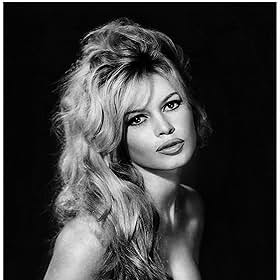
Brigitte Bardot
- Self
- (sin acreditar)
Antoine Bourseiller
- Le partenaire de Brigitte Bardot
- (sin acreditar)
Chantal Darget
- La femme dans le métro
- (sin acreditar)

Françoise Hardy
- La compagne de l'officier américain
- (sin acreditar)

Med Hondo
- L'homme dans le métro
- (sin acreditar)
Elsa Leroy
- Mlle 19 ans de 'Mademoiselle Age Tendre'
- (sin acreditar)

Dominique Zardi
- Le lecteur du bouquin porno
- (sin acreditar)
- Director/a
- Guionistas
- Todo el reparto y equipo
- Producción, taquilla y más en IMDbPro
Reseñas destacadas
Adding my thoughts to the mix of excellent reviews here because I have not seen any touch on this directly.
I understand the movie was mainly unscripted but it is still one of his masterpieces. It is not his best work but one I would imagine that he had a lot of fun making and directing. The camera work is of course artwork in itself.
The movie is largely all over the place but shows his feelings about consumerism, war, especially the Vietnam war, the military-industrial complex that was developing not just in the US but in other nations as well. Add to that birth control, education, capitalism, socialism, communism, and revolution.
The movie uses the lives of young couples and the feeling they have about love, life, and their careers and future as a platform but it shows importantly how the indifference of some youth about things relevant to their life can come back to haunt them.
More importantly near the end it shows how a pollster by making polls is not capturing the opinions from others but is actually influencing others and society by the questions presented. A la Facebook, Twitter, and our modern social platforms and how others are using those same platforms to influence society today.
A movie everyone over 16 should see.
I understand the movie was mainly unscripted but it is still one of his masterpieces. It is not his best work but one I would imagine that he had a lot of fun making and directing. The camera work is of course artwork in itself.
The movie is largely all over the place but shows his feelings about consumerism, war, especially the Vietnam war, the military-industrial complex that was developing not just in the US but in other nations as well. Add to that birth control, education, capitalism, socialism, communism, and revolution.
The movie uses the lives of young couples and the feeling they have about love, life, and their careers and future as a platform but it shows importantly how the indifference of some youth about things relevant to their life can come back to haunt them.
More importantly near the end it shows how a pollster by making polls is not capturing the opinions from others but is actually influencing others and society by the questions presented. A la Facebook, Twitter, and our modern social platforms and how others are using those same platforms to influence society today.
A movie everyone over 16 should see.
"Kill one man and you're a murderer. Kill thousands and you're a conqueror. Kill everyone and you're a god." This is one of the many intriguing lines spoken in Jean-Luc Godard's 1966 film "Masculine, Feminine", a French film that examines what Godard calls "The children of Marx & Coca-Cola". Paul (Leaud) is a 21 year-old man who has just completed his mandatory national service in the French army, and, disillusioned with life, finds himself writing in a café. At one café in particular, he meets Madeleine (Goya), a beautiful young woman who is an aspiring pop singer and is able to get Paul a job at the magazine she occasionally works for. Soon after, she (seemingly almost reluctantly) succumbs to Paul's advances and they embark on a relationship. Along the way, they spend time with his friend Robert (Debord) and her two friends/roommates Elisabeth (Jobert) and Catherine (Duport). During their time together, Paul, who is becoming an increasingly vociferous political activist, struggles with Madeleine's apparent apathy and bursts of affection as well as her complete indifference to social and economic issues plaguing France and the world at large.
I had the pleasure of seeing this film tonight at a local theater that shows art and classic films, and the experience was wonderful. I have read about this film for years, but short of catching it in a film class or at a retrospective of Godard's work (which is not very likely in Milwaukee, WI) it was unavailable until now since it has not yet been released on DVD and isn't readily available on VHS. As cliché as it sounds, "Masculine/Feminine" ended up being so incredibly good that it was more than worth the wait. Therefore, I am pretty much breaking one of my regular traditions of letting a film kind of "settle" in my head before writing about it, since it was so thought-provoking and excellent it's like I wanted to prolong the experience.
With raw and grainy black and white cinematography by Willy Kurant, "Masculine, Feminine" at times feels like a documentary, which is perhaps Godard's intended perception. The camera lingers on the young actors, examining their faces as they wax philosophic on everything from Vietnam to birth control to Bob Dylan. While the film is extremely "talky" at certain points, there was not one moment where I was not captivated. Part of this was the unconventional style with which Godard blocked several of the scenes, particularly the scenes between two characters who are discussing various topics to an extent where they are practically interviewing one another. Normally, the camera switches back and forth between the actors, but Godard chooses instead to keep the camera trained on the person who is being asked the questions, perhaps in an effort to gain a more natural reaction. Another interesting component of the film is its various philosophical points about men and women, posted between scenes and accompanied with the sound of a gun shot. Counting down 15 philosophies about relationships and life in general, this (at least I'm assuming for the time) unconventional style of film-making was surely an inspiration for stylish filmmakers of the future, like Danny Boyle, Guy Ritchie and especially Quentin Tarantino.
Leaud, whose most famous role is probably the young Antoine Doinel in Truffaut's "The Four Hundred Blows" may be about 10 years older, but he looks exactly the same. His rumpled, academic look and sincerely intense and intellectual demeanor are intriguing, and his strong emotional self is prevalent and endears the audience to his character; as with "The Four Hundred Blows", I really cared about his character's fate. Goya is also good as the vapid Madeleine, a woman who takes great care in her appearance to make it appear that she doesn't take care. Other than really not having anything philosophical or intellectual to bring to the table, she also is content to steal the interests of those around her, to give her the appearance of depth. (For example, after making fun of Paul for becoming worked up over Bach, she has no problem telling a reporter she encounters toward the end of the film that he is one of her favorites.) The rest of the cast serve as great supports, particularly the semi-deep and fully charming Catherine (Duport).
I mentioned earlier that it was particularly a treat to see this film simply because it is so rare. Apparently, if all goes as planned, the incredibly wonderful Criterion Collection will be releasing this film on DVD September 2005. I personally plan to pick it up when it is released because I feel like I will gather either more information regarding the characters and/or the story or could possibly come up with a completely different perspective. When the film does become available, I would highly recommend "Masculine, Feminine" to art-cinema lovers or anyone who appreciates the French New Wave. And if you have never seen a film of this type, or by Godard himself and are looking for something to get your feet wet, this would be a good one to start with, because it is avant garde without sacrificing a coherent story and tangible characters. Mostly, I would recommend seeing this film with someone who appreciates good cinema, because I regret not having done so myself, I was so in need of discussion immediately after walking out of the theater. 8/10 --Shelly
I had the pleasure of seeing this film tonight at a local theater that shows art and classic films, and the experience was wonderful. I have read about this film for years, but short of catching it in a film class or at a retrospective of Godard's work (which is not very likely in Milwaukee, WI) it was unavailable until now since it has not yet been released on DVD and isn't readily available on VHS. As cliché as it sounds, "Masculine/Feminine" ended up being so incredibly good that it was more than worth the wait. Therefore, I am pretty much breaking one of my regular traditions of letting a film kind of "settle" in my head before writing about it, since it was so thought-provoking and excellent it's like I wanted to prolong the experience.
With raw and grainy black and white cinematography by Willy Kurant, "Masculine, Feminine" at times feels like a documentary, which is perhaps Godard's intended perception. The camera lingers on the young actors, examining their faces as they wax philosophic on everything from Vietnam to birth control to Bob Dylan. While the film is extremely "talky" at certain points, there was not one moment where I was not captivated. Part of this was the unconventional style with which Godard blocked several of the scenes, particularly the scenes between two characters who are discussing various topics to an extent where they are practically interviewing one another. Normally, the camera switches back and forth between the actors, but Godard chooses instead to keep the camera trained on the person who is being asked the questions, perhaps in an effort to gain a more natural reaction. Another interesting component of the film is its various philosophical points about men and women, posted between scenes and accompanied with the sound of a gun shot. Counting down 15 philosophies about relationships and life in general, this (at least I'm assuming for the time) unconventional style of film-making was surely an inspiration for stylish filmmakers of the future, like Danny Boyle, Guy Ritchie and especially Quentin Tarantino.
Leaud, whose most famous role is probably the young Antoine Doinel in Truffaut's "The Four Hundred Blows" may be about 10 years older, but he looks exactly the same. His rumpled, academic look and sincerely intense and intellectual demeanor are intriguing, and his strong emotional self is prevalent and endears the audience to his character; as with "The Four Hundred Blows", I really cared about his character's fate. Goya is also good as the vapid Madeleine, a woman who takes great care in her appearance to make it appear that she doesn't take care. Other than really not having anything philosophical or intellectual to bring to the table, she also is content to steal the interests of those around her, to give her the appearance of depth. (For example, after making fun of Paul for becoming worked up over Bach, she has no problem telling a reporter she encounters toward the end of the film that he is one of her favorites.) The rest of the cast serve as great supports, particularly the semi-deep and fully charming Catherine (Duport).
I mentioned earlier that it was particularly a treat to see this film simply because it is so rare. Apparently, if all goes as planned, the incredibly wonderful Criterion Collection will be releasing this film on DVD September 2005. I personally plan to pick it up when it is released because I feel like I will gather either more information regarding the characters and/or the story or could possibly come up with a completely different perspective. When the film does become available, I would highly recommend "Masculine, Feminine" to art-cinema lovers or anyone who appreciates the French New Wave. And if you have never seen a film of this type, or by Godard himself and are looking for something to get your feet wet, this would be a good one to start with, because it is avant garde without sacrificing a coherent story and tangible characters. Mostly, I would recommend seeing this film with someone who appreciates good cinema, because I regret not having done so myself, I was so in need of discussion immediately after walking out of the theater. 8/10 --Shelly
Masculin Féminin has been called one of Godard's most challenging films by critics and scholars alike. However, having seen both Film Socialisme and La Chinoise, I think this one isn't nearly his worst in terms of extractable ideas and themes. It's ambiguous, often difficult to watch and grasp, and very disjointed, yet it is also one of the best presentations of pop art, pop culture, and time-specific culture I have yet to see. It's Easy Rider and Two-Lane Blacktop for the 1960's France.
The aforementioned criticisms of Masculin Féminin are to be expected with a Godard film; he is a man not easily defined and one who defies all narrow stereotypes of filmmakers and free-thinkers. He is a man who had the unbelievable audacity to go against popular French cinematic customs during the tumultuous times of 1960's, making films that defied convention, critiqued western culture, and valued experimentation over traditionalist practices. Consistently, with the lone exceptions probably being Pierrot Le Fou and Weekend Godard's films are usually more fun to contemplate, analyze, write about, and discuss than they are to watch. They're meals and things you don't appreciate until they're over and done with even though one doesn't necessarily want to revisit it any time soon; watch two in an evening, especially his political works, and I fear for your mental wellbeing.
Masculin Féminin centers around Paul (Jean-Pierre Léaud), a young France idealist who falls in love with a pop star named Madeleine (Chantal Goya), completely ignoring their polar opposite views of the world, music, politics, etc. Paul and Madeline, among Madeline's close circle of friends, begin having intimate and inspirational conversations about those topics, often reciting poetry or reading political text in order to communicate their point. In the meantime, Godard structures the film like he so often does, with quick-cuts and interjecting title cards bearing often disconnected and unclear text that we, the audience member, have to try to connect to the film in some way.
One of the Godard's most famous title cards appears in this picture, around the third act of the film, and reads, "This film could be called The Children of Marx and Coca-Cola." Here, Godard seems to be stating that the characters we center on in this film, and perhaps he himself, a "Marxist intellectual," are only impacted by two budding forces of the time; they are Marxism, the political ideology coined by the teachings of Karl Marx that addresses issues of class struggle and conflict between people of differing socioeconomic lifestyles by critiquing capitalism and emphasizing a more communistic approach to governing, and Coca-Cola, the globally-recognized soft drink brand that could easily be dubbed a corporate empire. Now, I think the generation today could be called "The Children of Income Inequality and Apple."
Another great quote that pops in the film, this time it's uttered aloud, is stated by Paul when he is discussing the roles of a philosopher and a filmmaker. He states very simply, "a philosopher and filmmaker share an outlook on life that embodies a generation." I like this quote almost as much as the above quote because this one compares two ostensibly different people and makes them come together in hopes that people see they achieve the same goal. This could also come full circle to reference Godard himself, as Godard is very much a Marxist philosopher and thinker as well as a radical, experimental filmmaker, and he damn-sure embodies the mindset and opinions of the sixties French students and young-adults.
With that, Masculin Féminin is a dialog-heavy film where the dialog can be increasingly alienating and very often dry and unappealing. Background knowledge of the French New Wave movement, mild understanding of Marxism, as well as a high tolerance for complex political readings is almost essential here. In theory, the film shouldn't work - it's far too disjointed, punctuated by interjecting title cards that still do little other than muddle the narrative, and has little character development outside of rather basic descriptions. However, scarcely has a film been this more focused and successful at developing the motivations and thoughts of a specific generation.
Starring: Jean-Pierre Léaud and Chantal Goya. Directed by: Jean-Luc Godard.
The aforementioned criticisms of Masculin Féminin are to be expected with a Godard film; he is a man not easily defined and one who defies all narrow stereotypes of filmmakers and free-thinkers. He is a man who had the unbelievable audacity to go against popular French cinematic customs during the tumultuous times of 1960's, making films that defied convention, critiqued western culture, and valued experimentation over traditionalist practices. Consistently, with the lone exceptions probably being Pierrot Le Fou and Weekend Godard's films are usually more fun to contemplate, analyze, write about, and discuss than they are to watch. They're meals and things you don't appreciate until they're over and done with even though one doesn't necessarily want to revisit it any time soon; watch two in an evening, especially his political works, and I fear for your mental wellbeing.
Masculin Féminin centers around Paul (Jean-Pierre Léaud), a young France idealist who falls in love with a pop star named Madeleine (Chantal Goya), completely ignoring their polar opposite views of the world, music, politics, etc. Paul and Madeline, among Madeline's close circle of friends, begin having intimate and inspirational conversations about those topics, often reciting poetry or reading political text in order to communicate their point. In the meantime, Godard structures the film like he so often does, with quick-cuts and interjecting title cards bearing often disconnected and unclear text that we, the audience member, have to try to connect to the film in some way.
One of the Godard's most famous title cards appears in this picture, around the third act of the film, and reads, "This film could be called The Children of Marx and Coca-Cola." Here, Godard seems to be stating that the characters we center on in this film, and perhaps he himself, a "Marxist intellectual," are only impacted by two budding forces of the time; they are Marxism, the political ideology coined by the teachings of Karl Marx that addresses issues of class struggle and conflict between people of differing socioeconomic lifestyles by critiquing capitalism and emphasizing a more communistic approach to governing, and Coca-Cola, the globally-recognized soft drink brand that could easily be dubbed a corporate empire. Now, I think the generation today could be called "The Children of Income Inequality and Apple."
Another great quote that pops in the film, this time it's uttered aloud, is stated by Paul when he is discussing the roles of a philosopher and a filmmaker. He states very simply, "a philosopher and filmmaker share an outlook on life that embodies a generation." I like this quote almost as much as the above quote because this one compares two ostensibly different people and makes them come together in hopes that people see they achieve the same goal. This could also come full circle to reference Godard himself, as Godard is very much a Marxist philosopher and thinker as well as a radical, experimental filmmaker, and he damn-sure embodies the mindset and opinions of the sixties French students and young-adults.
With that, Masculin Féminin is a dialog-heavy film where the dialog can be increasingly alienating and very often dry and unappealing. Background knowledge of the French New Wave movement, mild understanding of Marxism, as well as a high tolerance for complex political readings is almost essential here. In theory, the film shouldn't work - it's far too disjointed, punctuated by interjecting title cards that still do little other than muddle the narrative, and has little character development outside of rather basic descriptions. However, scarcely has a film been this more focused and successful at developing the motivations and thoughts of a specific generation.
Starring: Jean-Pierre Léaud and Chantal Goya. Directed by: Jean-Luc Godard.
This film was a chore to watch. I've never had to pause a movie so many times, taking me three days and a significant amount of perseverance to get through it. The primary issue lies in the fact that the film offers little more than dialogues between boys and girls, which, for the most part, came across as uninteresting and irrelevant.
In dialogue-driven films, it is crucial to have an engaging story in the background to maintain the audience's interest. This film, however, fails in that regard. The background story is not only incoherent but also ambiguous, making it hard to follow and even harder to care about. The discussions among characters fail to strike a chord, often feeling out of touch and unrelatable.
The dialogues in this film lack the ability to transcend their era, feeling stuck in the sixties without offering any timeless insights or universal themes. As a result, the conversations feel dated and fail to engage a contemporary audience. This detachment from current relevance makes it difficult for viewers to connect with the film on a deeper level.
A successful dialogue-driven film needs more than just conversations; it requires a compelling narrative that gives context to those dialogues, characters that are well-developed and relatable, and themes that resonate across different times and cultures. Unfortunately, this film falls short on all these fronts. The dialogues are flat and fail to develop the characters or advance the plot in a meaningful way. The characters remain one-dimensional, and their interactions do little to reveal any depth or complexity.
In essence, this film exemplifies how a dialogue-driven movie can go wrong. Without engaging dialogue, a coherent background story, well-developed characters, and relevant themes, it becomes a tedious experience. The film's failure to connect with the audience on any significant level results in a viewing experience that is more frustrating than enjoyable.
To summarize, this film is an example of missed opportunities and poor execution. Its dialogues are neither engaging nor relevant, the story is muddled and unclear, and the characters lack depth. The themes do not resonate with modern viewers, and the pacing makes the film feel interminable. Watching it felt more like a test of endurance than a form of entertainment. For a dialogue-driven film to succeed, it must excel in areas where this film has unfortunately fallen flat.
In dialogue-driven films, it is crucial to have an engaging story in the background to maintain the audience's interest. This film, however, fails in that regard. The background story is not only incoherent but also ambiguous, making it hard to follow and even harder to care about. The discussions among characters fail to strike a chord, often feeling out of touch and unrelatable.
The dialogues in this film lack the ability to transcend their era, feeling stuck in the sixties without offering any timeless insights or universal themes. As a result, the conversations feel dated and fail to engage a contemporary audience. This detachment from current relevance makes it difficult for viewers to connect with the film on a deeper level.
A successful dialogue-driven film needs more than just conversations; it requires a compelling narrative that gives context to those dialogues, characters that are well-developed and relatable, and themes that resonate across different times and cultures. Unfortunately, this film falls short on all these fronts. The dialogues are flat and fail to develop the characters or advance the plot in a meaningful way. The characters remain one-dimensional, and their interactions do little to reveal any depth or complexity.
In essence, this film exemplifies how a dialogue-driven movie can go wrong. Without engaging dialogue, a coherent background story, well-developed characters, and relevant themes, it becomes a tedious experience. The film's failure to connect with the audience on any significant level results in a viewing experience that is more frustrating than enjoyable.
To summarize, this film is an example of missed opportunities and poor execution. Its dialogues are neither engaging nor relevant, the story is muddled and unclear, and the characters lack depth. The themes do not resonate with modern viewers, and the pacing makes the film feel interminable. Watching it felt more like a test of endurance than a form of entertainment. For a dialogue-driven film to succeed, it must excel in areas where this film has unfortunately fallen flat.
That alternate title for Masculin Feminin, The Children of Marx and Coca-Cola, is provided in the middle of the film. It is probably the most famous thing from it. It's actually a good title. Politics and pop culture mix in odd ways in the film, and the characters are uncertain about both of those aspects of their lives.
Truth be told, Masculin Feminin is a lesser work by Jean-Luc Godard. It was made during a difficult period in his life: his relationship with Anna Karina, his wife and favorite actress, star of many of his early films such as Le petit soldat, Une femme est une femme, and especially Vivre sa vie, was falling apart. Therefore, this particular film is very bitter and hopeless. Godard is also unsure of where he's going. The film stars Jean-Pierre Leaud, who is most famous for playing Antoine Doinel in such Truffaut films as The 400 Blows. His girlfriend is played by Chantal Goya, who was a pop star at the time (and she plays an up-and-coming pop singer in the film). The film loses track of its supporting players. They are omnipresent, but when they have scenes without Leaud or Goya, the film gets tedious. Godard doesn't know what he's doing with them. This is especially true of a long scene where Leaud's best friend tries to court Goya's best friend in a kitchen. He asks her many questions, but they are all very trite ones about her sex life. I swear, he asks the same three questions a dozen times each. It gets old fast, and the scene lasts forever. There are several good sequences, but nothing that really equals the best of Jean-Luc Godard. Perhaps its real value is in its editing. Godard's editing is always interesting, and Masculin Feminin shows us his skill with long takes. Also, there are a couple of great tracking shots. 7/10.
Truth be told, Masculin Feminin is a lesser work by Jean-Luc Godard. It was made during a difficult period in his life: his relationship with Anna Karina, his wife and favorite actress, star of many of his early films such as Le petit soldat, Une femme est une femme, and especially Vivre sa vie, was falling apart. Therefore, this particular film is very bitter and hopeless. Godard is also unsure of where he's going. The film stars Jean-Pierre Leaud, who is most famous for playing Antoine Doinel in such Truffaut films as The 400 Blows. His girlfriend is played by Chantal Goya, who was a pop star at the time (and she plays an up-and-coming pop singer in the film). The film loses track of its supporting players. They are omnipresent, but when they have scenes without Leaud or Goya, the film gets tedious. Godard doesn't know what he's doing with them. This is especially true of a long scene where Leaud's best friend tries to court Goya's best friend in a kitchen. He asks her many questions, but they are all very trite ones about her sex life. I swear, he asks the same three questions a dozen times each. It gets old fast, and the scene lasts forever. There are several good sequences, but nothing that really equals the best of Jean-Luc Godard. Perhaps its real value is in its editing. Godard's editing is always interesting, and Masculin Feminin shows us his skill with long takes. Also, there are a couple of great tracking shots. 7/10.



¿Sabías que...?
- CuriosidadesDue to the portrayal of youth and sex, the film was prohibited to persons under 18 in France - "the very audience it was meant for," griped Jean-Luc Godard.
- Créditos adicionalesContrary to what Paul and his friend decide in the laundry mat sequence, Godard points out just before the credits that the word "féminin" does in fact contain another word: "fin" [end].
- ConexionesEdited into Bande-annonce de 'Masculin féminin' (1966)
- Banda sonoraLaisse-Moi
Music by Jean-Jacques Debout
Lyrics by Jean-Jacques Debout
Performed by Chantal Goya
Editions de RCA
Selecciones populares
Inicia sesión para calificar y añadir a tu lista para recibir recomendaciones personalizadas
- How long is Masculine Feminine?Con tecnología de Alexa
Detalles
- Fecha de lanzamiento
- Países de origen
- Sitio oficial
- Idiomas
- Títulos en diferentes países
- Masculí femení
- Localizaciones del rodaje
- Scandic Hotel Continental, Norrmalm, Estocolmo, Provincia de Estocolmo, Suecia(sequence of film seen at the cinema)
- Empresas productoras
- Ver más compañías en los créditos en IMDbPro
Taquilla
- Recaudación en Estados Unidos y Canadá
- 200.380 US$
- Fin de semana de estreno en EE. UU. y Canadá
- 26.855 US$
- 13 feb 2005
- Recaudación en todo el mundo
- 205.543 US$
- Duración
- 1h 50min(110 min)
- Color
- Mezcla de sonido
- Relación de aspecto
- 1.37 : 1
Contribuir a esta página
Sugerir un cambio o añadir el contenido que falta