PUNTUACIÓN EN IMDb
7,4/10
19 mil
TU PUNTUACIÓN


Un romance entre jóvenes parisinos, mostrado a través de una serie de viñetas.Un romance entre jóvenes parisinos, mostrado a través de una serie de viñetas.Un romance entre jóvenes parisinos, mostrado a través de una serie de viñetas.
- Director/a
- Guionistas
- Estrellas
- Premios
- 3 premios y 3 nominaciones en total


Evabritt Strandberg
- Elle (la femme dans le film)
- (as Eva-Britt Strandberg)


Yves Afonso
- L'homme qui se suicide
- (sin acreditar)

Henri Attal
- L'autre lecteur du bouquin porno
- (sin acreditar)
Mickey Baker
- Record producer
- (sin acreditar)
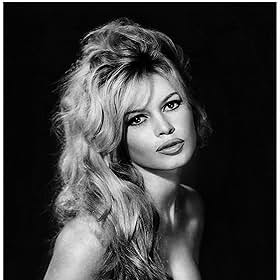
Brigitte Bardot
- Brigitte Bardot
- (sin acreditar)
Antoine Bourseiller
- Le partenaire de Brigitte Bardot
- (sin acreditar)
Chantal Darget
- La femme dans le métro
- (sin acreditar)

Françoise Hardy
- La compagne de l'officier américain
- (sin acreditar)

Med Hondo
- L'homme dans le métro
- (sin acreditar)
Elsa Leroy
- Mlle 19 ans de 'Mademoiselle Age Tendre'
- (sin acreditar)

Dominique Zardi
- Le lecteur du bouquin porno
- (sin acreditar)
- Director/a
- Guionistas
- Todo el reparto y equipo
- Producción, taquilla y más en IMDbPro
Reseñas destacadas
It's strange this movie has not a single French comment.More than any Godard movie (I must confess I'm not a Godard fan,by a long shot),this one depicts a world now gone ,the world of the French sixties youth ,of the "Mademoiselle Age Tendre" magazine ,the world where a "pop" singer Chantal Goya used to sing "Si Tu Gagnes Au flipper" ("Should you win if you play pinball,then you've lost my heart ,'cause I know you've dated my best friend" exciting huh?).Every year the trendy girls used to elect their "Mademoiselle Age Tendre" and the winner had tons of presents and had the privilege of dining with Johnny Hallyday,Françoise Hardy and other "pop" stars of the era.Godard shows one of the lucky recipients and for once he displays some humor.Abortion and suicide did not exist in the sixties youth world they (magazines and radios) built for them,but in Godard's flick,they loom in the background.The director makes a tricky use of the words "féminin" and "fin".It's Marlene Jobert's first important part.
You had to be here ,I guess.For people who did not live in France in the sixties ,it is an honest time capsule
You had to be here ,I guess.For people who did not live in France in the sixties ,it is an honest time capsule
"Masculin Feminin" is a definitive example of French New Wave filmmaking. It is experimental, comic, risky, wild, and fun, a spectacle that find cinematic magic within even the most subtle and mundane of situations. Although it is often listed as nothing more than a drama, this is also an extremely funny movie, perhaps one of Jean-Luc Godard's very funniest. From the opening moments, bizarre comic mischief is springing left and right. Through unexpected surrealism and occasional violence, Godard masterfully weaves dark humor into this often tragic love story.
The performances are also quite exceptional. Jean-Pierre Léaud further stabilizes his spot among the greatest French actors, and Chantal Goya is no less than absolutely charming and delightful. The characters are well developed-often likable, but sometimes despicable, like most human beings. There are times in which you, as an audience member, agree with their actions and beliefs, and there are times in which you must disagree. Through their ups and downs, "Masculin Feminin" explores a youthful couple's relationship in a unique and hysterical way. Fusing satire, sadness, fantasy, and comedy, "Masculin feminin" is very much a Jean-Luc Godard love story, meaning that it is heavily stylized, but also heavily realistic, just not in the conventional sense.
The performances are also quite exceptional. Jean-Pierre Léaud further stabilizes his spot among the greatest French actors, and Chantal Goya is no less than absolutely charming and delightful. The characters are well developed-often likable, but sometimes despicable, like most human beings. There are times in which you, as an audience member, agree with their actions and beliefs, and there are times in which you must disagree. Through their ups and downs, "Masculin Feminin" explores a youthful couple's relationship in a unique and hysterical way. Fusing satire, sadness, fantasy, and comedy, "Masculin feminin" is very much a Jean-Luc Godard love story, meaning that it is heavily stylized, but also heavily realistic, just not in the conventional sense.
I saw Masculin Feminin in a class last year and like with most of Jean-Luc Godard's films I was taken aback by how much the film doesn't stick to anything expected for the audience. This is Godard at the peak of his powers as a director for what has become a line associated forever with Godard- the Marx and Coca-Cola generation of people (or, those born in the 1940's). Like My Life to Live, the film is broken up into specific acts, but this time it isn't as discernible and even plays on when a new segment should start or end (sometimes it changes quite quickly). And the spontaneous feel that goes with many of the better Godard films is in full swing here, as Godard (according to the interviews on the DVD) sometimes just feeds the actors lines, or just questions to get true, if more documentary-like, answers from the actor(s). It's really one of the best films from the period that made Godard known all over the world; anyone seeing his later, more obscured semantic essay films need only to see a film like this or Band of Outsiders to see the filmmaker dealing with real characters and convincing dialog.
Jean-Pierre Leaud is actually just as good here as he is in the 400 Blows, only in a slightly different way. The youth of this actor is still ever present, but here it's changed to be a little more of a radical guy. The uncertainty of the character of Paul, his interest in the opposite sex, and having an intelligent but aimless walk of life, is very in tune with the other Truffaut creation. He becomes, along with his co-stars (like the young, beautiful Chantal Goya as Madeline and Marlene Jobert as Elisabeth), if not really a direct representation of all the French youth at the time, something of a reflection of youth is like in general is present. These characters don't know what they want for their lives, but they do know that things like sex, rock and roll, protesting the oppression of governments, and keeping an interest in parts of life are what make up their day-to-day existences. What might seem very casual styling in following these characters, particularly Paul, is a bit more calculated than expected. Everything that unfolds goes from being very funny to philosophical to fly-on-the-wall to even the poetic. That the cinematography and visual style is more often than not exciting in where the camera may move or not, or where the length of the shot will hold.
Individual moments make up some of the best that Godard's ever received, and from actors who being caught off-guard is not a negative. I loved the dialog between Paul and Madeline early in the film, as simple questions have some deeper contexts. Or when Paul is just walking along, a rock song starts, and a guy whips out a knife only to something very unexpected with a great, ironic payoff. Or the movie within the movie, a parody on Bergman's The Silence that isn't disrespectful and at the same time captures a cool attitude that these characters are looking at even if it's a bit above their own sexual attitude. But most striking both times I watched the film, even in its sort of un-reality and very 'movie' kind of way is when Madeline says a very poetic bit of wording in bed in the dark. Even in the moments when Godard's off-kilter filming isn't as appealing as in other points, as one who is apart of this age group the characters are in, I got enveloped in their loose, tragic-comic conversations and observations (not as preachy or didactic as in other works of the filmmaker). The ending, too, is perfectly shocking and puts a fine dramatic cap on what is really a bittersweet view of these people. And along with getting these characters right, this time and place, the places and people they encounter (little poetic notes of their own, as on the subway or in the coffee shops) add to its overall effect. One of the best films of 1966.
Jean-Pierre Leaud is actually just as good here as he is in the 400 Blows, only in a slightly different way. The youth of this actor is still ever present, but here it's changed to be a little more of a radical guy. The uncertainty of the character of Paul, his interest in the opposite sex, and having an intelligent but aimless walk of life, is very in tune with the other Truffaut creation. He becomes, along with his co-stars (like the young, beautiful Chantal Goya as Madeline and Marlene Jobert as Elisabeth), if not really a direct representation of all the French youth at the time, something of a reflection of youth is like in general is present. These characters don't know what they want for their lives, but they do know that things like sex, rock and roll, protesting the oppression of governments, and keeping an interest in parts of life are what make up their day-to-day existences. What might seem very casual styling in following these characters, particularly Paul, is a bit more calculated than expected. Everything that unfolds goes from being very funny to philosophical to fly-on-the-wall to even the poetic. That the cinematography and visual style is more often than not exciting in where the camera may move or not, or where the length of the shot will hold.
Individual moments make up some of the best that Godard's ever received, and from actors who being caught off-guard is not a negative. I loved the dialog between Paul and Madeline early in the film, as simple questions have some deeper contexts. Or when Paul is just walking along, a rock song starts, and a guy whips out a knife only to something very unexpected with a great, ironic payoff. Or the movie within the movie, a parody on Bergman's The Silence that isn't disrespectful and at the same time captures a cool attitude that these characters are looking at even if it's a bit above their own sexual attitude. But most striking both times I watched the film, even in its sort of un-reality and very 'movie' kind of way is when Madeline says a very poetic bit of wording in bed in the dark. Even in the moments when Godard's off-kilter filming isn't as appealing as in other points, as one who is apart of this age group the characters are in, I got enveloped in their loose, tragic-comic conversations and observations (not as preachy or didactic as in other works of the filmmaker). The ending, too, is perfectly shocking and puts a fine dramatic cap on what is really a bittersweet view of these people. And along with getting these characters right, this time and place, the places and people they encounter (little poetic notes of their own, as on the subway or in the coffee shops) add to its overall effect. One of the best films of 1966.
Possible Spoliers: Though not Godard's best, Masculin, feminin is in many ways the prototypical Godard film, exhibiting as it does both his characteristic virtues and characteristic vices. The plot is simple and barley manages to hold the film together; a young man (Paul) conducts a shapeless relationship with a singer (Madeline), works on a cigarette trick, engages in politically oriented graffiti, wrestles with only moderate energy with his own political views, watches two strangers get killed and takes scant notice, etc. Friends and acquaintances of the pair drift in and out of the film, to no great effect.
The film, like most Godard films, should be dreadful, and to many it will appear to be just that. But it manages to develop a rhythm, largely thanks to interesting editing choices, and keeps the viewer interested, if not exactly riveted. One hangs on with a Godard film in an attempt to discern the pattern at work-there seems to be no organizing principle as such, nothing particular the filmmaker wishes to communicate, but one senses a method, or a semblance of one, to Godard's madness.
Nearly 40 years on, Masculin, feminin appears very much a product of its time, though not without some claim to universality. References to the Vietnam War and to De Gaulle along with detailed, and dreary, political texts read aloud by the actors, do date the film somewhat, and yet a good deal of ground is covered; love and sex, birth control, women's rights, democracy and liberty, France vs. America, Bob Dylan, the Final Solution, German war guilt, union agitation, random violence, vanity, pornography. Trouble is, neither the characters nor the film reaches any particular conclusions about any of these things; many of them are mentioned in passing-themes stillborn. But perhaps that's part of the point. Godard seems to be acting almost like a
documentarian-at this point in time these kinds of things were discussed, but desultorily, as a part of the process of living, but not as its whole. Will this interest you, the putative viewer? Who knows. In my opinion, this is hardly a great film. Scenes drag on and lead nowhere; dramatic events happen but have no bearing on the rest of the film and thus we are not inclined to care; the sound of gunfire and titles break the film into chapters for no justifiable reason; Godard appears as confused as his protagonists as to the value of art, politics, and action. Still, the film has a wholly original texture, and that cannot be faked.
The film, like most Godard films, should be dreadful, and to many it will appear to be just that. But it manages to develop a rhythm, largely thanks to interesting editing choices, and keeps the viewer interested, if not exactly riveted. One hangs on with a Godard film in an attempt to discern the pattern at work-there seems to be no organizing principle as such, nothing particular the filmmaker wishes to communicate, but one senses a method, or a semblance of one, to Godard's madness.
Nearly 40 years on, Masculin, feminin appears very much a product of its time, though not without some claim to universality. References to the Vietnam War and to De Gaulle along with detailed, and dreary, political texts read aloud by the actors, do date the film somewhat, and yet a good deal of ground is covered; love and sex, birth control, women's rights, democracy and liberty, France vs. America, Bob Dylan, the Final Solution, German war guilt, union agitation, random violence, vanity, pornography. Trouble is, neither the characters nor the film reaches any particular conclusions about any of these things; many of them are mentioned in passing-themes stillborn. But perhaps that's part of the point. Godard seems to be acting almost like a
documentarian-at this point in time these kinds of things were discussed, but desultorily, as a part of the process of living, but not as its whole. Will this interest you, the putative viewer? Who knows. In my opinion, this is hardly a great film. Scenes drag on and lead nowhere; dramatic events happen but have no bearing on the rest of the film and thus we are not inclined to care; the sound of gunfire and titles break the film into chapters for no justifiable reason; Godard appears as confused as his protagonists as to the value of art, politics, and action. Still, the film has a wholly original texture, and that cannot be faked.
Adding my thoughts to the mix of excellent reviews here because I have not seen any touch on this directly.
I understand the movie was mainly unscripted but it is still one of his masterpieces. It is not his best work but one I would imagine that he had a lot of fun making and directing. The camera work is of course artwork in itself.
The movie is largely all over the place but shows his feelings about consumerism, war, especially the Vietnam war, the military-industrial complex that was developing not just in the US but in other nations as well. Add to that birth control, education, capitalism, socialism, communism, and revolution.
The movie uses the lives of young couples and the feeling they have about love, life, and their careers and future as a platform but it shows importantly how the indifference of some youth about things relevant to their life can come back to haunt them.
More importantly near the end it shows how a pollster by making polls is not capturing the opinions from others but is actually influencing others and society by the questions presented. A la Facebook, Twitter, and our modern social platforms and how others are using those same platforms to influence society today.
A movie everyone over 16 should see.
I understand the movie was mainly unscripted but it is still one of his masterpieces. It is not his best work but one I would imagine that he had a lot of fun making and directing. The camera work is of course artwork in itself.
The movie is largely all over the place but shows his feelings about consumerism, war, especially the Vietnam war, the military-industrial complex that was developing not just in the US but in other nations as well. Add to that birth control, education, capitalism, socialism, communism, and revolution.
The movie uses the lives of young couples and the feeling they have about love, life, and their careers and future as a platform but it shows importantly how the indifference of some youth about things relevant to their life can come back to haunt them.
More importantly near the end it shows how a pollster by making polls is not capturing the opinions from others but is actually influencing others and society by the questions presented. A la Facebook, Twitter, and our modern social platforms and how others are using those same platforms to influence society today.
A movie everyone over 16 should see.



¿Sabías que...?
- CuriosidadesDue to the portrayal of youth and sex, the film was prohibited to persons under 18 in France - "the very audience it was meant for," griped Jean-Luc Godard.
- Créditos adicionalesContrary to what Paul and his friend decide in the laundry mat sequence, Godard points out just before the credits that the word "féminin" does in fact contain another word: "fin" [end].
- ConexionesEdited into Bande-annonce de 'Masculin féminin' (1966)
- Banda sonoraLaisse-Moi
Music by Jean-Jacques Debout
Lyrics by Jean-Jacques Debout
Performed by Chantal Goya
Editions de RCA
Selecciones populares
Inicia sesión para calificar y añadir a tu lista para recibir recomendaciones personalizadas
- How long is Masculine Feminine?Con tecnología de Alexa
Detalles
- Fecha de lanzamiento
- Países de origen
- Sitio oficial
- Idiomas
- Títulos en diferentes países
- Masculí femení
- Localizaciones del rodaje
- Scandic Hotel Continental, Norrmalm, Estocolmo, Provincia de Estocolmo, Suecia(sequence of film seen at the cinema)
- Empresas productoras
- Ver más compañías en los créditos en IMDbPro
Taquilla
- Recaudación en Estados Unidos y Canadá
- 200.380 US$
- Fin de semana de estreno en EE. UU. y Canadá
- 26.855 US$
- 13 feb 2005
- Recaudación en todo el mundo
- 205.543 US$
- Duración
- 1h 50min(110 min)
- Color
- Mezcla de sonido
- Relación de aspecto
- 1.37 : 1
Contribuir a esta página
Sugerir un cambio o añadir el contenido que falta