

La joven Dorothy y su perro son arrastrados por un tornado desde Kansas a la mágica tierra de Oz, y se embarcan en una búsqueda con tres nuevos amigos para ver al mago, que puede devolverla ... Leer todoLa joven Dorothy y su perro son arrastrados por un tornado desde Kansas a la mágica tierra de Oz, y se embarcan en una búsqueda con tres nuevos amigos para ver al mago, que puede devolverla a su hogar y cumplir los deseos de los demás.La joven Dorothy y su perro son arrastrados por un tornado desde Kansas a la mágica tierra de Oz, y se embarcan en una búsqueda con tres nuevos amigos para ver al mago, que puede devolverla a su hogar y cumplir los deseos de los demás.
- Ganó 2 premios Óscar
- 16 premios y 14 nominaciones en total


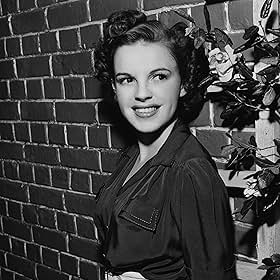


The Singer Midgets
- The Munchkins
- (as The Munchkins)
Gladys W. Allison
- Munchkin
- (sin acreditar)
John Ballas
- Munchkin
- (sin acreditar)
Franz Balluck
- Munchkin
- (sin acreditar)
Josefine Balluck
- Munchkin
- (sin acreditar)
Casper Balsam
- Munchkin
- (sin acreditar)
John T. Bambury
- Munchkin
- (sin acreditar)
Resumen
Reviewers say 'The Wizard of Oz' is cherished for its themes of home, friendship, and self-discovery. Judy Garland's performance and "Over the Rainbow" are celebrated. The black and white to Technicolor transition is noted for its impact. Characters like the Scarecrow and Tin Man symbolize personal growth. The film's cultural significance and moral lessons resonate across ages. Some critique its allegorical elements and societal reflections. Though dated, the special effects and set designs are admired for their creativity and era-specific impact.
Reseñas destacadas
10robb_772
Where to begin? MGM's elaborate adaptation of L. Frank Baum's 1900 fantasy classic THE WONDERFUL WIZARD OF OZ not only became an institution among itself (and practically defined the concept of modern popular culture), but is reported to be the most viewed film ever made. A sharp screenplay effectively condenses the novel's text into a workable film, and director Victor Fleming (along with countless other behind-the-scenes technicians) craft a visually stimulating fantasy world that surpasses the expectations of even the most imaginative viewers. Brimming with stunning visual effects (the film's fierce tornado is an FX feat that has yet to be surpassed by CGI), witty dialogue, and eye-popping Technicolor, THE WIZARD OF OZ truly lives up to it's reputation as a once-in-a-lifetime film where every element comes together flawlessly.
The cast could not be improved upon. The quivery-voiced, solemn-faced Judy Garland will always be Dorothy, the little lost farm girl on the road to Oz, clutching her beloved Toto (impressively portrayed himself by the female canine performer Terry, the terrier). It seems inconceivable that MGM had originally wished to cast Shirley Temple in the role, as Temple's doe-eyed, cutesy-voiced shtick would have been a catastrophic ill-fit for the tone of this picture. Conversely, Garland is perhaps the screen's quintessential woman/child; always seemingly just one step away from reaching full emotional maturity. It is her sadness that transfixes viewers to the screen, the exact same quality that made the film's most memorable Harold Arlen/E. Y. Harburg number "Over the Rainbow" into one of the most exquisite marriages between artist and song ever to be recorded.
The remainder of the cast is similarly exceptional, many of whom perform perfectly even under the most debilitating make-up and costumes. Frank Morgan is marvelously versatile in no less than five roles, the insanely energetic Bert Lahr mugs brilliantly, the handsome Jack Haley swoons sweetly, Billie Burke lends the film an ornate ethereality, and Ray Bolger's gravity-defying physical presence nearly steals the entire picture on several occasions. Perhaps most notable is former schoolteacher Margaret Hamilton's transformation into the wickedest of wicked witches, which certainly remains among the vilest and most terrifying portrayals of full-throttle evil ever to be seen. No matter how it is analyzed, scrutinized, or satirized, the 1939 production of THE WIZARD OF OZ is a top-notch example of how to turn a great story into a fabulous, milestone of a film.
The cast could not be improved upon. The quivery-voiced, solemn-faced Judy Garland will always be Dorothy, the little lost farm girl on the road to Oz, clutching her beloved Toto (impressively portrayed himself by the female canine performer Terry, the terrier). It seems inconceivable that MGM had originally wished to cast Shirley Temple in the role, as Temple's doe-eyed, cutesy-voiced shtick would have been a catastrophic ill-fit for the tone of this picture. Conversely, Garland is perhaps the screen's quintessential woman/child; always seemingly just one step away from reaching full emotional maturity. It is her sadness that transfixes viewers to the screen, the exact same quality that made the film's most memorable Harold Arlen/E. Y. Harburg number "Over the Rainbow" into one of the most exquisite marriages between artist and song ever to be recorded.
The remainder of the cast is similarly exceptional, many of whom perform perfectly even under the most debilitating make-up and costumes. Frank Morgan is marvelously versatile in no less than five roles, the insanely energetic Bert Lahr mugs brilliantly, the handsome Jack Haley swoons sweetly, Billie Burke lends the film an ornate ethereality, and Ray Bolger's gravity-defying physical presence nearly steals the entire picture on several occasions. Perhaps most notable is former schoolteacher Margaret Hamilton's transformation into the wickedest of wicked witches, which certainly remains among the vilest and most terrifying portrayals of full-throttle evil ever to be seen. No matter how it is analyzed, scrutinized, or satirized, the 1939 production of THE WIZARD OF OZ is a top-notch example of how to turn a great story into a fabulous, milestone of a film.
Judy Garland's portrayal of Dorothy, Dorothy's oddball Oz friends, "Somewhere Over the Rainbow", and the rest of this fine production of "The Wizard of Oz" have lost little of their magic over the years. While it has become oddly fashionable in recent years to deride this kind of classic, innocent fantasy, the movie itself has aged very well, and it is likely to retain an appreciative audience for some time to come.
There's no doubt that part of the appeal of the story and the characters comes from them being such old friends to so many cinema fans, but there are also good reasons why they have endured for so long, and have been able to hold up even after becoming so familiar. Although Dorothy is not a particularly complex character, she represents an innocent but deep yearning that is easy to identify with. Likewise, the 'Oz' characters are bizarre enough to remain interesting, but there is a core of substance that again is easy to believe in. Who does not feel that he or she could use at least one of the things that Dorothy's friends want?
The adaptation from the original story is done quite well, making fine choices for the characters and episodes that would work on film. The settings and visual effects may not impress the devotees of today's computer imagery, but in their time they certainly demonstrated a great deal of skill and planning, and even now, in their own way they are more believable than are most of the computer tricks that have become so overused.
The popular story has also been used for a number of more recent adaptations, and some of them have had some good points of their own. But this Wizard remains by far the most wonderful of the versions of the classic tale.
There's no doubt that part of the appeal of the story and the characters comes from them being such old friends to so many cinema fans, but there are also good reasons why they have endured for so long, and have been able to hold up even after becoming so familiar. Although Dorothy is not a particularly complex character, she represents an innocent but deep yearning that is easy to identify with. Likewise, the 'Oz' characters are bizarre enough to remain interesting, but there is a core of substance that again is easy to believe in. Who does not feel that he or she could use at least one of the things that Dorothy's friends want?
The adaptation from the original story is done quite well, making fine choices for the characters and episodes that would work on film. The settings and visual effects may not impress the devotees of today's computer imagery, but in their time they certainly demonstrated a great deal of skill and planning, and even now, in their own way they are more believable than are most of the computer tricks that have become so overused.
The popular story has also been used for a number of more recent adaptations, and some of them have had some good points of their own. But this Wizard remains by far the most wonderful of the versions of the classic tale.
In the fall of 2006, my husband and I saw a screening "The Wizard of Oz" that had a full orchestra providing the soundtrack. Never in my life had I seen a more eclectic audience: there were families with little children, adults who came alone (one woman was dressed as Glinda), teens and college students, even couples who had to have been in their '90s. Not to gush, but it's really a testimonial to "Oz"'s legacy that it can appeal to every generation, to every age. Like hot chocolate or Mickey Mouse T-shirts, "The Wizard of Oz" is something you never have to worry about being too old for. There is something so comforting about the familiar story of farm girl Dorothy's journey through the strange but wonderful land of Oz, and yet it remains a wonder to behold. I still get excited when Dorothy steps out her sepia-toned world of Kansas into the Technicolor Munchkinland, even though I learned ages ago how the trick was done. I'm still overjoyed when Dorothy makes another odd yet loyal friend along her journey (hmmm, a nice message of tolerance, too!). I still cry when Dorothy bids her friends farewell (Jack Haley in particular breaks my heart). I just want to yell at the screen, "no! Forget boring old Kansas, stay in Oz!"
Not only is "The Wizard of Oz" a charming, addictive classic, but it's one of the best-cast films ever. Putty-limbed Ray Bolger ("Some people without brains do and AWFUL lot of talking, don't they?"), over-the-top Bert Lahr (I haven't any courage at all, I even scare myself!"), and boyishly charming Jack Haley ("Now I know I have a heart, 'cause it's breaking.") are pitch-perfect in their respective roles as the Scarecrow, the Cowardly Lion, and the Tin Man. All three were vaudeville vets, and they infuse their roles with both theatrical shtick and warmth. Billie Burke is memorably twittery yet poised as Glinda the Good Witch, and who can possibly forget Margaret Hamilton's cackling, gleefully evil performance as the Wicked Witch of the West? Hamiltion's iconic, villainous image is so emblazoned in our minds, that it's easy to forget she was a former kindergarten teacher and future animal rights activist! As superb as the cast is, however, "The Wizard of Oz" belongs to the young Judy Garland. Garland makes Dorothy a very real character that we can all relate too, whereas any other actress would have made her one-note and whiny. She believably plays an ordinary girl in an extraordinary place, her lovely brown eyes wide with awe and wonder. And that singing voice! Long before Garland's voice became tinged with tremulous desperation due to age and hard living, the true beauty and purity of her voice comes through in "Oz". Garland sings "Over the Rainbow" so simply, without a trace of theatrics, and you're swept away just the same. It's spellbinding, seeing someone so young have the presence and talent to hold a movie in the palm of her hand. "The Wizard of Oz" will remain the ultimate escapist classic for generations to come, and it will always be one of my favorites. It's comforting, familiar, why... it's just like home.
Not only is "The Wizard of Oz" a charming, addictive classic, but it's one of the best-cast films ever. Putty-limbed Ray Bolger ("Some people without brains do and AWFUL lot of talking, don't they?"), over-the-top Bert Lahr (I haven't any courage at all, I even scare myself!"), and boyishly charming Jack Haley ("Now I know I have a heart, 'cause it's breaking.") are pitch-perfect in their respective roles as the Scarecrow, the Cowardly Lion, and the Tin Man. All three were vaudeville vets, and they infuse their roles with both theatrical shtick and warmth. Billie Burke is memorably twittery yet poised as Glinda the Good Witch, and who can possibly forget Margaret Hamilton's cackling, gleefully evil performance as the Wicked Witch of the West? Hamiltion's iconic, villainous image is so emblazoned in our minds, that it's easy to forget she was a former kindergarten teacher and future animal rights activist! As superb as the cast is, however, "The Wizard of Oz" belongs to the young Judy Garland. Garland makes Dorothy a very real character that we can all relate too, whereas any other actress would have made her one-note and whiny. She believably plays an ordinary girl in an extraordinary place, her lovely brown eyes wide with awe and wonder. And that singing voice! Long before Garland's voice became tinged with tremulous desperation due to age and hard living, the true beauty and purity of her voice comes through in "Oz". Garland sings "Over the Rainbow" so simply, without a trace of theatrics, and you're swept away just the same. It's spellbinding, seeing someone so young have the presence and talent to hold a movie in the palm of her hand. "The Wizard of Oz" will remain the ultimate escapist classic for generations to come, and it will always be one of my favorites. It's comforting, familiar, why... it's just like home.
10utgard14
The most difficult thing about reviewing The Wizard of Oz is finding something to say about it that doesn't begin with "the best." It's hard to argue that this isn't a strong contender for the greatest movie of all time. Navel-gazing dramas about the human condition are fine, and I know most critics' lists would give preference to those sorts of films, but this movie has a little bit of everything and is easily among the most perfect films ever made. It doesn't matter if you're a kid or a grown-up. The Wizard of Oz is a timeless classic that has appeal for every open-hearted person out there. It's full of iconic lines, songs, characters, and moments. It's had a cultural impact few films do. So many things from the film have made their way into our everyday lives and language. If I had to single out one thing about it I love more than the memorable characters played by an ideal cast, exuberant Arlen & Harburg songs, delightful story, and beautiful sets, costumes, and matte painting backdrops, it would be the vibrant and rich Technicolor. It's such a gorgeous looking movie. Funny, sentimental, sincere -- it's a masterpiece that I've been in love with since I was a little kid. I've never grown tired of it and I hope I never do.
I was born the same year the movie came out, but only caught up with it the other night, mainly because musicals are not my usual movie fare. So what's left to say after 500+ reviews. I was most impressed by the art and set direction. Too bad they didn't win Oscars. The sets were so imaginative and well done, from poppy fields to enchanted woods to yellow brick road.
For once, MGM's habit of over-producing what's on screen really paid off with an appropriately lavish scale. The effects are simply breathtaking, but I can also detect the nightmarish visuals that go beyond the demonic Witch of the West. So I can see why kids would be both mesmerized and unsettled by the fantastic adventures.
I also have to say that Garland was wonderful as Dorothy, though I've never been a particular fan. Plus, her captivating rendition of Rainbow deserves to top the all-time movie charts. All in all, I'm sorry it took me so long to catch up. It's really hard to believe that so many cooks (writers & directors) didn't spoil the outcome. Somehow, the sumptuous production with its sturdy moral all came together, and remains aptly a movie for the ages.
For once, MGM's habit of over-producing what's on screen really paid off with an appropriately lavish scale. The effects are simply breathtaking, but I can also detect the nightmarish visuals that go beyond the demonic Witch of the West. So I can see why kids would be both mesmerized and unsettled by the fantastic adventures.
I also have to say that Garland was wonderful as Dorothy, though I've never been a particular fan. Plus, her captivating rendition of Rainbow deserves to top the all-time movie charts. All in all, I'm sorry it took me so long to catch up. It's really hard to believe that so many cooks (writers & directors) didn't spoil the outcome. Somehow, the sumptuous production with its sturdy moral all came together, and remains aptly a movie for the ages.
Banda sonora
Obtén una vista previa de la banda sonora aquí y continúa escuchándola en Amazon Music.






¿Sabías que...?
- CuriosidadesJudy Garland found it difficult to be afraid of Margaret Hamilton, because she was such a nice lady off-camera.
- PifiasAfter the Wizard gives the Scarecrow his diploma, he says, "The sum of the square roots of any 2 sides of an isosceles triangle is equal to the square root of the remaining side." This is a misstatement of the Pythagorean Theorem, which is, in fact, about right triangles and not isosceles ones. However, this statement is not true about any triangle, and so it is completely wrong.
- Créditos adicionalesToto is listed in the end credits as being played by Toto, when he was actually played by a female dog named Terry.
- Versiones alternativasFrom 1968 to 1984, on NBC-TV and CBS-TV airings of the film, the film was edited to sell more commercial time. As the amount of commercial time on network television gradually increased, more scenes were cut. According to film historian John Fricke, these cuts started with solely a long tracking shot of Munchkin Land after Dorothy arrives there. The rest of the film remained intact. Also according to Fricke, more wholesale cutting of the film took place when CBS regained the TV rights in 1975. By the 1980s, the other excised shots included: the film's dedication in the opening credits, continuity shots of Dorothy and Toto running from the farm, establishing shots of the cyclone, the aforementioned tracking sequence in Munchkin Land, the establishing shot of the poppy field, and tiny bits and pieces of the trip to the Wicked Witch's castle. CBS, which had shown the uncut version of the film in 1956, and again from the films first telecast until 1968, finally started to show it uncut again beginning in 1985, by time-compressing it. Network airings in the 1990s were uncut and not time-compressed; the film aired in a 2-hour, 10-minute time period.
- ConexionesEdited into Una llama en el espacio (1950)
Selecciones populares
Inicia sesión para calificar y añadir a tu lista para recibir recomendaciones personalizadas
- How long is The Wizard of Oz?Con tecnología de Alexa
Detalles
- Fecha de lanzamiento
- País de origen
- Sitio oficial
- Idioma
- Títulos en diferentes países
- El màgic d'Oz
- Localizaciones del rodaje
- Stage 28, Sony Pictures Studios - 10202 W. Washington Blvd., Culver City, California, Estados Unidos(Witch's castle drawbridge; Wash and Brush Up Company; Witch's entrance hall; Witch's tower room; Yellow Brick Road montage song)
- Empresa productora
- Ver más compañías en los créditos en IMDbPro
Taquilla
- Presupuesto
- 2.777.000 US$ (estimación)
- Recaudación en Estados Unidos y Canadá
- 24.668.669 US$
- Fin de semana de estreno en EE. UU. y Canadá
- 5.354.311 US$
- 8 nov 1998
- Recaudación en todo el mundo
- 25.637.669 US$
- Duración
- 1h 42min(102 min)
- Relación de aspecto
- 1.37 : 1
Contribuir a esta página
Sugerir un cambio o añadir el contenido que falta