IMDb RATING
7.4/10
49K
YOUR RATING


Count Dracula moves from Transylvania to Wismar, spreading the Black Plague across the land. Only a woman pure of heart can bring an end to his reign of horror.Count Dracula moves from Transylvania to Wismar, spreading the Black Plague across the land. Only a woman pure of heart can bring an end to his reign of horror.Count Dracula moves from Transylvania to Wismar, spreading the Black Plague across the land. Only a woman pure of heart can bring an end to his reign of horror.
- Awards
- 5 wins & 8 nominations total




Rijk de Gooyer
- Town official
- (as Ryk de Gooyer)


Attila Árpa
- Violinist Boy
- (uncredited)
Michael Edols
- Lord of the Manor
- (uncredited)
Featured reviews
In Wismar, Germany, Lucy (Isabelle Adjani) and the real state agent Jonathan Harker (Bruno Ganz) is a happily married couple. Jonathan's boss Renfield (Roland Topor) sends him to Transylvania to sell an old house in Wismar to Count Dracula (Klaus Kinski). Jonathan is advised by the locals of a village to return since the count is a vampire, but he does not give up of his intent.
Jonathan visits Count Dracula and when he sees the photograph of Lucy, he immediately buys the real estate. He drinks the blood of Jonathan and navigates to Wismar, carrying coffins with the soil of his land, rats and plague in the ship. Along the voyage, Count Dracula kills the crew-members and a ghost vessel arrives in Wismar. Meanwhile Jonathan rides to his homeland to save Lucy from the vampire.
"Nosferatu: Phantom der Nacht" is a wonderful and atmospheric remake of F. W. Murnau's classic film based on Bram Stoker's novel (but uncredited). Herzog has also changed the ending of the novel and uses wonderful cinematography supported by magnificent performances in his version. Klaus Kinski is one of the scariest Dracula of cinema history. My vote is eight.
Title (Brazil): "Nosferatu - O Vampiro da Noite" ("Nosferatu – The Vampire of the Night")
Jonathan visits Count Dracula and when he sees the photograph of Lucy, he immediately buys the real estate. He drinks the blood of Jonathan and navigates to Wismar, carrying coffins with the soil of his land, rats and plague in the ship. Along the voyage, Count Dracula kills the crew-members and a ghost vessel arrives in Wismar. Meanwhile Jonathan rides to his homeland to save Lucy from the vampire.
"Nosferatu: Phantom der Nacht" is a wonderful and atmospheric remake of F. W. Murnau's classic film based on Bram Stoker's novel (but uncredited). Herzog has also changed the ending of the novel and uses wonderful cinematography supported by magnificent performances in his version. Klaus Kinski is one of the scariest Dracula of cinema history. My vote is eight.
Title (Brazil): "Nosferatu - O Vampiro da Noite" ("Nosferatu – The Vampire of the Night")
The vampire genre has seen its share of lackluster films. Indeed, the centerpiece of the grand tradition, the Dracula legend, has seen so many remakes and revisionist attempts that one would be hard pressed to find a version of the tale that is original in its telling. Dracula, like it or not, is a cornerstone of Western society. And it is wholly unfortunate that Bela Lugosi is considered THE Dracula (although Hammer fans may contend that Christopher Lee holds the title since he played the good Count over twenty times).
With Werner Herzog's "Nosferatu: Phantom der Nacht" (also known as "Nosferatu: The Vampyre"), the old Hollywood rules seem to have been thrown out the window in favor of F.W. Murnau's striking silent film, the 1922 masterpiece "Nosferatu: Eine Symphonie der Grauens" ("Nosferatu: A Symphony of Terror"). While many purists of the genre balk at the idea of favoring the Nosferatu tale over the time-tested Tod Browning and Terence Fisher entries, one must realize that the cape-clad widow's peak Count has been sullied by a thousand parodies over time, and is simply not a frightening entity any longer. This was a matter much pondered by Francis Ford Coppola when considering his adaptation. While Gary Oldman's portrayal was serviceable and definitely different, something key was lacking from the tale.
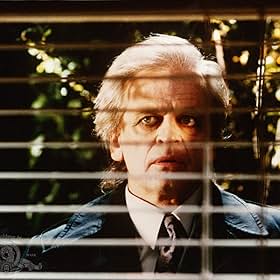
This is what Herzog and his long-time "trouble and strife" lead man Klaus Kinski found when they ventured upon the "Nosferatu" remake. Herzog shifted the attention of the viewer away from the plot, which acts mostly as a backdrop for the imagery, and made it so the primary intake becomes a visual one. Kinski's Dracula is not the scowling insect of the Murnau film. He portrays the Count in a way that no other actor has quite grasped. In this film, Dracula is a suffering being, loathing every moment of his curse's continuation. Of course, as the good Count himself states, "Young men. You are like the villagers. and cannot place yourself in the soul of the hunter." The vampyre is trapped by his instincts, and Kinski's eyes betray harrowing madness (as they did in "Aguirre, der Zorn Gottes"), spiteful malice, and a sorrow so bottomless it defies description. It is as if the beast wishes to weep, but has forgotten how.
Filming on location in Germany, Herzog uses the same dreamlike camera angles, mixing them with a rich color palette and masterful lighting. There is a certain uneasiness that filters outward from the screen as you watch. As Jonathan Harker explores his surroundings during his lodging at Castle Dracula, there is inexplicably a young gypsy boy incessantly playing a scratchy violin under the archway. The surreality of the picture is only matched by its attention to the dark magic of the vampire. Like its predecessor, it actually seems to believe in the creatures, and respects them. It holds the legend, the plight of the people of Wismar, and the plight of the Count himself in deep reverence.
What can be extracted from the dialogue and plot is that this is not your average bloodsuckers extravaganza. In fact, the good Count only sets his fangs to the throat of the living once on screen, and when that occurs, it lends more of a feeling of sacrifice and sorrow than of terror. Indeed, the tone of the film is driven toward tragedy, and does not shift its course. One of the film's more telling moments is when Dracula, alone with Harker's beloved Lucy, ventures to plead with the beautiful lady, "Will you come to me. become my ally? Bring salvation to your husband. and to me. The absence of love. is the most abject pain." When she refuses, he does not lash out or decide to make a meal of her then and there. He instead moans with the intonation of a wounded animal and slinks off into the night.
"Nosferatu: Phantom der Nacht" is the most complete of vampire films, and towers over the genre. It could be considered a pity that the only film that sits upon its coattails is its predecessor of the same name. Under Herzog's direction (wisely choosing to avoid remaking classic shots), we get an entirely different film that exudes an entirely different feeling. It not only maintains the eerie horror that the genre deserves, but also achieves a beauty and mystique that has been lost over the years. A must-see.
With Werner Herzog's "Nosferatu: Phantom der Nacht" (also known as "Nosferatu: The Vampyre"), the old Hollywood rules seem to have been thrown out the window in favor of F.W. Murnau's striking silent film, the 1922 masterpiece "Nosferatu: Eine Symphonie der Grauens" ("Nosferatu: A Symphony of Terror"). While many purists of the genre balk at the idea of favoring the Nosferatu tale over the time-tested Tod Browning and Terence Fisher entries, one must realize that the cape-clad widow's peak Count has been sullied by a thousand parodies over time, and is simply not a frightening entity any longer. This was a matter much pondered by Francis Ford Coppola when considering his adaptation. While Gary Oldman's portrayal was serviceable and definitely different, something key was lacking from the tale.
This is what Herzog and his long-time "trouble and strife" lead man Klaus Kinski found when they ventured upon the "Nosferatu" remake. Herzog shifted the attention of the viewer away from the plot, which acts mostly as a backdrop for the imagery, and made it so the primary intake becomes a visual one. Kinski's Dracula is not the scowling insect of the Murnau film. He portrays the Count in a way that no other actor has quite grasped. In this film, Dracula is a suffering being, loathing every moment of his curse's continuation. Of course, as the good Count himself states, "Young men. You are like the villagers. and cannot place yourself in the soul of the hunter." The vampyre is trapped by his instincts, and Kinski's eyes betray harrowing madness (as they did in "Aguirre, der Zorn Gottes"), spiteful malice, and a sorrow so bottomless it defies description. It is as if the beast wishes to weep, but has forgotten how.
Filming on location in Germany, Herzog uses the same dreamlike camera angles, mixing them with a rich color palette and masterful lighting. There is a certain uneasiness that filters outward from the screen as you watch. As Jonathan Harker explores his surroundings during his lodging at Castle Dracula, there is inexplicably a young gypsy boy incessantly playing a scratchy violin under the archway. The surreality of the picture is only matched by its attention to the dark magic of the vampire. Like its predecessor, it actually seems to believe in the creatures, and respects them. It holds the legend, the plight of the people of Wismar, and the plight of the Count himself in deep reverence.
What can be extracted from the dialogue and plot is that this is not your average bloodsuckers extravaganza. In fact, the good Count only sets his fangs to the throat of the living once on screen, and when that occurs, it lends more of a feeling of sacrifice and sorrow than of terror. Indeed, the tone of the film is driven toward tragedy, and does not shift its course. One of the film's more telling moments is when Dracula, alone with Harker's beloved Lucy, ventures to plead with the beautiful lady, "Will you come to me. become my ally? Bring salvation to your husband. and to me. The absence of love. is the most abject pain." When she refuses, he does not lash out or decide to make a meal of her then and there. He instead moans with the intonation of a wounded animal and slinks off into the night.
"Nosferatu: Phantom der Nacht" is the most complete of vampire films, and towers over the genre. It could be considered a pity that the only film that sits upon its coattails is its predecessor of the same name. Under Herzog's direction (wisely choosing to avoid remaking classic shots), we get an entirely different film that exudes an entirely different feeling. It not only maintains the eerie horror that the genre deserves, but also achieves a beauty and mystique that has been lost over the years. A must-see.
It's taken me awhile to feel like I "get" Werner Herzog movies, I often find myself arguing with myself during his stuff. Half the time is, what a pretentious hack God when will this s**t be over, the other half is my God that's beautiful, he really is a mad genius...and by the end I usually don't know what to think.
I've never watched a movie by Herzog where the plot really amounted to much, the scenarios are set up, and they follow their natural courses, but it's the moments along the way, the journey itself, and not the prize at the end, that makes his film's worth watching.
Herzog makes images, often of people being surrounded and enveloped by nature and the world around them, but images I can safely say I'd never seen before anywhere.
Whether photographing a beach, a horde of plague rats, or a man wandering through mountains, there's a photorealism and dreaminess to everything that goes hand in hand, and that it's that kind of paradox that seems at the heart of Herzog, if it sounds like too much or not enough, just get out now.
Nosferatu is the Dracula story most people are familiar with, no Romance here though, just craven greed and lust. But the directors skills transform it into something else...However I would be lying if I said I knew what, because it's not really the point, were given the images and the framework of the story and either we find something beautiful or true or we don't.
I paused this movie quite a few times just to look at it, and that's the best endorsement I can give to this, and a lot of the Herzog stuff that I end up liking(Aguire:The Wrath Of God, Heart Of Glass, Even Dwarfs Started Small, Strosvek, etc). Beautiful, unique, and challenging, but not for everyone.
I've never watched a movie by Herzog where the plot really amounted to much, the scenarios are set up, and they follow their natural courses, but it's the moments along the way, the journey itself, and not the prize at the end, that makes his film's worth watching.
Herzog makes images, often of people being surrounded and enveloped by nature and the world around them, but images I can safely say I'd never seen before anywhere.
Whether photographing a beach, a horde of plague rats, or a man wandering through mountains, there's a photorealism and dreaminess to everything that goes hand in hand, and that it's that kind of paradox that seems at the heart of Herzog, if it sounds like too much or not enough, just get out now.
Nosferatu is the Dracula story most people are familiar with, no Romance here though, just craven greed and lust. But the directors skills transform it into something else...However I would be lying if I said I knew what, because it's not really the point, were given the images and the framework of the story and either we find something beautiful or true or we don't.
I paused this movie quite a few times just to look at it, and that's the best endorsement I can give to this, and a lot of the Herzog stuff that I end up liking(Aguire:The Wrath Of God, Heart Of Glass, Even Dwarfs Started Small, Strosvek, etc). Beautiful, unique, and challenging, but not for everyone.
I just purchased this on DVD and its easily one of my favorite new disks. Included in the DVD masterpiece are: the English Version, the German Version with English subtitles, audio commentary by director Werner Herzog, 2 different US theatrical trailers, 1 Spanish theatrical trailer and even a making of the movie mini-feature!!! Very worth the money!!!
This is not an average movie by any means!!! It also appears to be a salute to the great German Expressionist films of the early 1900's. The story line is very intelligent and compassionate. The dialogue is spoken very soft and slowly. There is not very much action in the film, but the performances and cinematography are nothing short of breathtaking!!
Klaus Kinski plays a very convincing Dracula in this 1979 classic. His slow movements are almost hypnotizing!!! Just watch how he moves his hands!! They move so slow and very mysterious!! The guy who played the "nut case" was great!! The images of coffins, crucifixes, rats, and how rumors of the plague were spreading were brilliantly executed.
If you liked this film, you might want to check out 1992's "The Cronos" for another example of a compassionate and intelligent story about Vampires, but set in Mexico. Both films explore the "humanistic" internal conflict in vampires.
This is not an average movie by any means!!! It also appears to be a salute to the great German Expressionist films of the early 1900's. The story line is very intelligent and compassionate. The dialogue is spoken very soft and slowly. There is not very much action in the film, but the performances and cinematography are nothing short of breathtaking!!
Klaus Kinski plays a very convincing Dracula in this 1979 classic. His slow movements are almost hypnotizing!!! Just watch how he moves his hands!! They move so slow and very mysterious!! The guy who played the "nut case" was great!! The images of coffins, crucifixes, rats, and how rumors of the plague were spreading were brilliantly executed.
If you liked this film, you might want to check out 1992's "The Cronos" for another example of a compassionate and intelligent story about Vampires, but set in Mexico. Both films explore the "humanistic" internal conflict in vampires.
I would like to heap strong praise on the cinematographer in his ability to make a color film that looks almost black and white. These muted colors and use of dull blues and lots of grays REALLY enhance the film and give it a beautiful moodiness and creepiness. This is by far the best aspect of the movie.
As for the acting and writing, I was less enthusiastic. In addition to the stark lighting and cinematography, the acting itself was VERY stark and way too subdued. The moody scenery was good--the moodiness of the acting was NOT. While the movie should not have been high energy, at times it felt like it had almost none and tended to bore me from time to time. With a SMALL does of adrenaline, it would have been a lot better. The slowness of the film just seemed too much and the film would have improved by just speeding up the filming, as there are just too many long and deliberate scenes. Some see this as artistry--I see it as just too over-indulgent.
Although very dated, I still think the original is the better movie of the two. Unlike NOSFERATU (1979), it was unique and not just some come lately remake. And, and many ways, the original silent version is more haunting and terrifying.
As for the acting and writing, I was less enthusiastic. In addition to the stark lighting and cinematography, the acting itself was VERY stark and way too subdued. The moody scenery was good--the moodiness of the acting was NOT. While the movie should not have been high energy, at times it felt like it had almost none and tended to bore me from time to time. With a SMALL does of adrenaline, it would have been a lot better. The slowness of the film just seemed too much and the film would have improved by just speeding up the filming, as there are just too many long and deliberate scenes. Some see this as artistry--I see it as just too over-indulgent.
Although very dated, I still think the original is the better movie of the two. Unlike NOSFERATU (1979), it was unique and not just some come lately remake. And, and many ways, the original silent version is more haunting and terrifying.




Did you know
- TriviaWerner Herzog decided to restore the original names of the characters the day the copyright of the original "Dracula" expired, while still following the movie blueprint laid out by F.W. Murnau's Nosferatu le vampire (1922).
- Goofs(at around 58 mins) When the captain of the ship is writing in his log he says they left the Caspian Sea, which is landlocked and nearly 1000 miles away from the port in Bulgaria where the voyage started. Bulgaria is on the Black Sea.
- Quotes
Count Dracula: [subtitled version] Time is an abyss... profound as a thousand nights... Centuries come and go... To be unable to grow old is terrible... Death is not the worst... Can you imagine enduring centuries, experiencing each day the same futilities...
- Alternate versionsThe English-language version was only available in a shorter cut until 2000, which was about 10 minutes shorter.
- ConnectionsEdited into Spisok korabley (2008)
- SoundtracksRheingold
Written by Richard Wagner
Performed by Wiener Philharmoniker
Conducted by Georg Solti (as Sir Georg Solti)
Decca LC 0171
Details
- Release date
- Countries of origin
- Languages
- Also known as
- Nosferatu, vampiro de la noche
- Filming locations
- Delft, Zuid-Holland, Netherlands(many exteriors)
- Production companies
- See more company credits at IMDbPro
Box office
- Gross worldwide
- $3,644
Contribute to this page
Suggest an edit or add missing content