

Un pobre pueblo bajo la amenaza de unos bandidos recluta a siete samuráis para ayudarles a defenderse.Un pobre pueblo bajo la amenaza de unos bandidos recluta a siete samuráis para ayudarles a defenderse.Un pobre pueblo bajo la amenaza de unos bandidos recluta a siete samuráis para ayudarles a defenderse.
- Dirección
- Escritura
- Estrellas
- Nominado a 2 premios Óscar
- 5 premios ganados y 9 nominaciones en total


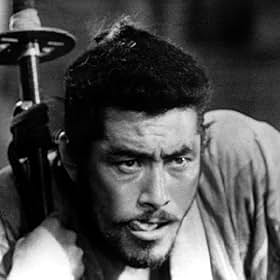
Toshirô Mifune
- Kikuchiyo
- (as Toshiro Mifune)


Yukiko Shimazaki
- Wife
- (as Yukio Shimazaki)


Isao Kimura
- Katsushiro
- (as Ko Kimura)


Kokuten Kôdô
- Old Man Gisaku
- (as Kuninori Todo)


- Dirección
- Escritura
- Todo el elenco y el equipo
- Producción, taquilla y más en IMDbPro
Resumen
Reviewers say 'Seven Samurai' is highly rated for its groundbreaking influence, Kurosawa's direction, and epic storytelling. It explores themes of honor, sacrifice, and social class, with praise for its cinematography and battle scenes. Critics note its historical and cultural significance and impact on future films. However, some find it overly long with pacing issues and outdated acting styles. Despite these criticisms, its classic reputation and place in cinematic history maintain high ratings.
Opiniones destacadas
In 1954, Kurosawa made foreign film history with Seven Samurai. Everything about this film is just absolutely terrific. The film lasts around 3 1/2 hours, and every minute of it is unbelievable filmmaking. Kurosawa's blend of stellar craft, captivating cinematography, ravishing art direction, and unforgettable characters makes this one of the most intelligent films ever made. The first hour is devoted to devoloping the many four-dimensional characters which inhabit the film throughout. When watching the film, the audiece cares for, trusts, mourns and ultimately believes every single attribute the characters have. Samurai set up the way that many action films are made today; films like Predator and Alien still work within it's boundaries. The battle scenes are terrific and the fast-paced editing is ground-breaking. If people have a problem with subtitles and long movies, then see this and your opinions will change. The sheer filmmaking of Kurosawa will not disappoint. Also see Yojimbo and High & Low.
This is my favorite Kurosawa film, the man was a true master of the cinematic arts. If you have never seen a Kurosawa film definetly make this your first. Though extremely long at about 3 1/2 hours it is well worth the time spent.
To quickly summarize, a poor Japanese village hires 7 Samurai to protect it from being raided by bandits. Don't get me wrong there is way more to it than that, I just dont want to give anything away. This is an intense and emotional movie that hooks you from the first scene and keeps you on the line till it is all over. The battle scene at the end is in true Kurosawa form. The acting is outstanding by everyone involved from the main characters all the way down to the very last extra. Of course the best way to see any film, especially a Kurosawa film is on the big screen if you are able to. Beautifully filmed, in black and white, anyone familiar with Kurosawa's work has to wonder visually how much more gorgeous it could have been had Kurosawa had the option of color in 1954.
The camera use is brilliant and every scene is balanced visually. This film is also the first one to use "the wipe" as a way of changing from one scene to another. This technique was later used by George Lucas in his Star Wars movies. I would also recommend the DVD version that has the commentary option by the Japanese cinema expert if anyone is interested in a deeper understanding of the "hows" and "whys" of Kurosawa's film making. Any man, woman, boy or girl who just wants to see a really, really great movie, THIS IS THE ONE! An A+++ in my book.
To quickly summarize, a poor Japanese village hires 7 Samurai to protect it from being raided by bandits. Don't get me wrong there is way more to it than that, I just dont want to give anything away. This is an intense and emotional movie that hooks you from the first scene and keeps you on the line till it is all over. The battle scene at the end is in true Kurosawa form. The acting is outstanding by everyone involved from the main characters all the way down to the very last extra. Of course the best way to see any film, especially a Kurosawa film is on the big screen if you are able to. Beautifully filmed, in black and white, anyone familiar with Kurosawa's work has to wonder visually how much more gorgeous it could have been had Kurosawa had the option of color in 1954.
The camera use is brilliant and every scene is balanced visually. This film is also the first one to use "the wipe" as a way of changing from one scene to another. This technique was later used by George Lucas in his Star Wars movies. I would also recommend the DVD version that has the commentary option by the Japanese cinema expert if anyone is interested in a deeper understanding of the "hows" and "whys" of Kurosawa's film making. Any man, woman, boy or girl who just wants to see a really, really great movie, THIS IS THE ONE! An A+++ in my book.
I've been on a Toho binge for a while now and for the most part the films have been enjoyable, especially those by Kurosawa.
The earlier films were dark, bleak and unsettling viewing and therefore going into Seven Samurai I was of two minds. First I expected more of the same, in both quality and tone but then on the flipside at time of writing this is ranked as the 19th highest rated movie on IMDB which is incredible.
My expectations were that it would be good, but that's about it. Seeing Takashi Shimura in the credits also confirmed my logic that this was going to at least be an entertaining three and a half hours.
I was mistaken, Seven Samurai is not good............it's outstanding.
Wonderfully crafted, perfectly scored, incredibly choreographed, well acted and beautifully written this is well deserving of it's high place and I would consider it nothing short of a masterpiece.
If you check out my IMDB rating distribution it's very clear to see that getting anything higher than an eight is a rarity, this deserves it on so many levels.
I didn't expect this level of quality further as generally I don't tend to agree with titles in the IMDB top 250, this however I do I thoroughly unconditionally agree.
A masterpiece and essential viewing, I don't even need to give the premise of the movie in this review and must simply stress that this is film making mastery at its finest.
The Good:
Takashi Shimura
Very well shot for its time
Perfectly crafted
The Bad:
Nothing springs to mind
Things I Learnt From This Movie:
Akira Kurosawas should be a household name, not Bruckheimer or Bay!
I'll put money down now that none of the remakes or movies heavily influenced by Seven Samurai comes close in quality
The earlier films were dark, bleak and unsettling viewing and therefore going into Seven Samurai I was of two minds. First I expected more of the same, in both quality and tone but then on the flipside at time of writing this is ranked as the 19th highest rated movie on IMDB which is incredible.
My expectations were that it would be good, but that's about it. Seeing Takashi Shimura in the credits also confirmed my logic that this was going to at least be an entertaining three and a half hours.
I was mistaken, Seven Samurai is not good............it's outstanding.
Wonderfully crafted, perfectly scored, incredibly choreographed, well acted and beautifully written this is well deserving of it's high place and I would consider it nothing short of a masterpiece.
If you check out my IMDB rating distribution it's very clear to see that getting anything higher than an eight is a rarity, this deserves it on so many levels.
I didn't expect this level of quality further as generally I don't tend to agree with titles in the IMDB top 250, this however I do I thoroughly unconditionally agree.
A masterpiece and essential viewing, I don't even need to give the premise of the movie in this review and must simply stress that this is film making mastery at its finest.
The Good:
Takashi Shimura
Very well shot for its time
Perfectly crafted
The Bad:
Nothing springs to mind
Things I Learnt From This Movie:
Akira Kurosawas should be a household name, not Bruckheimer or Bay!
I'll put money down now that none of the remakes or movies heavily influenced by Seven Samurai comes close in quality
Akira Kurosawa's masterpiece... The Japanese equivalent to Orson Welles' Citizen Kane.. I say it's just as good, if not even better. Not only Kurosawa's most well known film, but the most widely recognized Japanese film ever made. This movie will forever be known as a milestone in motion picture history.
The story revolves around a village that has become a group of bandits' common looting and pillaging ground. The villagers cannot take this any longer and go to town to hire warriors to defend the village from the bandits. A wandering ronin, Kambei (Takashi Shimura) agrees to help them and with his help, they recruit six others that agree to take the job. The seven samurai teach the villagers how to stand up to the bandits and defend themselves. Finally, when the time comes, they engage in a fierce battle with the attacking bandits.
About once in every 20 years or so we are gifted with a film that has the meaning, power, richness, and technique that The Seven Samurai has. I cannot urge anyone enough to see this film, the images are true cinematic poetry rich with so much emotion that I cannot even describe them in words. If you have never seen any of Kurosawa's works, then please see Seven Samurai... you will witness the true beauty, excellence and magic that the art form known as film is capable of.
The story revolves around a village that has become a group of bandits' common looting and pillaging ground. The villagers cannot take this any longer and go to town to hire warriors to defend the village from the bandits. A wandering ronin, Kambei (Takashi Shimura) agrees to help them and with his help, they recruit six others that agree to take the job. The seven samurai teach the villagers how to stand up to the bandits and defend themselves. Finally, when the time comes, they engage in a fierce battle with the attacking bandits.
About once in every 20 years or so we are gifted with a film that has the meaning, power, richness, and technique that The Seven Samurai has. I cannot urge anyone enough to see this film, the images are true cinematic poetry rich with so much emotion that I cannot even describe them in words. If you have never seen any of Kurosawa's works, then please see Seven Samurai... you will witness the true beauty, excellence and magic that the art form known as film is capable of.
10OttoVonB
I discovered 16 of Kurosawa's best known films before returning to the one which is commonly thought of as his masterpiece. Seven Samurai is unlike any other grand classic ever produced. It's basic plot can be summed up in a single easy sentence, yet its refinement and execution rival any movie you've ever seen.
The premise: in chaotic 16th century Japan, as marauders threaten raid villages, one village hires samurai to defend it from a group of bandits. Yet Kurosawa (also co-writer) developed these characters in a way unheard of for what might pass as an epic action film. To its astonishing credit, through all of its 207 minutes running time, Seven Samurai never falters or bores. And if the script is a marvel in itself, the acting and production design than derive from it are nothing short of superlative. It is said that Kurosawa forced the villagers (from supporting role to mere extra) to live together as a community during production and be their characters, each and every one of which he had drawn out specifically. This unusual technique gave Seven Samurai a feel of authenticity unparalleled in film history.
The samurai themselves are so richly given life to in the screenplay that little more would have been needed to make them memorable characters, yet the main cast pay off at every turn, and though every one of the seven main actors give in perfect performances (never as I had feared before watching it do you confuse them, even in the chaotic battle scenes), two immortal roles have a particularly resounding effect: Takashi Shimura (Kambei Shimada), who plays the leader of the ragged band of samurai, gives his sage and venerable warrior a god-like intensity that makes the magnetic charisma of his character unquestionable. One of the easiest leaders to root for in all the history of film-making. Stealing the show however, albeit by a very thin margin, is longtime Kurosawa favorite coworker Toshiro Mifune (Kikuchiyo) as the rogue seventh, the black sheep of the herd, giving the bravura ultimate performance of a lifetime paved throughout with great roles.
The story follows them and the villagers, equally nuanced and developed, through their encounter, training, eventual bonding and the big inevitable fight for survival. Unlike subsequent very successful remakes (i.e. Magnificent Seven), seven Samurai transcended excellency by having many layers (nothing or no one is white or black: everything exists in shades of gray) and thus being very real and human. Even without the menace, its interpersonal dynamics would have made it perfect human drama, subtle, balancing comedy, intensity, realism, drama and a deep philosophy with astonishing ease, yet the menace does materialize and thus Seven Samurai unleashes its violence in a series of action scenes crafted with such vision and ingenuity as has ever reached an action film (the frenetic battle scenes at the end rather evoke Saving Private Ryan in their relentlessness).
In the end, what made this into solid gold was, at the core, Akira Kurosawa, who would, despite directing many further masterpieces (Throne of Blood, Yojimbo, Red Beard, Dersu Uzala, Kagemusha, Ran), would never top this one. Throughout his life, Kurosawa kept confirming his status as perhaps the greatest director ever. If so, Seven Samurai is the ultimate proof of that truth. One of the very best films ever made and personal all-time favorite.
The premise: in chaotic 16th century Japan, as marauders threaten raid villages, one village hires samurai to defend it from a group of bandits. Yet Kurosawa (also co-writer) developed these characters in a way unheard of for what might pass as an epic action film. To its astonishing credit, through all of its 207 minutes running time, Seven Samurai never falters or bores. And if the script is a marvel in itself, the acting and production design than derive from it are nothing short of superlative. It is said that Kurosawa forced the villagers (from supporting role to mere extra) to live together as a community during production and be their characters, each and every one of which he had drawn out specifically. This unusual technique gave Seven Samurai a feel of authenticity unparalleled in film history.
The samurai themselves are so richly given life to in the screenplay that little more would have been needed to make them memorable characters, yet the main cast pay off at every turn, and though every one of the seven main actors give in perfect performances (never as I had feared before watching it do you confuse them, even in the chaotic battle scenes), two immortal roles have a particularly resounding effect: Takashi Shimura (Kambei Shimada), who plays the leader of the ragged band of samurai, gives his sage and venerable warrior a god-like intensity that makes the magnetic charisma of his character unquestionable. One of the easiest leaders to root for in all the history of film-making. Stealing the show however, albeit by a very thin margin, is longtime Kurosawa favorite coworker Toshiro Mifune (Kikuchiyo) as the rogue seventh, the black sheep of the herd, giving the bravura ultimate performance of a lifetime paved throughout with great roles.
The story follows them and the villagers, equally nuanced and developed, through their encounter, training, eventual bonding and the big inevitable fight for survival. Unlike subsequent very successful remakes (i.e. Magnificent Seven), seven Samurai transcended excellency by having many layers (nothing or no one is white or black: everything exists in shades of gray) and thus being very real and human. Even without the menace, its interpersonal dynamics would have made it perfect human drama, subtle, balancing comedy, intensity, realism, drama and a deep philosophy with astonishing ease, yet the menace does materialize and thus Seven Samurai unleashes its violence in a series of action scenes crafted with such vision and ingenuity as has ever reached an action film (the frenetic battle scenes at the end rather evoke Saving Private Ryan in their relentlessness).
In the end, what made this into solid gold was, at the core, Akira Kurosawa, who would, despite directing many further masterpieces (Throne of Blood, Yojimbo, Red Beard, Dersu Uzala, Kagemusha, Ran), would never top this one. Throughout his life, Kurosawa kept confirming his status as perhaps the greatest director ever. If so, Seven Samurai is the ultimate proof of that truth. One of the very best films ever made and personal all-time favorite.


¿Sabías que…?
- TriviaAkira Kurosawa's original idea for the film was to make it about a day in the life of a samurai, beginning with him rising from bed, eat breakfast, go to his master's castle and ending with him making some mistake that required him to go home and kill himself to save face. Despite a good deal of research, he did not feel he had enough solid factual information to make the movie. He then pitched the idea of a film that would cover a series of five samurai battles, based on the lives of famous Japanese swordsmen. Hashimoto went off to write that script, but Kurosawa ultimately scrapped that idea as well, worrying that a film that was just "a series of climaxes" wouldn't work. Then, producer Sôjirô Motoki found, through historical research, that samurai in the "Warring States" period of Japanese history would often volunteer to stand guard at peasant villages overnight in exchange for food and lodging. Kurosawa then came across an anecdote about a village hiring samurai to protect them and decided to use that idea. Kurosawa wrote a complete dossier for each character with a speaking role. In it were details about what they wore, their favourite foods, their past history, their speaking habits, their reaction to battle and every other detail he could think of about them. No other Japanese director had ever done this before.
- ErroresIn the closing moments of the final battle, the bandits fire two musket shots only seconds apart. It is clear from the plot that at that time they possess only one musket. The black powder muskets of the age required much more time to reload. This error was pointed out in the commentary of the deluxe DVD edition.
- Citas
Kambei Shimada: This is the nature of war: By protecting others, you save yourselves. If you only think of yourself, you'll only destroy yourself.
- Versiones alternativasThe film's original Japanese release version runs 207 minutes, plus intermission, which includes four minutes of entr'acte music against a blank screen. This is the version that has been generally shown worldwide since the 1980s, though sometimes it is shown without the intermission and entr'acte, resulting in a listed running time of 203 minutes. The initial U.S.A. release was re-titled 'The Magnificent Seven' and released November 1956, with English subtitles, and ran 158 minutes. Some European releases were even further shortened to 141 minutes. Landmark Films re-released the film in the U.S. in December 1982, the first time outside Japan the film saw a major release with its running time intact (although the intermission and entr'acte were removed). Later U.S.A. releases by Avco-Embassy Pictures, Janus Films, and Films Incorporated, and by BFI in the UK, are also the full original version of the film.
- ConexionesFeatured in Objectif: 500 millions (1966)
Selecciones populares
Inicia sesión para calificar y agrega a la lista de videos para obtener recomendaciones personalizadas
Detalles
Taquilla
- Presupuesto
- JPY 125,000,000 (estimado)
- Total en EE. UU. y Canadá
- USD 820,278
- Fin de semana de estreno en EE. UU. y Canadá
- USD 15,942
- 28 jul 2002
- Total a nivel mundial
- USD 1,092,319
- Tiempo de ejecución
- 3h 27min(207 min)
- Color
- Mezcla de sonido
- Relación de aspecto
- 1.37 : 1
Contribuir a esta página
Sugiere una edición o agrega el contenido que falta