













Millimeter-scale particles of nuclear-reactor fuel are encased in four layers of different materials that act as a “miniature containment system”.


Customer-obsessed science


Research areas













-
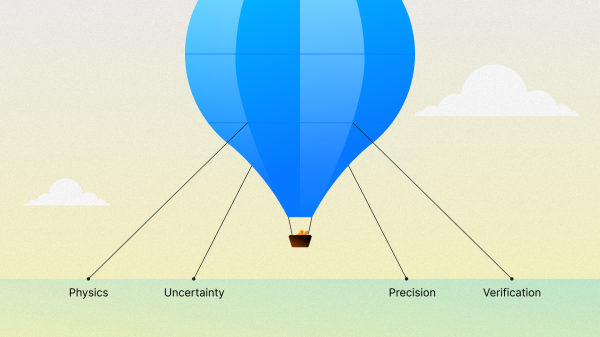
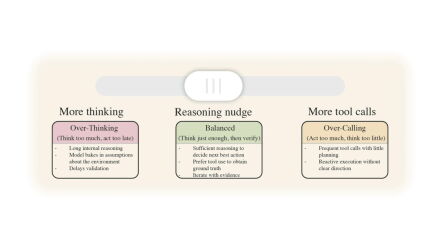
 June 8, 20267 min readFour approaches can dramatically improve the performance and trustworthiness of AI agents in operational environments.
 -

-
-
-
May 27, 20264 min readMachine learning


Featured news

Hosted by Danielle Perszyk, cognitive scientist at Amazon's AGI Lab, the podcast features researchers tackling the hardest problems in agentic AI — from building reliable perception systems to designing training environments that mirror human learning.

The Antibody Developability Benchmark is powered by one of the most diverse antibody datasets in public literature, enabling transparent performance evaluation for AI-guided antibody design.

Challenge pushes teams to demonstrate measurable gains in secure-coding performance while building AI agents that advance real-world utility and reliability at scale.

Initiative will fund over 100 doctoral students researching machine learning, computer vision, and natural-language processing at nine universities.
-
2026E-commerce assistants must go beyond product search to support idea inspiration, criteria formation, comparison, and tool-grounded fact-checking over non-linear shopping journeys. Teaching these behaviors into deployable latency-constrained models is bottlenecked by post-training data: trajectories must cover the full agentic workflow with diversity and fidelity, yet desired outputs are open-ended (often
-
2026Large-scale AI evaluation increasingly relies on aggregating binary judgments from K annotators, including LLMs used as judges. Most classical methods, e.g., Dawid-Skene or (weighted) majority voting, assume annotators are conditionally independent given the true label Y ∈ {0, 1}, an assumption often violated by LLM judges due to shared data, architectures, prompts, and failure modes. Ignoring such dependencies
-
ACM FAccT 20262026Popularity bias is a pervasive problem in recommender systems, where recommendations disproportionately favor popular items. This not only results in 'rich-get-richer' dynamics and a homogenization of visible content, but can also lead to misalignment of recommendations with individual users' preferences for popular or niche content. This work studies popularity bias through the lens of user-recommender
-
2026Building on recent formalizations of root cause analysis for rare events (“outliers”) in structural equation models, we propose a formal definition of a causal pathway and discuss its testable implications. We identify conditions under which these implications depend only on a causal abstraction defined by the pathway of rare events, rather than on the full causal graph of the underlying system. Accordingly
-
2026In many real-world systems, causal ground truth is hard to obtain, making it challenging to evaluate expert statements about causal effects. In this paper, we propose new methods for evaluating lists of bivariate causal statements in the con-text of linear structural causal models and causal graphs. Our approach is based on a mathematical formalization of mutual compatibility, measuring the extent to which
Collaborations
View allWhether you're a faculty member or student, there are number of ways you can engage with Amazon.
View all

Gretchen Ertl
The program offers unrestricted funds and other resources to support research at academic institutions and non-profit organizations in areas that align with our mission.

A global university competition to drive secure innovation in generative AI technology, which focuses on responsible AI and large language model coding security.

Credit: Wolfram Scheible
We partner with particular academic organizations across the world for deep and sustained collaborations in multiple research areas of mutual interest.

Courtesy of Pai-Ling Yin
We hire world-class academics to work on large-scale technical challenges, while they continue to teach and conduct research at their universities.
