Scenes I Love: Robby the Robot Makes His Debut in Forbidden Planet


According to the imdb, today is Robby the Robot’s birthday.  I didn’t know that robot’s had birthdays but apparently, they do.  Robby is 67 years old and I think that, along with Earl Holliman, he might be one of the last two surviving cast member of the 1956 sci-fi classic, Forbidden Planet.

So, it only seems appropriate that today’s scene that I love should be Robby the Robot’s debut appearance in Forbidden Planet.  Happy birthday, Robby!

4 Shots From 4 Films: Special Olivia de Havilland Edition


Olivia De Havilland and Friends

Olivia De Havilland and Friends

Today would have been the birthday of the great Olivia de Havilland!  It’s time for….

4 Shots From 4 Olivia de Havilland Films

Gone With The Wind (1939, dir by Victor Fleming)

Gone With The Wind (1939, dir by Victor Fleming)

The Snake Pit (1948, dirby Anatole Litvak)

The Snake Pit (1948, dir by Anatole Litvak)

Lady in a Cage (1964, dir by Walter Grauman)

Lady in a Cage (1964, dir by Walter Grauman)

The Swarm (1978, dir by Irwin Allen)

The Swarm (1978, dir by Irwin Allen)

By the way, do you know who shares a birthday with Olivia De Havilland?  OUR VERY OWN PATRICK SMITH!  Happy birthday, Pat!!!!!!

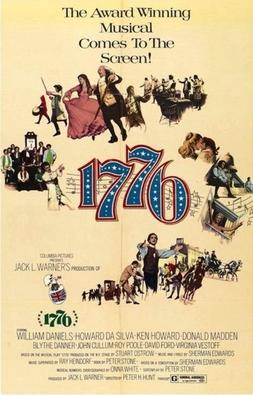
Icarus File No. 29: 1776 (dir by Peter R. Hunt)


The year is 1776.  The British have landed in Canada and are now marching towards New York with the intention of putting down a revolultion that has sprung up over issues like unfair taxation.  In Philadelphia, John Adams (William Daniels) is frustrated by the refusal the second Continental Congress to take up debate on whether or not the 13 North American colonies should announce their official independence from Britian.  Every day, Adams steps into the chamber and demands that the Congress take some action.  And, every day, his fellow deletates sing, “Sit down, John!”

Yes, you read that correctly.  They sing it.

Based on a 1969 Broadway musical, 1776 features a lot of singing, a lot talking, and not much else.  This is a film about the debate surrounding the writing of the Declaraiton of Independence that sometimes feels as if it’s telling its story in real time.  It’s no shock when Benjaming Franklin (Howard Da Silva) continually falls asleep at his desk or when Thomas Jefferson (Ken Howard) sings that he’d rather be home.  This is a nearly 3-hour film that feels like 3 months.  Some films about the Revolutionary War emphasize the brilliance of the Founding Fathers.  Some films emphazie the struggle to be free.  Other films emphasize the daily violence of serving in the army.  1776 captures the monotony of being trapped in a room full of cranky middle-aged men who will not stop talking.  The film dutifully captures every debate and controversy.  When John Adams shouts at everyone to get on with it, it’s hard not to sympathize until you realize that Adams himself is a huge reason why nothing ever seems to get done.  There’s only so many hours in the day that can be devoted to singing songs.

Perhaps the most shocking thing about 1776 is that it was realsed in 1972.  Nothing about 1776 suggests that it’s a product of the same era in which Bob Fosse was redefining the musical with Caberet and Francis Ford Coppola was refefining the historial epic with The Godfather and John Boorman was risking the lives of Burt Reynolds and Jon Voight to capture a weekend rafting trip.  There’s nothing about Peter R. Hunt’s direction to suggest that this film was made in the same era that saw Robert Altman playfully reinventing genres ranging from the service comedy to the detective film to the ensemble musical.  At a time when American directors were rebelling against convention and experimenting with new ways to tell stories, 1776 is a lengthy, dramatically inert and stagebound Broadway adaptation.  In style and look, it feels like a cinematic product of the 1950s or the early 60s, a film that was made when Hollywood’s only competition was from television.  Even Thomas Jefferson’s longing for his wife (Blythe Danner) is played discreetly.  When she finally does show up in Philadelphia, Jefferson closes the shudders.  When John Adams and Benjamin Franklin notice that the shudders are still closed hours later, it’s treated as a moment for everyone in the audience to turn red as they try not to giggle.  They’re having sex, the audience is meant to think, Good thing they’re married!  It’s a moment that feels as natural and human as Sandra Dee looking over her shoulder and winking as she goes off with Troy Donahue.

The key to understanding 1776 is to be found in the opening credits.  “Produced by Jack Warner.”  By the time 1776 went into production, Warner had been a Hollywood mogul for 54 years.  He started his career in the silent era and he built Warner Brothers into one of Hollywood’s most successful studios.  When he was younger, he was the one breaking the rules, making gangster movies and turning actor like James Cagney, Humphrey Bogart, and Edward G. Robinson into stars.  However, by the time he made 1776, Warner was the last of a dying breed.  Despite having greenlit Bonnie and Clyde, one of the seminal “Now Hollywood” productions, the older Jack Warner had little use for the Hollywood counterculture.  1776 was reportedly a pet project for Jack Warner, a film that he took a strong hand in producting and which he expected would sweep the box office and the Oscars.  Warner recruited the majority of the show’s Broadway cast to appear in the film.  Warner personally ordered the remove of a musical number that seemed to discreetly critcize the Vietnam War.  Warner even went on TV to promote the film.  During an interview on the Merv Griffin Show, Warner launched into a triade about “pinko commies.”  I imagine Warner had a point about the communists but it still was probably not the right way to promote the film in the 1970s.  While other films invited the counterculture into Hollywood, 1776 was essentially Jack Warner shouting, “Stay off my lawn!” with the voice of William Daniels.

1776 was a last attempt to hold onto the old way of making movies.  It was a film about a revolution that was desgined to thwart another revolution.  The Continental Congress was menaced by the British.  Jack Warner was menaced by the shadows of Coppola, Scorsese, and Friedkin.  It would be Jack Warner’s final film as a producer.  He died in 1974, still one of the towering figures in the history of Hollywood.  Of the old time moguls, only Adolph Zuker and Darryl F. Zanuck outlasted Jack Warner.

When Hamilon first came out in 2025, it was often described as being the antidote to 1776Hamilton was entertaining where 1776 was stodgy.  Well, maybe.  1776 may lack great songs but it doesn’t really have any truly bad ones either.  Instead, it’s just a very middle-of-the-road show, inoffensive and designed to keep the tourits happy.  Hamilton was viewed as being revolutionary when it was released but now it feels a bit gimmicky, with both the show and the almost religious initial enthusiasm for it feeling like somewhat embarassing artifacts from a different era.  (From the coverage during the Hamilton’s heyday, you would think no one but Lin-Manuel Miranda had ever written about Alexander Hamilton or Aaron Burr before.)  There is a great film to be made about the Continental Congress but it probably doesn’t invovle any singing.

As for 1776, William Daniels is amusing when he gets frusrated and Blythe Danner is far prettier than the real Martha Jefferson and the film itself is a forgettable tribute to the great men who foudned a great country.

Previous Icarus Files:

  1. Cloud Atlas
  2. Maximum Overdrive
  3. Glass
  4. Captive State
  5. Mother!
  6. The Man Who Killed Don Quixote
  7. Last Days
  8. Plan 9 From Outer Space
  9. The Last Movie
  10. 88
  11. The Bonfire of the Vanities
  12. Birdemic
  13. Birdemic 2: The Resurrection 
  14. Last Exit To Brooklyn
  15. Glen or Glenda
  16. The Assassination of Trotsky
  17. Che!
  18. Brewster McCloud
  19. American Traitor: The Trial of Axis Sally
  20. Tough Guys Don’t Dance
  21. Reach Me
  22. Revolution
  23. The Last Tycoon
  24. Express to Terror 
  25. 1941
  26. The Teheran Incident
  27. Con Man
  28. Looker

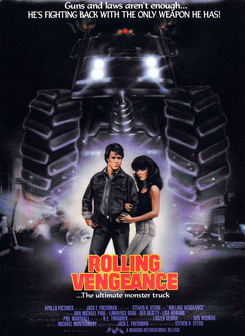
Insomina File #77: Rolling Vengeance (dir by Stephen Hilliard Stern)


What’s an Insomnia File? You know how some times you just can’t get any sleep and, at about three in the morning, you’ll find yourself watching whatever you can find on cable or streaming? This feature is all about those insomnia-inspired discoveries!

If you’re having trouble getting to sleep tonight, you can always go over to YouTube and watch 1987’s Rolling Vengeance.

Rolling Vengeance supposedly takes place in Ohio but one look at the perpetually wet weather and the misty country side leaves little doubt that this film was shot in Canada.  Joey Russo (Don Michael Paul) is a trucker who seeks revenge after the antics of Tiny (Ned Beatty) and his redneck sons lead to death of first his mother (Susan Hogan) and sisters and then his father (Lawrence Dane).  Joey’s way of getting revenge is to go down to the junkyard, collect a bunch of parts, and build his own monster truck.  Soon, Joey is tracking down Tiny’s men.  Somehow, Joey is able to sneak up on people while driving a gigantic truck.  Also, for some reason, it never occurs to anyone that the best way to escape from the path of a big, lumbering vehicle is to do anything other than run in a straight line.

It’s a bit of a stupid movie and there’s a gratiotious rape scene that is hard to sit through and which leaves a sour taste that runs throughout the final 20 minutes of the film.  Don Michael Paul makes for a blank-faced hero.  On the plus side, the truck destroys a lot of poorly constructed buildings.  Fan of vehicular mayhem will find a lot to enjoy here.  Fans of great character actors going totally overboard in genre films will enjoy watching Ned Beatty as he wears a leather jacket and talks like the leader of the Canadian Hell’s Angels.

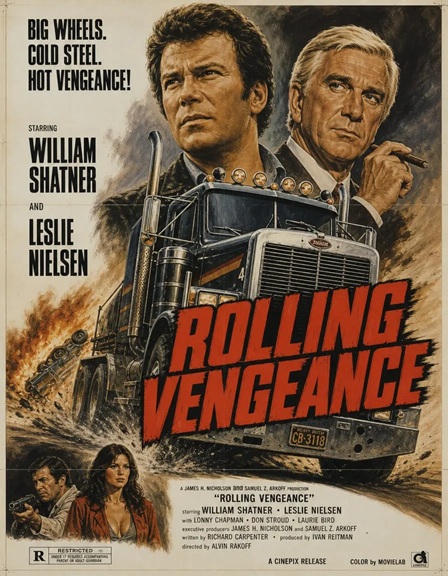
As I watched the film, it occurred to me that, if it had been made in the 70s, it would have starred William Shatner as the good trucker and Leslie Nielsen would have played the Ned Beatty role.  Lawrence Dane would have still played the father.

Previous Insomnia Files:

  1. Story of Mankind
  2. Stag
  3. Love Is A Gun
  4. Nina Takes A Lover
  5. Black Ice
  6. Frogs For Snakes
  7. Fair Game
  8. From The Hip
  9. Born Killers
  10. Eye For An Eye
  11. Summer Catch
  12. Beyond the Law
  13. Spring Broke
  14. Promise
  15. George Wallace
  16. Kill The Messenger
  17. The Suburbans
  18. Only The Strong
  19. Great Expectations
  20. Casual Sex?
  21. Truth
  22. Insomina
  23. Death Do Us Part
  24. A Star is Born
  25. The Winning Season
  26. Rabbit Run
  27. Remember My Name
  28. The Arrangement
  29. Day of the Animals
  30. Still of The Night
  31. Arsenal
  32. Smooth Talk
  33. The Comedian
  34. The Minus Man
  35. Donnie Brasco
  36. Punchline
  37. Evita
  38. Six: The Mark Unleashed
  39. Disclosure
  40. The Spanish Prisoner
  41. Elektra
  42. Revenge
  43. Legend
  44. Cat Run
  45. The Pyramid
  46. Enter the Ninja
  47. Downhill
  48. Malice
  49. Mystery Date
  50. Zola
  51. Ira & Abby
  52. The Next Karate Kid
  53. A Nightmare on Drug Street
  54. Jud
  55. FTA
  56. Exterminators of the Year 3000
  57. Boris Karloff: The Man Behind The Monster
  58. The Haunting of Helen Walker
  59. True Spirit
  60. Project Kill
  61. Replica
  62. Rollergator
  63. Hillbillys In A Haunted House
  64. Once Upon A Midnight Scary
  65. Girl Lost
  66. Ghosts Can’t Do It
  67. Heist
  68. Mind, Body & Soul
  69. Candy
  70. Shortcut to Happiness
  71. Dallas Cowboy Cheerleaders
  72. Dallas Cowboy Cheerleaders II
  73. Don’t Kill It
  74. Listen To Me
  75. 300 Miles For Stephanie
  76. Hackers

Music Video of the Day: A Farewell to Kings by Rush (1977, directed by ????)


It’s Canada Day so let’s give our neighbors up north a shout-out by featuring Rush.

To quote Neil Peart, this song “seems to encapsulate everything that we want Rush to represent.”  The song is about dealing with the hypocrisy and finding your own truth, away from the demands of the establishment and the so-called “kings” who think that it is their place to tell others how to live their lives and what to believe.

Both the song and the music video are filled with imagery that harkens back to the Middle Ages, a reminder that hypocrites have always been there and they always will be but that the people will always find a way to be free.

Enjoy!

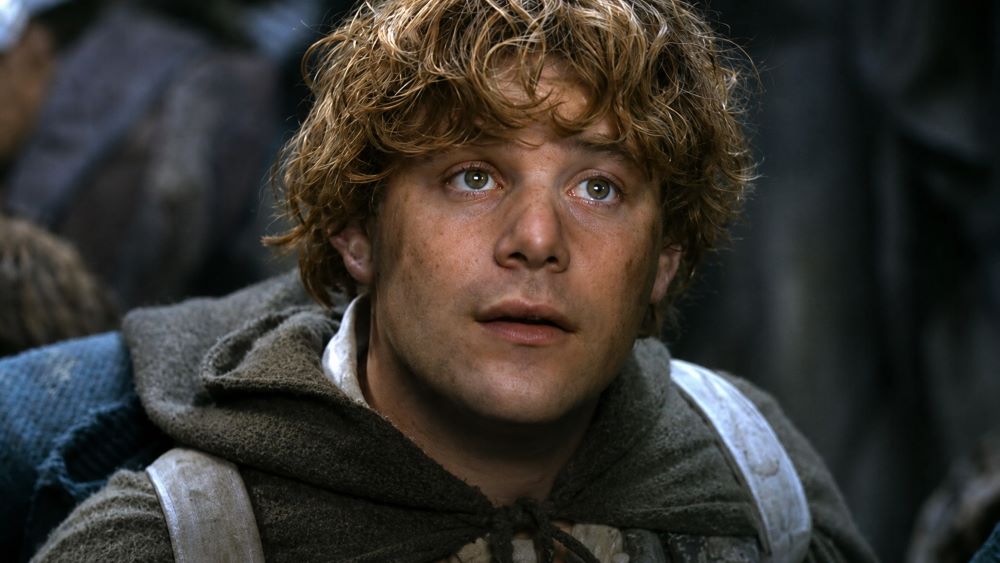
Hero of the Day: Samwise Gamgee (The Lord of the Rings)


“Don’t you leave him, Samwise Gamgee. And I don’t mean to.” — Samwise Gamgee

Samwise Gamgee stands as one of the most compelling and deeply human characters in J.R.R. Tolkien’s The Lord of the Rings, a figure whose quiet strength and unwavering loyalty redefine the very notion of heroism. Unlike the noble Aragorn or the wise Gandalf, Sam is an ordinary hobbit—grounded, humble, and devoid of grand ambitions. His heroism does not stem from swordplay or sorcery, but from his steadfast devotion to Frodo Baggins and the simple, unshakable belief that even the smallest person can change the course of the future. Tolkien uses Sam to illustrate that true courage is not the absence of fear, but the resolve to act despite it, a theme that resonates throughout the epic narrative of The Lord of the Rings.

Traditional fantasy heroes are often defined by their extraordinary abilities or grand destinies, but Sam’s greatness is rooted entirely in his profound normalcy. He is not driven by a prophetic calling or a desire for glory; rather, his initial motivation is simply the fear of losing his master and friend, Frodo Baggins. Tolkien uses Sam to demonstrate that heroism is not the absence of fear, but the choice to push forward in spite of it. When Sam is forced to temporarily take up the burden of the One Ring in The Return of the King, his inherent simplicity becomes his greatest weapon. Unlike the great lords of Men, Sam lacks the ambition and desire for power that the Ring exploits, allowing him to willingly surrender it back to Frodo—a testament to the incorruptible nature of the common folk.

At the heart of Samwise’s character is an unparalleled loyalty that elevates him from a mere sidekick to the true savior of the quest. As Frodo is progressively broken down by the physical and psychological toll of the journey to Mordor, it is Sam who serves as the emotional anchor preventing his total collapse. Sam’s devotion reaches its zenith on the slopes of Mount Doom, where his refusal to let Frodo fail results in one of literature’s most iconic declarations: “I can’t carry it for you, but I can carry you.” In this moment, Sam embodies the purest form of love and sacrifice. He does not save Middle-earth by striking down a dark lord, but by literally carrying the weight of his friend’s despair when Frodo can no longer stand.

Furthermore, Sam provides a vital, grounded perspective that prevents the narrative from becoming lost in its own high-fantasy majesty. His deep connection to the Shire, to the soil, and to the simple joys of life—like a good meal or a smoke—acts as a tether to goodness in a world being consumed by shadow. This “salt of the earth” wisdom allows Sam to perceive the true horror of Mordor and the Ring not in abstract, philosophical terms, but as a direct threat to the innocent, everyday life he holds dear. By viewing the apocalyptic conflict through the eyes of a gardener, Tolkien makes the stakes feel remarkably intimate, reminding the reader that the ultimate goal of the quest is not to establish a new empire, but to preserve the quiet beauty of the natural world.

Ultimately, Samwise Gamgee endures as one of literature’s greatest heroes because he represents the best of what ordinary people can achieve under extraordinary circumstances. He begins the story as a timid, provincial hobbit terrified of leaving his hometown, yet he ends it as a resilient warrior, a loving husband, and a civic leader. Tolkien, a veteran of the brutal trenches of World War I, understood that the world is often saved not by brilliant generals or chosen ones, but by the quiet courage of everyday people doing their duty. Through Sam, The Lord of the Rings delivers a timeless and deeply moving message: that in the face of insurmountable darkness, the most powerful force in the world is a stubborn, unassuming love.

Hero of the Day

Guess Who Beat Cleveland Last Night?


Last night, the Rangers beat the Guardians 6-3 and, dare I say it, they’re finally starting to look like a playoff team to me!

Again, I’m trying not to jinx them by getting too excited.  Whenever I get too excited or too confident, it seems like they always end hitting a bad streak.  I am trying to trick the Baseball Gods into thinking that I’m “Comfortably Blasé,” as my sister puts it.  But it’s not easy to stay calm when your team has a good night!

I love this.  I my Rangers.  I love America.  And I love the great American pastime.

GO RANGERS!

(By the way, in the video below, ignore the annoucners when they try to dismiss the American League.  Everyone knows that baseball media is biased in favor of the National League.)