The Isekai Rag

Yesterday, in my long puzzlement as to why Europeans don’t seem to get into big groups online (the kids do a little more than the older people but not like Americans where most of our friends might be spread throughout the country.) It was suggested this is because Americans form spontaneous organizations like mad people. And this is true and probably most of it. There are probably other contributing factors, including that Europeans have more “local community” things. Partly because they all live in countries so small you need a passport to swing anything larger than a ten week old kitten. And partly because the automobile took a lot longer to get widespread there, while here we have a century of it.

In fact by historical norms we are the weird ones. The very, very weird ones. Our own little mutant country. If you’re an American (since I don’t think there are any pure blood Amerindians left, except by bizarre genetic piling on accident) either you or your ancestors, when you decamped to America, left everything behind once already. So it’s perfectly normal for us to move all over. And when our kids grow up, they move too. Our families might be spread across distances that would make Europeans’ eyes water. (You should have heard me trying to explain to the family that my older kid didn’t move that far away. It’s less than ten hours driving, after all. We can do it in a single day if we start up early and only stop once for lunch. That’s nothing. Practically next door. We see him every couple of months. Meanwhile, the Portuguese family is trying to condole with me as if he’d moved… well, across the ocean.) Anyway, that combined with the fact we work way too much compared to Europeans, means that we have little time for local stuff or to establish local ties, even when we try. (We see our local friends once every three or four months.) On the other hand, we’re still humans with need for community, so in between the edges of our very weird lives, and around the corners of our work, we make friends online. Which explains why we have friends all over the country, including in some places you don’t expect to have conservatives. (Waves at Bill in New Haven and Ian in Chicago!) Which means we have on the ground reporting, which means that the “official truth” from on high increasingly gets us to snort-giggle.

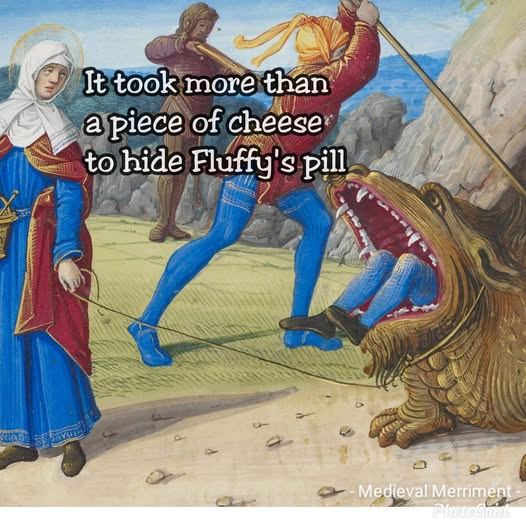
All this long introduction has nothing to do with today’s post and Honorable Truck-Kun above. I had an allergy shot yesterday, and it hit me as it hasn’t since early on, in that the entire day reads fuzzy in memory and I committed some interesting howlers. As in, I realized I left a whole cup of coffee by my computer, which… let’s say it’s a good thing I covered it up. Since I sweeten my coffee, Indy would have consumed it and would probably be at the emergency vet today.

Anyway, this brings us to Honorable Truck Kun.

The other things Americans do that is not so common in Europe is self improvement. I figure it’s also because we (Hi, guys) and our ancestors came here as the ultimate self-improvement, leaving everything behind and reinventing ourselves.

All the books from Thinking Yourself Skinny (I do, I do. The body doesn’t agree) to completely reinventing some trait of your personality do big in … America. Oh, they sell overseas too, but the mechanic is different. They’ll catch fire in an entire country, and then the entire country will get disillusioned at the same time and ditch it.

Yes, sure, this also leaves us wide open for things like cults and very weird — I still think of them as California — manias, chakras and auras and heaven knows what else. There is good and bad.

Europeans tend to resign themselves. They usually know what their ancestors were like, and therefore accommodate themselves to “this is how we are.” Which is more tranquil but also more subject to despondency and manipulation. (Few people directly remember their ancestors more than three generations. Which is also why being blamed for your ancestors’ guilt is nonsense.)

Anyway, I am of the trying to improve and reinventing myself mind. Of course I am. I mean, I came here, all by my own self, didn’t I? (Okay, husband helped, but he was already here. Born here. Ancestors here for generations. Since… 1650? Very forethoughtful (totally a word) of him. He’s a planner. I like that about him.)

Now, is self-improvement extra specially effective and last forever? Are you kidding me?

We’re still human, with human bodies and human limits. And I don’t know about all of you, but my body doesn’t JUST ignore me on thinking myself skinny. It pretty much holds two middle fingers aloft when I ask it to do something, more and more as I age. It’s very annoying. It also never tells me anything like, you know “those disgusting sweats you’ve been having, waking you up at night? You should be taking an anti-histamine while doing these desensitization treatments.” Annoying meat-suit.

Anyway, yes, self-improvement only does so much. Most of it tends to rubber band by sheer inertia.

However it does something. Each time I try, it improves a little, and now looking back I’m a completely different beast than I was forty years ago, and largely, yes, for the better.

My perennial battle, more than anything else, is with the fact I’m ADD AF (As F***. My older son’s scientific classification of me. Apparently other people are ADD. People who can’t stand in line at the grocery store more than three minutes and wander off to look at things that catch their eye are ADD AF.) as well as with the fact that yes, to be sure, I’m cramming three lives and five jobs onto a normal day.

When you’re like that, mistakes are made. The mistakes accumulate. And after a while you can’t move for the debris of regret, guilt and depression. And unfortunately, at some point you become the walrus in Alice in Wonderland, wallowing and crying (and still doing more stupid sh*t, because who cares.)

And this is why I’ve come up with the Honorable Truck Kun and the Isekai Rag.

Note that ragtime (which is my husband’s favorite thing to play on the piano) is a repetitive, recurring rhythm. This will happen again and again.

As for Truck-Kun and Isekai, I don’t read this stuff (though I’m willing to try it. I just recently popped up from 3 years of Jane Austen fanfic, so…. I have a lot backlog to read) but my younger fans, my kids’ age tell me there is a whole range of being hit by a truck and waking up in a whole new life: Isekai. For a movie with this beginning, try Yesterday. (His decision is stupid, the mechanism of fate doubtful, the morality flawed, but the movie itself is a delight nonetheless. Just don’t think too hard on it.) For the other works, I’ll let the fans in the comments tell you.

BUT before I’d heard of Isekai I’d come up with this solution to cut the threads of regret and guilt and “if I could go back in time.”

Okay, you’re you but not really you. Your consciousness belongs to someone else who got hit by Truck Kun on the streets of some other world. You don’t have those memories. In fact the only memories you have are of the body you landed in.

But the important thing is that: You’re here. You’re not responsible for anything that created this situation. It’s not your fault. And you feel in your heart of hearts you came from greater things and are destined for greater things.

Yes, the house is a mess (how does someone not only not finish unpacking in five years, so that one room is just impassible, but accidentally create another such room? Guys, this chick was a mess.) The cats are — oh, yeah, cats. And the work is years and years behind.

But I’m here now, and it’s time to clean, organize, and set a schedule.

I’ll fall off the horse, of course, because the body I fell into has its own habits. But something will remain, and I’ll be a little more productive, a little neater, a little less verklempt.

And there’s things I want to do. Resume the art thing — turns out one of the few gifts I can give people is portraits. — Resume ancient Greek. Books I need to read. And oh, my heavens, books to write. Yes, it’s all a mess. That’s what happens when you drop in.

BUT– The Isekai rag is playing, and I’m going to do it.

Come with me. Wave at imaginary Truck-Kun as it speeds on to hit another dancer, and let’s get going.

We’re destined for greater things (DUH, we’re American) and we can’t stand around waiting.

Now — isekai rag!

Europe So Far Away

I have a letter from my father awaiting a reply. He wishes to talk by correspondence, he says. Which is fine. I do get we’re both somewhat deaf and talking to each other on the phone is more difficult than in person.

The problem is that the older he gets the tinier his handwriting, to the point he can cram a normal letter on the back of a postcard. And I’m in the dreaded lands of presbiopia. So I didn’t understand ALL of his letter, only parts of it, enough to get the gist. (And he’s going to be strangely discommoded by mine, because my handwriting used to be merely ugly, but — in case you don’t know this — each country has a distinctive cursive, and my cursive changed with time. now it’s caught in an unholy land between Portuguese script — a lot like old German — and American Script. Not only does it remain the same insane scribbling hand I always had, but now there’s not guarantee of any given letter being rendered the same twice. (If you ever compare my signatures, you will see.) This means I often take notes while reading a book and then sweat trying to interpret what I wrote. This without the charming spelling issues which were always bad and are now worse.)

Most of it is, as it should be, family stuff and a lot about how much he misses mom. Some is world affairs, and I’m afraid being a wretched creature I’m going to have to answer those. Oh, he’s mostly worried not combative, but–

This is in a way an attempt at explaining what happened between Europe and America and why it’s much worse now than it’s ever been.

First, guys, since most of you are born and raised in the US you need an explanation dad probably doesn’t require. It’s like this:

Europe never loved us. Some Europeans did but those of us who did were always an odd bunch and this put us at odds with all other Europeans. They tolerated and encouraged the Soviet Union in the hopes it would “Show up America.”

If I had to guess, since I wasn’t around two hundred and fifty years ago, it started with the certainty that the republic would fail, since it negated the forever European way of living, then moved on to being upset we didn’t. And the fact we saved their asses twice didn’t help at all.

As Heinlein says in Stranger, all “thank you” implies some amount of resentment. Okay, I’m not sure that’s true, because it’s not what I experience. Mostly from me all thank yous involve some number of confusion and fear of trespassing.

But I think the difference is that I was taught how to accept help/charity BY HEINLEIN. I’m not so much accepting help/charity, as I’m taking what I need right then, and it flows outward again when other people are in need. So I’m just borrowing, and pay it forward.

And therein lies the rub. Our intervention in the long war of the 20th century was never paid forward by Europe. it just didn’t happen. In fact it just couldn’t happen, since Europe took the long wars as their signal to go on a self-hating spiral of self destruction.

(I’m not sure how much of that spiral was native and how much was USSR propaganda. Someday maybe we’ll figure out how much cognitive pollution the USSR put into the world, including destroying our own academia and a lot of our political thought. The entire anti-colonial boondoggle is something that the Europeans hold against us — the ones that realize what a disaster it was on both sides — but we were on it because of the extreme lefty academics and air-dreamers were trying to let the USSR grab lands without resistance. Most colonies Europe left were immediately taken over by the USSR de facto if not de Jure.)

On top of which, they outsourced their culture and the production of cultural product to the US. Look, that’s not what they meant to do, you know? they were subsidizing their film and novel production, to make sure the “worthy art” got all the money it needed. I mean, they got enough trash from the US, right. Except that in fact “trash” is what people read and watch. See, for instance, Shakespeare, who wrote plays for apprentices and groundlings. While the promoted art of the cognoscenti goes nowhere. So the result of European governments paying for the “approved art” was to make the only art people watch and read American. (Reading in Europe has been plummeting, in commensurate response to their getting as their only offerings from America the precious darlings of trad pub. Different for those countries to whom Kindle is readily available, but there again… There’s culture. More on that later.) And the problem is the culture they’re getting from us is what Hollywood is selling, which they take deadly serious as “modern” and “advanced” leading to far greater destruction there than here.

This again feeds a hatred of America and a wish to see us stumble.

But until recently, they largely kept their mouths shut where Americans could hear. Oh, sure, their news imputed all the worst vices to us, and generally blamed us for their problems, etc, and also gave them an idea of how we live that meant we had much fun online with Europeans who thought we shoot each other in the streets and also that we’re like Latin America where you’re either very rich or destitute. (This is vital, because the only way their elites can keep hold of the populace in their neo-feudal soft socialism is to project the horrors of what they think naked capitalism would be onto us, and then drive them to think we live in some kind of Dickensonian horror, compared to which their managed decline seems like paradise.)

However it used to be that Europe knew which side of their bread was buttered and that the US has — pardon me the graphic nature of this — a mighty generous tit on which to suckle.

They have now lost what remained of their tiny little minds, and I believe I can explain it.

First of all, they’re completely broken over 2020. At some level they have to know it was all a hoax, and they were not even — as I yelled at mom when she tried ordering me to take the vaccine — the main aim of the hoax. The aim was to steal US elections. Terrorizing Europeans was just stage dressing.

But oooh, boy, were they terrorized. Not even the crazier state in the US locked down as fast, as hard, as long or as stupidly as Europe did. And they had a ridiculously high buy in to the dangerous vaccines, too.

At some level they know they were hoaxed, but they can’t process how their old mechanism of trusting the authorities and the “best people” so they have a lot of free floating anger which their media and reporting is encouraging them to attach to us.

Okay, this is the part that I need to explain to my dad: the media over there really has them utterly convinced that we are repeating fascism.

This is partly their hatred of Trump whom their elites hate because our elites hate him, and how bad a person do you have to be even those American know nothings hate you? And partly that they absolutely believe that our media is absolutely truthful, when our media has also lost its tiny flipping minds and is now reporting completely imaginary stuff.

Partly though is that they absolutely believe that history repeats itself and have been on the lookout for Hitler anywhere a shred of patriotism remains, because patriotism causes Hitler. (DUH. That’s what they were taught in school. DUH.) And of course keep fitting the little they know onto this model.

The thing is the model they were taught in school was not how to find Hitler, but how to find anything that was antithetical to the USSR swallowing them whole. So sure signs of Hitler are: a strong military. Patriotism. Any reduction in social net spending. Self sufficiency or the encouragement thereof. Etc. etc. etc.

And in that light, we look terrible.

They also believe our country is convulsing itself with people trying to fight Trump. That ICE really is deporting anyone who tans. And other fantasies. Which is even more Hitlery.

AND the crowning thing in all this: They haven’t embraced the digital revolution as much as Americans have.

Oh, don’t get me wrong: Everyone has a cell phone. But political blogs are rare and for reasons that evade me, so are groups where people from all over just gather.

I KNOW my dad is going to ask me how I know that the rest of the country isn’t in revolt against Trump, that it’s just Minnesota.

And I’m going to answer that throughout most of the weekday I hang out with my writing group, which is spread out all over the US (and a couple from Canada/Japan.) SO I know. I know that in most cities the actual “resistance” is a dozen boomers with walkers and oxygen tanks.

Because between the work from home, and our just swimming in the digital sea, we all know people all over the country and can verify reports and rumors. (EXCEPT aged boomers of course.)

Which is a divide with Europe that I don’t understand and can’t explain.

But it contributes to their worry for us and their certainty we’re about to fall to Hitler2, this time it’s Orange.

And we have no way to reach them, because it would take explaining all this stuff.

It’s not just that they’re watching a different movie. It’s that someone has locked the theater doors and keeps amping up the sound, till they only see what they’re shown.

This will end in tears.

Book Promo And Vignettes By Luke, Mary Catelli and ‘Nother Mike

If you wish to send us books for next week’s promo, please email to bookpimping at outlook dot com. If you feel a need to re-promo the same book do so no more than once every six months (unless you’re me or my relative. Deal.) One book per author per week. Amazon links only. Oh, yeah, by clicking through and buying (anything, actually) through one of the links below, you will at no cost to you be giving a portion of your purchase to support ATH through our associates number. A COMMISSION IS EARNED FROM EACH PURCHASE.*Note that I haven’t read most of these books (my reading is eclectic and “craving led”,) and apply the usual cautions to buying. I reserve the right not to run any submission, if cover, blurb or anything else made me decide not to, at my sole discretion.SAH

I WASN’T GOING TO REPEAT THIS WARNING, BUT OBVIOUSLY I HAVE TO:
OKAY, PLEASE LISTEN: THIS IS STATED ABOVE, BUT AGAIN: ALL I NEED FROM YOU IF YOU WANT YOUR BOOK PROMOTED IS A LINK TO AMAZON. Please, for the love of all gods and fishes and all the birds in the sea, DO NOT SEND ME THE BOOK, THE COVER, THE BLURB, OR WORSE YOUR ENTIRE LIFE STORY. I get a ton of spam on that email because it’s here every week. PLEASE don’t make me read five pages to figure out if you’re someone sending me a link or a spam bot. If you’re afraid the link might not work, you can also send me your name and the book title with the link. That’s acceptable too. BUT DON’T SEND ME THE UNABRIDGED WORKS OF TOLSTOY WITH THE LINK AT THE END.
I’ve had about enough so this is the new policy: IF YOU MAKE ME WORK TOO HARD, I’LL REPLACE YOUR BOOK COVER WITH A PICTURE OF A CAT GIRL. MEOW AND SHAME OR SOMETHING – SAH

FROM ARI H. MENDELSON: Consent (Kingmaker)

Tech billionaire Jerry Neville holds the key to a groundbreaking technology capable of manipulating anyone’s decisions. However, Neville’s Chinese backers demand perfection, threatening dire consequences unless the flaws are fixed.

Targeted for artificial seduction by Neville’s algorithm is Hollywood actress Meghan Peters.

Meanwhile, a group of independent journalists rises to expose the truth in a world where even our thoughts can be controlled.

Lying in wait for the crusading reporters is Mei Hua Chang, a Chinese spy whose beauty and charm are matched only by her cunning.

In Consent, prepare to be captivated by relentless action, nerve-wracking suspense, and a profound examination of power and persuasion.

FROM NATHAN C. BRINDLE: The Reason (Timelines Universe Book 1)

January 1993. Somalia. Operation Restore Hope. A Marine platoon pulling a security patrol runs into an insurgent ambush in Mogadishu, and when the platoon commander winds up unconscious from a blow to the head taken when an IED rolls his command Humvee, and the First Sergeant is killed as soon as he exits his vehicle, command falls to a badly wounded gunnery sergeant — initially trapped in the same vehicle with his platoon commander and their driver, but conscious and alert and ready to bring some personal hell down on the RIFs…if he can just get out of this damn vehicle, grab a rifle, and drag himself and his busted-up, non-working leg over to a firing point without bleeding out. June 1993. Washington, DC. A First Lieutenant with a freshly-healed scar on his head encounters a beautiful redheaded floor nurse at Bethesda Naval Hospital. He’s there to see his Gunny, who’s been stuck in the hospital with a broken femur since he was transported home in February. He’s the platoon commander who was knocked hors de combat by the IED, and he’s been sent to find out why his Gunny is obstinately refusing to accept an important decoration for his participation in the incident. Turns out that’s going to be quite a job, because Gunny’s got his reason. Will the Lieutenant, and his ally the nurse, be able to convince his Gunny there’s a better reason to accept the decoration? Might be they’ll need a little help from a friend…

FROM M. LEE MOORE: Logan Mitchell and the Earthrise Light

As Logan Mitchell counts down the days to his dad’s Christmas return from the Asteroid Belt, an illness begins spreading among the newest arrivals to the Mars colony. With tensions rising and people falling ill, Logan and his friends must step in to support the struggling families, while bringing the community closer together than ever before.

Logan Mitchell and the Earthrise Light is a heartfelt sci-fi adventure about bravery, belonging, and the power of community when it matters most.

FROM EDWARD WILLET: The Haunted Horn

Perfect for fans of R.L. Stine and John Bellairs: a spine-tingling mix of schoolyard showdowns, family drama, and Civil War ghosts that will keep you up past lights-out!

On a disastrous Friday in Oak Bluff, Arkansas, brainy eighth-grader Alex Mitchell buys a battered old Civil War bugle at a dusty auction—and his luck goes from bad to worse. School bully Sammy Findlater wants it for his “trophy” collection, and standing up to Sammy (and his hulking gang) means bruises, dead animals in lockers, and a garbage-splattered chase through town.

But when Alex blows the tarnished horn, something even more frightening stirs. Chilling midnight marches echo down his alley, ghostly Confederate soldiers trample the town square, and a wide-eyed boy in a ragged gray uniform stares up at his window, whispering, “I’m going home.”

As the anniversary of the Civil War Battle of Oak Bluff nears, the spirits grow dangerously solid: campfires scorch grass, cannons uproot from concrete, and downtown teeters on fiery ruin.

With bullies on his tail and a supernatural showdown brewing, Alex must team up with tough-as-nails Annie Parker to unravel the mystery. Can he summon the courage to sound the bugle at the right moment and lay the ghosts to rest—or will history repeat itself in a terrifying clash that destroys everything?

FROM MARY CATELLI: Madeleine and the Mists

Enchanted pools, shadowy dragons, wolves that spring from the mists and vanish into them again, paths that are longer, or shorter, than they should be, given where they went. . . the Misty Hills were filled with marvels. Madeleine still left the hills, years ago, to marry against her father’s will. If her husband’s family is less than welcoming, she still is glad she married him, and they have a son, two years old. But her husband’s overlord has fallen afoul of the king. And all his men fall with him, including her husband. She sets out, to seek the queen and try to bypass the king — and the Misty Hills. Some things are not so easily evaded.

J. KENTON PIERCE: The Warlord of Greenline Town (Tales From the Long Night Book 2)

In the ruins of Hesperides Colony, scarred by volcanic winters and orbital threats, Captain Ravati Aziz safeguards underground Greenline Town. A veteran trooper turned cop, she balances family with bondmates and kids amid a corrupt town council, brutal Blackcheek gangs, and nomadic Pridesmen driving herds through deadly badlands.

When a notorious homesteader unearths a crashed starship packed with lost tech and comes to Greenline looking for help, Ravati volunteers, knowing what’s at stake.As vanished Gentle Walkers return with secrets and politicians scheme for power, Ravati allies with warriors and scholars to defend her home.

In a brutal world of hard choices, can she stop Greenline’s slide into tyranny?

FROM ERIC THOMSON: No Honor in Death (Siobhan Dunmoore Book 1)

Siobhan Dunmoore was losing the war one ship at a time. The Shrehari Empire had burned more hulls out from under her than any other officer in the Fleet. Some said she was too aggressive. Others said too reckless. The enemy called her something else—something they spat with fear. None of it mattered. Not all her enemies wore Imperial uniforms. And the only reputation she had left was for bad luck.

She was dragging another wreck home, crew half‑dead, systems failing. This time she’d bluffed her way out by the skin of her teeth. She wanted rest. The Admiralty wanted her back in the fight.

They gave her Stingray. The Fleet’s cursed frigate. Captain disgraced, crew broken, ship rotting. The last of her kind still limping through the war. Admirals whispered about scrapping her, breaking up the jinx. But the war was bleeding ships, and anything that could still fire had to fight.

So Dunmoore went from staring down the Empire’s finest on a battleship’s burning bridge to commanding a crew ready to mutiny, admirals sharpening knives, and a mystery that stank of death. Stingray’s curse wasn’t just sailor’s talk. Something was wrong. The crew kept their mouths shut. Politics pressed in. Her own demons clawed at her.

Taking that frigate into battle was suicide. But Dunmoore had never walked away from a fight. Failure wasn’t an option. Defeat wasn’t acceptable. Death was just a hole in the ground. Victory was the only honor left. She’d drag Stingray back from hell—or go down damned forever.

BY EDMOND HAMILTON, REVIVED BY D. JASON FLEMING: The Complete Interstellar Patrol (Annotated): A pulp space opera omnibus

In 1928, Edmond Hamilton published Crashing Suns in Weird Tales magazine, at approximately the same time that E.E. Smith’s Skylark of Space was published in Amazing Stories, giving both men the distinction of creating the genre of space opera. Hamilton, however, was the first to create a series, writing further stories in his Interstellar Patrol Series in 1929 and 1930, then writing a final one in 1934.

Here in one volume is every Interstellar Patrol story Hamilton published, including the novel Outside the Universe. What the stories lack in characterization and scientific plausibility, they more than make up for in enthusiasm, spectacle, and sheer breakneck pacing.

  • This iktaPOP Media omnibus includes new introductions that give the stories genre and historical context.

FROM DALE COZORT: The Best of Space Bats & Butterflies – Book Two

Space Bats & Butterflies Book Two is another eclectic collection of the best alternate history or time-travel stories, book excerpts, essays and world-building exercises from the ninety-plus issues of a long-running Alternate History zine.
• Part Two of a two-part book-length alternate World War II scenario-The Moscow Option-1942.
• The Interrupted Trajectory: Indians without the Old World.
• Could you save the Incas from Spanish conquest?
• American Revolution: Britain Keeps the Deep South
• D-Day Landings Fail.
Fiction stories and excerpts:
• World War II Germany invades a divided alternate history US that still uses black powder muskets.
• Bootleggers from the 1920s invade a far-future sanctuary for massacre victims.
• Modern US collides with an alternate reality full of deadly animals.
• Tasmanian Wolves are supposed to be extinct. What is one doing in a Illinois cornfield?
• An ageless, vastly intelligent dog holds the secrets to immortality. Can he survive long enough to give it to humanity?

FROM HOLLY CHISM: The Schrödinger Paradox: Cataclysm

The end is coming.

Unlucky jerk Tom Beadle was on watch at NASA when the collision alert sounded: a new asteroid, bigger than the dino-killer, headed for Earth. Big problem, but that’s why we have NASA, right? Except, after decades of budget cuts, NASA has no way to shove it off course. That job has to be contracted out. Will the private sector company his best friend from college works at succeed where the government option failed? Might be best to have a backup plan, just in case…

FROM MACKEY CHANDLER: Fair Trade: An Alien Invasion Story

Most of my writing is in a series people seem to enjoy but there is a constant small crowd who say: I’d really like your take on an alien invasion story. Well this is for them. The bulk of the aliens come to Earth stories assume their vast superiority, sometimes invincibility. Sometimes they suddenly appear on the white house lawn dictating terms. I have yet to see one with them appearing at the Kremlin or Canberra which seems rather parochial. Other times they are so advanced they quarantine the Earth or Solar System without discussion because we are such barbarian slime-balls. They may alternately be impossible to talk to and attack without mercy. All these assume they come with a plan and the means to carry it out. Our own age of exploration showed things happen much less orderly. Islands and natives were happened upon while seeking someplace else or even because a storm or miscalculation left the ship lost. In that case there is no plan but survival with the assets at hand. As with any game remember that turnabout is fair play.

FROM KAREN MYERS: The Chained Adept: A Lost Wizard’s Tale

MEET A POWERFUL WIZARD WITH UNANSWERED QUESTIONS–AND AN UNBREAKABLE CHAIN AROUND HER NECK.

Have you ever wondered how you might rise to a dangerous situation and become the hero that was needed?

The wizard Penrys has barely gained her footing in the country where she was found three years ago, chained around the neck and wiped of all knowledge. And now, an ill-planned experiment has sent her a quarter of the way around her world.

One magic working has called to another and landed Penrys in the middle of an ugly war between neighboring countries, half a world away.

No one has any reason to trust her amid rumors of wizards where they don’t belong. And she fears to let them know just what she can do — especially since she can’t explain herself to them and she doesn’t know everything about herself either.

Penrys has her own problems, and she doesn’t have any place in this conflict. But they need her, whether they realize it or not. And so she’s determined to try and lend a hand, if she can. Whatever it takes.

And once she discovers there’s another chained adept, even stronger than she is, she’s hooked. Friend or foe, she has questions for him — oh, yes, she does.

All she wants is a firm foundation for the rest of her life, with a side helping of retribution, and if she has to fix things along the way, well, so be it.

The Chained Adept is the first book of the series.

FROM A. PALMER: Wonder: Sermons From a Servant

After Trouble, after Hope, there is Wonder.

God brings people through many stages in life, and as before, these poems describe mine. I offer them humbly, in case anyone else out there feels the way I do.

BY J. D. COOPER: Lessons

The “lessons” herein are meant to answer real-world questions asked of the author in his busy suburban pediatric practice. There are more fatherless teenagers than can be counted. Almost daily, young men and women who desperately want someone to guide them, teach them, and love them unconditionally, ask questions about how to “adult.”
This book is overtly Christian. There are no apologies for that, but the reader has the right to not be blindsided. You have been warned. It is real-world gritty. Trauma happens, and it is the job of human beings who love their fellow man to rescue the broken. This book discusses delicate topics like sex, puberty, and teenage hormones. There are also lessons on aspects of manhood like courage, hard work, and commitment. Finally, this story is emotional. We hide who we are from each other. Still, on occasion, the author gets to peek behind the curtain and sees the loneliness and desperation of teenagers who just want to be loved.
Love them. Love them all.

FROM DEX QUIRE: The Transformations, a Tale of Modern Sin

That meme or pop-up or spam – you know the one – it’s everywhere on the internet. It urges men to enlarge a certain body part. But really – who or what kind of man would buy into that nonsense? The narrator of “The Transformations,” for one. He applies Onan’s Enlarging Ointment to himself and promptly turns into a donkey. Our foolish narrator is then raked across a pile of intriguing and entertaining encounters including lockdown at the zoo, bizarre sex, friendship with a drunken elephant, eco-terrorism, semi-slavery by pious religious communards, sea voyages, depraved tourists, drug pirates and other magically or demonically inspired bi-peds. The novel is an obvious homage to Apuleius’ “the Golden Ass” while offering a modern, magical realist update in vivacious and witty prose. Blue Guitar Press invites you to enjoy Dex Quire’s world of wonders and transformations.

FROM SARAH A. HOYT: No Man’s Land: Volume 1 (Chronicles of Lost Elly)

On a lost colony world, mad geneticists thought they could eliminate inequality by making everyone hermaphrodite. They were wrong. Catastrophically wrong.
Now technology indistinguishable from magic courses through the veins of the inhabitants, making their barbaric civilization survivable—and Publius Cornelius Scipio Africanus Kayel Hayden, Viscount Webson, Envoy of the Star Empire—Skip to his friends— has just crash-landed through a time-space rift into the middle of it all.
Dodging assassins and plummeting from high windows was just the beginning. With a desperate king and an archmagician as his only allies, Scipio must outrun death itself while battling beasts, traitors, and infiltrators bent on finishing what the founders started: total destruction.
Two worlds. One chance. No time to lose.

Volume 1
The Ambassador Corps has rules: you cannot know everything, don’t get horizontal with the natives, don’t make promises you can’t keep.
They’re a lot harder to follow when assassins are hunting you, your barbarian allies could kill you for the wrong word, and death lurks around every corner.
The unwritten rule? Never identify with the natives.
Skip’s already broken that one.
Now he’s racing against time to save his new friends from slavery—or worse—while dodging energy blasts and political intrigue. One crash-landed diplomat. A world of deadly secrets. And absolutely no backup.

Some rules are meant to be broken. Others will get you killed.

Vignettes by Luke, Mary Catelli and ‘Nother Mike.

So what’s a vignette? You might know them as flash fiction, or even just sketches. We will provide a prompt each Sunday that you can use directly (including it in your work) or just as an inspiration. You, in turn, will write about 50 words (yes, we are going for short shorts! Not even a Drabble 100 words, just half that!). Then post it! For an additional challenge, you can aim to make it exactly 50 words, if you like.

We recommend that if you have an original vignette, you post that as a new reply. If you are commenting on someone’s vignette, then post that as a reply to the vignette. Comments — this is writing practice, so comments should be aimed at helping someone be a better writer, not at crushing them. And since these are likely to be drafts, don’t jump up and down too hard on typos and grammar.

If you have questions, feel free to ask.

Your writing prompt this week is: COPPER

It’s January 16 Do You Know Where Your Year is?

This image is a misnomer, of course, because the year of the Fire Horse (also the Red Horse. Uh) doesn’t start until end of February, but a wooden snake is not nearly so amusing, and besides I have this theory that in our fast-communication world the avatars for the Chinese years got confused and started reigning (in this case perhaps raging would be more appropriate) when the Western New Year starts.

It sure would explain — as much as anything can — what happened starting Jan 1 — well, Jan 7, but you know — when the year came in like a horse. A horse that’s on fire. (But…. it’s on FIRE.)

I mean, it’s not just the fact that in the dead of night we removed a dictator from his bed and brought him to the Us to be held accountable. That’s amazing, yes, but there’s so much more going on. No, it’s not just Tim Walz being Timwalzed and doing his best imitation of Temu Jefferson Davis — or as someone put it “If Jefferson Davis and Liberace had a baby.”

There’s Iran, which is rebelling. It’s been quiet recently, and I think the rebellion is in the process of being subdued, and I’m hoping we don’t allow that. It’s the kind of edge of the seat thing that is keeping me awake at night. (If you’re the praying sort pray for Iran.)

And then there’s… good Lord, this year has been everything all the time. Like, we have finally made a food pyramid that makes sense, not one designed by people who thought Diet For A Small Planet (i.e. we’ve got to stop eating meat, because the population is exploding) made any sense. And we did away with two thirds of early childhood vaccination.

In a normal year those two things alone would have been news enough for six months of argument in the newspapers. I mean, you might think the food pyramid is just a recommendation, but it informs all the federal food aid, plus feeding of the troops, food in schools, all of that. It has a profound impact. But…. this year.

The US withdrew from 66 global organizations.

In a normal year the left would be wailing about our leaving such vital organizations like:
1) 24/7 Carbon-Free Energy Compact

2) Colombo Plan Council

3) Commission for Environmental Cooperation

4) Education Cannot Wait

5) European Centre of Excellence for Countering Hybrid Threats

6) Forum of European National Highway Research Laboratories

7) Freedom Online Coalition

8) Global Community Engagement and Resilience Fund

And such vital UN organization as:

9) Peacebuilding Commission

50) Peacebuilding Fund

51) Permanent Forum on People of African Descent

52) U.N. Alliance of Civilizations

53) U.N. Collaborative Programme on Reducing Emissions from Deforestation and Forest Degradation in Developing Countries

54) U.N. Conference on Trade and Development

55) U.N. Democracy Fund

56) U.N. Energy

57) U.N. Entity for Gender Equality and the Empowerment of Women

58) U.N. Framework Convention on Climate Change

59) U.N. Human Settlements Programme

But this year? This year it’s not even registering. They haven’t even started a scream that Israel withdrew from those right after we did.

Meanwhile abroad: Syria working with Israel on security. Israel recognizing Somaliland. Somalia being removed from the nations eligible for refugee status in the USA.

Also, apparently, some number of nations are no longer eligible for visas to the US.

And– And– And– Oh, yeah, stuff is being done to curb fraud and clean voters’ rolls, though I’m sure it’s not enough, and I wish it were fast and more strict. OTOH considering how much they depend on fraud, just removing some avenues might help.

Of course there’s already been sad events too, like Scott Adams’ death. Soemthing else that would take at least a month of news, any other year.

And I’m sure I’m forgetting half a dozen things that rocked my world when they came across the screen. It’s that type of year, apparently, it’s been at least a year since Jan 1st.

So — as a community service, I’m laying down a challenge: What do you have on your bingo card for this year?

Things I’m hoping for –

freedom for Iran

the fall of communism in China.

Things I wouldn’t be surprised if they happened:

The collapse and political rebuilding of the rest of the Americas

The discovery and IMPLEMENTATION of life extension technology.

Things that might rate a raised eyebrow:

The EU breaking apart in a fit of sanity
Atlantis raising from the sea.

Deej kindly contributed some for that last category:

“Elon reveals the colony he’s already established on Mars.”

“Grok copied Scott Adams’s brain pattern, and will be making Dilbert strips for the foreseeable future.”

Now, your turn. Hear those hoof beats? The year commeth like a raging fire horse. (Or perhaps a raging zebra.)

What’s in your bingo card?

Front Seat For the Ghost Dance

Yes, i should be blogging an old book — Anthro the Life Giver — and I bought it and everything. And then…. I’ll be battered and deep fried if I have any idea where I put it. It doesn’t help I’m in the middle of the great organization and cleaning…. I hope I didn’t donate it. It was very expensive. I wish I had it electronic, because then I couldn’t lose it

Anyway… I’d be worried about Alzheimers except I’m better than I was in my twenties. This is mostly ADHD. And right now working on two books at once.

But there are advantages to being old, and having seen this movie before. Movie? Well, a lot of you are getting very worried about Minnesota. Because the media is doing their usual stuff of spinning up the crazies and the poor people who don’t know better — including some my age who blindly listen to the MSM — to think that ICE is Gestapo, or that they are doing anything other than deportations (And not enough of those, d*mn it.)

Look, back in 2004 when I was sure Kerry would win because of all the noise and fury? A friend in the Heinlein group, who was then in his eighties, so I don’t hold much hope of his still being with us — but he might be — said that you can tell when the left is losing because they get unbearably loud.

At the time I doubted him. Look, I was a kid. Barely in my forties. But since I’ve observed he was right. Every time he was right.

So, what is going on? Well, it used to be they made a lot of noise to convince you they were winning. But that hasn’t worked — really — since sixteen. Oh, 2020. 2020 was all fraud. they didn’t even try noise. The only noise was after, to convince us that Trump had justly lost. And if you bought it — so many on the right did — shame on you. And if you’re over some age, usually 55 your college should let you audit mathematics classes cheaply. Oh, there was the second prong to their fraud, which was the theater of Black Lives Matter. That theater and that loud — yes it was just loud theater. That’s why they only could do two cities at a time, why the pallets of bricks, and why the whole thing vanished overnight once they got their puppet in — was on the marginal chance they could get black people to vote for the corpse (likely worked with some. Who knows?) but mostly so people like the supreme court would be afraid to call out fraud, because they thought the country was in uprising and they’d get killed.

Their psyops are rarely aimed the way you think. The “All the right are anti-Semites” thing was aimed at democrat Jews to keep them in line (More the fool them if they fall for it, but heck, some of y’all on the right did. Shame on you. It’s an obvious and transparently naked psy-ops.) It panicked the right, but it was aimed at leftist Jews.

In the same way the insanity in Minnesota and the attempt to wind up more patsies and mentally ill to martyr themselves is aimed not at us but at their side, to shore up belief and fervor.

Ghost dancing. It’s all ghost dancing.

Is it working? Well. Some people are in conquered areas, so it’s really hard to know if the psy-ops works or if they’re making mouth-noises for the equivalent of painting lamb’s blood on the doorposts and hoping the dark angel of communism passes by. This goes for occupied professions and other areas where people falsify their preference. I know people who falsify their preference (And very well at that) exist because I did for years. And I have friends still submerged everywhere from Academia to the arts. They do what they have to do and say what they have to say because baby needs shoes. And sometimes because they’re grimly, stone-facedly engaged in their own version of the long march. I.e. if this all falls apart they want to be our men — and women — on the inside, who can make sure the left’s victory is dead aborning. This of course requires extremely good “passing” so you’ll find them coming out with some of the most hilarious — but not to the left — hot takes.

And then there’s the mentally ill, the disaffected, those without connections, and people who could never ever ever read human emotions one on one, much less over all the country. The left is very “lucky” that 2020 created so many more of them. They’re still a minority. They are also the ones they’re trying to convince with crazy stuff like “ICE is not law enforcement” And “ICE is taking American citizens off the streets and disappearing them.”

They want these people to believe that nonsense, because that creates more martyrs. And they think martyr blood will propel them to renewed power.

They are wrong. They are profoundly wrong. It almost worked in the seventies, at least in a lot of places. Not not in all and not for long.

And their odds in the seventies were so much better than now.

You might not realize that, because you weren’t around or really tuned in to politics in the seventies (I learned early that even if you’re not interested in politics, politics is very interested in you. Like people in beaches at risk of sneaker waves, I haven’t turned my back on it since.)

And I remember the seventies. “The left is going to win” and “communism is the future” was more plausible then. A whole lot more plausible. It wasn’t just that they could point to the USSR and say “See, communism works. They have no crime and no poverty.” and they had the glossy magazines and the fact that the US treated Russia as a peer in armaments and as superior in morality (No? Really? What do you think USAID was about? They were convinced that the USSR was winning hearts and minds, and only way we could compete with that was throw money around.) Yes, some of us saw through it, but even with me, it took till I was 14 and I had NO PROOF. As with being sure world population is much smaller than advertised and started falling earlier than advertised, I had no way of proving it. Not even reports of having visited Those who visited the USSR were usually not of our persuasion, and they brought back stories of wonderful, and it took a jaundiced view to see through it.

So the left had a society that “was working” and was one of the world’s “superpowers” to point at and claim that was why communism would win. And they had the young. Dear Lord they had the young. If you weren’t at least paying lip service to “Both are equally bad” (Us and the USSR, no joke) you were regarded as an imbecile.

And of course, the megaphone of the media was impenetrable. To be not-on-the-left was to continuously apologize for all the manufactured “scandals” they created to marginalize those who opposed them. Nixon was the devil. Carter was a savior. Ford was a klutz. And on down to dog catcher level.

So they could stage big things, sit ins and walk outs and lockouts in every campus. After all, I’m told by those older than me that anti-war demonstrations were the way to pick up the cute chicks. That’s how you tell where the social power is. Being leftist was a positional good.

But even then, here — note, not in Portugal, not in a dozen other countries — the “get a pregnant woman shot so it ignites country-wide revolution” didn’t take. I don’t know the details of the poor woman who got shot at Kent, and whether she was a true believer or — merely — an oblivious passerby (Lord knows in Portugal in the seventies I oblivious passerbyed into some hairy situations. Children, if you learn nothing else from me, learn that it is stupid to walk around reading your science fiction paperbacks when spontaneous street battles can break out around the corner. Oh, also I almost got run over a bunch of times. What can I say it’s an addiction.) I could ask my husband who finished his degree at Kent and whose older brother attended immediately after that debacle, but I don’t want to just listen to ranting the rest of my day. He has opinions about the whole thing. They don’t accord the the “official” version you were taught in school. (Only time I saw my husband about to punch someone in SF was when Eric Flint went into the Kent incident. He got schooled at the top of Dan’s voice and had the good sense to shut up.)

However, even that, in the much more favorable conditions of the seventies failed to ignite the US into leftist (socialist, communist, whatever) revolution.

The Minnesota insanity is not going to ignite it now (Hey advantages of this, I can now spell Minnesota. That’s new!) when the USSR fell and despite the best attempts at covering the dung in perfume everyone knows more or less it was a miserable place. It’s not going to ignite now when the most fervent apologists for communism are either transparently venal or stupid or… well, mentally ill.

They couldn’t even find a normal looking pregnant woman. Think about that for a moment. And they have to blatantly LIE about what is going on. And most of the insanity (look, there’s crazy all over. After all Trump got shot in what was a rural area) is concentrated in one city, because that’s all they can commandeer.

And it’s only “taking” with a small portion of the population, and only because these people mostly follow the MSM which is outright lying, not just embroidering. On social media, you can see the left change opinions in real time and each hot take is worse. I keep staring at them and going “What on Earth are these people?” It’s like a new mountain of insanity appears behind the previous insurmountable peak. Yesterday my favorite were the chickies who convinced themselves the ICE agent in the Good Shot (Note spelling) has fled the country and then started running with that, how they guessed he wasn’t such a good patriot, etc. as though it had been proven. Though the idea that one can get internal bleeding from firing a 9mm one handed was also precious. No. Really.

It’s revolting, because the left is blatantly casting about for more martyrs, trying to ignite a revolution on top of a pile of bodies of those gullible or stupid enough to fall for their tricks. And they don’t seem to realize that the revolution they hanker for is impossible because most people now know that their philosophy is all steaming pile of shit and no pony. They might not know it at a level they can ARTICULATE but the renaming to “Democratic Socialism” didn’t happen because the “communist” brand was so wonderful.

They couldn’t do it in the seventies. They can’t do it now. As pinched and stupid as things were under the autopen we’re not a Latin American nation of noblemen and campesinos where the campesinos can be weaponized with some tawdry promises and ersatz hope. (Look, even Latin America is not like that anymore. The left doesn’t know that, which is why they tried to import it. Poor idiots think culture is genetic and doesn’t change ever.)

So all they are doing is replaying the greatest hits to get their fans to head bop. And most people — those not addicted to the vile politics stuff — are ignoring it.

Does this mean it’s harmless? No. Like with weaponizing crazies to shoot political figures, there are going to be victims on both sides. So minimizing that is a goal. If you have a family member or friend prone to buying this bullshit, if you love them (hey, I love FERAL cats) don’t argue the fundamentals of their belief — that are none, just slogans resonating in an otherwise empty head — but do tell them that yes, ICE are federal law enforcement, and yes, ICE have real guns with real bullets. Taunting, screaming in their ears, etc. will only go on till they feel threatened and then you’ll be dead. If you wouldn’t do it to an FBI agent, or your local policeman, don’t do it to ICE. There are less painful ways to commit suicide.

And if it’s just the elderly relative who believes the MSM, point out casually that no, there hasn’t been a single PROVEN case of ICE detaining (let alone deporting) an American citizen. The closest you get to that is the minor children sent back with their illegal parents, because the parent chose it so. And on that, don’t cry for them. The kids are American citizens. They’ll get welfare/support checks wherever they are. (One reason to nix birth citizenship.) In countries where life is much cheaper this is a huge thing. I went to high school with a pair of twins who were born while their mom was “visiting” the US. The entire extended family lived from their support payments.

Just pour some cold water in the MSM fervid lies. The most effective way is to say “I guess they don’t read social media. All these have been debunked” instead of frontally calling the MSM bald faced liars (which they are.)

What else?

Oh, yeah, stop panicking. I think part of the reason even the left isn’t getting that much “purchase” this time is their continuous whirlwind of “must fight for” causes that get dropped on a dime: Climate change, BLM, Palestine, now ICE. Even true believers at some point notice this get dropped COLD when the utility is past. There is no continuity, just a crazed search for “purchase” in people’s minds.

As for us, remember all the times the world was coming apart, including the kayfab fight in which Musk was now, for sure, going to go left (People, he’s not stupid) and help the left, and yes, all the other variations there of.

Even Gates has admitted the climate hoax was an hoax. It’s over.

The beast hasn’t fallen over, but it’s mortally wounded.

Dangerous? Of course it’s dangerous. But we’re not at danger of LOSING. The danger is the destruction it will create as it dies. And these things play out slowly. The death could take twenty years.

Be not afraid, but be not stupid. Don’t despair. Try to snatch brands out of the fire. BUT don’t run headlong to death. We’re not the left. Our cause is just. We don’t need martyrs. And you’re more precious to us alive than dead.

Now, in through your nose and out through your mouth. Deep breaths. You got this.

Time Travelers

We are all time travelers. We start somewhere and learn it as our home, and then by the end of our lives we’re somewhere quite different, a place that feels strange to most of us, and in which we’re not quite at home.

That future arrives a day at a time, but our lives are composed of a lot of days. At the end, sometimes through our own actions, we all find ourselves as strangers in a strange land.

I was thinking of this while in Portugal, talking to dad about his mom, my beloved grandmother, the one I usually just refer to as “my grandmother.” And dad reminisced about trying to buy grandma “barrel sardines” when she was starting to get ill (they didn’t know that) and lost her appetite.

Barrel sardines? Well, apparently my great grandmother made her own, through the hard years. In the months sardines were plentiful, she bought a lot of them, and stored them in salt in a barrel. Layered close, with lots of salt between the layers. Apparently you ate them boiled.

I came after. How far after? Well, Great Grandma died eight years or so before I was born. Was she doing barrel sardines to the end? I don’t know. I know dad remembered barrel sardines as a treat from his childhood. Note the important thing here, dad was telling us about his quest for barrel sardines sometime in the 1990s through the delicatessen of the city of Porto and getting blank looks, where they were sold commercially less than fifty years before. … And it was the first time I heard of this.

Yes, I was alive during dad’s epic search for sardines, but I was in the US, so I’d never heard of it. Apparently my brother, who is a scooch less than 10 years older than I remembers barrel sardines.

Now I’ll admit, it sounds repulsive to me, but probably a lot of the things I loved and miss would sound repulsive to my kids. Also I suspect they were relatively starved for protein since dad grew up in the thirties, so any protein and fat would taste good. But that’s not the point. The point is that here I am over sixty, sitting in the kitchen, listening to my dad and brother talk about something they think I know, and to me it might as well be dispatches from an alien world. Even though obviously it was going on less than ten years before I was born.

We all live in slices of time as much as we live in slices of space. And not only is the time before us or the time after us alien to us, but the world becomes more alien as we go.

Look, I don’t think it affects me as much as other people, because I’m mad in love with the future, and always was. So I’m always trying to figure out what’s new and how it works. But even then– Well– Put a pin in this, but–

I think evolutionarily we’re supposed to learn our environment as kids, and that imprint helps throughout life. Think on, neolithic the span of a human life saw change, sure, but it wasn’t seismic change of the kind that shook the foundations of the world. Well, not usually, barring your particular little band being involved in a war and losing. But even then the conqueror’s culture most of the time wasn’t that different, say till the Romans who were different and also very up with the conquering and civilizing.

The Romans on an evolutionary time scale happened ten seconds ago, so our systems wouldn’t be adapted to it.

Why am I saying all this?

Well…. The last 20 years or so we’ve entered a warp drive of technological disruption. As in “She can’t go any faster, captain. I’m giving it all she got.”

Yes, there was more big, visible change throughout the 20th century. Dad lived through from cars being curiosities to airplanes being boring. I mean, 1968 we moved to “the new house” in an ox cart. I don’t even think there are any ox carts in the village now.

But in the way we live, the process of the every day? The last twenty years have been dizzying, and it’s still going on. And it built on the twenty years before that, which were pretty fast.

Things like, how I did my stupid little job changed so fast that we’ve been living off the same purchase of mail stamps for the last…. let’s see, younger son was six…. so 25 years. To explain, I’d bought my normal stamps for the business for the month. These were the stamps I used to send short story submissions and the occasional novel to my agent/editor. I don’t remember how much it was, but I was circulating north of 60 short stories, so… probably sixty or seventy dollars.

Yes, there were electronic submissions, but not for the big magazines, and my agent and publisher still wanted the submissions printed out and boxed.

And then within THAT MONTH it all changed to electronic. Despite the first class mail stamps being much more expensive now we’re still living from that purchase, because we send out maybe a first class letter a month. (It’s always a bill, though what it is changes.) We’re only NOW starting to see the end of that purchase, and the idea of having to buy stamps is by now almost alien.

Because things changed THAT FAST.

There was an intermediate, almost forgotten stage, in which I could remote-order the Fedex/kinkos near my agent to print the novel and pay with a card, and give her name for pickup. That seemed like the height of luxury and convenience, but six months later it was “just email the file.”

These future innovations are good and bad. I don’t have many local friends and rarely see the ones I have in person, but we talk on the net all the time. Them and the 98% of my friends who live … somewhere. But we talk every day, more or less.

What I’m trying to say is that the current pace of change makes all of us uncomfortable. Not because the change is naturally bad, but because our brains aren’t geared up for it. it feels like chaos, whether it is or not. And that makes us uncomfortable.

Much more so when we have to revise everything we were taught, which apparently was in large part hokum.

And though it varies by temperament, it’s going to hit older people harder. Me? I keep forgetting I’m an older people. The people I identify with are around 35. I know that’s not be because that’s my kids’ age group. But if you show me pictures na dtell me to pick out my age group…. yeah.

And I like innovation, so I’m always trying things, and truly we live in an age of miracles.

OTOH I feel weird and out of sorts because we’re living in a mid century modern house, and that feels wrong, since the ‘happy houses’ growing up were Victorian or older. So even I have triggers.

What can I tell you? Whenever you start feeling like everything is spinning out of control, examine the sensation. Is it true, or the result of too much change too fast? And if it’s the latter, what can you do to make yourself more comfortable. Yes, it might be as easy as moving to a place that feels more right. Or not. Or easing another point of tension in your life. To make room for the new.

But for now…. we’re all time travelers. The future arrives day by day. The time we came from departs. And no matter how much we love the new world, portions and bits that we also loved leave. And can never be reached again.

The corollary to this is the past is another country. No, no matter how hard you studied you don’t know how it worked. Look, there’s always some barrel sardines lurking somewhere that were integral to how they lived (or survived the great depression) that you never even heard of. Because they were so normal to people they were not recorded anywhere.

And the future is another country too. No matter your age, learn to acculturate and become comfortable in it. You’ll be more productive and arguably happier. (No, the past isn’t always better. I bet you if you were magically transported to your childhood a lot of it would drive you nuts or disgust you. You just don’t remember those parts.)

At any rate, traveling to the past is not possible. The ship has sailed and it’s well behind you. Make your home now, and embrace the future.

It’s where you’re going to have to live.

What do You know?

We used to know so many things, in the past.

Or at least I did.

I mean, I knew a lot of things in Europe that turned out not to be real at all here. Like I knew that the US was wild and there were shootouts on the street all the time. (I still wanted to come here as an exchange student. What can i say. Did I ever claim my instinct of self preservation worked at all, let alone well?)

I knew that nuclear power was dangerous — dangerous I tell you! — which is why we couldn’t have nuclear energy.

And I knew were were all going to freeze to death because of pollution, that we were running out of oil for real, that population was growing so fast food would be rationed by the end of the eighties and–

Oh lots of things. Including that Chinese would continue reproducing too fast to vanish, even if you lined them up and had them jump off a cliff (no one said how many at a time. A serious flaw. No. I mean, people die anyway at a constant rate. Would the cliff jumping be more or less than normal death. I don’t know. No one told me, and it didn’t occur to me to ask.)

How did I know this? Well, I was young and everyone agreed on these things: school, scientists who wrote articles for scientific publications, novelists, song writers, the daily papers.

We all knew lots of things like that. We “knew” them because everyone “knew” them and if you said you didn’t then you’d be laughed at; it would be assumed you were just uninformed and ignorant.

… We surely have passed a lot of water since then, haven’t we? And in my case moving back and forth and back again between countries contributed to my examining everything I was told very carefully. An approach to information that could be described as “Chew, but don’t swallow.”

Some of the nonsense, from population to “we’re going to freeze to death” started looking more and more doubtful as time went by.

When I did 12th grade in the US, for instance, I found out that the average Portuguese family size was six children per woman. Guys, that would be like being told that about the US now, not even in the eighties. There were more families I met in the US with two and four kids than I knew in Portugal, where except for two large families (six and eleven) most of the people I knew had one kid, and a little less than half had two. However, it didn’t take much effort to realize the population numbers claimed for Portugal ONLY worked if every woman was popping off kids like crazy. And then at some point I realized it was a curious thing that all the countries claiming explosive population growth were countries who were either trying to intimidate us with how stronk they were — Russia, China — and countries that were net receivers of international charity, usually administered per capita.

Other things: the many many deaths from AIDS in Africa, so many that there were roving bands of orphaned kids, as reported by people who lived there, were somehow never reflected in the population numbers: they too must be like the Chinese, able to reproduce faster and faster while jumping off cliffs.

And I read Heinlein’s debunking of the population size in Moscow making it 1/4th the size claimed. And reports from friends who actually put their translation training to use filtered in. Stuff like “It’s physically impossible for Mexico City to be the size claimed. The water available wouldn’t keep that large a population alive. We’re not talking showers and laundry. Just drinking water, okay?” And I thought “That’s Mexico City. Which is maybe a little impoverished, but compared to Africa….”

Then at some point in the middle of the night, I remembered how haphazard things like the census are HERE where we’re practically autistic about number counting, and I started laughing at the thought of Middle Eastern countries counting every Bedouin, of African countries sending people into the wild to count the Maasai (to quote P. J. O’Rourke on the imbecility of Kenya trying to force the Maasai to live in government housing: “First, catch a Maasai.”) It was like a great light bulb went on and I thought “I bet you they either pull from air, or go out on the street and ask a couple of guys who, in those societies, will all say “Why I have twenty kids from my four wives” when in fact — very common if they’re not massively wealthy. One of the problems of polygamous societies — they are incells.

I immediately set out to test the waters. Not by speaking to strangers, but now and then I’d mention it to friends.

Who, invariably, called me insane. Crazy. Nutso. Everyone knew the population was well over six billion and ticking up towards OMG. How could I think otherwise? Didn’t I see the cities growing and impinging on wildlife habitats?

Well… I did, yes, of course, but hear you, did they ever hear about the interior non-city of countries, not just the US becoming depopulated? (This is a big problem in Portugal, and it is a problem of infrastructure and resources. I love the countryside there, not very fond of the cities. But in the unlikely, well nigh impossible event I were to relocate, I’d HAVE to move to a city. Why? Well, I’m over sixty. The availability of acceptable medical resources, for one. Other reasons, but that would be at a the top.

Still, I couldn’t dent anyone’s CERTAINTY (see yesterday’s post) that population was exploding. Exploding. Massively exploding.

Until…. Until we started noticing that it wasn’t. Now quite a few demographers say it’s not, and we’re on the verge of flipping and ending up in a population dearth.

I’m going to lay down a marker. I don’t think I’ll ever collect because HOW WOULD WE KNOW? But here it is: We never reached six billion and world population is in free fall.

But Sarah! Don’t you see all the immigrants! Well, except most aren’t. Most are males who want to send money back home. That’s just a measure of how effed the world is and also mind you how easy it has been to bilk the system here, so they can send a lot, a lot of money “home.” In fact they were recruited and helped to come here precisely for that purpose. (If you have time I HIGHLY recommend this series of guest posts on this blog. Also I need to check on Bill, given how the Ivies have been. And he’s been weird since 2020.) Even the left calls them “migrants” for a reason. They’re not established. Not settled. They come and they go. (With lots of our money in their suitcases.)

Still most people still say things like “Well, perhaps the population is a little lower. Perhaps we won’t hit ten billion… perhaps…”

Which makes me snort giggle, because again, how would you know? What do you know and how, when every number is corrupted, even here, much less elsewhere? (And if you think that people aren’t getting counted here and there, I’d like to sell you some swampland in Florida. I’ll even remove the gators first. Maybe.)

People are flailing about knowing that 2020 has ripped away faith in the institutions because they all turned out to be lying liars who lied, they know that the climate scam was a scam — and if they don’t then they are insane. Even Bill Gates admitted it — they know everything they were taught in our great post-modern learning was hokum far worse than the reputed lie about George Washington and the Cherry Tree (which turns out not to have been a lie at all) but they still want to believe. It’s like someone drowning, clutching at straws.

And then there was this yesterday: About the population of China. (For the X-iled here.) And one of you who isn’t a dumb ass came back with “Well, I believe it is like a third lower, but that number is too low.”

I didn’t snort giggle, and notice I’m not naming him, because it’s such a fricken human reaction. But I’m grinning now typing this because: HOW DOES HE KNOW? Why would a third less sound plausible, but a quarter of the announced number NOT sound plausible? Russia, it turned out, had quite a minuscule population, and falling fast, when the dropping curtain revealed its ravaged visage. And as we just found out its military capability is a joke. (No, stop, they haven’t been fighting the world. They’ve been fighting UKRAINE whom we gave some old equipment. Yes, sure, Europe gave them military equip– Okay I can’t type the rest of that sentence. Laughing too hard.) But they postured and strutted like they had this huge population and all these military aged men in the eighties…. which they didn’t.

So, why would China be different? Note even the video assumes the CITY reported population is correct. Which is funny since I know many AMERICAN cities pull those numbers from a– air.

The truth is no one knows nothing. There SHOULD be a way to calculate an approximate population and therefore population growth/fall from the consumption of water and such per county or county equivalent. Look, if Dan ever retires, I’ll probably push the project on him (in self defense.) I mean during Covid he made a program to pull numbers of those hospitalized with Covid at that level, which is how we found Kansas City enacted enhanced protocols, including mandatory masking with 2 hospitalizations. Two. (We were driving by when they freaked out, so we looked it up.) But unless one of you is retired and wants to play with that (And you’ll be limited to those countries that are online at that) it’s going to be pretty hard to establish. You’d think intelligence agencies worth spit would already be doing this stuff, right?

What we do know is that the countries that benefit from large populations report massive populations with robust growth, while the ones who have nothing to gain from such things say “We have a population, yeah, but people just aren’t making babies fast enough to keep it up.”

The problem is that bureaucratic states NEED to know. And since they can’t get information, they get BAD lies. And then use them to put the boot on everyone’s neck. It’s a bad thing.

So, as the old greeting goes — what do you know?

Not much. I used to know a lot, but all of it turned out to be wrong.

Your turn.

Narrative Lock-In: When Belief Becomes Bulletproof – a guest post by Todd R. Maxwell

Narrative Lock-In: When Belief Becomes Bulletproof – a guest post by Todd R. Maxwell

I could have written about narrative lock-in at any time. It happens over and over. In fact, the last several years present example after example. We’ve seen lock-in ready narratives about COVID, with many people trapped in a mask-wearing, jab-taking bubble to this day. When Donald Trump first became president, the political left escalated their usual “start a fight at Thanksgiving” tactic to “cut your family off at the holidays.” On the political right, many pundits disavow their own long-held worldviews and policy prescriptions because a formerly Democrat outsider grabbed the party reins. The list goes on and on.

The cartoonist turned political commentator Scott Adams describes the phenomenon as “two movies on one screen,” but that doesn’t quite capture the ramifications of disagreement.

Let me start with what I mean by narrative lock-in: It is when a belief in a particular, usually emotionally charged story becomes resistant to change, deeply influencing identity and behavior, often leading to extreme actions or entrenched beliefs. At the group level, it can fuse individuals’ identities to a cause, creating a visceral oneness with the group that makes extreme pro-group behaviors more likely. It can even lead to extremist recruitment. Signs of narrative lock-in include unusually consistent language in reiterating events, a persistent, unchanging perspective even and especially when acknowledging new information, and most importantly for purposes of this discussion, moral-emotional resonance, that is a strong emotional and moral appeal.

Narrative lock-in is very relevant at the moment, but let me tell you a personal story that reveals how powerful it actually is. I knew a lady who was into all the causes. I say “into” with some exaggeration. She didn’t do anything but “raise awareness,” i.e., endlessly cycle talking points. She was a nice lady, not someone I wanted to argue with, so I would just nod and change the subject if she brought some “issue” up. Except on one occasion, where I didn’t realize she had brought up one of her causes.

She mentioned bees. I don’t know a lot about bees, but it just so happened that I had read something lately about how Colony Collapse Disorder (CCD) was no longer the biggest concern among beekeepers. They were more concerned about mites, parasites, and viruses. I shared this in what I intended as agreement with the cause of “saving the bees.” I had no idea that CCD was one of her causes, and that the very idea that there could be other, bigger threats to bees was unallowable.

I had never seen this nice lady upset before, but she tensed up as soon as I said it. For a moment she just shook her head, saying “No, uh-uh” several times. Then she very tersely told me that without bees, crops will fail and I will starve, as though I’d be the only one. I fumbled something out about how bees are good and needful and backed away. I still hadn’t sorted out what I had gotten wrong before the next time I saw her. She had prepared a stack of printouts—outdated articles on CCD from years prior—and presented them to me without a word but with a triumphant look on her face.

That is what narrative lock-in looks like when the subject is merely bees, and when the disagreement is merely over the shape of the problem and not the nature of it. Now raise it to human stakes and frame it as a moral issue, and you can understand why it is that some people will never be swayed.

Compare this to what’s happening right now. The world (or at least the nation) is watching in real time as two narratives take shape in response to a tragic encounter in Minnesota. A protester attempting to thwart ICE operations, Renee Good, ended up dead for her troubles. The resulting divide is over whether the agent who shot her, Jonathan Ross, was acting in self-defense as she attempted to run him over with her SUV, or whether she was murdered while trying to commit a different felony—fleeing an officer—by fleeing.

The view that it was self-defense hasn’t shifted much in the days since the event became public. Video from multiple angles appears to show Good first backing up while turning one direction, then turning her wheels in the opposite direction before driving toward Ross who, in a fraction of a second, drew his weapon and fired, killing Good. That is, the self-defense view is basically that what the video shows is what happened.

The opposing view is, to put it generously, fluid. It relies heavily on what I call “caption bias.” This is the phenomenon where people rely on a headline, a voiceover, or an explainer to tell them what they are seeing, rather than trusting their own senses. It’s a subversion of the old adage; if a picture is worth a thousand words, a five-word caption can turn those thousand words into a lie.

Early versions insisted that Good was scared and confused, that she was simply trying to execute a three-point turn, and that she didn’t know the men who approached her vehicle were law enforcement. Additional footage showed her dropping off her wife before blocking the roadway for several minutes, interacting with ICE agents, and acknowledging who they were while her wife stood outside the vehicle taunting them. These additions promptly put those earlier notions to bed.

The next phase of narrative lock-in for those refusing to believe the self-defense narrative was to insist that she didn’t actually hit the cop—that she was actually trying to avoid him as she fled a lawful order to exit her vehicle. It was also to focus on the agents’ behavior and scrutinize whether they handled the situation as well as they could have. Other attempts to maintain the narrative lock included intense scrutiny of exactly what angle the tires were at, how far in front of the vehicle the agent was or was not, whether his reaction was “too fast,” whether the tires slipping gave the agent more time to (cinematically) leap out of the way, whether the agent appeared to be limping (or limping enough) afterward, whether he should be ‘tough enough’ to ‘take a hit,’ whether he was too slow to render aid or call for aid, and his demeanor after the incident (calling the deceased a ‘bitch’).

All of these, regardless of how germane they are, regardless whether they contradict other versions, are in service to locking in the narrative that the ICE agent was in the wrong and some of these serve to preemptively hold that narrative even if investigation should determine he was fully justified, as the existing legal framework for use-of-force suggests. It can be confidently predicted that if the outcome is in the agent’s favor, it will be chalked up to corrupt conspiracy rather than rules that do, in fact, allow LEOs to protect themselves and which treat motor vehicles as deadly weapons when used in an assault. The narrative lock-in will never budge.

So it’s a one-two punch.

First, the caption provides a psychological shortcut: the brain finds it much easier to store a five-word sentence than to process ten seconds of complex, high-stakes video. Eventually, the memory of the caption simply replaces the memory of the image. Once the frame is set, the person begins to identify with it, because to do otherwise would be to admit to having been fooled. If they repeat the narrative as it has been framed for them, the identity deepens.

What makes this incident particularly prone to lock-in is its moral-emotional resonance and its virality. The narrative surrounding the shooting incident follows from existing narratives about immigrants and immigration enforcement—namely, who are the good guys and who are the bad guys. While there are passionate views on both sides, the view that immigrants are persecuted victims against a Gestapo-like ICE patrol is hard to find a match for on the other side. Certainly, there are those who would see all immigrants deported, but you would be hard-pressed to find anyone who doesn’t at the very least acknowledge that not all illegal immigrants are, for example, murderous gang members. Conversely, the agents charged with enforcing immigration are viewed by their most extreme opposition as uniformly monstrous—more like movie villains than even soldiers for a historically wicked regime.

The virality of the moment encourages people to argue and reargue the event, reinforcing in their own mind the version of the event they’ve attached to until any alternative becomes literally inconceivable. A tell for this, as already alluded to, is the tendency to repeat the same arguments almost verbatim every time, even in the same conversation. A person who is not so locked-in will instead try to modify their explanation, using different words and metaphors to get the point across.

The point of identifying this isn’t to win a debate about a shooting in Minnesota. It’s to examine the machinery of narrative lock-in. There’s actually not a lot to say about it directly other than that it is a psychological self-preservation method. (The Freudian ego, I believe.) It’s a means to cope with cognitive dissonance and protect one’s self-identity. People don’t like to be wrong, but people do like to make their minds up about stuff really quickly. It can be a disastrous combination, especially when the person locked in believes that they are morally compelled to hold the line on whatever it is they’ve decided in a snap.

This isn’t just a quirk of human nature; it’s a feature of our environment. Marketers use this technique, I think, benignly when they try to capture buyers in their formative years, locking them into their brand of deodorant as “the best,” often for life. (My brand keeps changing, however, because the best deodorants keep going out of production.) Media and politicians, however, use the same tactics to get people not to reevaluate—or even to evaluate—their positions, instead tying identity to a brand, and letting the ideas shift under the label.

So what do we do about narrative lock-in? Honestly, I’m not sure there’s much we can do when someone else is locked in. The lady with the bee articles wasn’t going to hear me out, and the people convinced that Renee Good was murdered aren’t going to be persuaded by any investigation that clears Agent Ross. As the old adage goes, you can’t argue a person out of a position they didn’t argue themselves into.

But we can recognize the signs. When you see someone obsessing over tire angles and limps instead of the basic facts of the story, you aren’t looking at a disagreement over evidence. You’re looking at a person desperately trying to keep their world from falling apart. And once you see the lock-in, the mystery of why people refuse to see the obvious disappears.

Todd’s Twitter.

Book Promo And Vignettes By Luke, Mary Catelli and ‘Nother Mike

BOOK PROMO

If you wish to send us books for next week’s promo, please email to bookpimping at outlook dot com. If you feel a need to re-promo the same book do so no more than once every six months (unless you’re me or my relative. Deal.) One book per author per week. Amazon links only. Oh, yeah, by clicking through and buying (anything, actually) through one of the links below, you will at no cost to you be giving a portion of your purchase to support ATH through our associates number. A COMMISSION IS EARNED FROM EACH PURCHASE.*Note that I haven’t read most of these books (my reading is eclectic and “craving led”,) and apply the usual cautions to buying. I reserve the right not to run any submission, if cover, blurb or anything else made me decide not to, at my sole discretion.SAH

OKAY, PLEASE LISTEN: THIS IS STATED ABOVE, BUT AGAIN: ALL I NEED FROM YOU IF YOU WANT YOUR BOOK PROMOTED IS A LINK TO AMAZON. Please, for the love of all gods and fishes and all the birds in the sea, DO NOT SEND ME THE BOOK, THE COVER, THE BLURB, OR WORSE YOUR ENTIRE LIFE STORY. I get a ton of spam on that email because it’s here every week. PLEASE don’t make me read five pages to figure out if you’re someone sending me a link or a spam bot. If you’re afraid the link might not work, you can also send me your name and the book title with the link. That’s acceptable too. BUT DON’T SEND ME THE UNABRIDGED WORKS OF TOLSTOY WITH THE LINK AT THE END.
I’ve had about enough so this is the new policy: IF YOU MAKE ME WORK TOO HARD, I’LL REPLACE YOUR BOOK COVER WITH A PICTURE OF A CAT GIRL. MEOW AND SHAME OR SOMETHING – SAH

FROM TOM KRATMAN: For the Eternal Glory of Rome

GIVE ME BACK MY LEGIONS!

In September of the year 9 A.D. three Roman legions are trapped in the Teutoburg Forest by tens of thousands of rebelling Germanic tribesmen under the Romano-German renegade, Arminius. In an attempt to save what can be saved, an alien starship transports one of those legions, Legio XIIX, to safety. But the aliens are rushed by events and transport the XIIXth not just in space, but through time as well.

Dropped four centuries into their future, under the leadership of their first spear centurion, Marcus Caelius and the young but promising junior tribune, Gaius Pompeius, Legio XIIX must fight to survive almost from the first moments of arrival. Moreover, they must march and fight across a continent to find their way home.

Because home, the Roman Empire, needs them—their discipline, their tactics, their indomitable fortitude—more desperately than it has ever needed anything . . . because New Years Eve, 406 A.D. is coming, and with it, a horde of barbarians are going to cross the frozen Rhine and, unless stopped cold, destroy the Empire.

At the publisher’s request, this title is sold without DRM (Digital Rights Management).

FROM DALE COZORT: Wokuo Incursion II: Enemy of My Enemy

In 1938 California, the sky belongs to invaders from another reality, high tech descendants of Japanese pirates. Flying battleships blot out the sun, drones patrol the streets, and a single bite from the RAGE virus turns neighbor against neighbor in mindless fury.

Former bootlegger Scotty Davis races through this occupied nightmare, delivering secrets for a living while dodging resistance hit squads and the invaders’ fading tech. One wrong turn could make him a victim or a traitor.
Across enemy lines, Colonel Eddie Martin gambles everything to contact the invaders’ ancient foes, ruthless survivors from a reality already destroyed. Despite their power, the invaders are desperate refugees on the brink of collapse, and they will stop at nothing to keep the US from allying with their enemies.

But alliances forged in apocalypse come with hidden agendas. When the enemy of your enemy knocks, can you trust them to save your world, or will they burn it down to destroy their ancient enemy?

Enemy of My Enemy — a high-stakes alternate history techno thriller where betrayal is the only certainty.

FROM K. MACCUTCHEON: Discovering America Again: Daily Quotations from the Explorers

A guided journal for the United States 250th Year. Discover the explorers who discovered America in this daily guided journal for the 250th birthday of the United States. From Leif Ericson and Christopher Columbus through Lewis and Clark to Neil Armstrong, each day has a quotation from an explorer and a short meditation on what it means for us today. A great fun way to learn about US history and re-discover what made this country great.

FROM IAN CLARK: Victor One

They took the one person he couldn’t afford to lose. Now he’s coming for them all.

LAPD detective Charlie Irish thinks he left the bloody grind of homicide investigations behind—until a woman he loved is brutally murdered in her run-down Hollywood apartment. To the world, Terri was just another failed actress. But to Charlie, she was an innocent whose senseless death has him risking everything to find her killer.

Haunted by guilt and longing for revenge, Charlie worries that this is a case the LAPD doesn’t want him to solve. Torn between protocol and payback, he dives headfirst into the rotting underbelly of Los Angeles. There—among the cunning call girls, Armenian hitmen, and scheming Hollywood celebrities—he takes his last crack at finding the truth.

As the trail twists through seedy motels and Beverly Hills mansions, Charlie finds himself in a world where even a little curiosity can get you killed. The deeper he digs, the more he’s sure: Terri’s past wasn’t what it seemed, and someone powerful wants it buried for good.

Hunted by the people he once trusted and betrayed by his brothers in blue, Charlie has nothing left but a badge he’s willing to break and a love he’s ready to die for.

Because this time, justice isn’t enough. He wants vengeance.

BY ROBERT J. HORTON REVIVED BY D. JASON FLEMING: Three Riders (Annotated): a pulp western omnibus

iktaPOP Media proudly presents three classic westerns by pulp author Robert J. Horton!

Rider o’ the Stars

When he was hired on to the Diamond H Ranch, the stranger gave his name as Dane. After seeing his skill with rope and gun folks started calling him “Lightning Dane”.

Was he a gunman? An outlaw? Why was he here? Nobody knew except Dane himself. And he wasn’t talking.

The Prairie Shrine

Annalee Bronson and her mother left everything behind when her father died, setting out to homestead in the prairielands of Montana. But being from the east, they simply don’t have the experience to cope with all the circumstances they find themselves caught up in.

Luckily, prairie poet and loafer Andy Sawtelle and mysterious gunman Silent Scott are more than willing to lend a helping hand.

The Man of the Desert


It starts with a stampede, and never lets up from there!

  • This iktaPOP Media omnibus includes introductions by indie editor and author D. Jason Fleming putting the book into historical and genre context.

FROM HOLLY CHISM: Soul Inheritance

Fresh out of college, Evelyn Alexander’s first order of business was finding a place to live. One she could afford on her small inheritance before her job started. None of the local rental agencies had anything in her price range, but…she found a small Victorian house for sale, the only one mostly untouched in a decaying neighborhood of subdivided rental houses.

Complete with a ghost. A very attractive ghost. A very attractive ghost with a strong dislike of the idea of anyone changing his house. So, of course, she bought it. A cranky ghost for a roommate was still a better option than the tiny studio with criminal neighbors.

Between working to restore her new house, embezzlement at work and a murder next door, Evelyn has her hands full. As she works to get on her feet as a productive adult (and not fall in love with a ghost she can’t have), the problems start to snowball. And it’s only compounded by learning that her house has far more secrets than just a single, cranky (attractive) ghost…

FROM PAM UPHOFF: Family Fortune (Chronicles of the Fall Book 17)

Why would Captain Mishka Nix of the Security Bureau be called out for a simple runaway servant? Except . . . there’s something odd going on . . . even before Lord Saveli Solovsky took a fatal fall down a flight of stairs.

Anzor ought to be a rich kid, getting ready for his Presentation. Not that he minds hanging out on a raw Colony World, but the pretenses are piling up and when the police show up to tell him his father is dead, he’d better be wary and word things carefully . . . so they aren’t actual lies . . .

FROM M. C. A. HOGARTH: FireBorn’s Legacy (The Fallowtide Sequence Book 9)

Qora Paunene Zela has never been able to glimpse the future like other Eyes of the Faulfenzair God… but he’s always known where he’s supposed to be, so powerfully that he never questioned it, even when it took him off-world on the Faulfenza’s prototype warship, and from there into captivity and war among aliens. That those aliens should rescue him seemed fair, since they were the ones responsible for the mess they’d made of the galaxy. To a Faulfenzair’s way of thinking, anyway.

But the God has called Qora abroad again, and this time even a male who knows he’s in the right place at the right time isn’t sanguine about the journey. It’s one thing to wait on history to unfold… another entirely to follow in the footsteps of one of his people’s lost prophets, on the trail of the fourth and final messiah.

A lifetime of trusting the God may not be enough preparation for the revelations awaiting Qora at journey’s end….

Fireborn’s Legacy ties together the history of the Faulfenza, as told in Zafiil, and the intertwined Eldritch and Chatcaavan stories from the books of the Fallowtide Sequence. It also sets the stage for the final conflict that will unite the sapient species of the Peltedverse and all its multiple histories. Let the saga commence!

FROM LEIGH KIMMEL: The Margins of Mundania

A tween boy’s Christmas gift opens a world of wonder and brings joy to a whole town fallen on hard times. A young New Englander in the early Twentieth Century discovers that some parts of human history don’t bear too close examination. A literary critic in the old Soviet Union must confront his own moral cowardice.

These stories, along with a multitude of bite-sized works of flash fiction, carry you from the most prosaic of events to the moments of awe that offer glimpses of matters larger than ourselves.

Vignettes by Luke, Mary Catelli and ‘Nother Mike.

So what’s a vignette? You might know them as flash fiction, or even just sketches. We will provide a prompt each Sunday that you can use directly (including it in your work) or just as an inspiration. You, in turn, will write about 50 words (yes, we are going for short shorts! Not even a Drabble 100 words, just half that!). Then post it! For an additional challenge, you can aim to make it exactly 50 words, if you like.

We recommend that if you have an original vignette, you post that as a new reply. If you are commenting on someone’s vignette, then post that as a reply to the vignette. Comments — this is writing practice, so comments should be aimed at helping someone be a better writer, not at crushing them. And since these are likely to be drafts, don’t jump up and down too hard on typos and grammar.

If you have questions, feel free to ask.

Your writing prompt this week is: Waves